

Gram Kilogram Worksheet
This gram kilogram worksheet gives 3rd graders practice choosing metric units, converting grams to kilograms, and explaining a comparison. Answer key included, so measurement practice is ready to print and go.
$6.97
Or free with a membership — members pay $3.33/mo for all 10,000+ resources. See plans
Want this one free?
Tell us where to send it and it’s yours — no card, no catch.
One free resource per teacher. We’ll also send free teaching ideas each week — unsubscribe anytime.
Teaching is easier with a membership
Unlimited printables, games & videos for PreK–6th — for your classroom or homeschool. Cancel anytime.
Start your 3-day free trial$0 today · cancel anytime · Instant access to 10,000+ resources
About this resource
Description
Grams and kilograms are the metric units children use to describe how heavy an object is, and this gram kilogram worksheet gives third graders focused practice choosing the right one. A gram is tiny, about the mass of a paper clip or a single strawberry, while a kilogram is one thousand times larger and fits objects like a watermelon, a bowling ball, or a pumpkin. Matching an object to a sensible unit is the first step toward estimating and measuring mass with confidence, and it is the reasoning that standardized tests ask third graders to show.
This printable 3rd grade estimation worksheet moves students from choosing a unit to using it. Part A gives six familiar objects with fill-in-the-bubble choices of gram or kilogram. Part B asks students to convert between the two units using the fact that 1,000 grams equal 1 kilogram. Part C sets up a comparison between a 4 kilogram watermelon and a 3,500 gram pumpkin that students must solve and then explain in their own words. Use it as guided practice after a lesson on metric mass, as morning work, as a quick assessment, or as homework. The included answer key makes checking fast.
What’s Included
- 1 print-ready PDF worksheet
- Answer key
- 6 choose-the-unit bubble items, 4 gram and kilogram conversions, and 1 compare-and-explain problem
This gram kilogram worksheet helps children learn in three ways. First, it builds unit sense by pairing everyday objects with a realistic mass, so students stop guessing and start reasoning about size. Second, the conversion practice makes the thousand-to-one relationship automatic, and that single fact is what every later metric problem depends on. Third, the written explanation asks students to justify a comparison, which turns a quick right-or-wrong answer into real mathematical thinking a teacher can see and assess.
Bring the units to life away from the page. Set out a kitchen scale and let children weigh a crayon, an apple, a shoe, and a loaded backpack, recording each mass in the unit that fits it best. Play a sorting game with grocery items labeled in grams and kilograms. Ask students to hunt for the g and kg on packages at home and bring in the most surprising one they find. Finish by having each child write an original comparison problem for a partner to solve and explain.
Related Resources
What teachers say
Reviews
You must be logged in to post a review.

Third graders round three-digit numbers to the nearest hundred to estimate each sum on this Adding and Estimation Worksheet, then add to find the actual total. Includes an answer key—great for quick, no-prep math practice.

Help 3rd graders master rounding with this rounding to the nearest ten worksheet, featuring guided number lines and quick practice. Answer key included—an easy, no-prep way to build number sense and estimation skills.
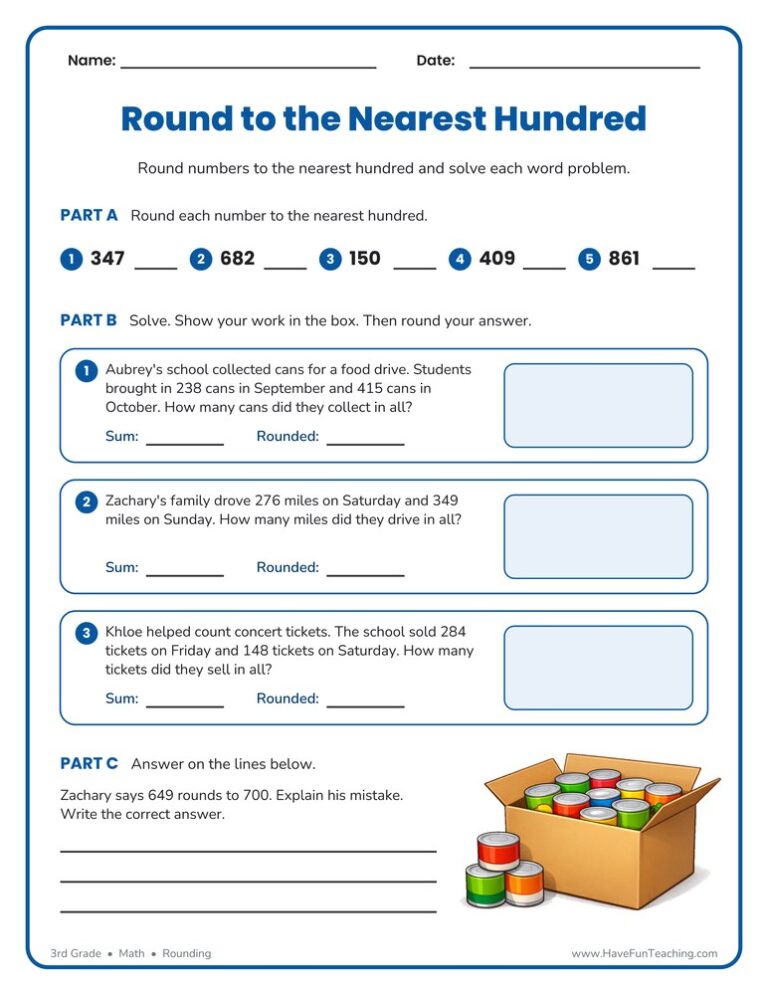
This round to the nearest hundred word problems worksheet gives 3rd Grade students five rounding items, three add-and-round word problems, and a written explanation task. An answer key is included so checking work is quick.
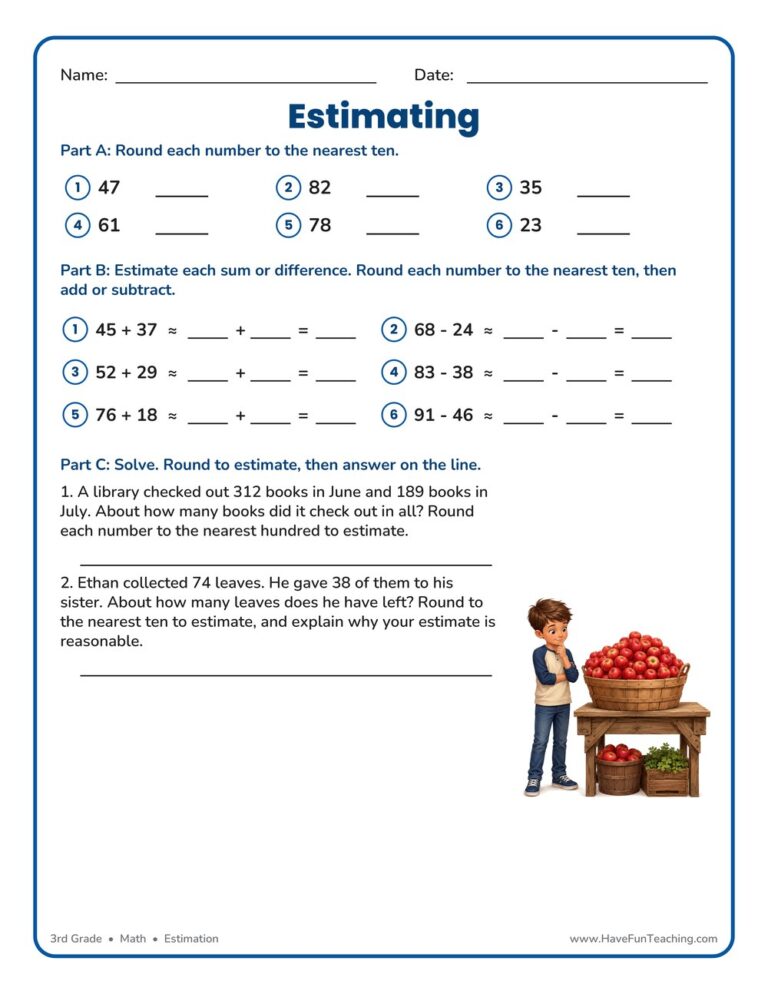
This add/subtract estimation worksheet helps 3rd graders round to the nearest ten and hundred to estimate sums and differences. Includes an answer key for quick, no-prep rounding and estimation practice.

This round to the nearest ten word problems worksheet gives 3rd graders four problems to solve and round, plus one written explanation. An answer key is included, so it prints and goes.

This rounding to hundreds worksheet gives 3rd graders nine rounding problems, a number line activity, and word problems to explain. An answer key is included, so estimation practice is ready in one print.

This time estimation worksheet helps 3rd grade students pick the better estimate for everyday activities and add estimated minutes. An answer key is included, so checking work takes seconds.
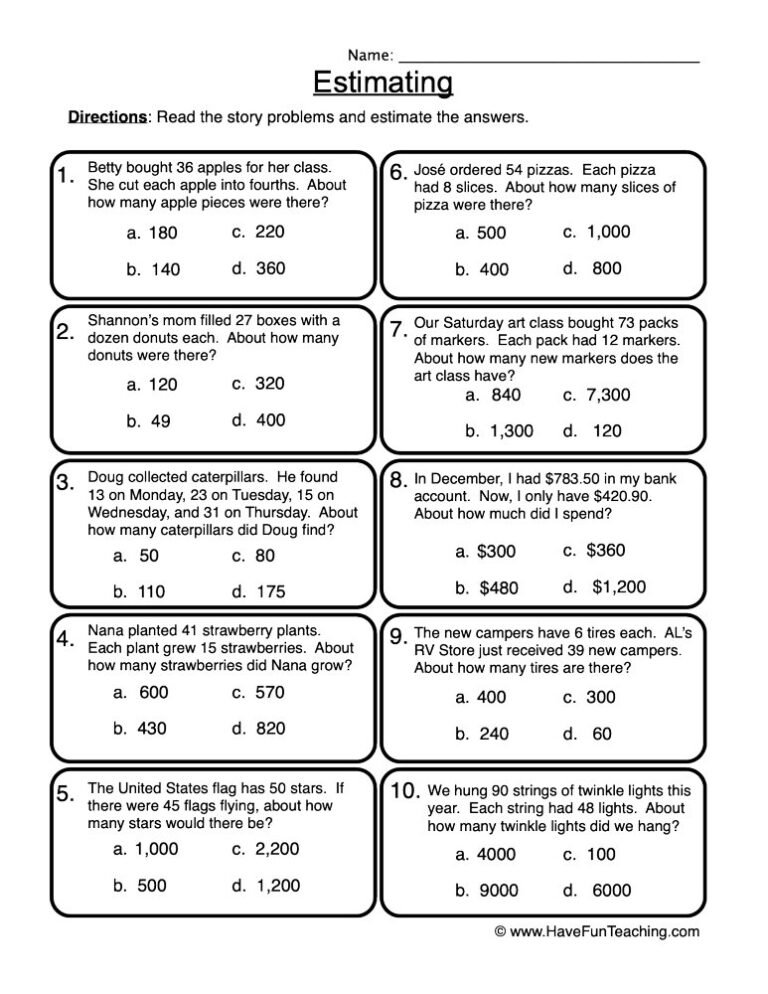
This estimation multiple choice worksheet has 3rd graders round to the nearest ten to estimate sums and differences in five bubble-answer story problems, plus two write-and-explain items. Answer key included for fast checking.

Using this Estimate and Measure Activity, students estimate lengths using units of inches, feet, centimeters, and meters.
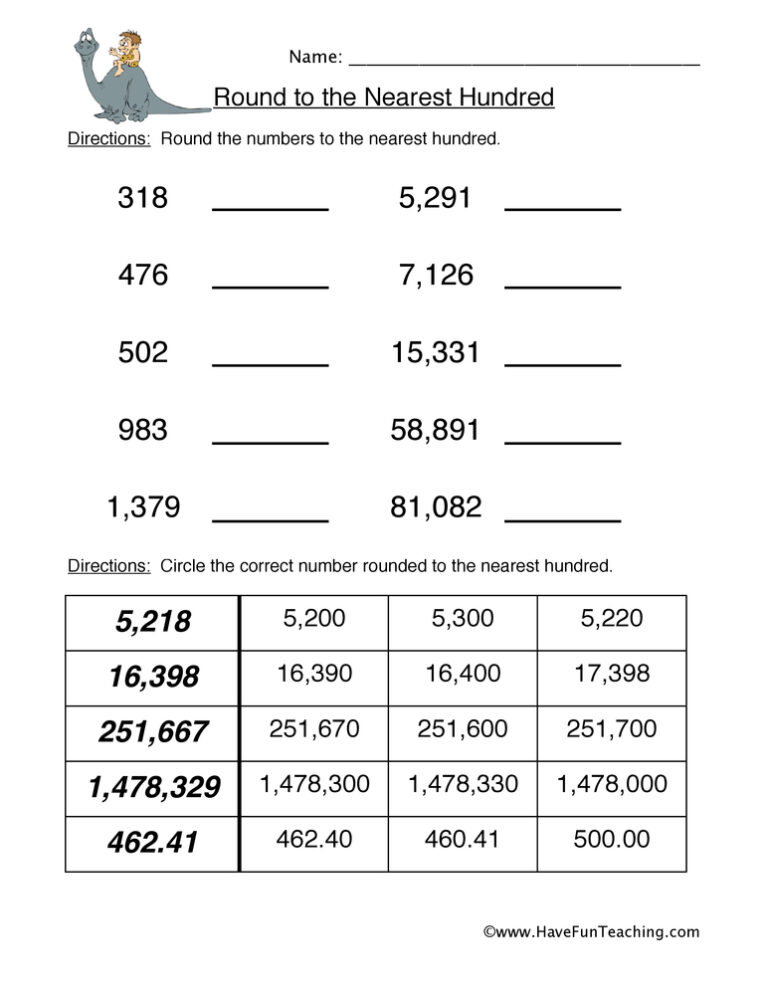
This Round to the Nearest Hundred Worksheet has 3rd Grade students name both neighboring hundreds before rounding, plus a word problem and an answer key so rounding finally makes sense.

This round to the nearest ten worksheet gives 3rd grade students ten rounding problems and three word problems, with an answer key included, so rounding becomes quick and automatic.
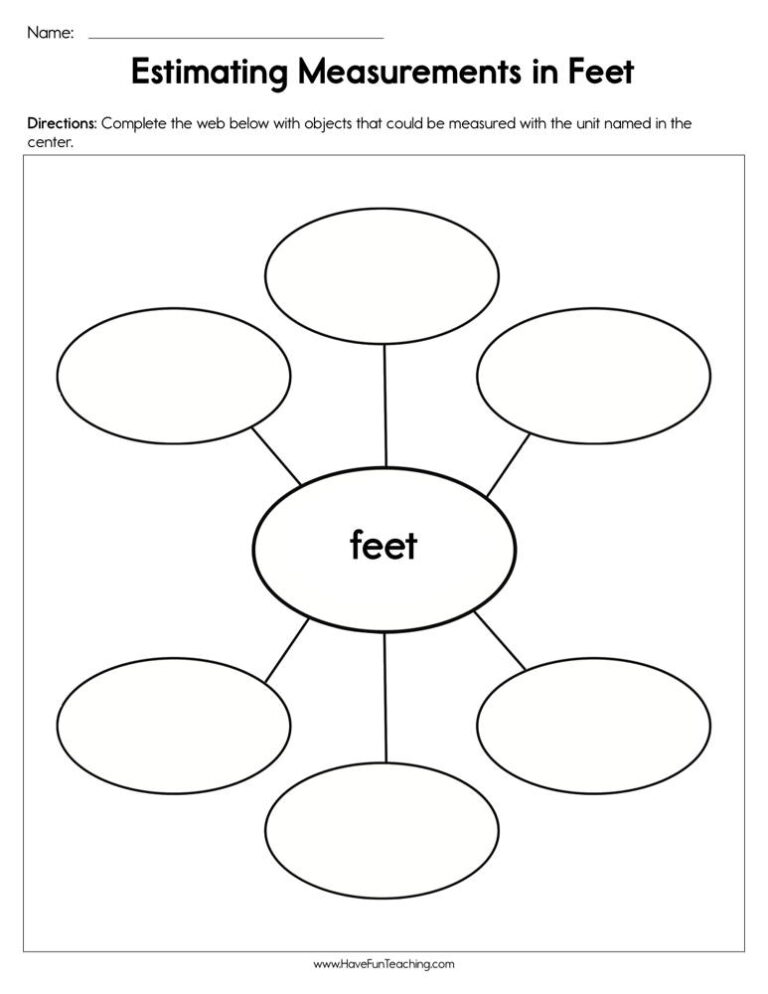
In this Estimating Measurement in Feet Worksheet, students complete the web below with objects that could be measured with the unit feet.

Reviews
There are no reviews yet