

Inflectional Verbs Worksheet
This Inflectional Verbs Worksheet gives 2nd Grade students hands-on practice adding -s, -es, -ed, and -ing to base verbs in real sentences. An answer key is included, so children build confident grammar skills and check their own work.
$6.97
Or free with a membership — members pay $3.33/mo for all 10,000+ resources. See plans
Want this one free?
Tell us where to send it and it’s yours — no card, no catch.
One free resource per teacher. We’ll also send free teaching ideas each week — unsubscribe anytime.
Teaching is easier with a membership
Unlimited printables, games & videos for PreK–6th — for your classroom or homeschool. Cancel anytime.
Start your 3-day free trial$0 today · cancel anytime · Instant access to 10,000+ resources
About this resource
Description
Verbs change shape to show who is doing the action and when it happened, and this Inflectional Verbs Worksheet gives 2nd Grade students focused practice with the four endings that carry that job: -s, -es, -ed, and -ing. Adding an ending to a base verb is one of the very first grammar moves a young writer makes independently, and it is what turns a loose list of words into a sentence that actually says something. A child who can hear the difference between jump, jumps, jumped, and jumping reads more smoothly, writes with far fewer errors, and starts to notice tense and subject agreement everywhere in a text.
This printable inflectional verbs worksheet is a two-page activity built for second graders. Part A supplies a word box of four inflected verbs and four sentences to complete, so students must decide which form matches the subject and the time of the action rather than guessing from position. Part B lists six base verbs, each shown with the ending it takes, and asks the student to write the finished word on a generous handwriting line. Print it, hand it out, and use the answer key on page two to check the work in seconds. It doubles as a quick 2nd grade verb endings worksheet for morning work, small-group review, or a homework page.
What’s Included
- A one-page student worksheet with two separate practice sections
- Part A: a four-word bank and four sentences to complete
- Part B: six base verbs to combine with -s, -es, -ed, and -ing
- A full answer key on the final page
- Wide, grade-appropriate writing lines for developing handwriting
Three Reasons This Helps Kids
- It separates the four endings so children learn each pattern clearly instead of blending them together.
- The sentence context forces real thinking about subject and tense, not simple copying.
- Writing every answer by hand builds spelling memory for endings that are easy to drop in a first draft.
Teacher and Parent Ideas
Read each Part A sentence aloud before students write, and ask them to say which word sounds right and why. Cover the word box and let stronger readers supply their own verb, then compare answers. For Part B, have children act out each base verb, then say the sentence twice, once about right now and once about yesterday, so the ending change is something they hear before they spell it. Keep a class chart of verbs the children find in their own reading and sort them under the four endings as the week goes on.
Related Resources
What teachers say
Reviews
You must be logged in to post a review.
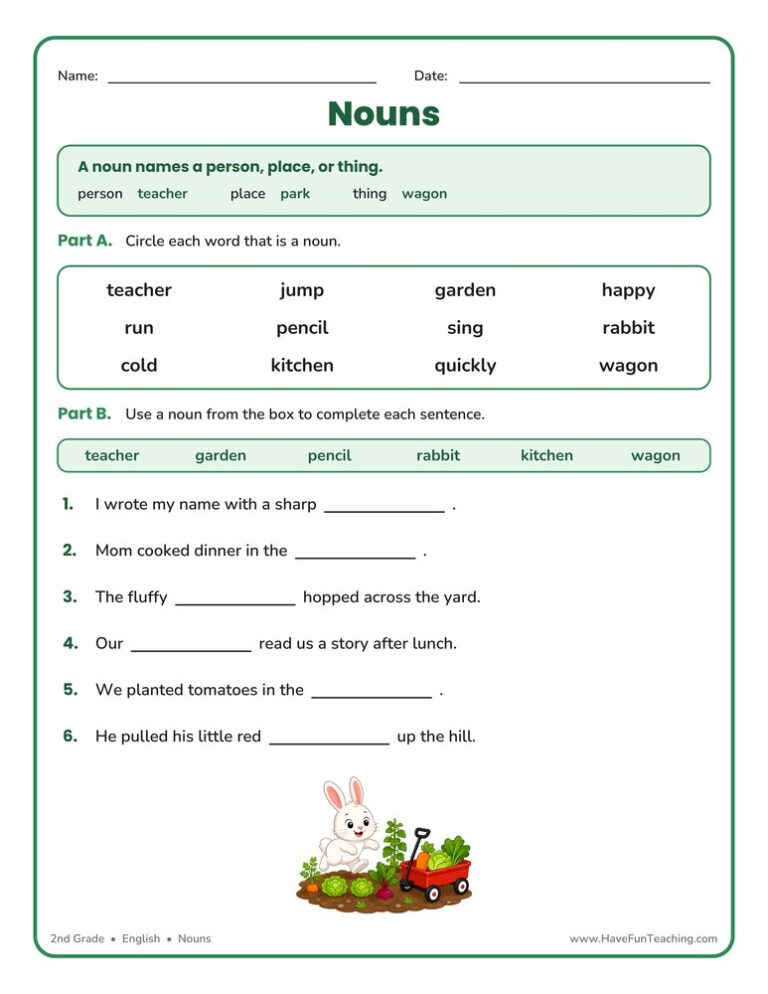
This Noun Fill in the Blanks Worksheet helps 2nd grade students identify nouns in a word box and complete sentences with the correct noun. Includes a complete answer key for quick, no-prep grammar practice at home or in the classroom.
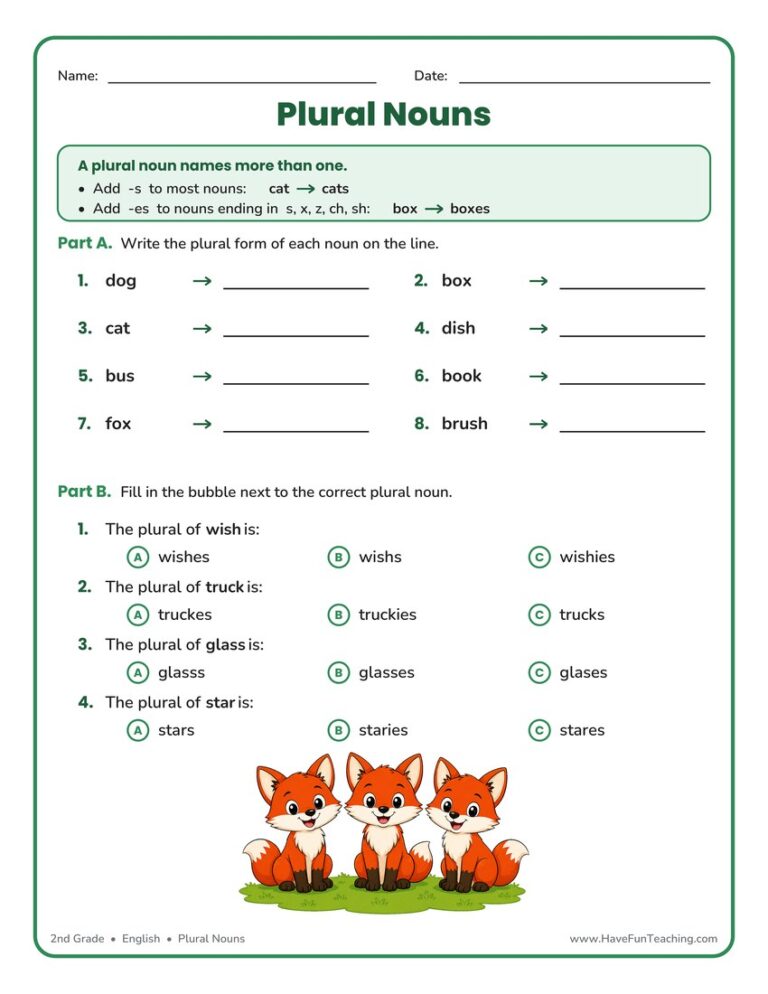
The Creating Plural Nouns Worksheet gives 2nd graders two-part practice turning singular nouns into plurals with the -s and -es rules. Includes a complete answer key for quick, no-prep grammar practice at home or school.

A free second grade using irregular nouns worksheet where students circle the correct irregular plural in eight sentences. Includes a complete answer key for quick, no-prep grammar practice.

This 2nd grade Choosing Pronouns Worksheet gives students fun fill-in-the-blank practice picking the right subject and object pronouns, with an answer key included for fast grading and confident grammar skills.
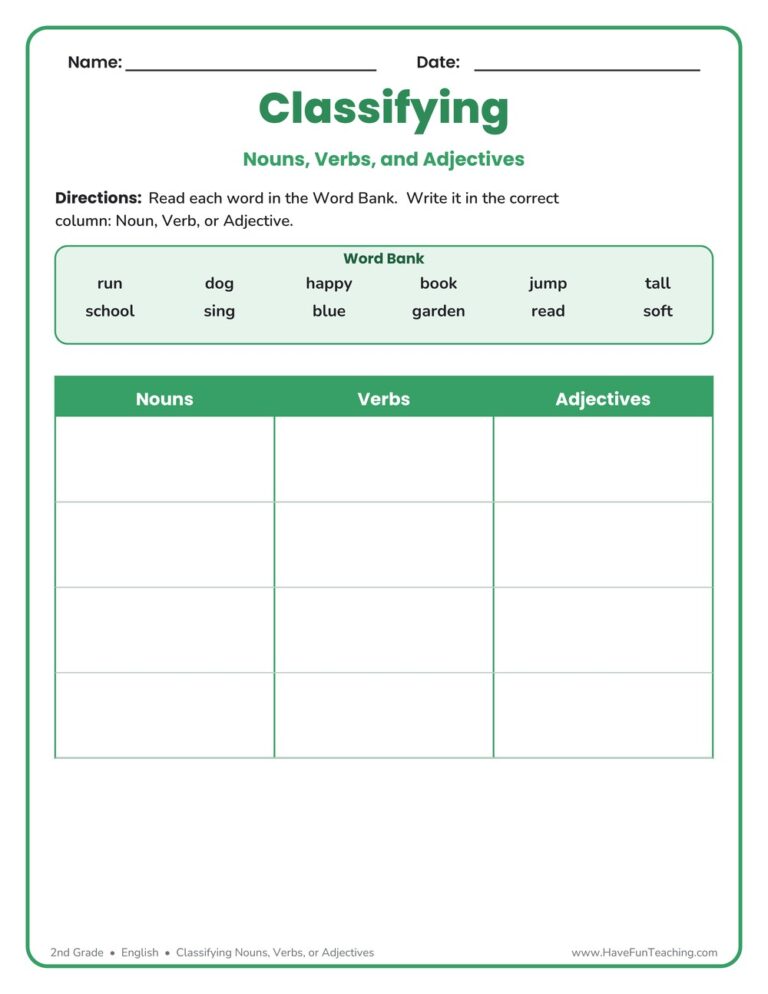
Sort twelve everyday words into nouns, verbs, and adjectives with this Classifying Nouns, Verbs, or Adjectives Worksheet for 2nd grade. Includes a complete answer key for quick, no-prep grammar practice.
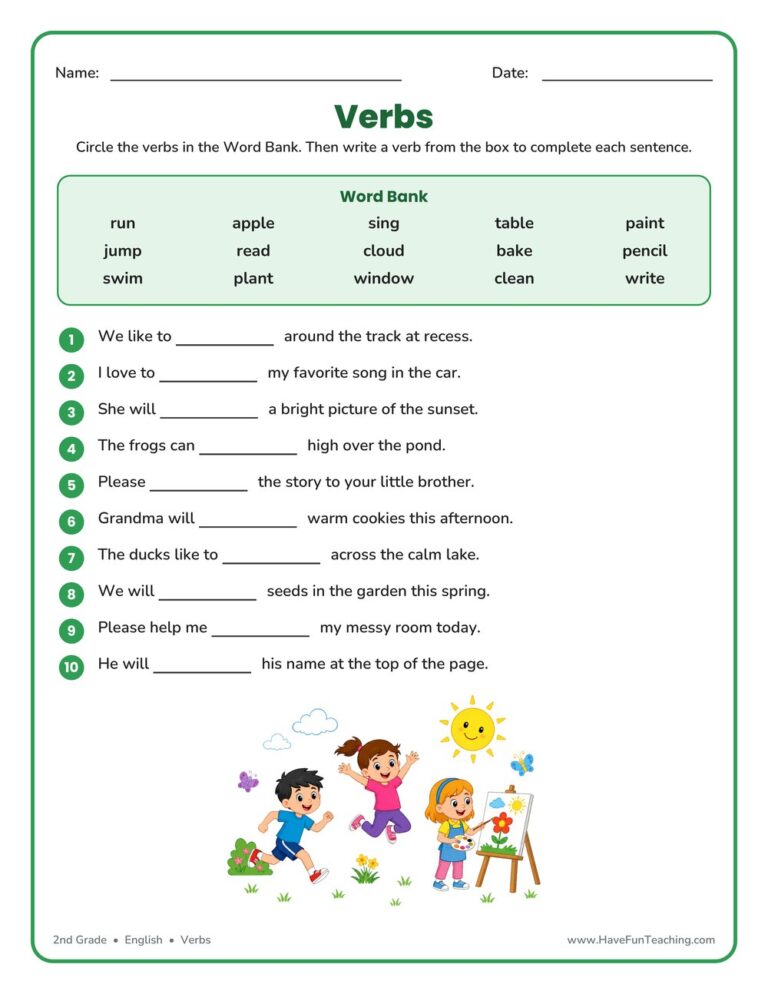
A 2nd grade fill in the blanks verb worksheet where students circle the verbs in a word bank and use them to complete ten sentences. Includes a complete answer key for quick, no-prep grammar practice.
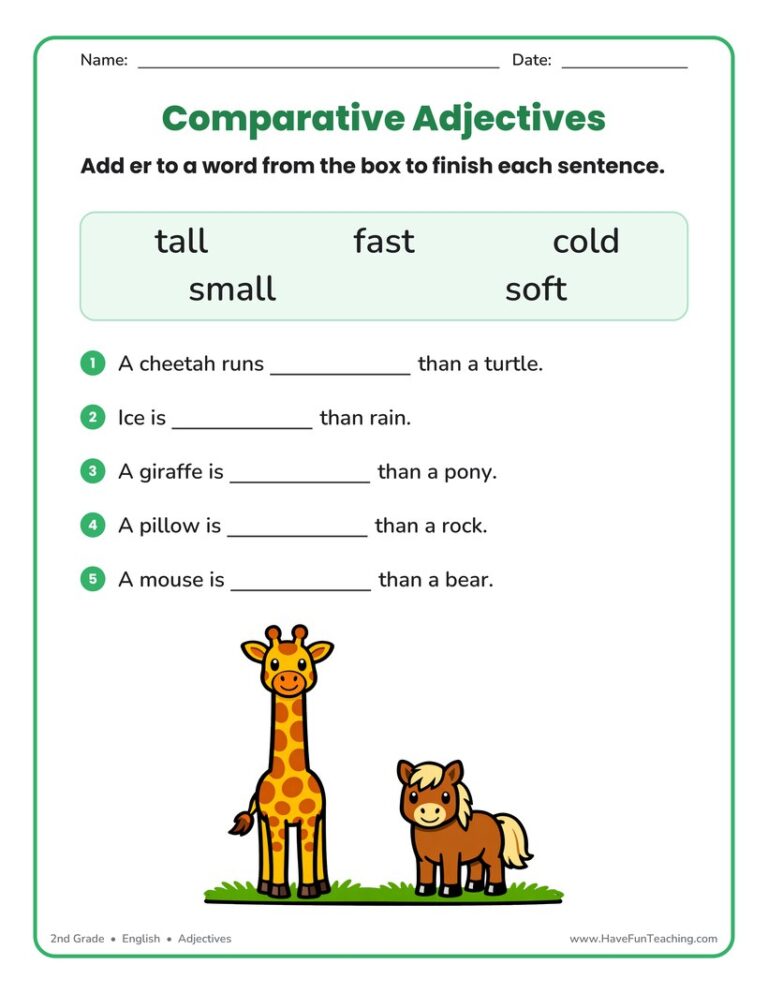
This Comparing Adjectives Fill in Blank Worksheet asks 2nd Grade students to add er to a word from the box and finish five comparing sentences. Answer key included for quick checking.

This Writing Personal Pronouns Worksheet has second graders swap an underlined noun for the pronoun that fits, using each word once. Answer key included, so practice checks itself.
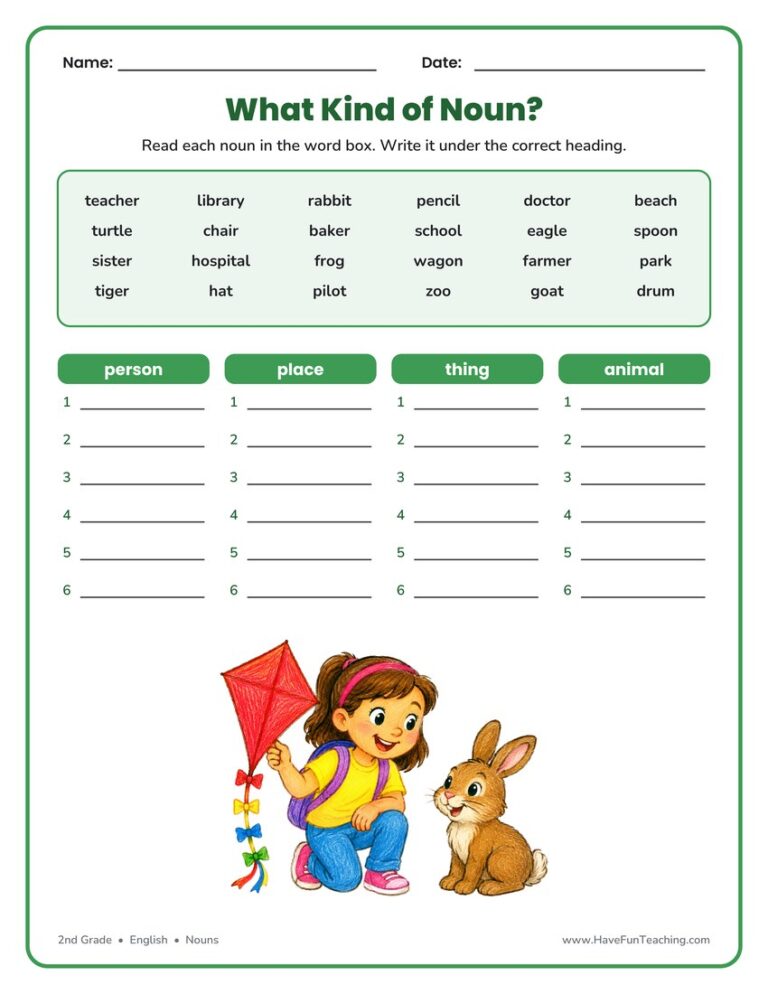
Students sort twenty-four nouns into person, place, thing, and animal categories on this 2nd grade sorting nouns worksheet. Includes a complete answer key for fast, no-prep grammar practice.

The Combining and Expanding Sentences Worksheet helps second graders use conjunctions to join sentences and add describing words. Grade 2, answer key included — a simple way to build stronger sentence writing.

This Noun Adjective and Verb Worksheet gives 2nd graders clear practice labeling words and finding the part of speech in a sentence. Includes an answer key — a simple, no-prep way to build grammar confidence.
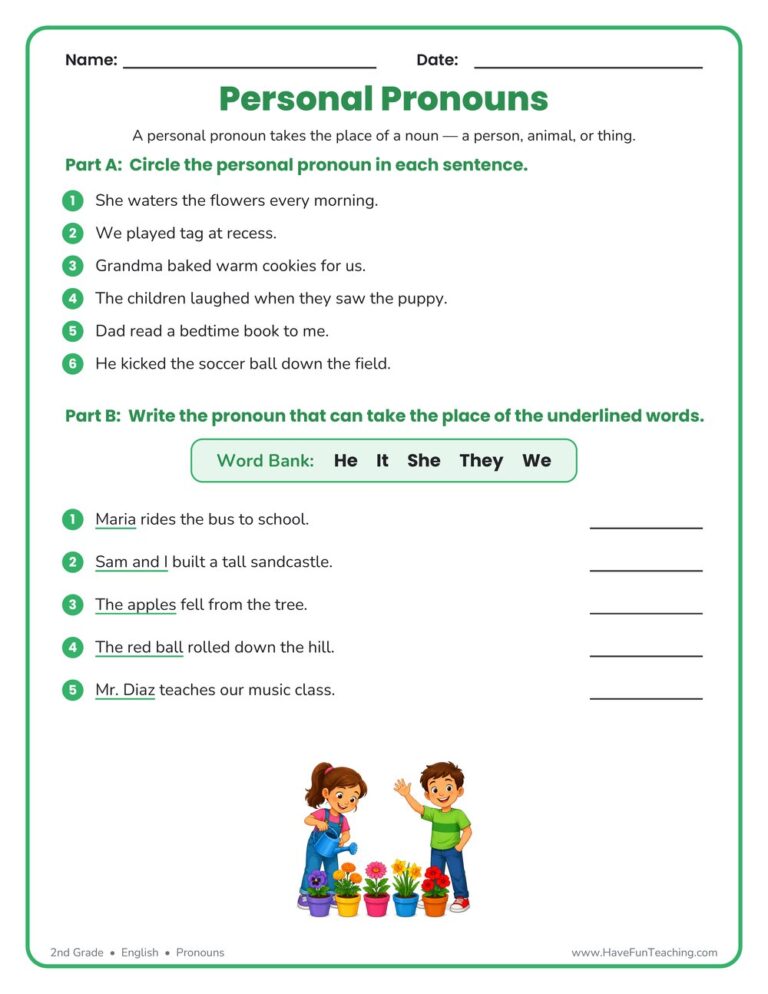
This personal pronouns worksheet gives 2nd graders practice circling pronouns and swapping nouns for the right pronoun using a word bank. An answer key is included to make grammar review simple.
Reviews
There are no reviews yet