

Is it Hot or Cold Worksheet
Is it Hot or Cold Worksheet gives kindergarten students six picture cards to sort by temperature and a line to write HOT or COLD. Answer key included, so temperature vocabulary practice takes no prep.
$6.97
Or free with a membership — members pay $3.33/mo for all 10,000+ resources. See plans
Want this one free?
Tell us where to send it and it’s yours — no card, no catch.
One free resource per teacher. We’ll also send free teaching ideas each week — unsubscribe anytime.
Teaching is easier with a membership
Unlimited printables, games & videos for PreK–6th — for your classroom or homeschool. Cancel anytime.
Start your 3-day free trial$0 today · cancel anytime · Instant access to 10,000+ resources
About this resource
Description
Temperature is one of the first measurement ideas a young child can actually feel, and sorting everyday things into hot and cold is where that understanding begins. This Is it Hot or Cold Worksheet asks students to look closely at six familiar objects and decide whether each one is hot or cold, then write the word that matches. Long before children read a thermometer scale, they build the vocabulary and the safety awareness that come from noticing that cocoa steams, ice melts, a candle burns, and a snowman only lasts when the air stays freezing.
This kindergarten measurement worksheet keeps the task simple and picture led. Six large, brightly modeled images sit in their own cards, each with a wide handwriting line underneath. Students name what they see, think about how it would feel to touch, and print HOT or COLD on the line. Use it as a whole class warm up, a science center activity, morning work, or a quick check after a lesson on temperature. Because the answers are single words, it also gives early writers meaningful practice forming letters with a real purpose.
What’s Included
- 1 print-ready PDF worksheet
- Answer key
- 6 hot-or-cold picture cards with a handwriting line for each answer
Three things make this Is it Hot or Cold Worksheet worth the paper. First, it links an abstract measurement word to concrete objects children already know, so the concept sticks. Second, it asks for a written answer rather than a circle or a check mark, which pushes students to recall and spell the temperature words instead of guessing. Third, the pictures are deliberately mixed so hot and cold items alternate unpredictably, which means children have to look and think about every single card rather than fall into a pattern.
Keep the learning going away from the page. Fill two bowls, one with warm water and one with ice water, and let students dip a finger and describe the difference in their own words. Take a hot and cold hunt around the classroom or kitchen and list what each group finds. Talk about safety rules for hot things such as stoves, ovens, and mugs. Sort magazine pictures into two labeled columns, or ask children to draw one hot thing and one cold thing on the back of the page and explain their choices to a partner.
Related Resources
What teachers say
Reviews
You must be logged in to post a review.
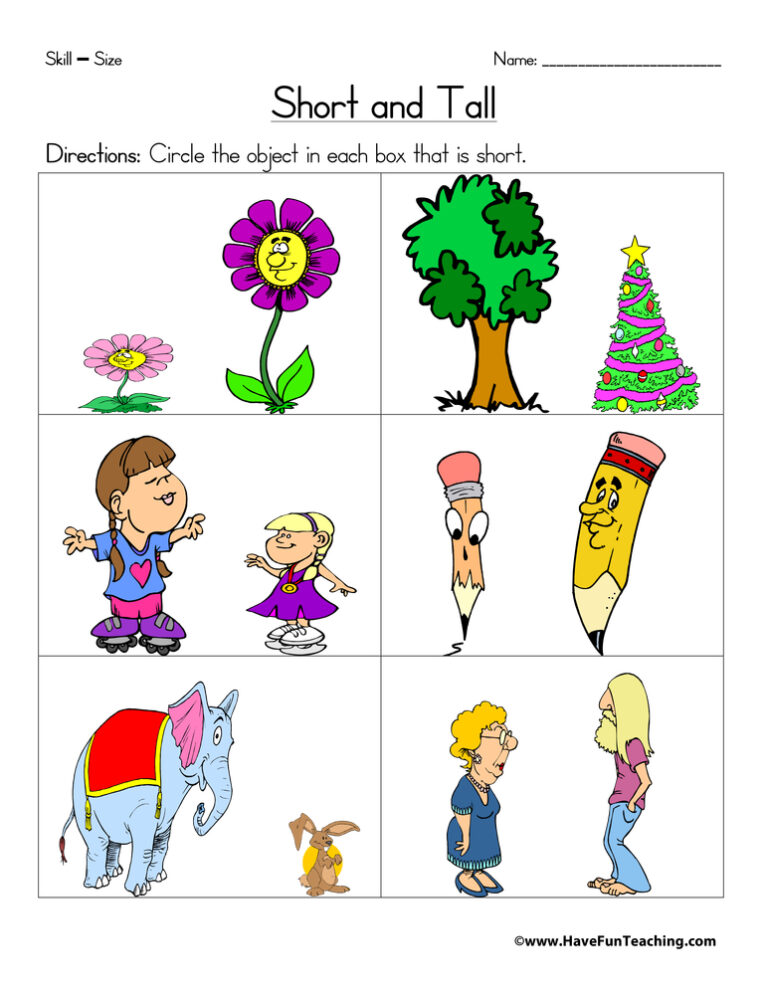
A picture-based short and tall worksheet for Kindergarten: circle the taller object in four boxes, then draw a short flower and a tall flower. Answer key included for quick, no-prep height practice.

This measurement worksheet gives kindergarten students practice comparing objects by weight, height, and length. An answer key is included, so checking work is quick and easy.

In this Garden Vegetables Measuring Activity, students practice measuring the length of garden vegetables in inches with this activity.

Using this Writing about Hot and Cold Objects Worksheet, student write and draw pictures of two cold and hot objects to show their understanding of temperature.

This using measurement words worksheet helps kindergarten students describe pictures as heavy or light, tall or short, long or short, and big or little. An answer key is included for quick, easy checking.
In this Ice Fishing Addition Subtraction Within 100 Activity, studentsuse addition and subtraction within 100 to solve word problems involving lengths that are given in the same units.

Using this K.MD.1 Kindergarten Common Core Lesson, students sort objects into short and tall categories to learn about measurement.
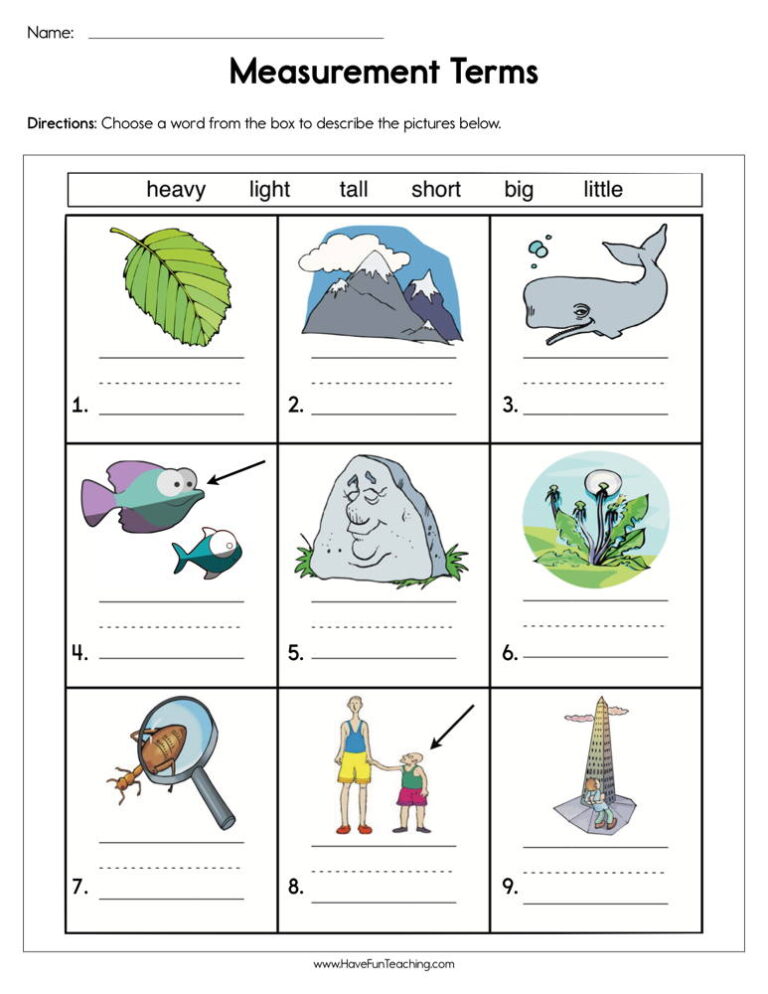
Using this Measurement Terms Worksheet, studentschoose a word from the box to describe the pictures.
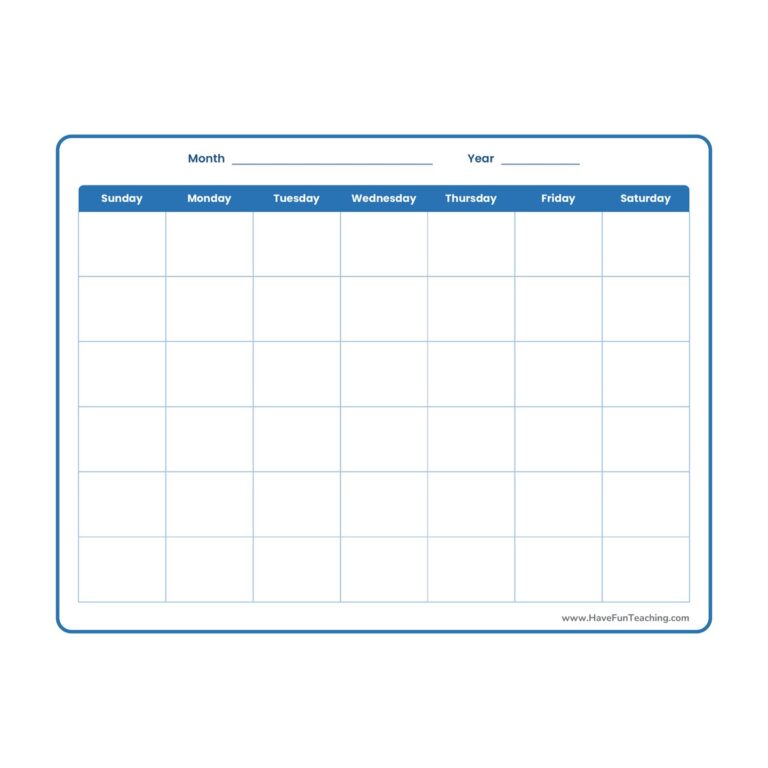
A printable, ready-to-use blank calendar with a landscape monthly grid and labeled day columns. Great for Kindergarten through 5th grade classrooms to map out lessons, holidays, and daily routines—just add the month and the dates.
Using the Counting Songs (Classic Video Collection), students practice skip counting by all of the numbers by singing and counting along to these thirteen videos.
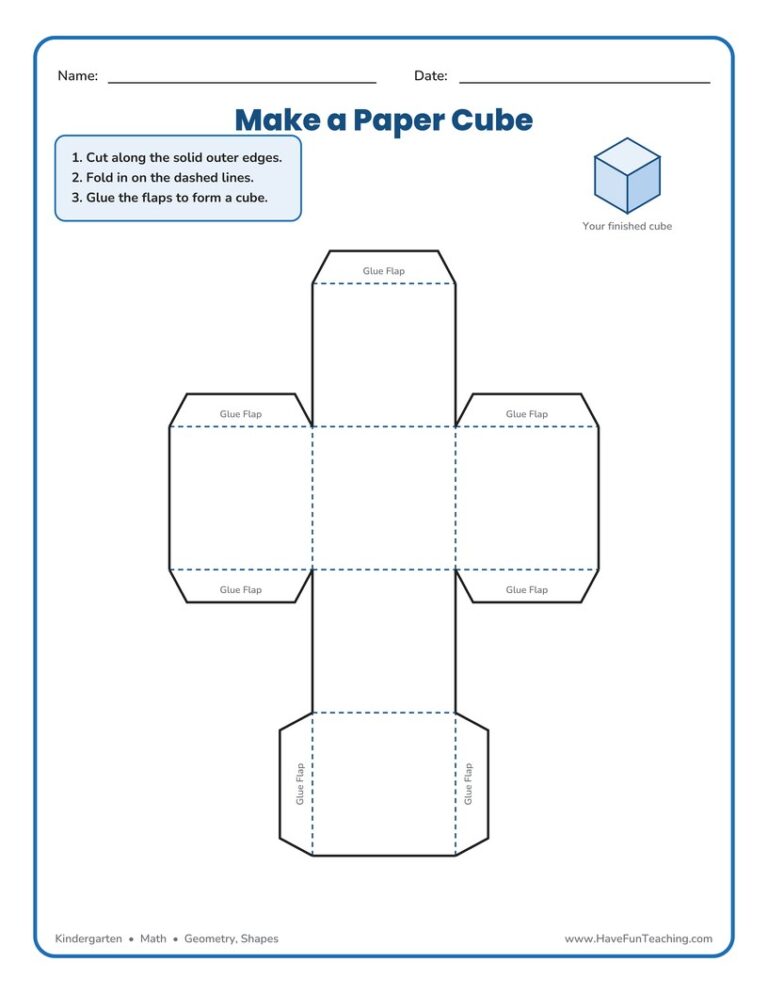
A hands-on paper cube template worksheet for Kindergarten geometry. Students cut, fold, and glue a printable cube net into a real 3D cube — a fun, no-prep way to explore solid shapes and build fine motor skills.

This Grouping into Categories Worksheet asks kindergarten students to sort eight pictures into fruit, animals, plants, and shapes by writing each one's category number. Includes an answer key for fast, no-prep classification practice.




Reviews
There are no reviews yet