

Adding and Estimation Worksheet
Third graders round three-digit numbers to the nearest hundred to estimate each sum on this Adding and Estimation Worksheet, then add to find the actual total. Includes an answer key—great for quick, no-prep math practice.
$6.97
Or free with a membership — get this and 10,000+ resources. See plans
Teaching is easier with a membership
Unlimited printables, games & videos for PreK–6th — for your classroom or homeschool. Cancel anytime.
Start your 3-day free trialNo commitment · Cancel anytime · Instant access to 10,000+ resources
About this resource
Description
Estimating sums is a powerful math skill that helps third graders judge whether an answer makes sense, and this Adding and Estimation Worksheet gives students focused practice doing exactly that. By rounding each three-digit number to the nearest hundred before adding, children learn to predict a reasonable total and then confirm it with an exact calculation. Building this “estimate first, then solve” habit strengthens number sense and helps students catch their own mistakes.
This printable 3rd grade addition worksheet presents eight three-digit addition problems, each paired with an Estimate box and an Actual box. Students first round both numbers to the nearest hundred and record their estimated sum, then add the original numbers to find the actual sum and compare the two. Use it as morning work, a math-center task, homework, or a quick formative check, and let the included answer key make grading fast.
What’s Included
- 1 print-ready PDF worksheet
- Answer key
- 8 three-digit addition problems with estimate and actual boxes
There are three big reasons this adding and estimation worksheet helps children learn. First, pairing every problem with both an estimate and an actual answer builds the essential habit of checking work for reasonableness. Second, rounding to the nearest hundred reinforces place value and mental math, so students add with more confidence. Third, the clean two-column layout keeps young mathematicians organized, letting them focus on the thinking instead of hunting for room to write.
To extend the skill, ask students to estimate real-world totals before adding—grocery prices, points in a game, or pages read this week—then compare the estimate to the exact amount. Have them explain in words why an estimate landed close or far off, or turn it into a partner game where one child estimates and the other checks. Rounding to the nearest ten for smaller numbers, or the nearest thousand for larger ones, offers quick differentiation for students who are ready for more.
Related Resources
What teachers say
Reviews
You must be logged in to post a review.
Using the Adding 8 Song (Lyric Mjusic Video), students sing and practice adding 8 with all addition facts 1-15. Your kids will learn how to add 8.

This Third Grade Math Test Practice Worksheet gives students 10 multiple-choice questions on place value, addition, and subtraction, with a complete answer key for fast, no-prep review.
Using the Adding 2 Song (Lyric Mjusic Video), students sing and practice adding 2 with all addition facts 1-15. Your kids will learn how to add 2.

Using Adding One Digit Numbers Worksheet, students solve single fact addition problems by matching equations and sums.
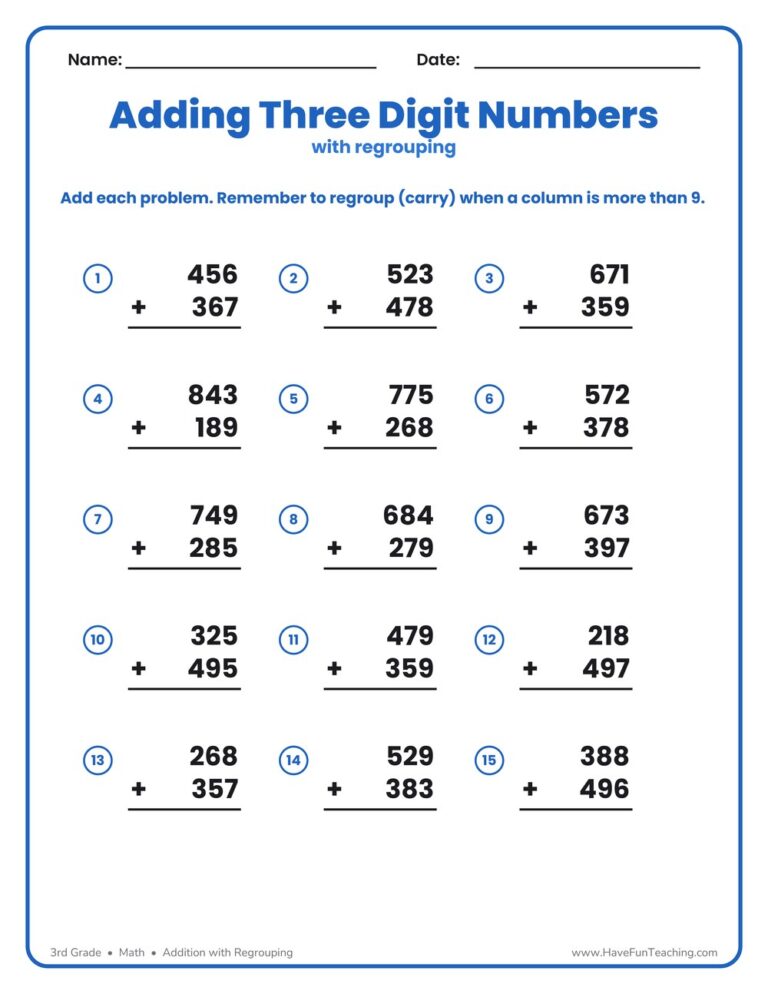
This triple digit addition regrouping worksheet gives 3rd graders fifteen three-digit column addition problems that all practice carrying across places. A complete answer key is included for fast, no-prep math review.
Using the Adding 3 Song (Lyric Mjusic Video), students sing and practice adding 3 with all addition facts 1-15. Your kids will learn how to add 3.
Using the Adding 1 Song (Lyric Mjusic Video), students sing and practice adding 1 with all addition facts 1-15. Your kids will learn how to add 1.

Using Subtracting with Measures Worksheet, students solve real life word problems involving different types of measurements.
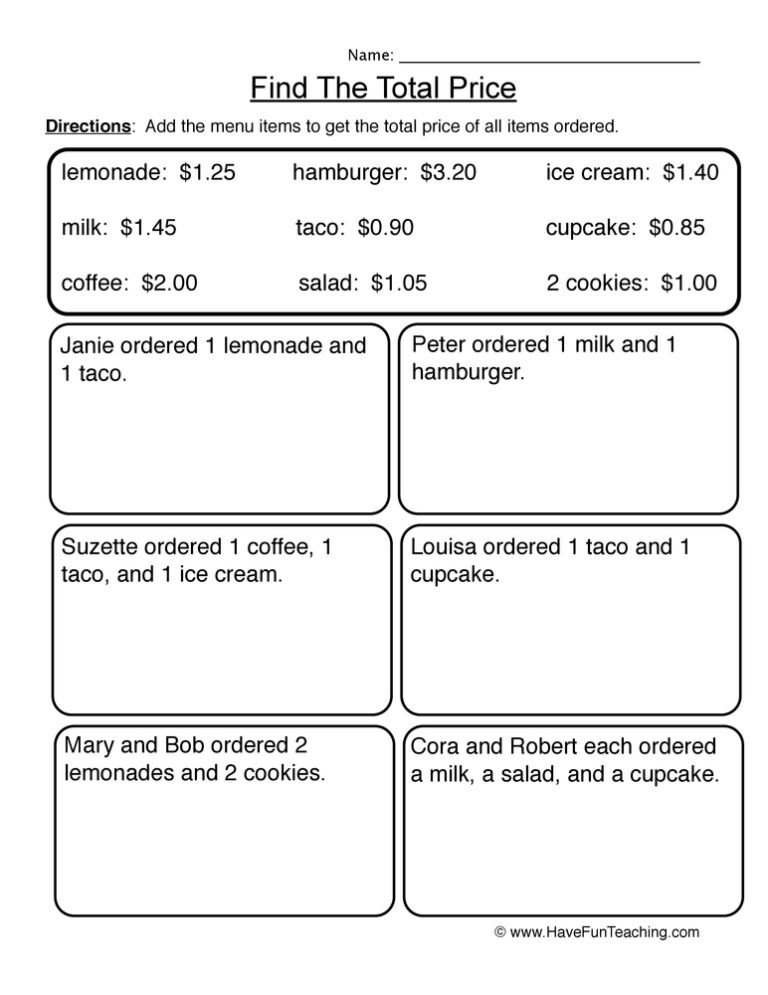
Using this Find the Total Price Worksheet, students find the total price they owe after using the prices on the menu provided.
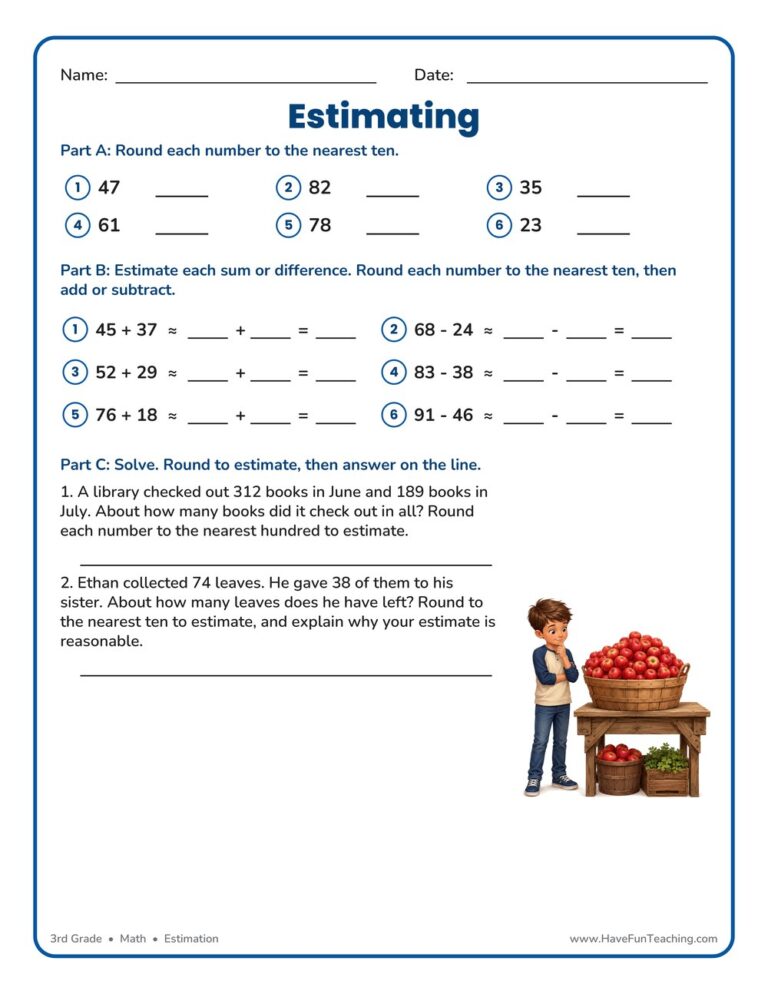
This add/subtract estimation worksheet helps 3rd graders round to the nearest ten and hundred to estimate sums and differences. Includes an answer key for quick, no-prep rounding and estimation practice.
Using the Adding 6 Song (Lyric Mjusic Video), students sing and practice adding 6 with all addition facts 1-15. Your kids will learn how to add 6.

Using Double Digit Subtraction With Regrouping Worksheet, students solve double digit subtraction problems with regrouping.
Reviews
There are no reviews yet