

Find the Total Price Worksheet
Use this find the total price worksheet to give 3rd graders four snack-shop orders to add and one spending problem to reason through. Answer key included, so money practice takes no prep.
$6.97
Or free with a membership — members pay $3.33/mo for all 10,000+ resources. See plans
Want this one free?
Tell us where to send it and it’s yours — no card, no catch.
One free resource per teacher. We’ll also send free teaching ideas each week — unsubscribe anytime.
Teaching is easier with a membership
Unlimited printables, games & videos for PreK–6th — for your classroom or homeschool. Cancel anytime.
Start your 3-day free trial$0 today · cancel anytime · Instant access to 10,000+ resources
About this resource
Description
Adding money is one of the first places where third graders see math show up in real life. Before a student can hand over the right amount at a snack bar or a school store, they have to read a price, line up dollars and cents, and add two or three amounts together without losing track of the decimal point. This find the total price worksheet gives them that practice with a menu they can actually picture, so adding money feels like something worth doing rather than another column of numbers.
This 3rd grade adding money worksheet opens with a six-item Snack Shop menu, then asks students to total four different orders and record each answer on the line inside its box. Part B goes a step further with a spending problem: a student has four dollars, wants two items, and has to decide whether that is enough and then explain how they know. Use it as morning work, as a quick check after a money lesson, or as a partner activity where one child reads the order aloud and the other finds the total. A complete answer key makes checking fast.
What’s Included
- 1 print-ready PDF worksheet
- Answer key
- A six-item Snack Shop menu with prices
- 4 order cards to total, plus 1 multi-step spending problem with room to explain
Three things make this find the total price worksheet work well in a third grade classroom. First, every total requires real regrouping in the cents place, so students practice carrying rather than adding tidy whole dollars. Second, the orders vary from two items to three, which stops children from memorizing one pattern and forces them to reread each problem. Third, the closing question asks for reasoning, not just an answer, so teachers can see whether a child compared the total to the amount available or simply guessed.
Away from the page, set up a pretend snack shop with index cards and real coins and let children take turns as customer and cashier. Hand a child a grocery flyer and a spending limit, then ask them to build an order that stays under it. Save restaurant menus and have students total a family order at home. Estimating first and then adding to check is another quick habit that builds number sense and makes money problems feel far less intimidating.
Related Resources
What teachers say
Reviews
You must be logged in to post a review.
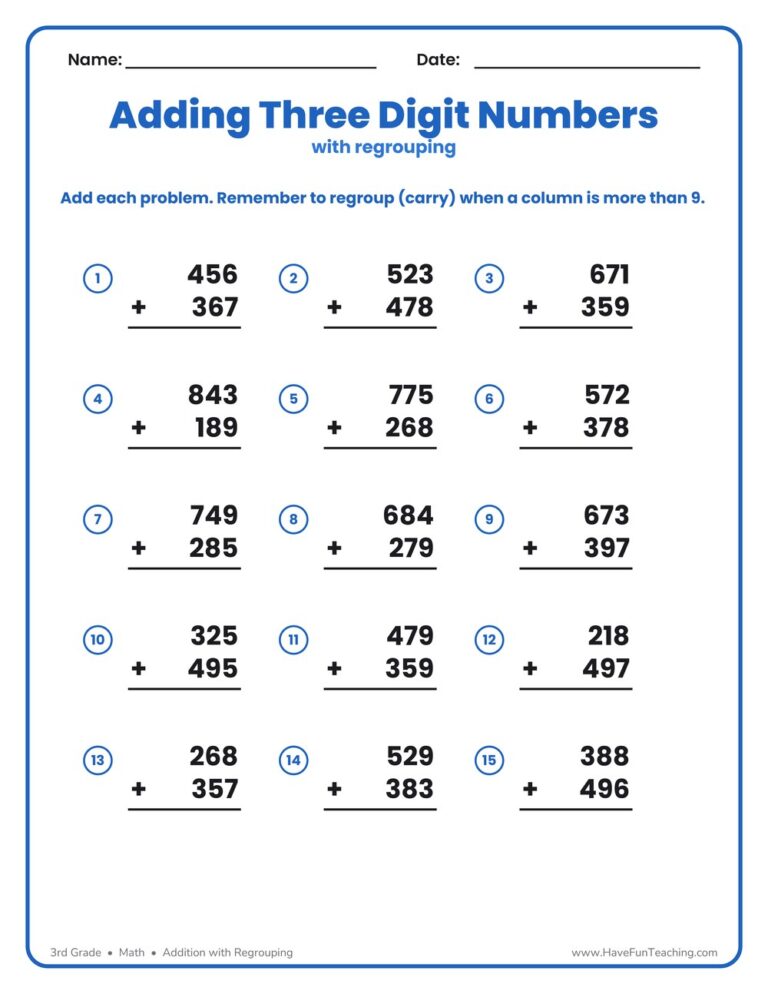
This triple digit addition regrouping worksheet gives 3rd graders fifteen three-digit column addition problems that all practice carrying across places. A complete answer key is included for fast, no-prep math review.

This Third Grade Math Test Practice Worksheet gives students 10 multiple-choice questions on place value, addition, and subtraction, with a complete answer key for fast, no-prep review.

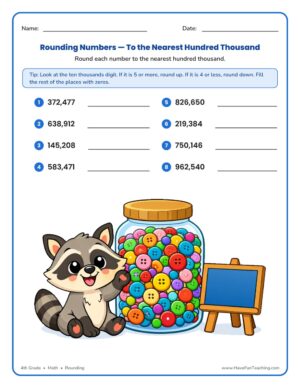
Third graders round three-digit numbers to the nearest hundred to estimate each sum on this Adding and Estimation Worksheet, then add to find the actual total. Includes an answer key—great for quick, no-prep math practice.
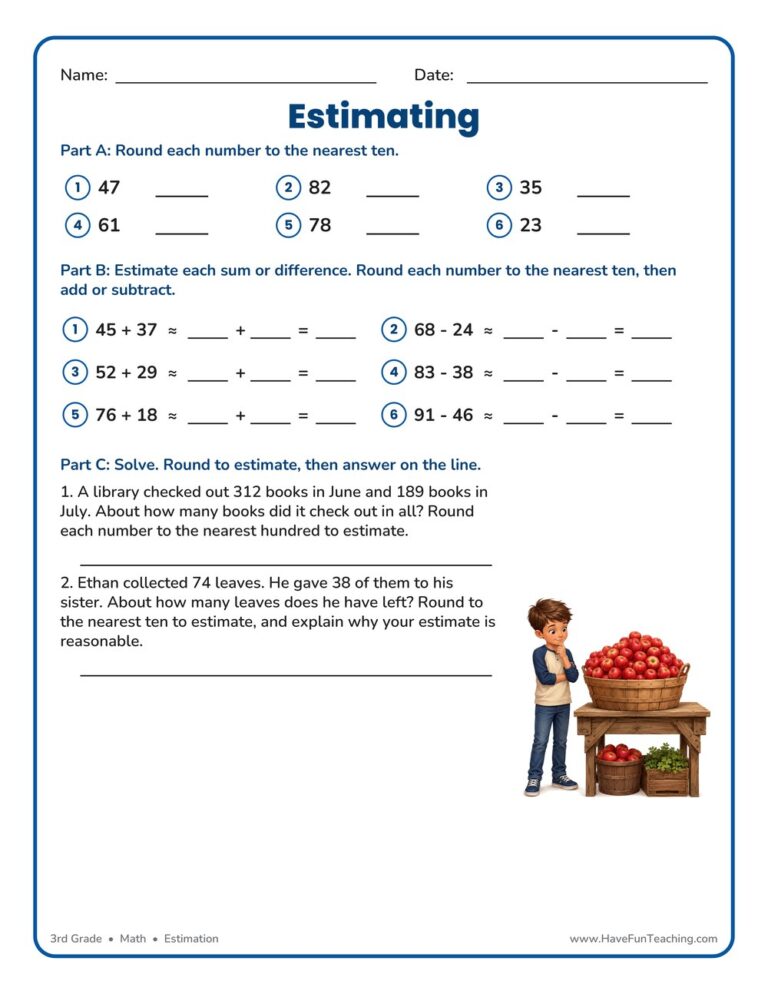
This add/subtract estimation worksheet helps 3rd graders round to the nearest ten and hundred to estimate sums and differences. Includes an answer key for quick, no-prep rounding and estimation practice.
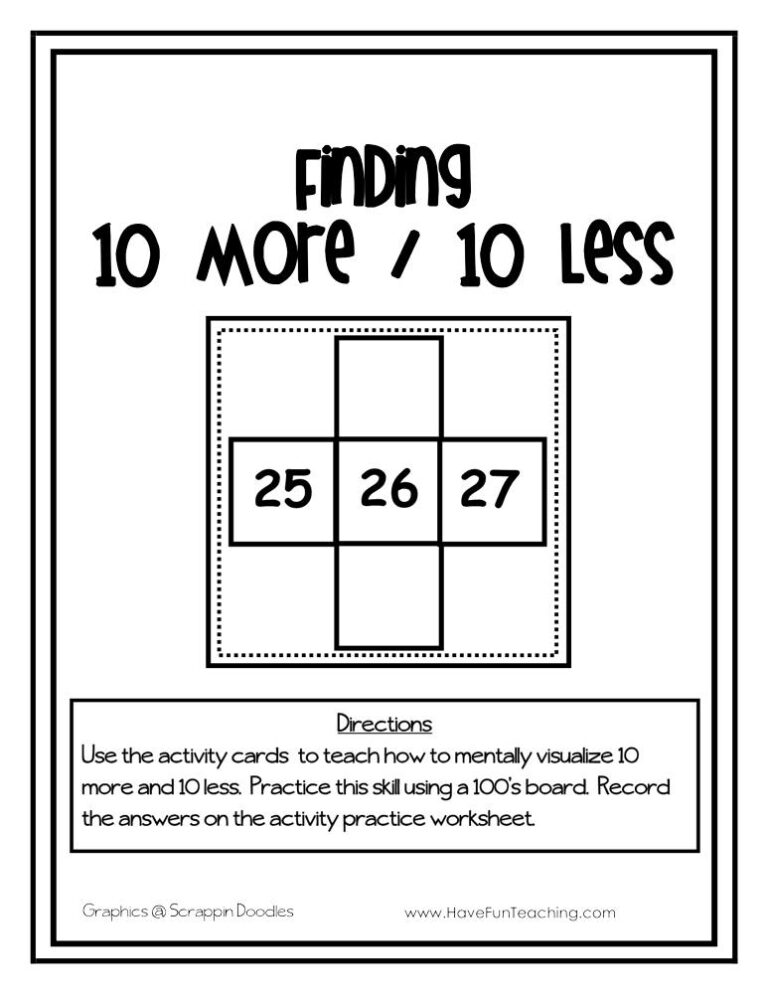
In this Finding 10 More 10 Less Activity, students practice finding 10 more and less than a given number to build skip counting and base ten skills.
Using the Adding 8 Song (Lyric Mjusic Video), students sing and practice adding 8 with all addition facts 1-15. Your kids will learn how to add 8.

Use the Adding Songs (Lyric Video Collection) to practice adding and addition facts by singing and adding these 15 addition songs. Great for addition facts!
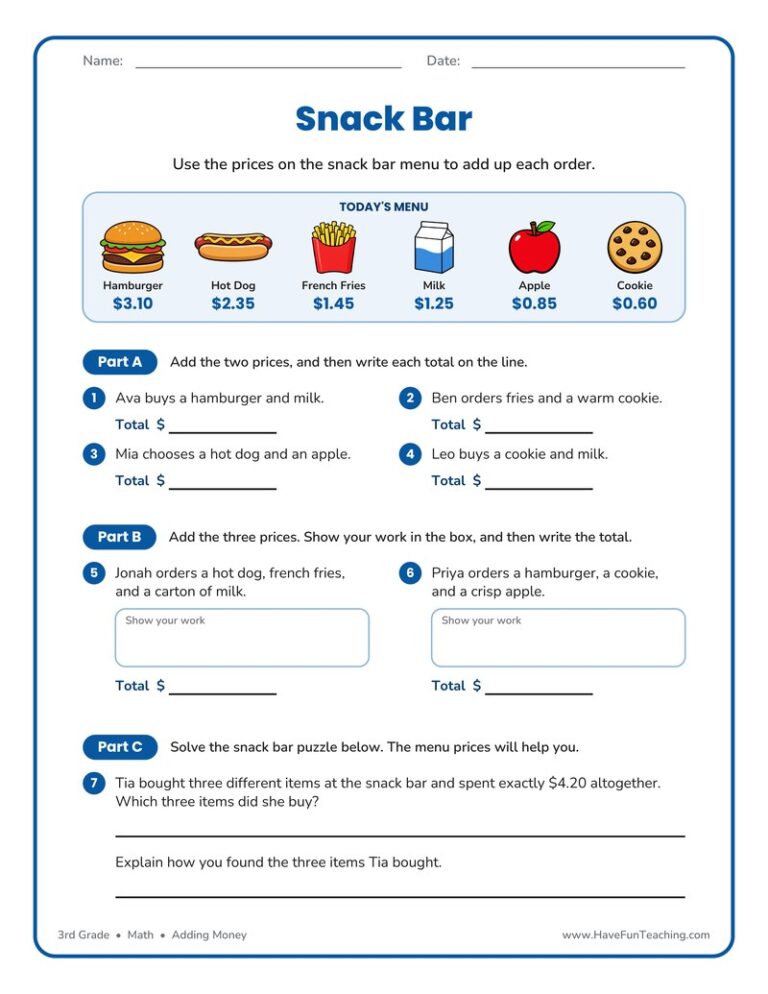
This Snack Bar Money Worksheet gives 3rd graders a real menu to add up, from two-item orders to a three-item money puzzle. Answer key included, so practice adding dollars and cents takes no prep.
Using the Adding 1 Song (Lyric Mjusic Video), students sing and practice adding 1 with all addition facts 1-15. Your kids will learn how to add 1.
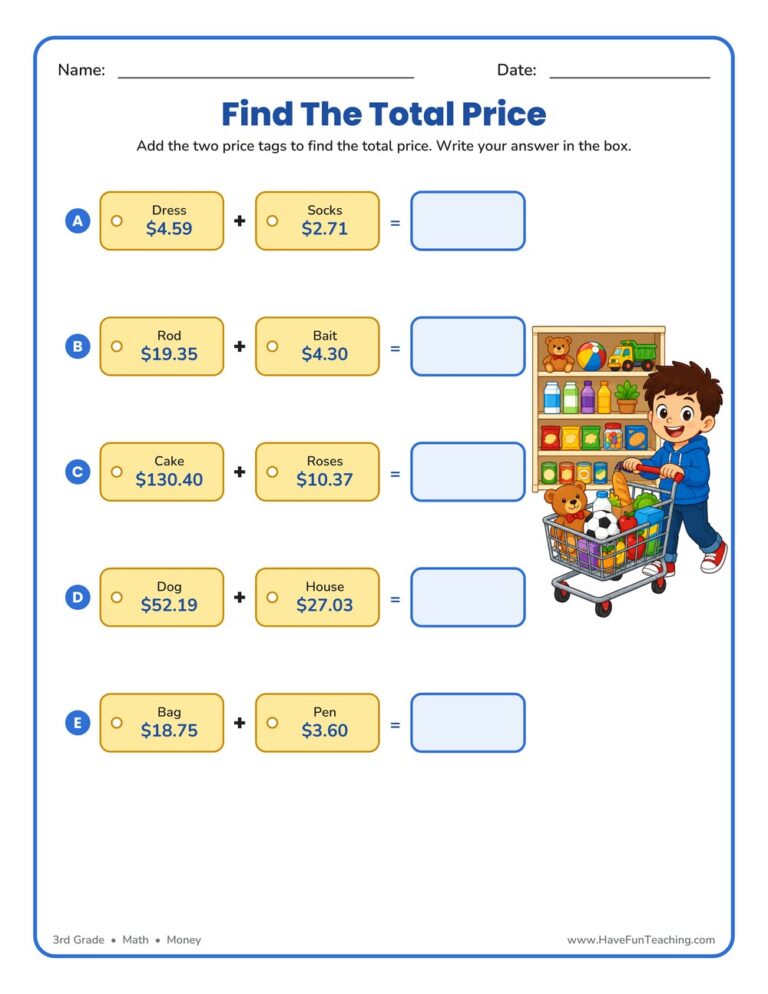
This Find the Total Price Pictures Worksheet has 3rd graders add two price tags to find each total. Answer key included for quick, no-prep money and addition practice.
Using the Adding 2 Song (Lyric Mjusic Video), students sing and practice adding 2 with all addition facts 1-15. Your kids will learn how to add 2.
Using the Adding 10 Song (Lyric Mjusic Video), students sing and practice adding 10 with all addition facts 1-15. Your kids will learn how to add 10.

Reviews
There are no reviews yet