
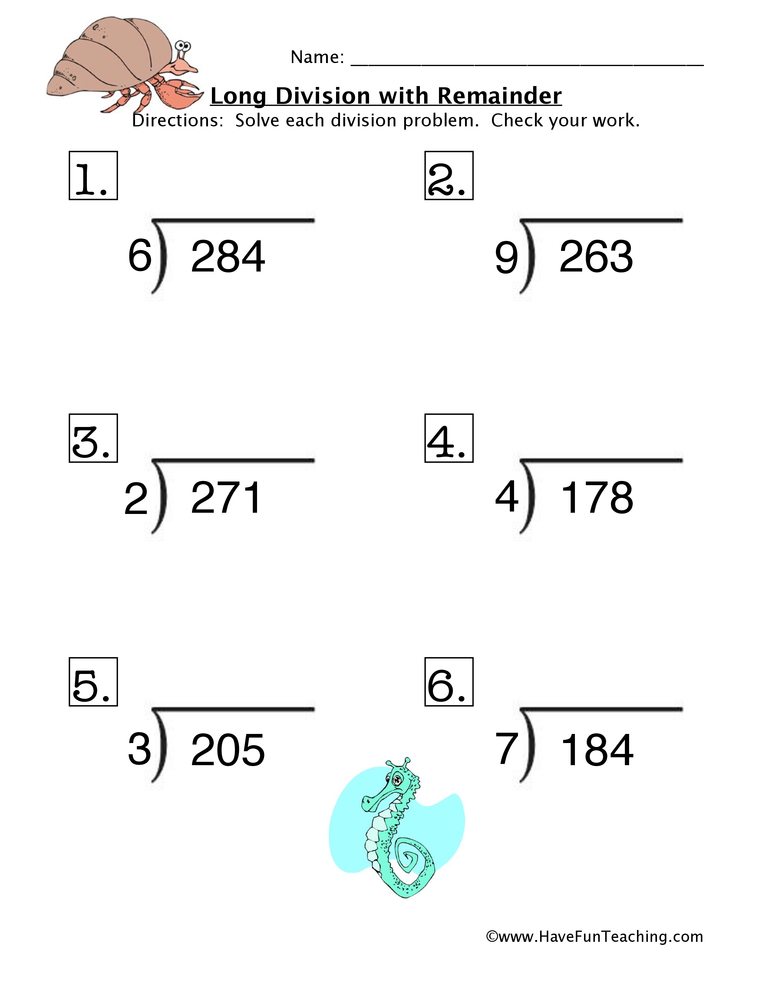
Long Division with Remainders Worksheet
A farm-stand themed long division with remainders worksheet where 4th graders divide three-digit numbers by one-digit divisors and tell what is left over. Answer key included for fast, no-prep division practice.
$6.97
Or free with a membership — members pay $3.33/mo for all 10,000+ resources. See plans
Want this one free?
Tell us where to send it and it’s yours — no card, no catch.
One free resource per teacher. We’ll also send free teaching ideas each week — unsubscribe anytime.
Teaching is easier with a membership
Unlimited printables, games & videos for PreK–6th — for your classroom or homeschool. Cancel anytime.
Start your 3-day free trial$0 today · cancel anytime · Instant access to 10,000+ resources
About this resource
Description
Long division with remainders is the step where fourth graders put place value, multiplication facts, and subtraction together into one steady routine. This long division with remainders worksheet gives students a clear, repeatable way to divide a three-digit number by a one-digit divisor and to record what is left over as a remainder. Instead of guessing, students work one place-value column at a time — divide, multiply, subtract, bring down — and finish by writing the quotient and the remainder (R) exactly the way their classwork and state assessments will ask for it.
This 4th grade division worksheet is built for independent practice. Part A gives six long division problems with a generous work space under each one, so students can show every step without crowding their digits. Part B moves the same skill into the real world with two word problems: one asks how many bags of corn a farm stand can fill and how many ears are left over, and the other asks students to judge whether another student’s answer is correct and explain how they know. Print it for morning work, a math center, homework, or a quick check before a unit test.
What’s Included
- 1 print-ready PDF worksheet
- Answer key
- 6 long division problems with three-digit dividends and one-digit divisors
- 2 remainder word problems, including a justify-your-thinking question
This long division with remainders worksheet helps kids in three ways. First, the fixed layout trains the divide-multiply-subtract-bring-down routine until it becomes automatic, which is what frees up thinking space for harder problems later. Second, every problem ends in a remainder, so students stop expecting a tidy answer and learn to report exactly what is left over. Third, the word problems ask students to interpret that remainder in context — five leftover ears of corn is a real answer, not a mistake — and to defend a solution in writing.
Teachers and parents can extend the practice easily. Roll two dice to build a dividend and a divisor, then race to solve it. Use counters or snap cubes to share a pile into equal groups and say the leftovers out loud. Ask students to invent a story for a problem like 93 ÷ 5 so the remainder has to mean something real. Skip-counting practice by fours, sixes, and eights also speeds up the estimation step inside every long division problem.
Related Resources
What teachers say
Reviews
You must be logged in to post a review.
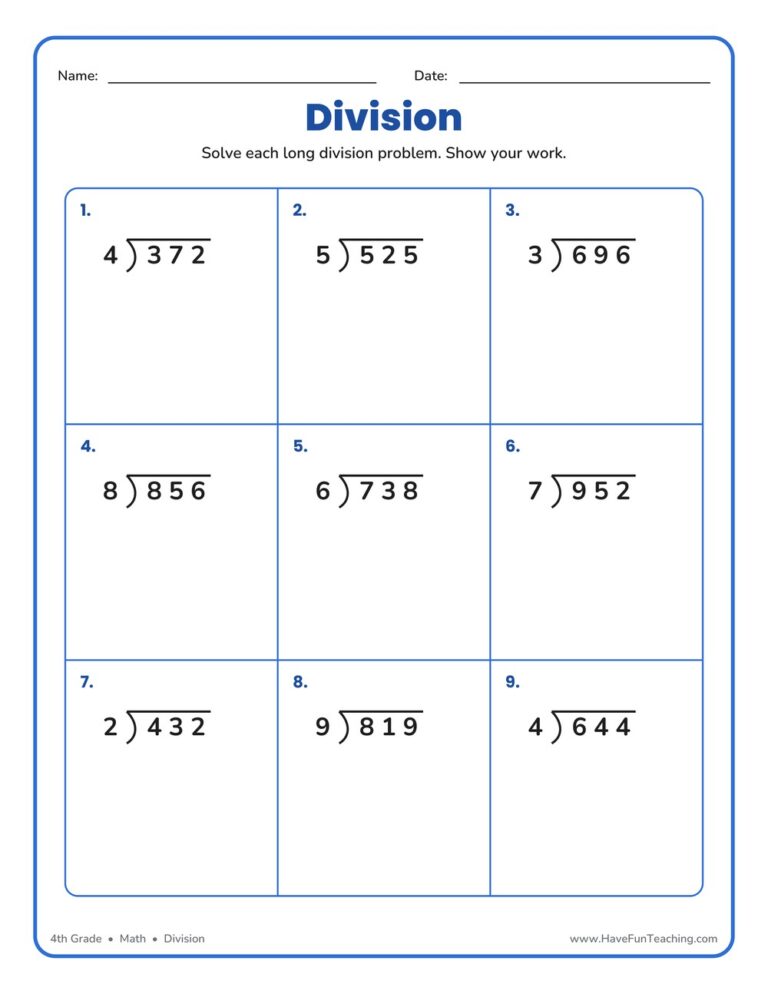
A 4th grade long division worksheet with nine three-digit-by-one-digit problems and roomy space to show each step. Includes a complete answer key for quick, no-prep division practice at home or school.
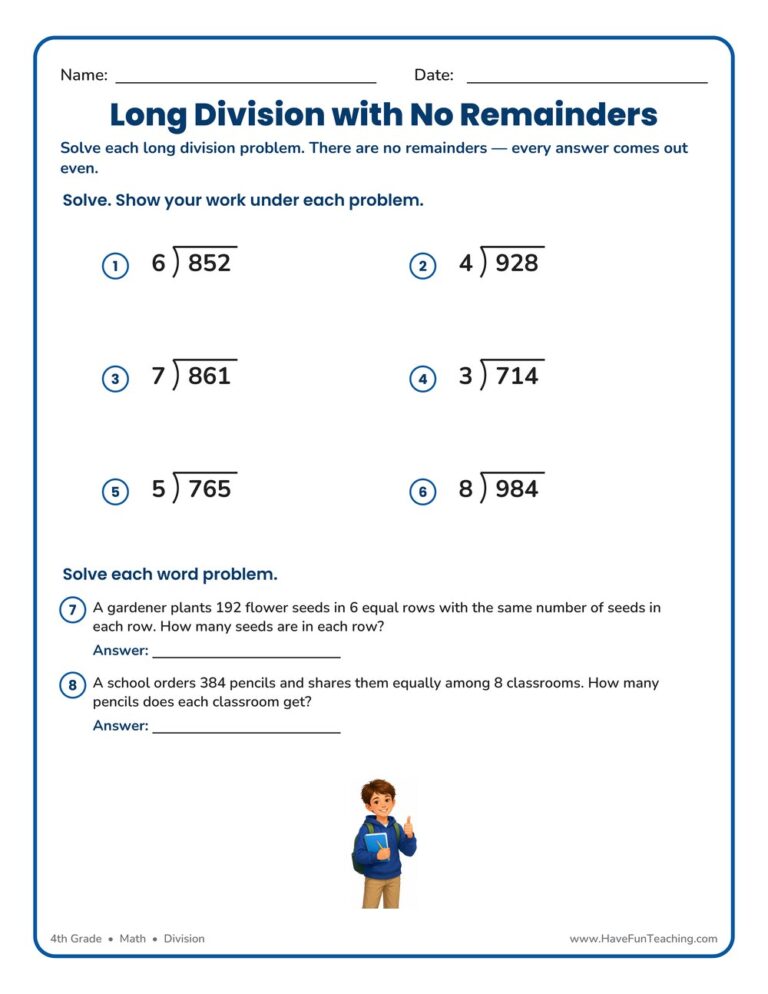
A 4th grade long division no remainders worksheet with six step-by-step problems and two division word problems. Includes an answer key — clean, no-prep practice for mastering the long division algorithm.
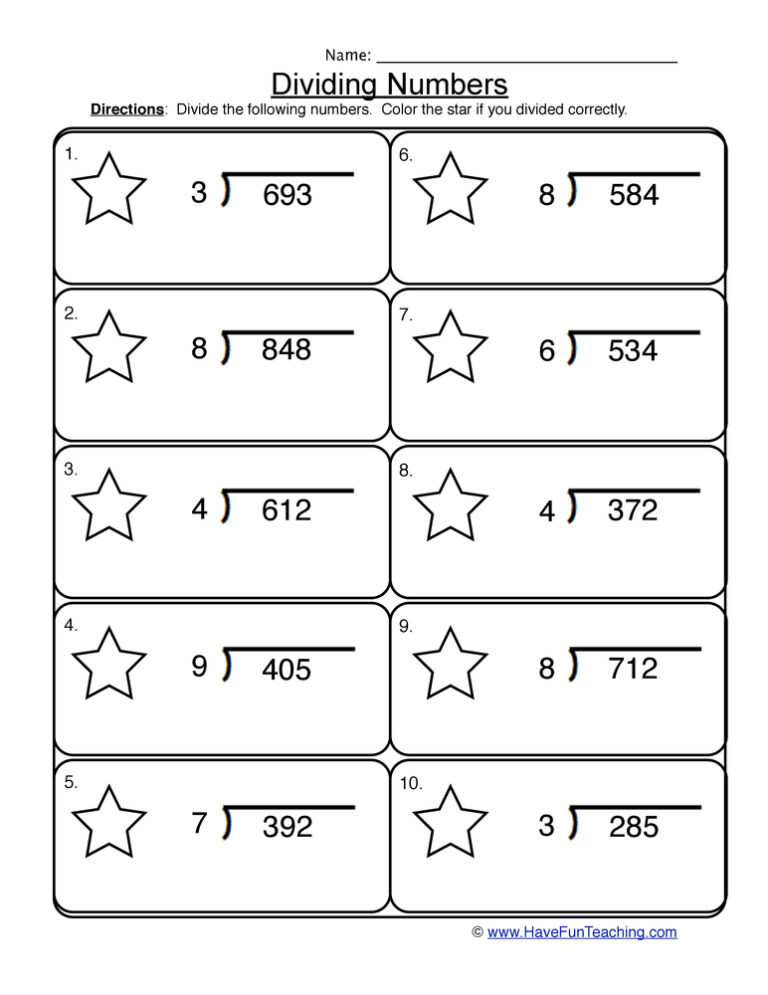
This Dividing 1 into 3 Digit Worksheet gives 4th Grade students six long division problems plus two word problems, with an answer key included, so dividing three digit numbers finally clicks.
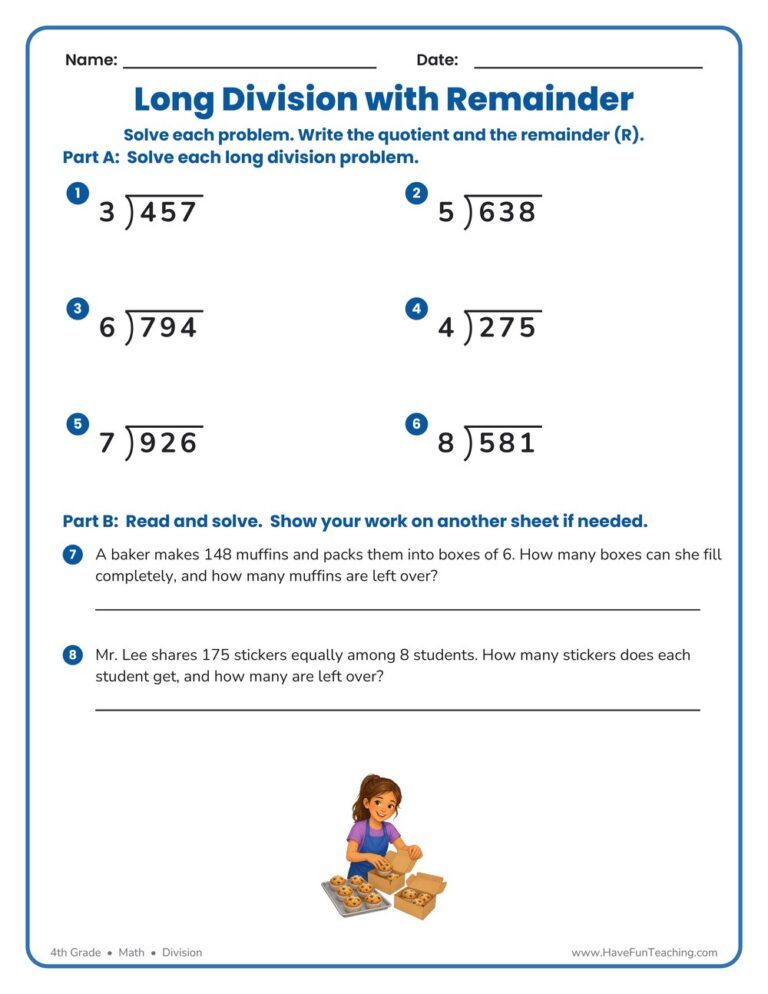
This long division with remainder worksheet gives 4th grade students six long division problems plus two word problems, with an answer key included to make practice simple and build real division confidence.
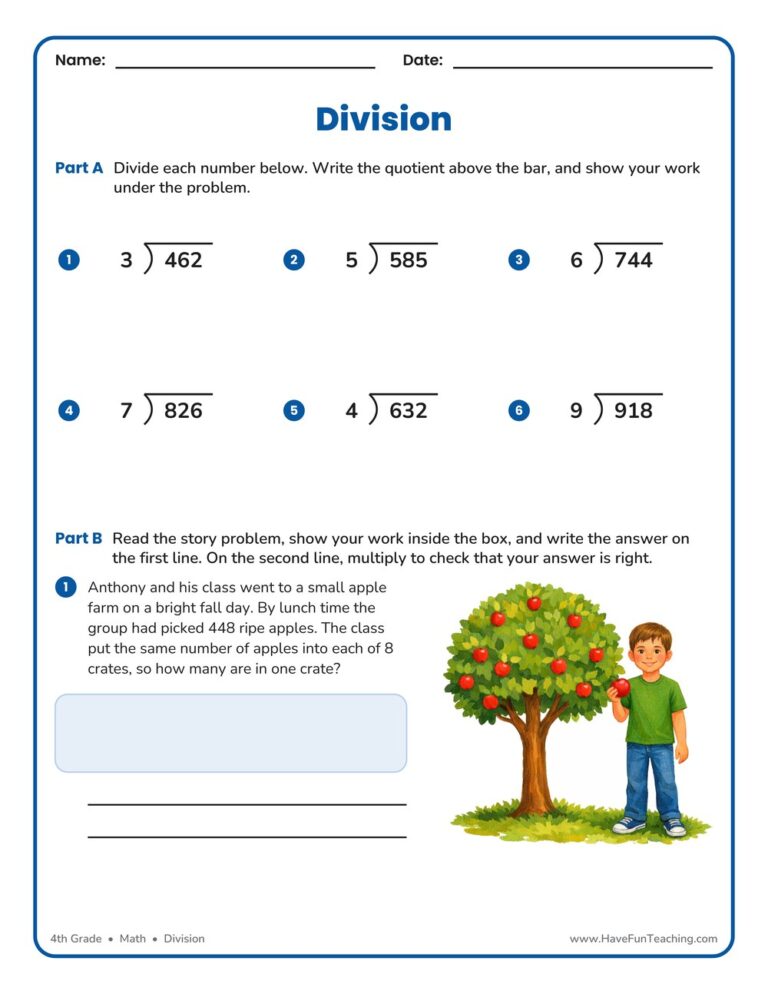
This One Digit Division Worksheet has 4th Grade students divide three-digit numbers by a one-digit divisor using long division, then solve an apple-farm story problem. Answer key included, so every step is easy to check.

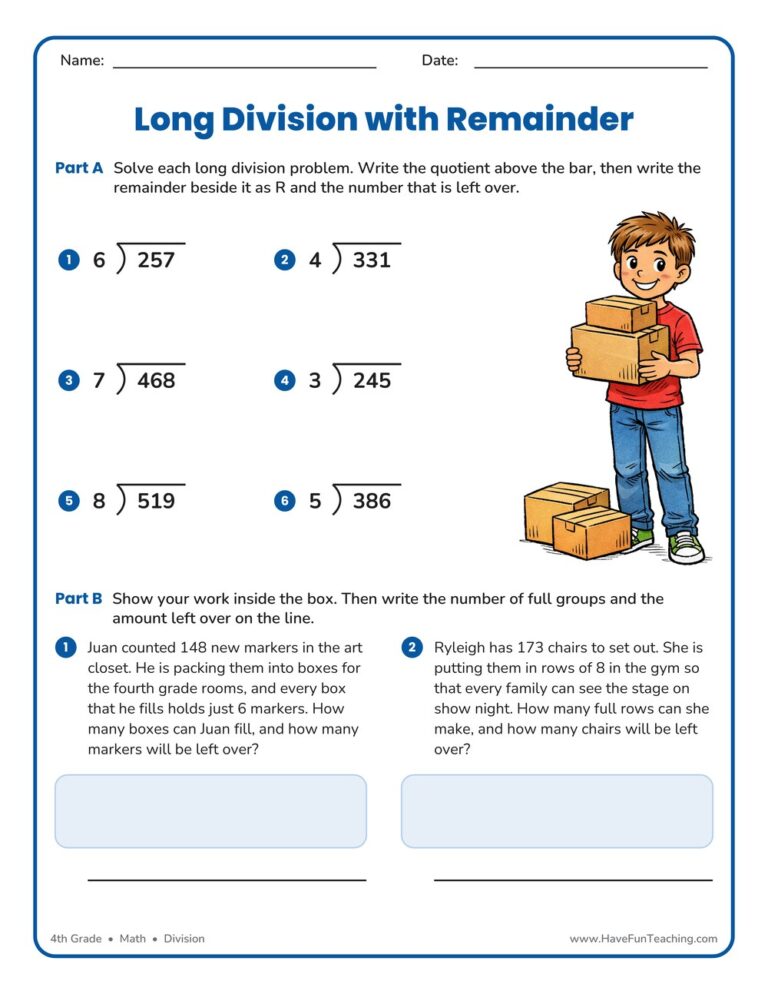
This long division problems with remainders worksheet gives 4th graders six three-digit long division problems and two story problems, with an answer key included, so leftover amounts finally make sense.
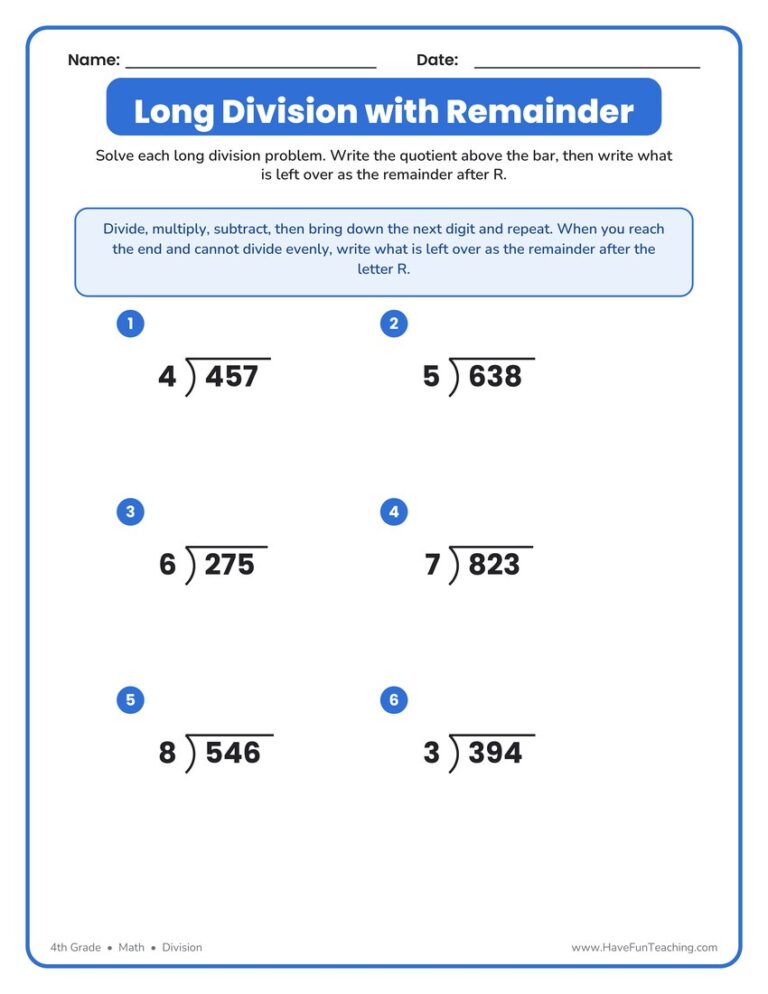
A 4th grade long division remainder worksheet with six three-digit problems that build confident, step-by-step dividing. Includes a complete answer key for quick, no-prep division practice at home or in class.
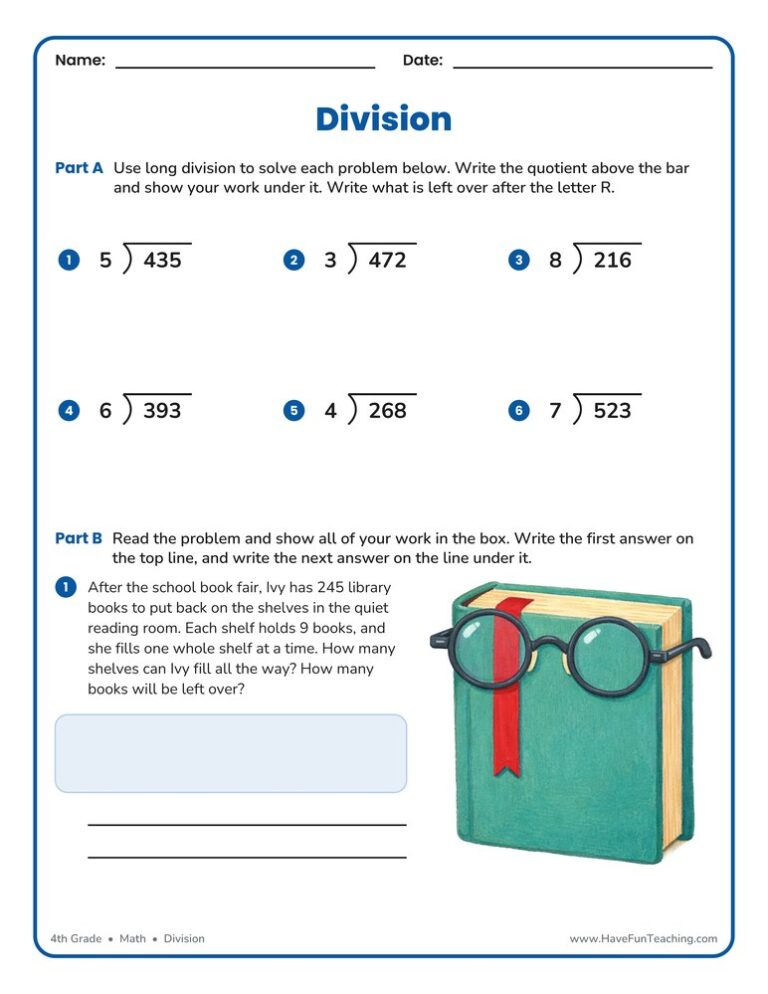
This one digit divisor division worksheet gives 4th graders six long division problems and a library word problem that ends in a remainder. An answer key is included, so checking work takes seconds.
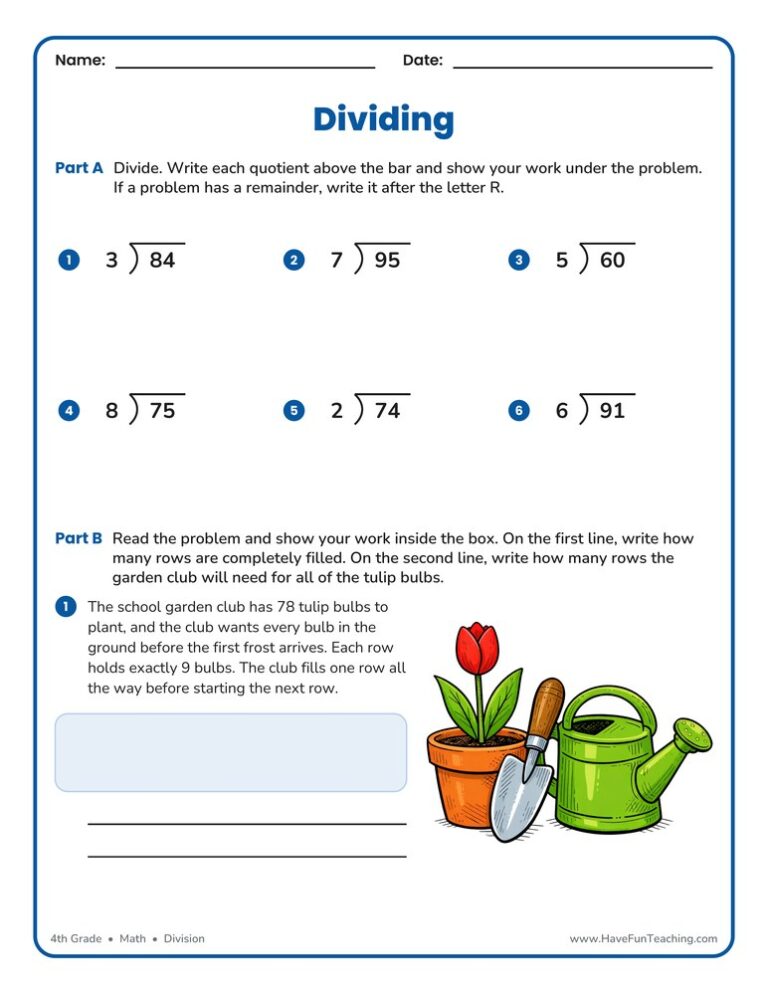
This Solving Dividing 1 into 2 Digit Worksheet gives 4th graders six long-division problems and a word problem with remainders. An answer key is included, so division practice takes no prep.
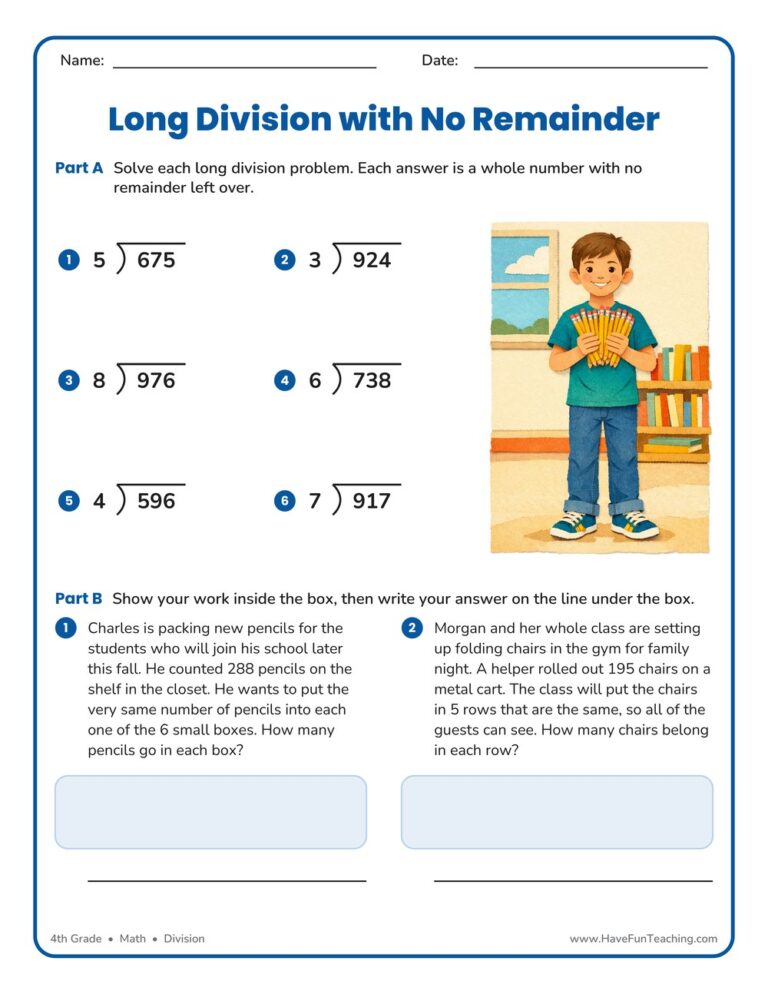
A 4th grade long division no remainder problems worksheet with six standard-notation problems and two school word problems. Answer key included, so students can master the steps before remainders.
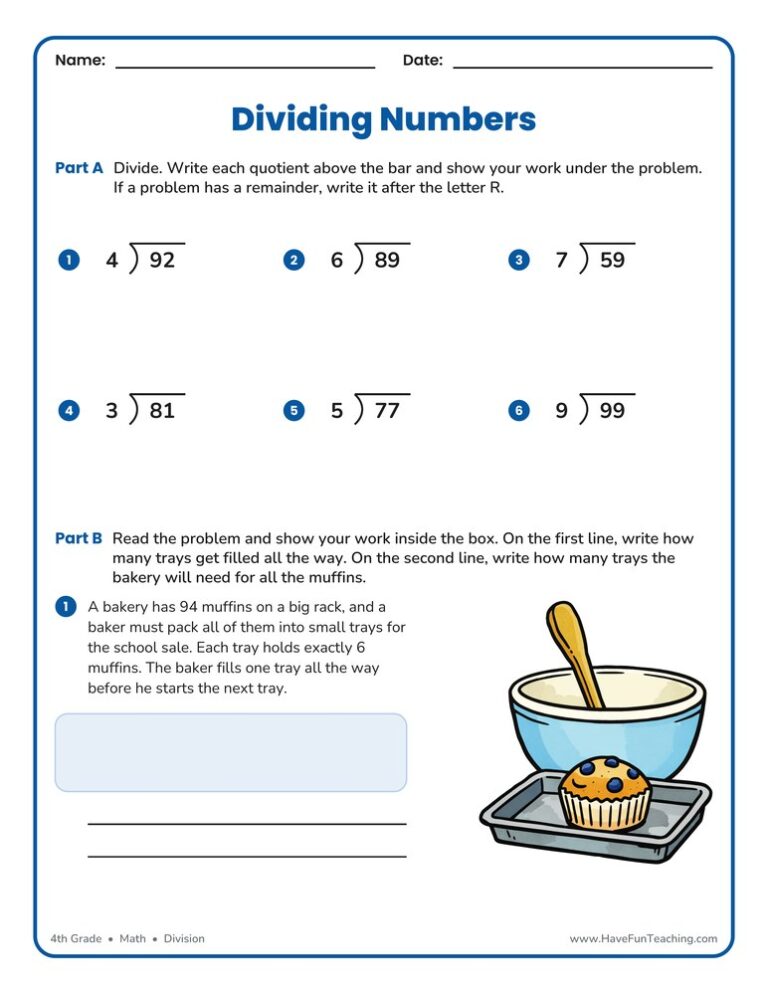
This dividing 1 into 2 digit worksheet gives 4th grade students six long division problems, three of them with remainders, and a word problem. An answer key is included, so division practice is ready to print.

Reviews
There are no reviews yet