
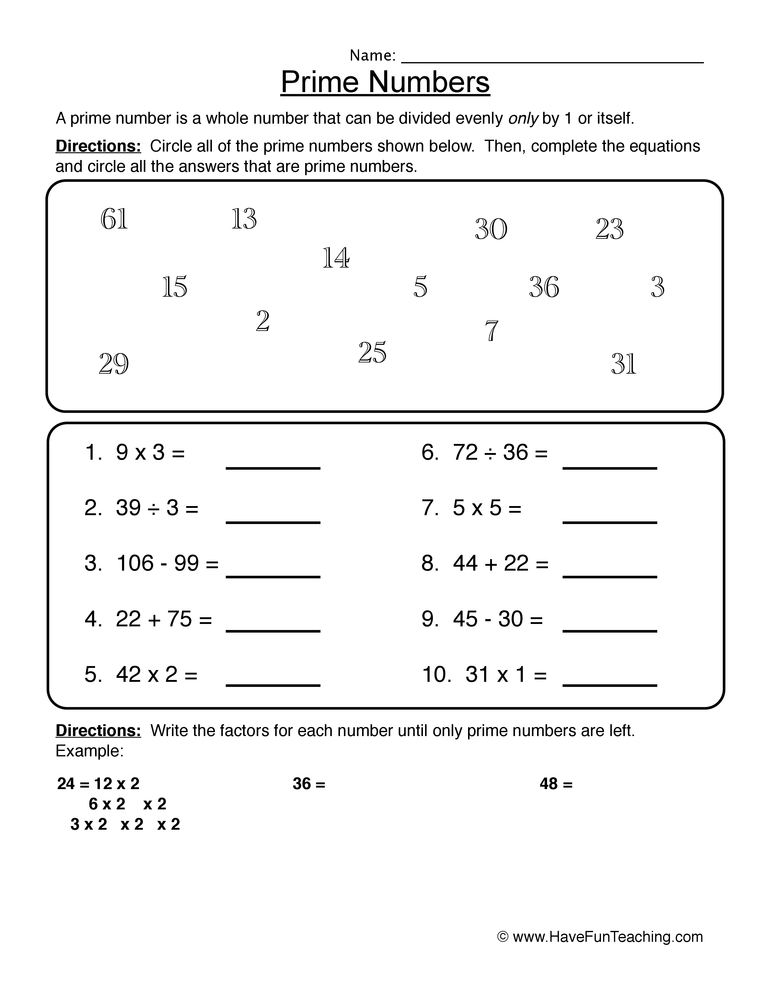
Prime Numbers Worksheet
This Prime Numbers Worksheet helps 4th graders identify prime and composite numbers by listing every factor and explaining their reasoning in a word problem. An answer key is included, so practice is fast to assign and easy to check.
$6.97
Or free with a membership — members pay $3.33/mo for all 10,000+ resources. See plans
Want this one free?
Tell us where to send it and it’s yours — no card, no catch.
One free resource per teacher. We’ll also send free teaching ideas each week — unsubscribe anytime.
Teaching is easier with a membership
Unlimited printables, games & videos for PreK–6th — for your classroom or homeschool. Cancel anytime.
Start your 3-day free trial$0 today · cancel anytime · Instant access to 10,000+ resources
About this resource
Description
A prime number is a whole number greater than 1 that has exactly two factors: 1 and itself. Every other whole number is composite, which means it can be built by multiplying smaller factors together. Learning to tell the two apart is a core fourth grade math standard, and it is the foundation for prime factorization, equivalent fractions, and finding common denominators later on. This prime numbers worksheet gives students focused practice at recognizing primes and proving their thinking with factor lists instead of guesswork.
This prime and composite numbers worksheet moves students through three connected steps on a single page. In Part A, they circle every prime number in a grid of twelve two-digit numbers, including tricky composites like 51, 87, and 91 that look prime at first glance. In Part B, they list all the factors of a number in order and then fill in a bubble to label it prime or composite. In Part C, they solve a short word problem about planting seeds in equal rows and explain their answer using factors. Use it as independent practice, a math center task, homework, or a quick check before a unit test.
What’s Included
- 1 print-ready PDF worksheet
- Answer key
- 12 prime or composite identification items, 3 list-all-the-factors rows with prime and composite bubbles, and 1 written-explanation word problem
There are three reasons this prime numbers worksheet helps students master the skill. First, it asks for every factor rather than a yes-or-no answer, so students build the divisibility habits that make the definition stick. Second, the numbers were chosen on purpose: 51, 87, and 91 catch the common mistake of assuming that any odd number must be prime. Third, the closing word problem asks for a written explanation, which turns a recall task into reasoning that transfers directly to prime factorization and greatest common factor work.
Teachers and parents can extend the lesson in simple ways. Try a Sieve of Eratosthenes on a hundreds chart and let students color the multiples until only the primes remain. Build arrays with counters or square tiles so students discover that a prime quantity only ever forms a single row. Play a quick prime-or-composite clap game with numbers under 50, or challenge students to find every prime between 1 and 100 in a timed sprint. Factor rainbows drawn on a whiteboard also make the pairs visible.
Related Resources
What teachers say
Reviews
You must be logged in to post a review.
Using the Counting Songs (Classic Video Collection), students practice skip counting by all of the numbers by singing and counting along to these thirteen videos.
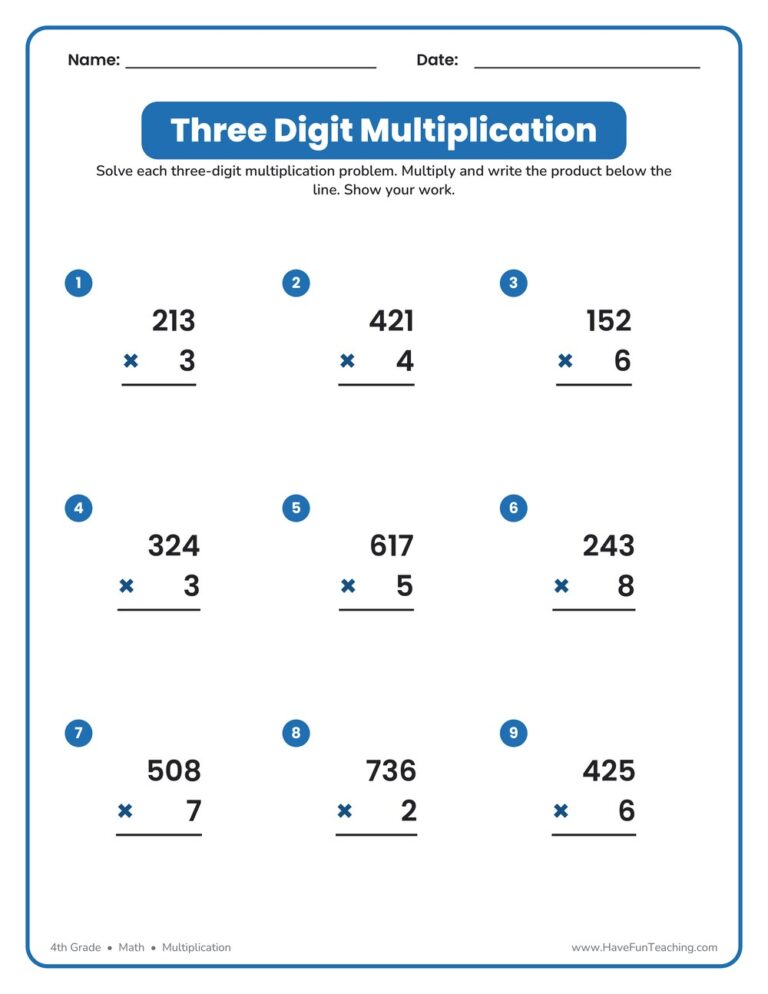
Build multiplication fluency with this Three Digit Multiplication Worksheet for 4th grade. Students multiply three-digit numbers by one digit across nine column problems, with a full answer key included for quick, no-prep practice.
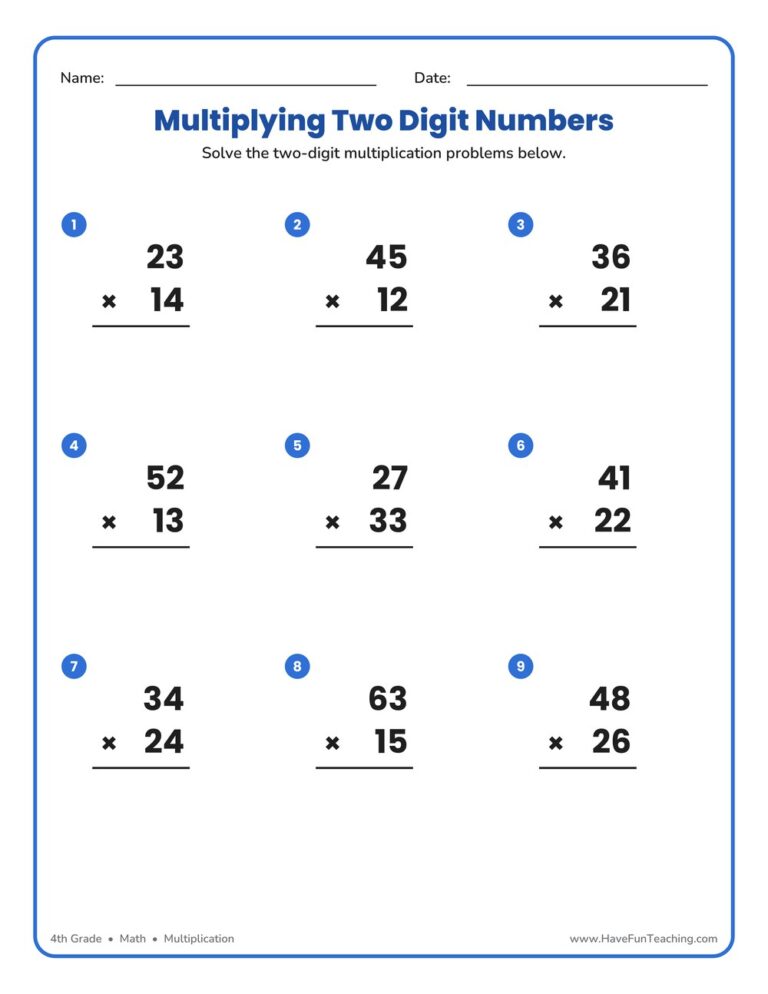
This Two Digit Numbers Multiplication Worksheet gives 4th graders nine vertical two-digit by two-digit problems to solve. Includes a complete answer key for quick, no-prep multiplication practice at home or in the classroom.

Using the Counting By Ones Song (Original Music Video), students practice counting by 1s by singing and counting along to this fun and engaging video!

Using the Counting By Fours Song (Original Music Video), students practice skip counting by 4s by singing and counting along to this fun and engaging video!

Using the Counting By Threes Song (Original Music Video), students practice skip counting by 3s by singing and counting along to this fun and engaging video!

Using the Counting By Twos Song (Original Music Video), students practice skip counting by 2s by singing and counting along to this fun and engaging video!

Using the Counting Down From Twenty Song (Original Music Video), students practice counting down from 20 by singing and counting along to this fun and engaging video!

Using the Counting By Sixes Song (Original Music Video), students practice skip counting by 6s by singing and counting along to this fun and engaging video!

Using the Counting By Tens Song (Original Music Video), students practice skip counting by 10s by singing and counting along to this fun and engaging video!

This two digit multiplication worksheet gives 4th graders six stacked problems, a real-world word problem, and an error to explain. Answer key included, so students can check their own thinking.

Using the Counting By Eights Song (Original Music Video), students practice skip counting by 8s by singing and counting along to this fun and engaging video!

Reviews
There are no reviews yet