Skip to content
Start My 3 Free Days $0 today · cancel anytime

Prime Numbers Resources

8 prime numbers resources: 3 test prep, 3 assessments, 3 workbooks and more. How teachers use these

Prime Numbers Resources

8 prime numbers resources: 3 test prep, 3 assessments, 3 workbooks and more. How teachers use these

Worksheet
Worksheet5th GradePrime Factorization Worksheet

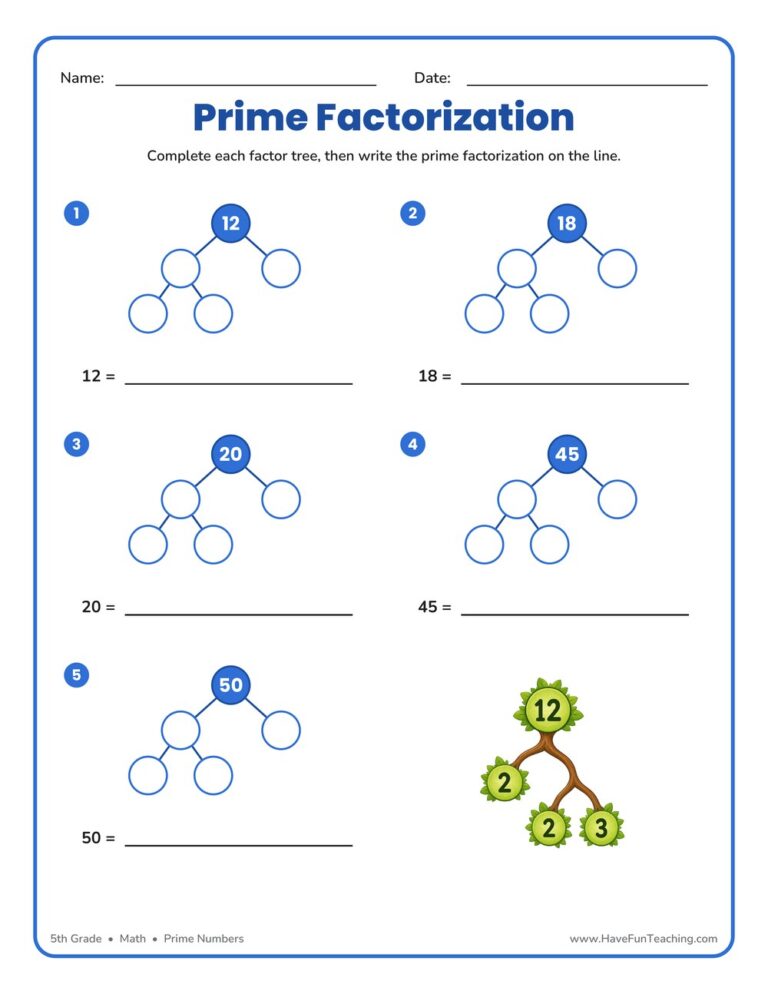
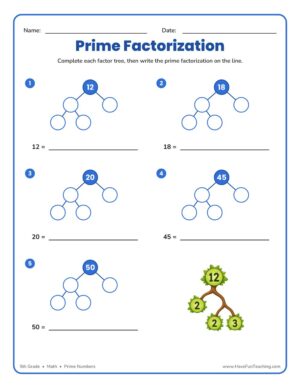
This prime factorization worksheet lets 5th graders complete five factor trees and write each number's prime factorization. A full answer key is included, making it perfect for no-prep practice, homework, or math centers.

Workbook
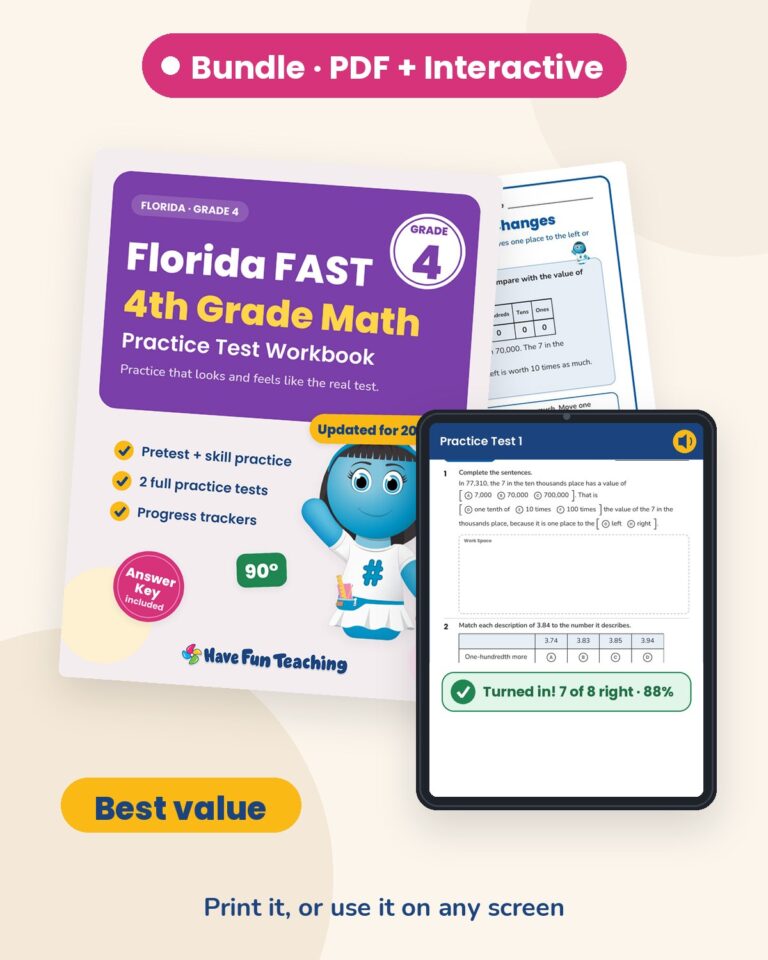
Workbook4th GradeFlorida FAST 4th Grade Math Practice Test Workbook

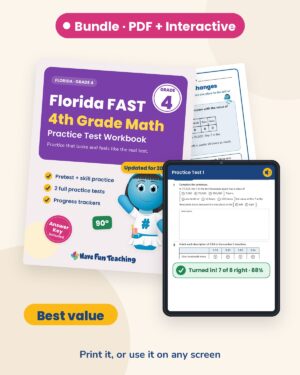
A Florida FAST 4th grade math practice test workbook for teachers, with a pretest, skill practice for all 39 benchmarks, mixed review and 2 full-length practice tests. Answer key included, so test prep is ready to go.

Worksheet
Worksheet4th GradePrime Numbers Worksheet

This Prime Numbers Worksheet helps 4th graders identify prime and composite numbers by listing every factor and explaining their reasoning in a word problem. An answer key is included, so practice is fast to assign and easy to check.

Workbook
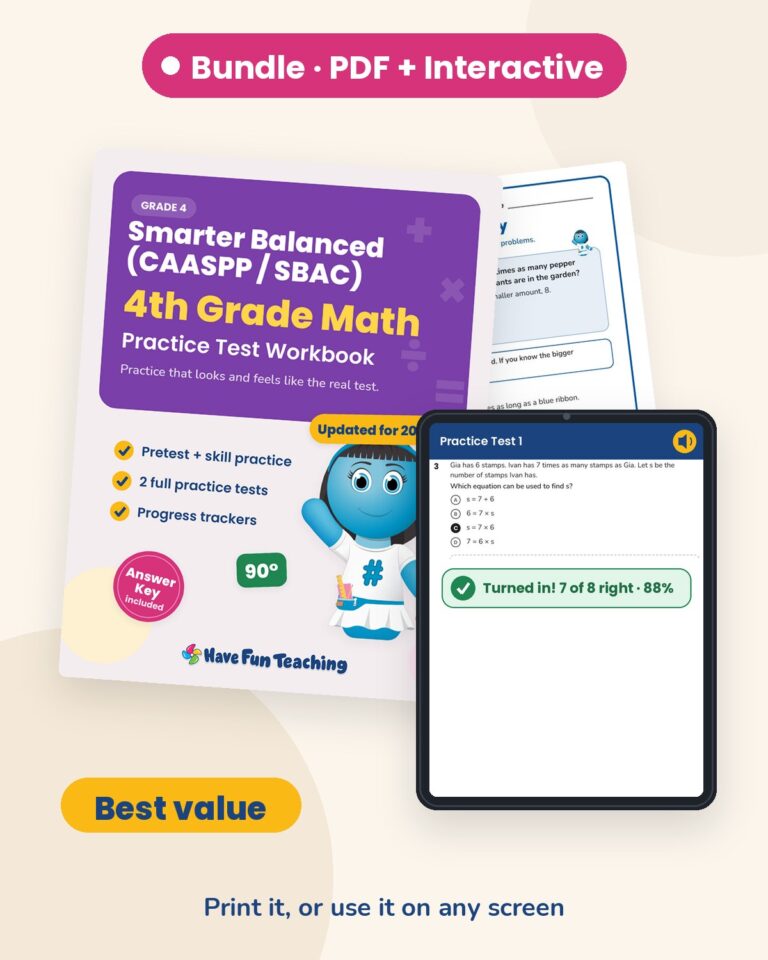
Workbook4th GradeSmarter Balanced (CAASPP / SBAC) 4th Grade Math Practice Test Workbook

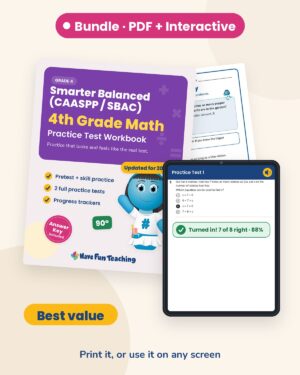
A Smarter Balanced (CAASPP / SBAC) 4th grade math practice test workbook for teachers, with a pretest, skill practice for all 38 standards, mixed review and 2 full-length practice tests. Answer key included, so test prep is ready to go.

Workbook
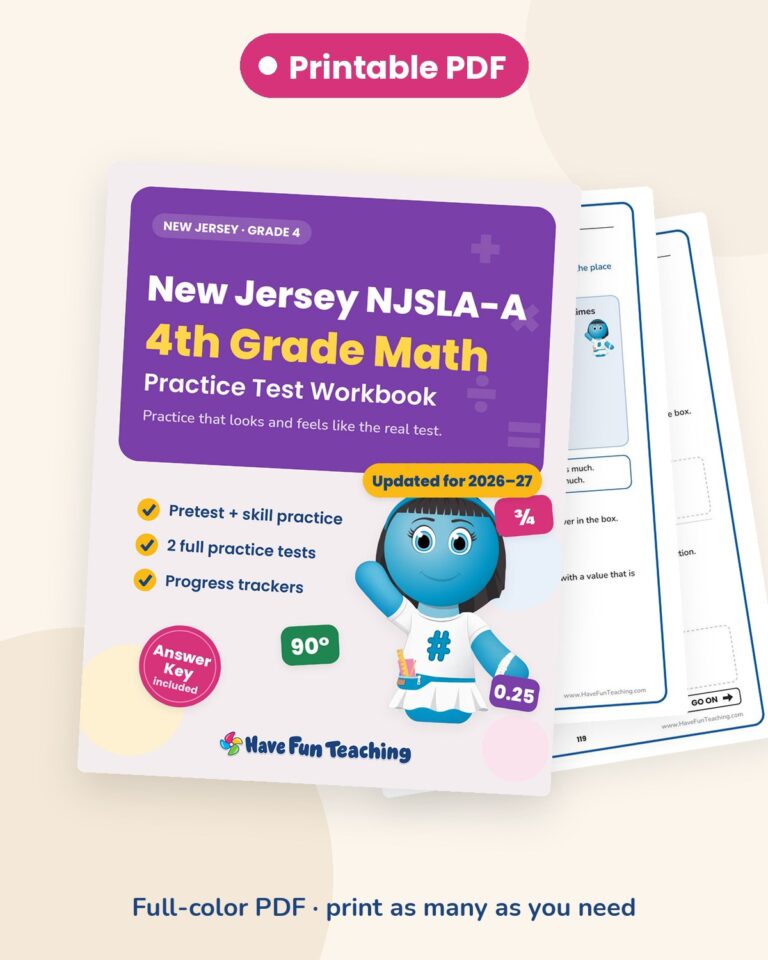
Workbook4th GradeNew Jersey NJSLA-A 4th Grade Math Practice Test Workbook

A NJSLA-A 4th grade math practice test workbook for teachers, with a pretest, skill practice for all 30 standards, mixed review and 2 full-length practice tests. Answer key included, so test prep is ready to go.

Common Core Lesson
Common Core Lesson4th Grade4.OA.4 Fourth Grade Common Core Lesson

Using this 4.OA.4 Fourth Grade Common Core lesson students determine whether a given whole number in the range 1–100 is prime or composite.

Activity
Activity4th GradePlanet Prime vs Planet Composite Activity

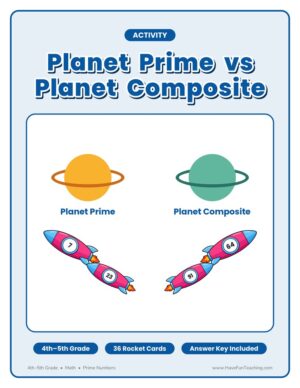
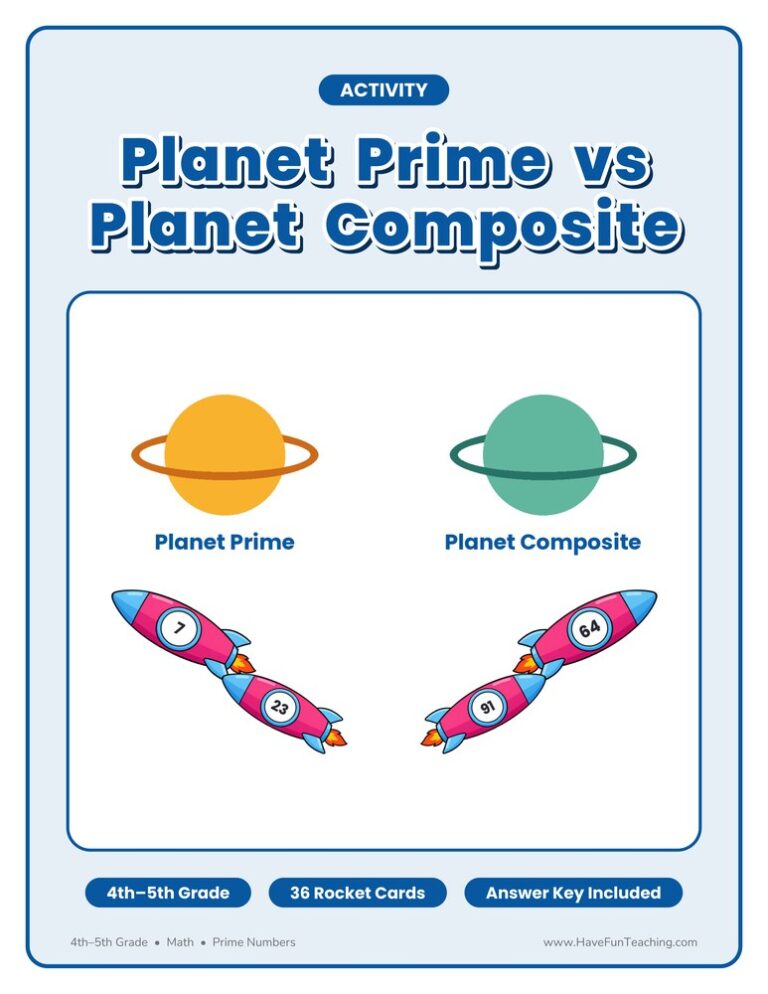
This planet prime vs planet composite activity is a number-card sorting game for 4th and 5th grade, with a recording sheet and factor pair practice page. Answer key included for quick checking.

From our teachers' playbook

Numbers that refuse to be split

What do kids learn about prime numbers?

A prime number has exactly two factors: 1 and itself. So 7 = 1 × 7 is prime, but 12 = 3 × 4 is composite because it has more factors. Students usually meet primes in 4th grade, finding factor pairs and sorting numbers up to 100 into prime and composite. Later they use prime factorization to break numbers into prime building blocks, like 12 = 2 × 2 × 3. The click comes when kids realize 1 isn't prime at all, and 2 is the only even prime!

Our favorite ways to teach prime numbers

Primes make sense when kids can see factors, not just memorize a list. Here's what works for us.

Make rectangles with tiles

Give kids 12 square tiles and ask how many different rectangles they can build. Then try 7. Seven only makes one long row! Numbers that make just one rectangle are prime, and kids discover it with their own hands.

Why it works: kids understand an idea best when they touch it, then draw it, then write it, the order the U.S. Department of Education recommends for elementary math.

Prime Numbers WorksheetTry it withPrime Numbers WorksheetWorksheetsOpen it →
Prime or composite? Prove it!

Write a number on the board and have partners decide prime or composite, then convince the class with a factor pair. Pick sneaky ones like 51 or 91 so they have to check carefully.

Why it works: using clear, consistent math words out loud is one of the U.S. Department of Education's recommendations for elementary math.

Prime Factorization WorksheetTry it withPrime Factorization WorksheetWorksheetsOpen it →

Sing the primes

A short song gets the first few primes into kids' heads fast. Play it as a warm-up all week, then pause it and have the class shout the next prime.

Why it works: words set to a repeating melody are easier to recall than the same words spoken (Wallace, 1994).

Prime Numbers SongTry it withPrime Numbers SongSongsOpen it →

Questions parents and teachers ask about prime numbers

What is a prime number in simple terms?

A prime number is a whole number greater than 1 that can only be divided evenly by 1 and itself. Examples are 2, 3, 5, 7, 11 and 13.

Is 1 a prime number?

No. A prime must have exactly two factors, and 1 has only one factor, itself. So 1 is neither prime nor composite.

What grade learns prime numbers?

Most students learn prime and composite numbers in 4th grade, working with numbers up to 100. Prime factorization usually follows in 5th or 6th grade.

How can kids tell if a number is prime?

Have them try dividing by small primes: 2, 3, 5 and 7. If none of those divides evenly into a number under 100, it's prime. Even numbers bigger than 2 are never prime.

Keep exploring