
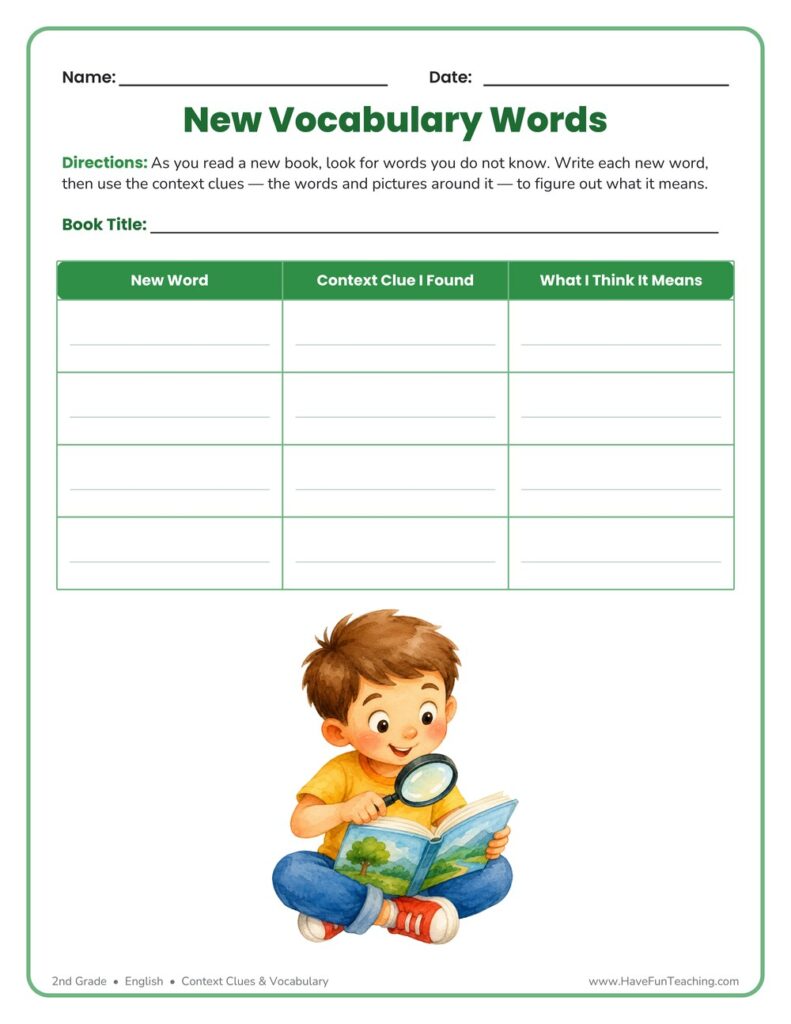
New Vocabulary Words Worksheet
This New Vocabulary Words Worksheet gives 2nd graders a simple graphic organizer for collecting unfamiliar words and using context clues to predict their meanings — a flexible, no-prep way to build independent vocabulary skills during any book.
$6.97
Or free with a membership — members pay $3.33/mo for all 10,000+ resources. See plans
Want this one free?
Tell us where to send it and it’s yours — no card, no catch.
One free resource per teacher. We’ll also send free teaching ideas each week — unsubscribe anytime.
Teaching is easier with a membership
Unlimited printables, games & videos for PreK–6th — for your classroom or homeschool. Cancel anytime.
Start your 3-day free trial$0 today · cancel anytime · Instant access to 10,000+ resources
About this resource
Description
Building strong readers starts with helping children figure out unfamiliar words on their own, and the New Vocabulary Words Worksheet gives second graders a simple, repeatable way to do exactly that. As students read a new book, they collect the words they do not know and use context clues — the surrounding words and pictures — to predict what each word means. This new vocabulary words worksheet turns everyday reading into an active word-detective hunt that grows independent vocabulary skills.
This printable graphic organizer keeps the whole process on one clean page. Students write the book title at the top, then fill in a three-column chart: the new word they found, the context clue that helped them, and what they think the word means. Teachers can model it during a read-aloud or hand it out for independent reading time, making it a flexible 2nd grade context clues worksheet for centers, small groups, or take-home reading. Because children choose their own words from whatever they are reading, the sheet works with any story, all year long.
What’s Included
- 1 print-ready PDF worksheet
- A three-column context clues organizer (new word, context clue, and meaning)
- A book title line to record the story being read
There are three big reasons this new vocabulary words worksheet helps young readers grow. First, it teaches a transferable strategy: instead of skipping hard words, children learn to search the sentence and illustrations for meaning. Second, writing each word and its predicted meaning strengthens memory, so new vocabulary sticks. Third, the open format builds confidence and independence, because every student succeeds with words at their own reading level.
Teachers and parents can stretch the learning in playful ways. Turn word-hunting into a game by giving each child a “detective” magnifying glass and a point for every clue they find. Compare guesses with a dictionary to celebrate close predictions. Post favorite new words on a classroom or refrigerator word wall, use them in silly sentences at dinner, or challenge kids to teach a new word to a family member. The more children notice and use new words, the faster their vocabulary grows.
Related Resources
What teachers say
Reviews
You must be logged in to post a review.

This Using Non-Fiction Text Features Worksheet helps 2nd graders spot the title, subheadings, captions, bold words, and glossary on a real nonfiction page. Answer key included for quick, no-prep reading practice.
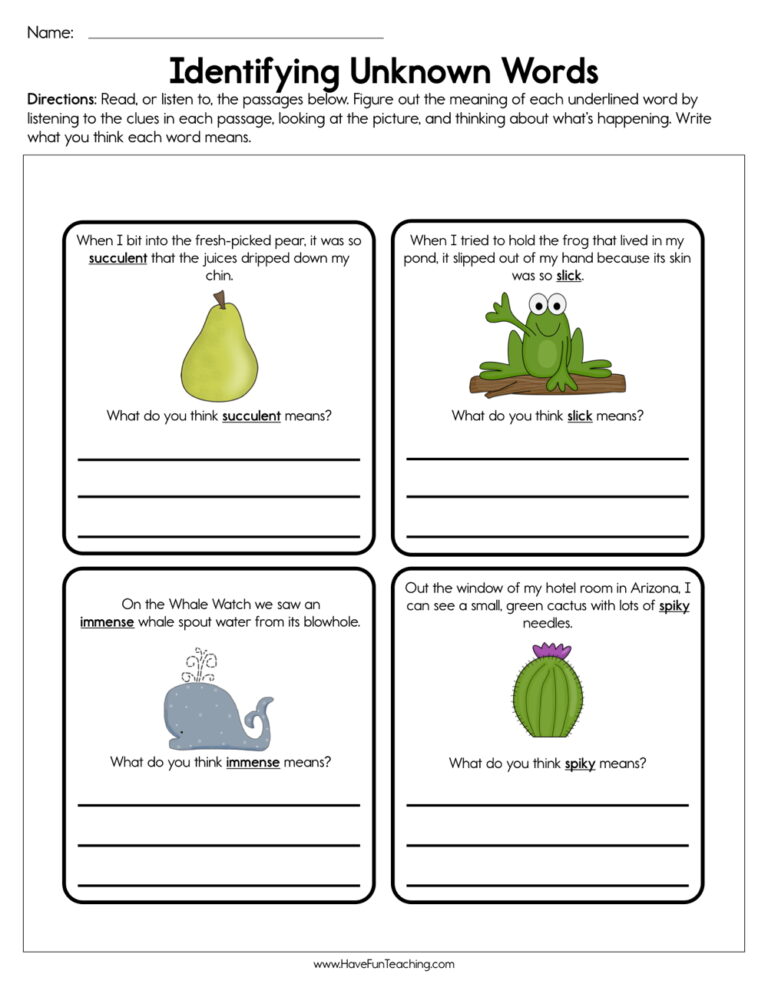
This Identifying Unknown Words Worksheet gives 2nd graders four illustrated passages and asks them to use context clues to choose what each underlined word means. Answer key included for fast, confident vocabulary practice.

This learning new words worksheet has 2nd graders read a short beach passage and use context clues to find the meaning of new words. An answer key is included, making it an easy way to build strong vocabulary habits.

The Using Figurative Language Worksheet gives 2nd graders four word banks and twelve sentences for choosing the strongest, most precise word. Includes an answer key for quick, no-prep vocabulary practice.

This informational text vocabulary worksheet gives 2nd grade students a short passage about how a seed grows, four bubble questions and one written response. An answer key is included.

This Images in Text Worksheet gives 2nd graders a short lighthouse passage with a full-width picture, then four questions on detail, text features, vocabulary and main idea. Answer key included.
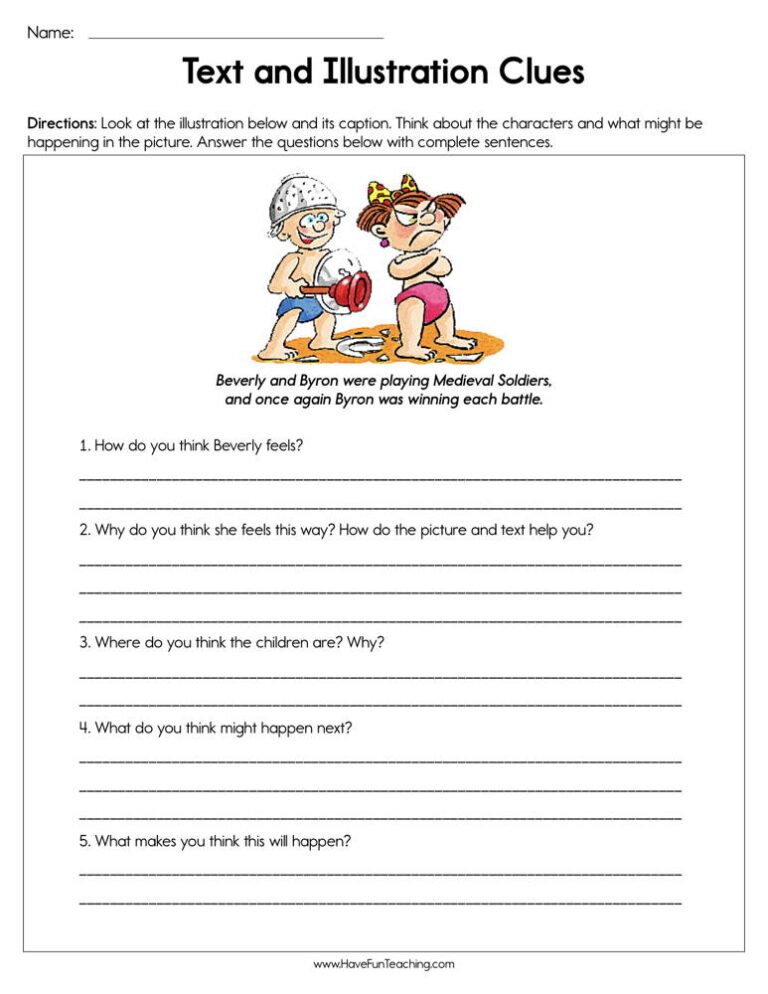
This Text and Illustration Clues Worksheet asks 2nd graders to read one picture and its caption together, then answer four questions with evidence. An answer key is included for quick checking.
Using Dictionary Dive Activity, students determine the meaning of unknown and multiple-meaning word and phrases choosing from a range of strategies.

Using Images to Understand the Information Worksheet, students explain how the illustrations contribute and clarify a text to build their understanding of what has been read.

This Using New Words From Books Activity helps studentsto use words and phrases acquired through conversations, reading and being read to, and responding to texts.

Using RI.2.4 Second Grade Common Core Lesson, students determine the meaning of words and phrases in a text relevant to a grade 2 topic or subject area.
Using Contributions to the Text Activity, students explain howthe information contributes to an understanding of the text in which itappears.




Reviews
There are no reviews yet