
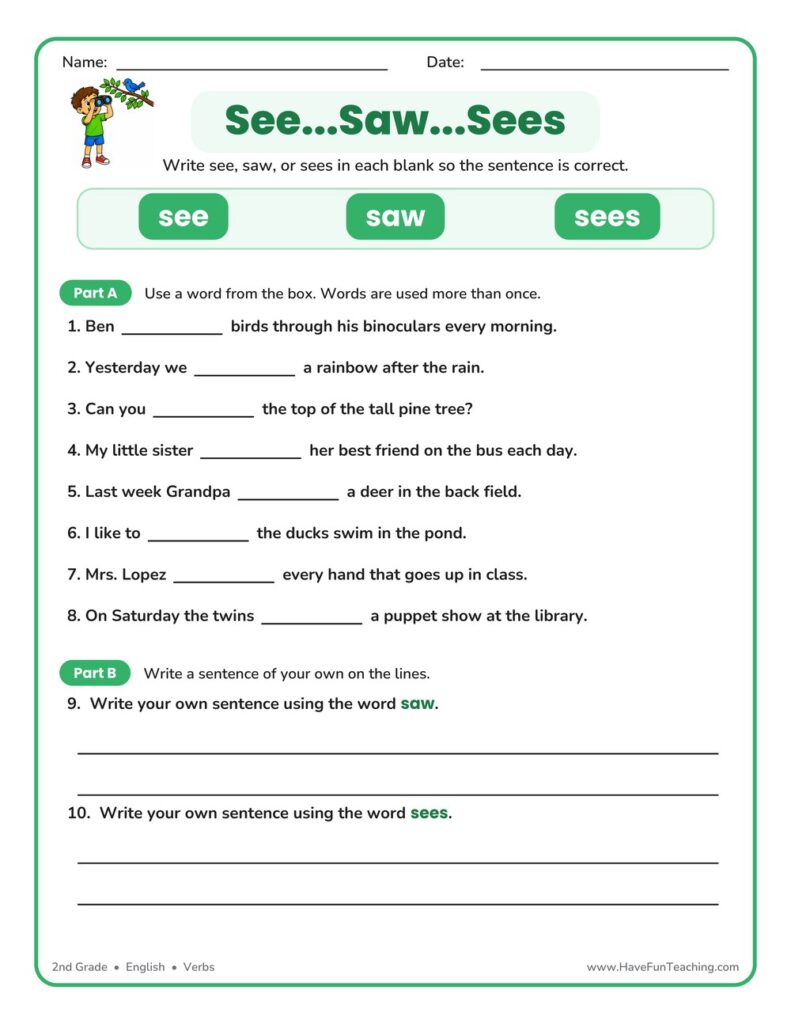
See Saw Sees Fill in Blank Worksheet
This See Saw Sees Fill in Blank Worksheet has 2nd graders choose see, saw, or sees for eight sentences, then write two of their own. An answer key is included for fast, no-prep verb practice.
$6.97
Or free with a membership — members pay $3.33/mo for all 10,000+ resources. See plans
Want this one free?
Tell us where to send it and it’s yours — no card, no catch.
One free resource per teacher. We’ll also send free teaching ideas each week — unsubscribe anytime.
Teaching is easier with a membership
Unlimited printables, games & videos for PreK–6th — for your classroom or homeschool. Cancel anytime.
Start your 3-day free trial$0 today · cancel anytime · Instant access to 10,000+ resources
About this resource
Description
Verbs change form depending on who is doing the action and when the action happens, and the verb see is one of the first irregular verbs children meet. Second graders need practice choosing between the base form see, the past tense saw, and the third-person singular sees. This See Saw Sees Fill in Blank Worksheet gives them eight clear sentences where only one of those three forms is correct, so every blank becomes a small decision about the subject and the time of the action.
This 2nd grade verbs worksheet is ready to print and use with no preparation. A word box at the top holds the three forms so students always know their choices, and the directions remind them that words are used more than once. In Part A, children read each sentence and write the correct form on the line. In Part B, they write two sentences of their own, one using saw and one using sees, which moves them from recognizing a correct form to producing one. A complete answer key is included, so you can check the page in seconds or let students correct their own work with a partner.
What’s Included
- 1 print-ready PDF worksheet
- Answer key
- 8 fill-in-the-blank sentences with a see / saw / sees word box
- 2 write-your-own-sentence prompts with lined writing space
There are three reasons this resource helps children lock in the skill. First, the sentences are varied on purpose — some need a past-tense verb, some need a singular subject verb, and some follow a helping word like can or to — so students cannot fall into a pattern and must read for meaning. Second, the See Saw Sees Fill in Blank Worksheet keeps the choices visible in a word box, which lowers the reading load and lets children spend their thinking on grammar. Third, the writing section asks for original sentences, which is where teachers can really see whether the rule has transferred.
Teachers and parents can stretch the lesson in easy ways. Say a sentence out loud and let children hold up one, two, or three fingers for see, saw, or sees. Play a quick sorting game with index cards labeled yesterday, every day, and he or she, then have students match sentence strips to the right card. Keep a class chart of other irregular verbs that change in the past tense, such as go and went or eat and ate, and add to it all year. Finish by asking children to read their own Part B sentences aloud so the class hears the forms used correctly.
Related Resources
What teachers say
Reviews
You must be logged in to post a review.
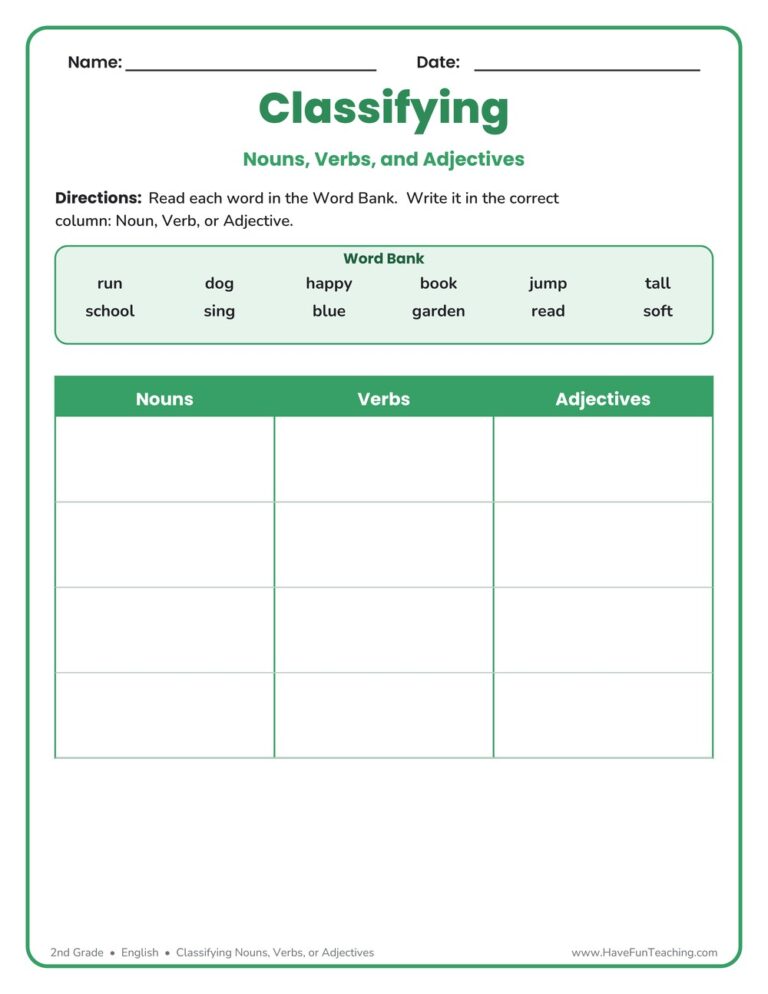
Sort twelve everyday words into nouns, verbs, and adjectives with this Classifying Nouns, Verbs, or Adjectives Worksheet for 2nd grade. Includes a complete answer key for quick, no-prep grammar practice.
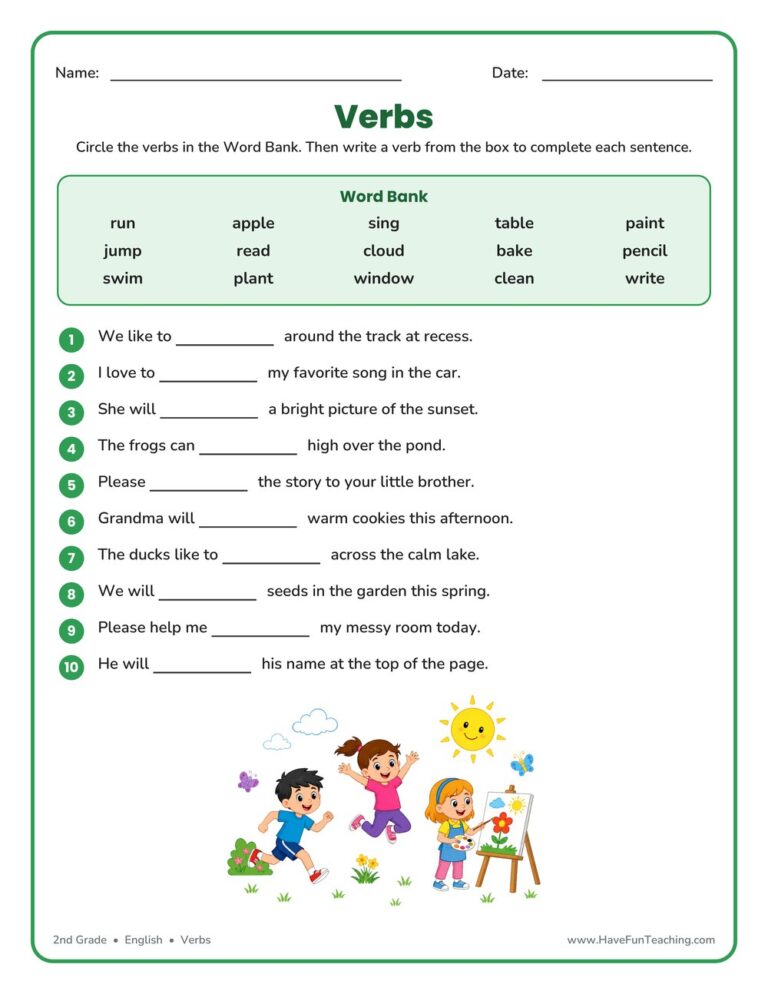
A 2nd grade fill in the blanks verb worksheet where students circle the verbs in a word bank and use them to complete ten sentences. Includes a complete answer key for quick, no-prep grammar practice.
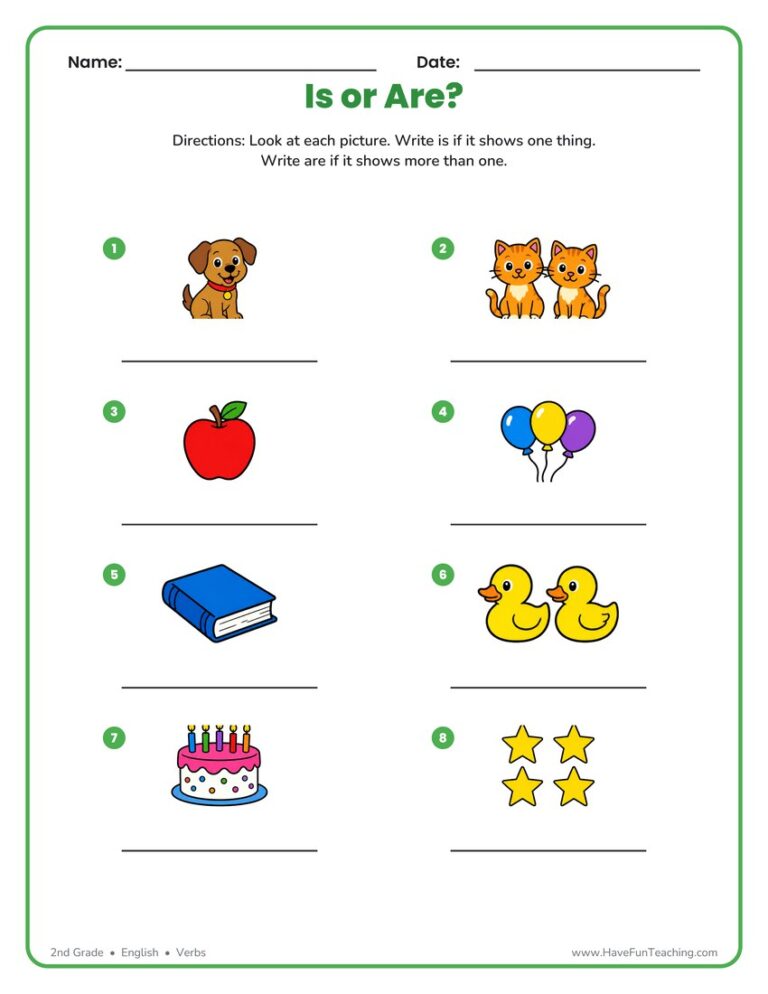
The Is Are Pictures Worksheet asks 2nd graders to write is or are for each picture, based on whether it shows one thing or many. Answer key included — perfect for quick, no-prep grammar practice.
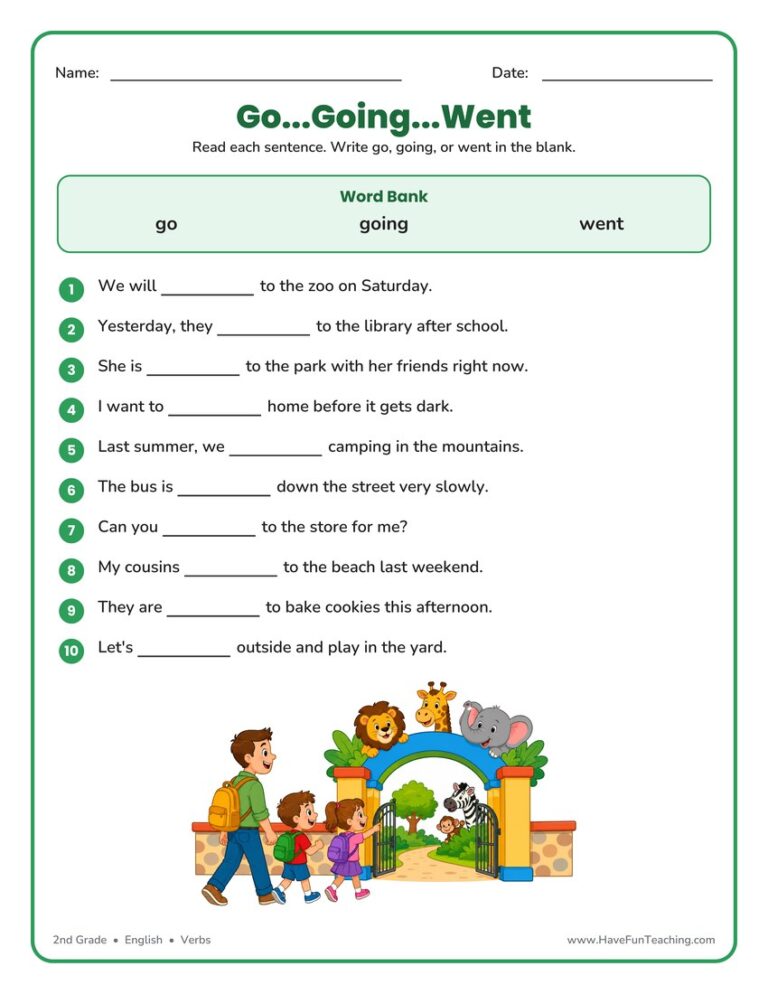
This second grade Go Going Went Fill in the Blank Worksheet has students choose go, going, or went to complete ten sentences using context clues. Includes an answer key for a quick, no-prep way to practice irregular verb forms.
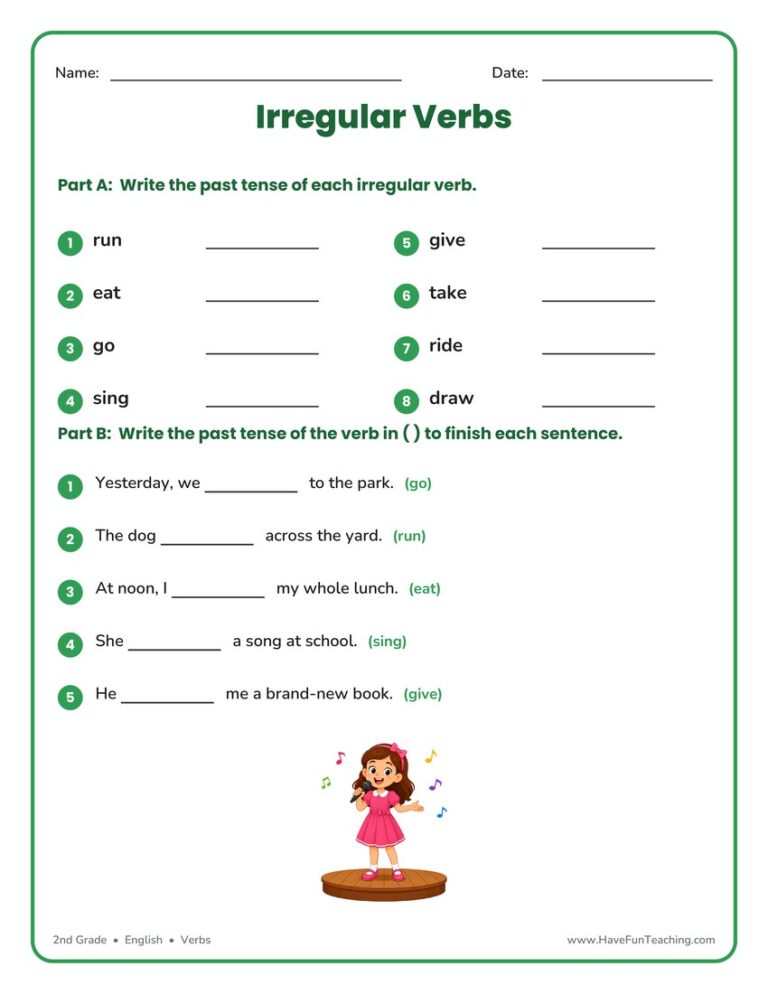
This Writing Irregular Verbs Worksheet gives 2nd graders hands-on practice changing common verbs into their correct past-tense forms. An answer key is included, making it perfect for quick, no-prep grammar review at home or school.
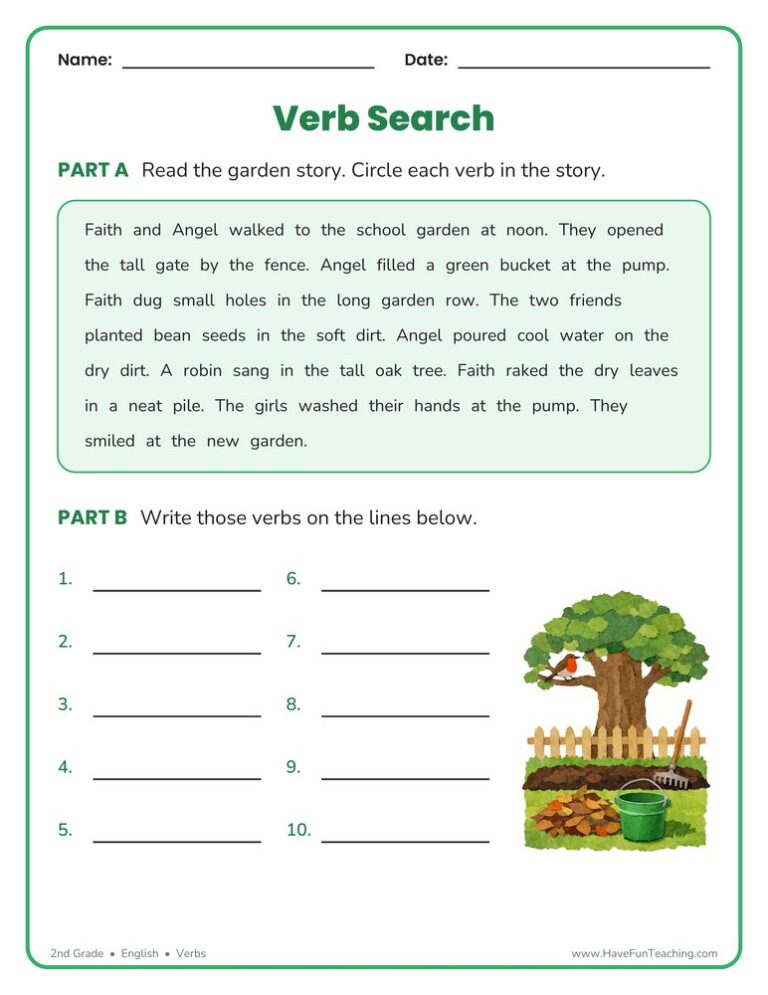
This Verbs Story Search Worksheet has 2nd graders read a short garden story, circle all ten action verbs, and write them on the lines. Answer key included for fast, no-prep grammar practice.

This has have had fill in blank worksheet asks 2nd Grade students to finish ten sentences with the right verb form, then write one of their own. An answer key is included, so grammar practice stays quick and clear.
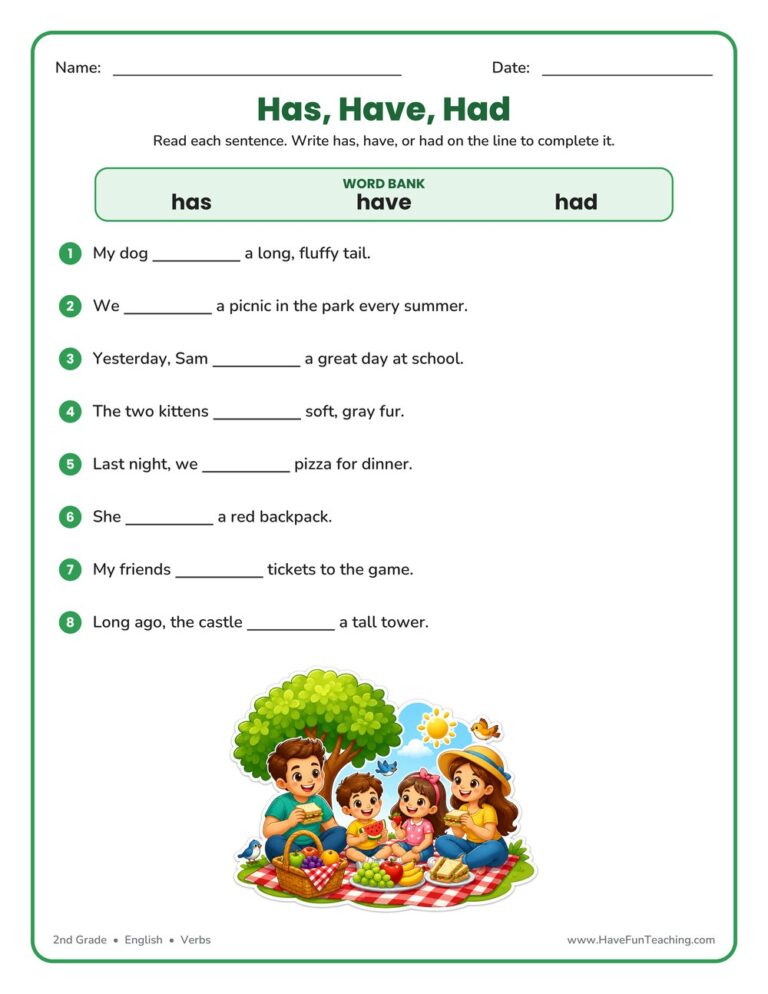
This Has, Have, Had Verb Worksheet gives 2nd graders eight fill-in-the-blank sentences and a word bank to practice choosing the correct verb form. An answer key is included for quick, no-prep grammar practice.
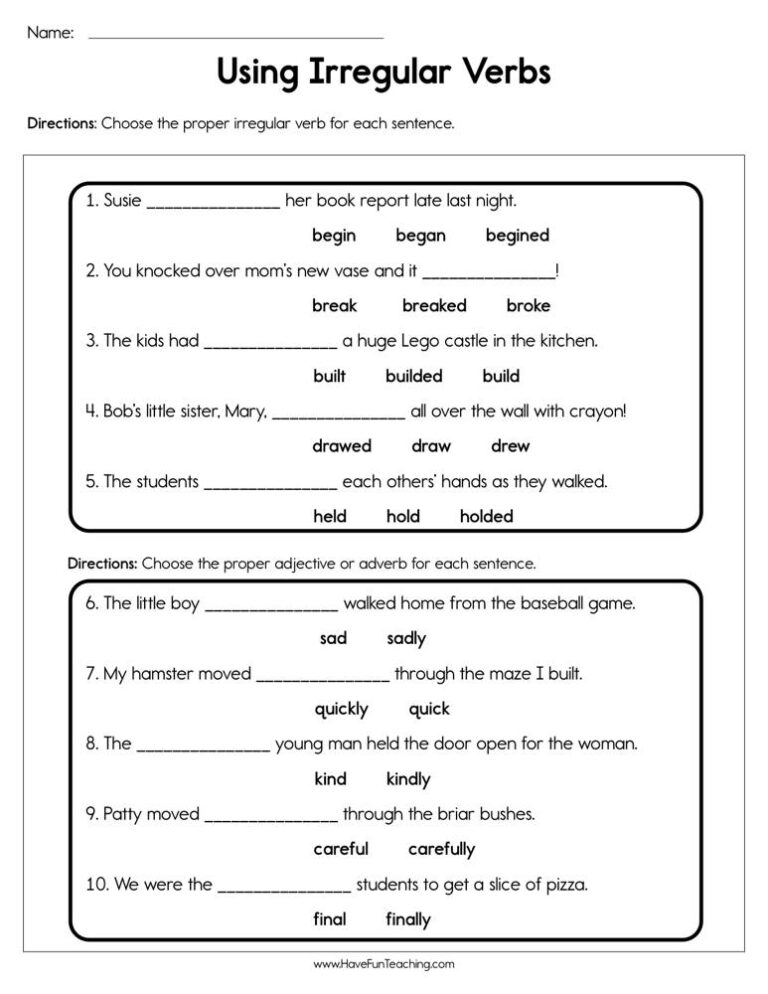
On this Use Irregular Verbs Worksheet, 2nd graders write the past tense of six tricky verbs and then finish five sentences of their own. An answer key is included, so grammar practice takes almost no prep.

This Verb Story Search Worksheet lets 2nd grade students read a fun garden story and circle every action verb they find. Includes an answer key for easy checking, great for no-prep parts-of-speech practice.
Using the Verb Rap Song (MP3), students will be able to define, give examples and use verbs in their own writing using the catchy and memorable lyrics.

Using these Action Verbs Flash Cards, students improve their verb vocabulary by having a set of words they can use in their writing.

Reviews
There are no reviews yet