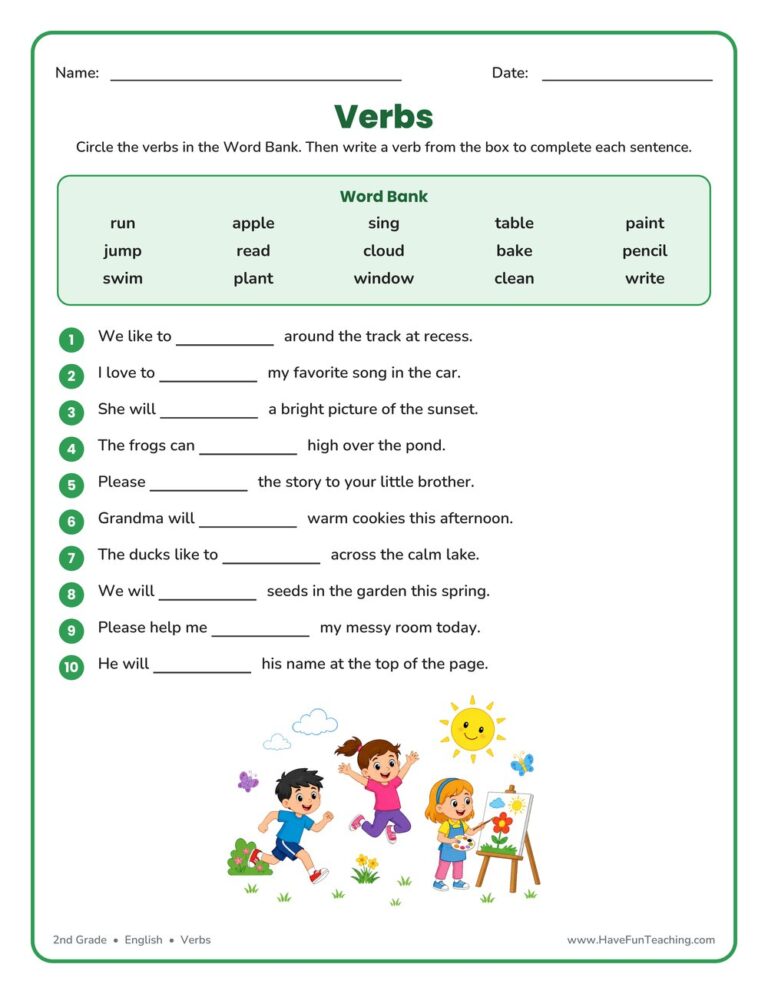
A 2nd grade fill in the blanks verb worksheet where students circle the verbs in a word bank and use them to complete ten sentences. Includes a complete answer key for quick, no-prep grammar practice.
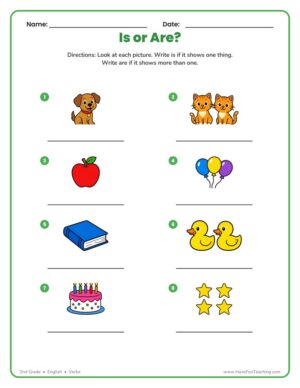
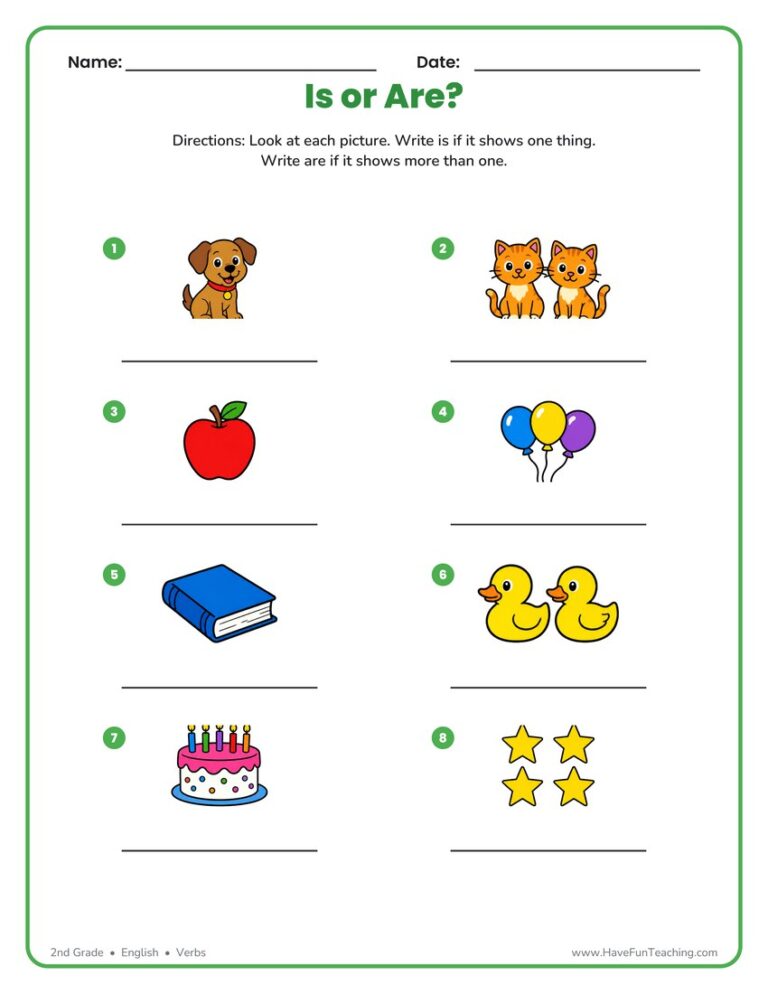
The Is Are Pictures Worksheet asks 2nd graders to write is or are for each picture, based on whether it shows one thing or many. Answer key included — perfect for quick, no-prep grammar practice.
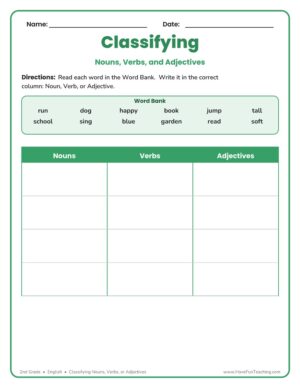
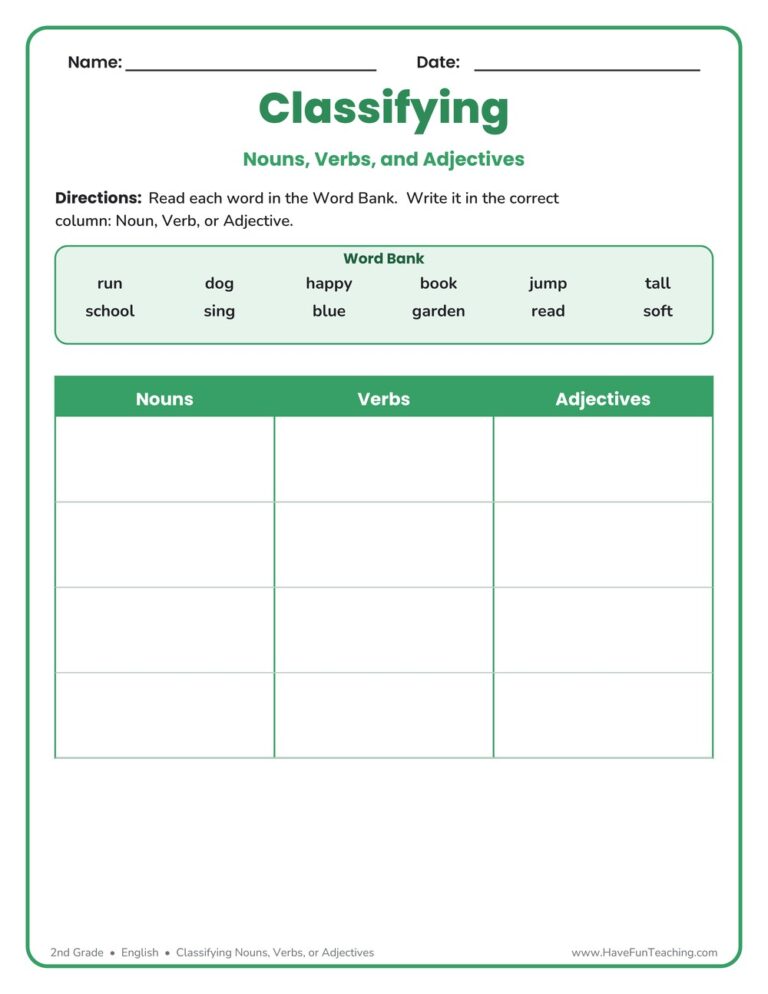
Sort twelve everyday words into nouns, verbs, and adjectives with this Classifying Nouns, Verbs, or Adjectives Worksheet for 2nd grade. Includes a complete answer key for quick, no-prep grammar practice.
This has have had fill in blank worksheet asks 2nd Grade students to finish ten sentences with the right verb form, then write one of their own. An answer key is included, so grammar practice stays quick and clear.
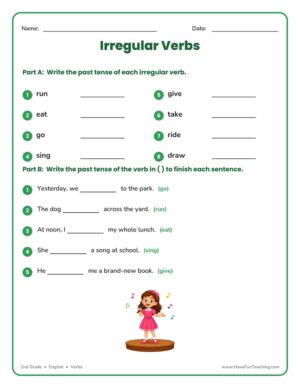
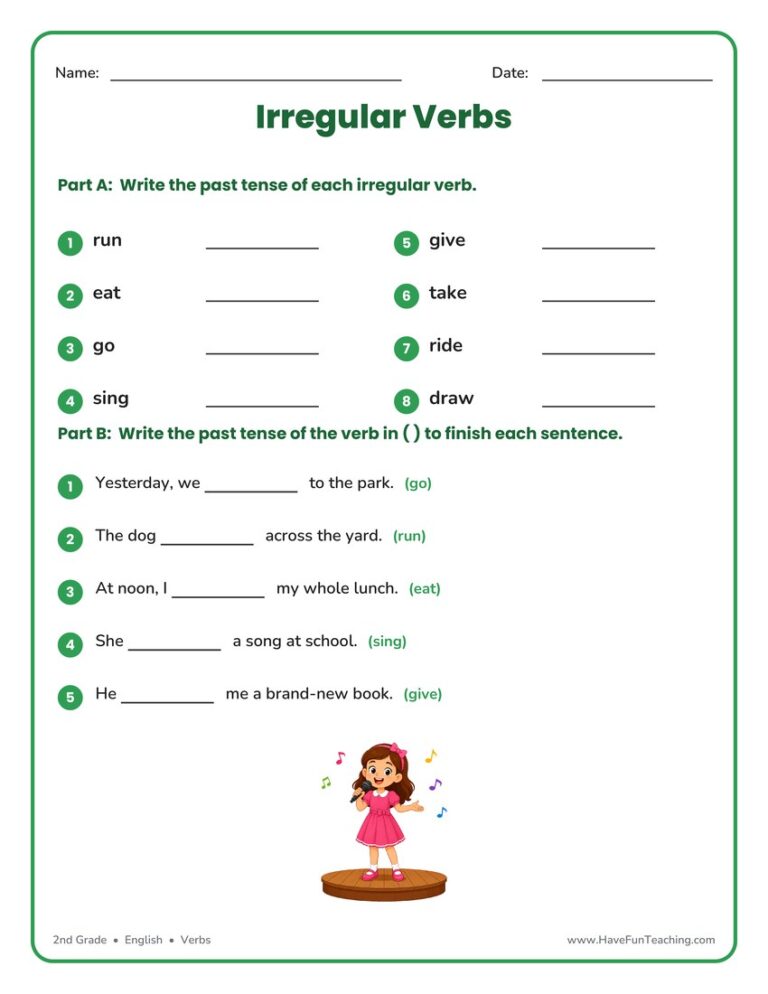
This Writing Irregular Verbs Worksheet gives 2nd graders hands-on practice changing common verbs into their correct past-tense forms. An answer key is included, making it perfect for quick, no-prep grammar review at home or school.
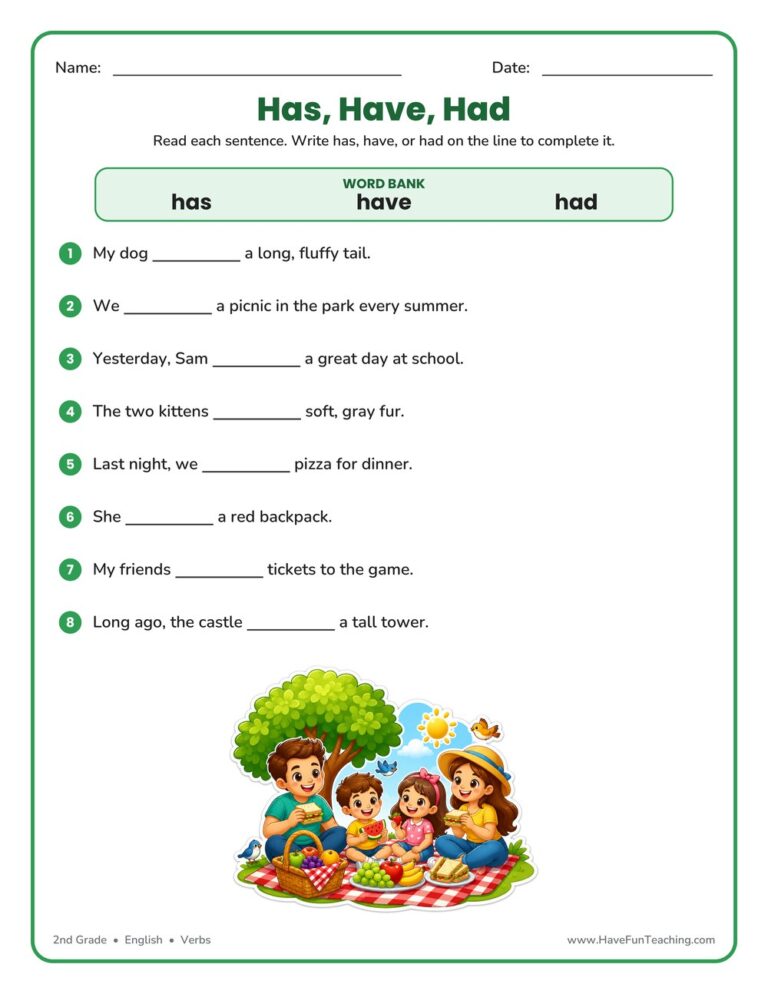
This Has, Have, Had Verb Worksheet gives 2nd graders eight fill-in-the-blank sentences and a word bank to practice choosing the correct verb form. An answer key is included for quick, no-prep grammar practice.
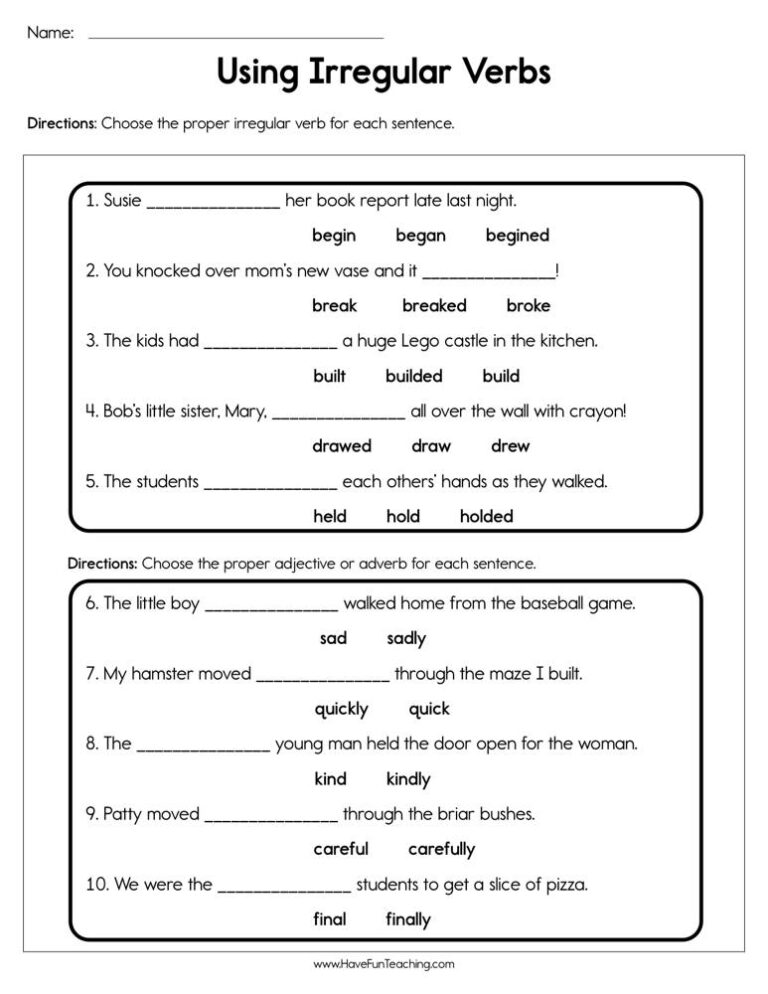
On this Use Irregular Verbs Worksheet, 2nd graders write the past tense of six tricky verbs and then finish five sentences of their own. An answer key is included, so grammar practice takes almost no prep.
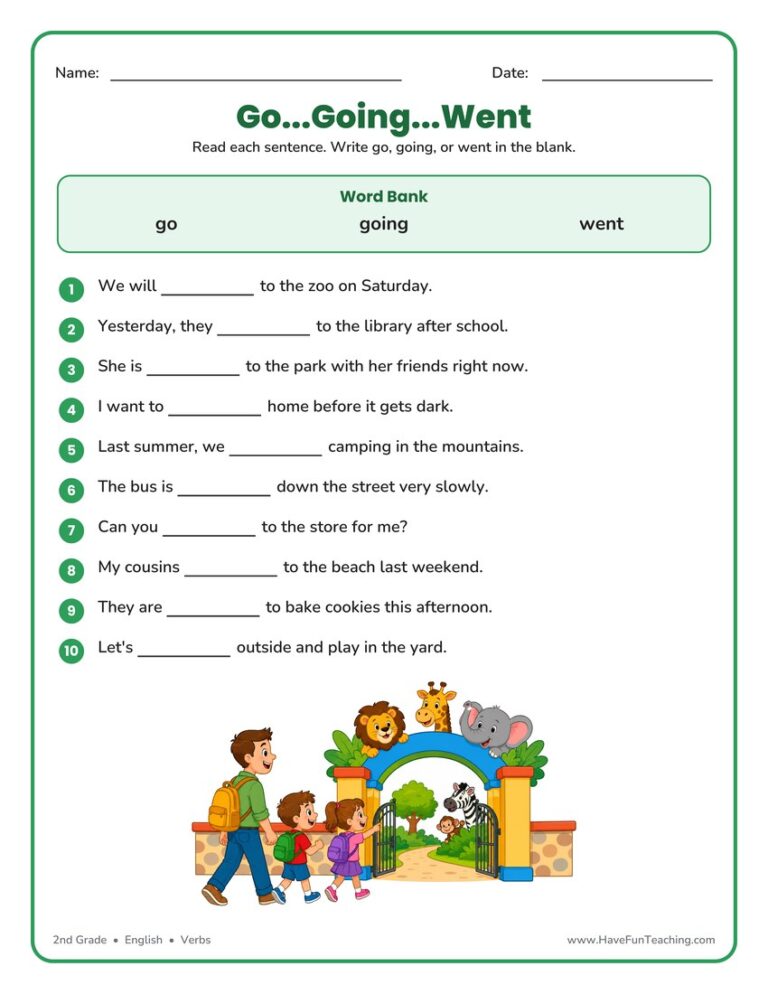
This second grade Go Going Went Fill in the Blank Worksheet has students choose go, going, or went to complete ten sentences using context clues. Includes an answer key for a quick, no-prep way to practice irregular verb forms.
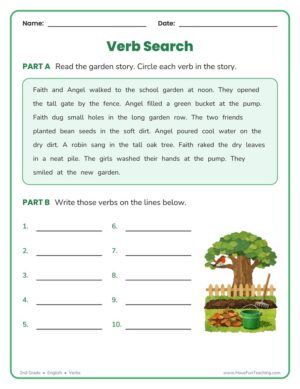
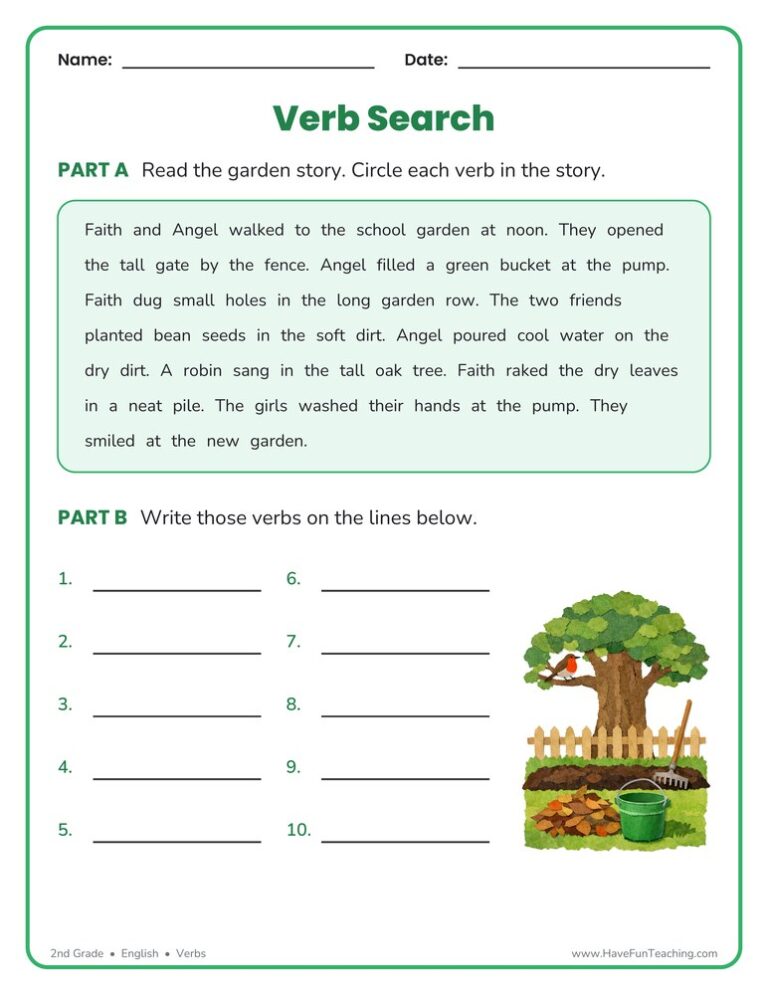
This Verbs Story Search Worksheet has 2nd graders read a short garden story, circle all ten action verbs, and write them on the lines. Answer key included for fast, no-prep grammar practice.
The Finding Verbs Worksheet gives 2nd grade students five circle-the-verb word pairs, a word box and four fill in the blank sentences, plus an answer key, so spotting action words becomes quick and clear.
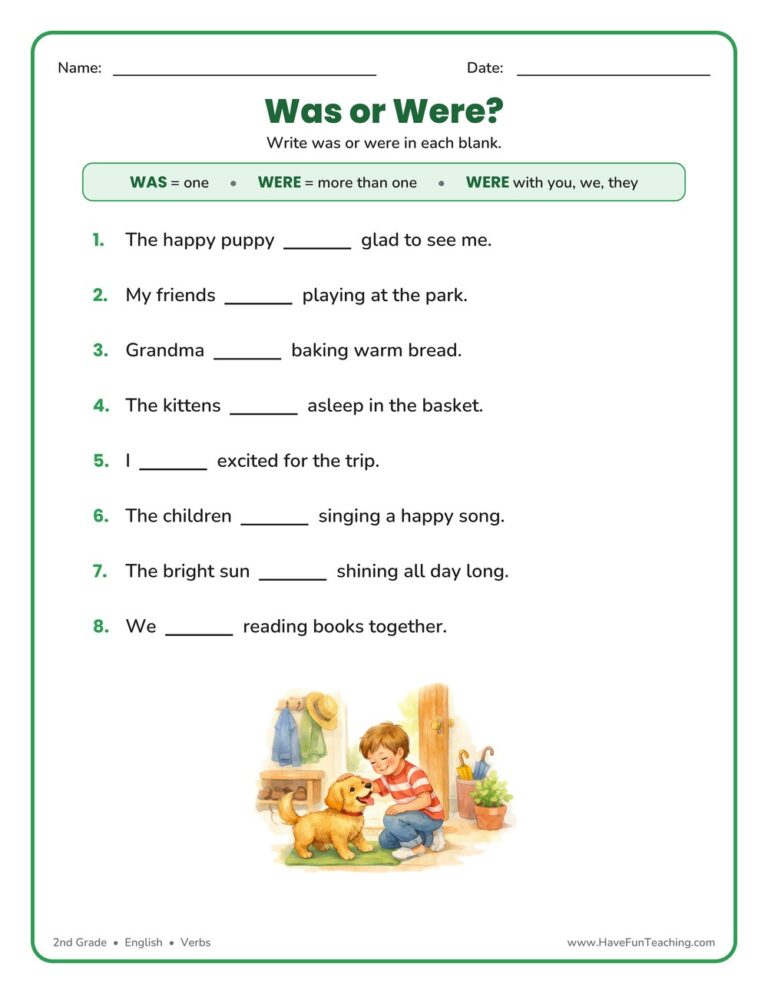
This was were fill in the blanks worksheet gives 2nd graders eight sentences to complete with the correct past-tense verb. An answer key is included for fast checking and confident, independent grammar practice.
This Verb Story Search Worksheet lets 2nd grade students read a fun garden story and circle every action verb they find. Includes an answer key for easy checking, great for no-prep parts-of-speech practice.
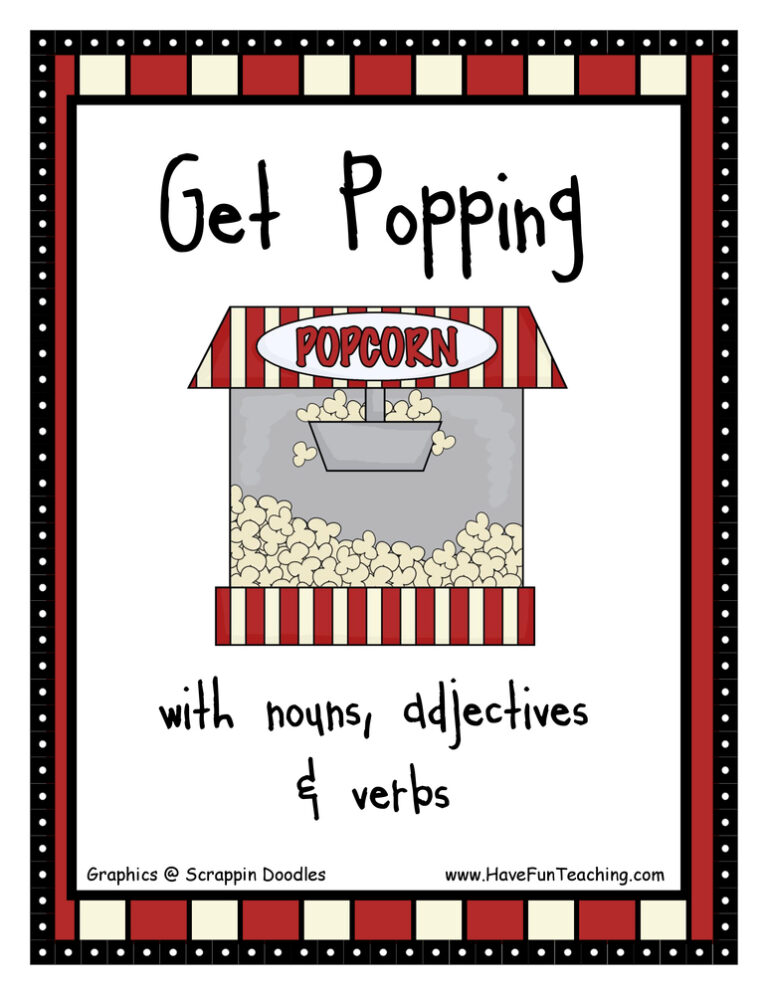
A noun, adjective, and verb activity for 1st to 3rd grade: sort 24 popcorn word cards into three buckets, then practice in sentences. Answer key included for easy checking.
Using the Verb Rap Song (MP3), students will be able to define, give examples and use verbs in their own writing using the catchy and memorable lyrics.
These action verbs flash cards help preschool through 3rd grade children name 18 actions with fold-over picture and word cards and model sentences. A practice page and answer key are included.
This using is am are worksheet gives 2nd graders six write-in sentences and three fill-in-the-bubble questions for practicing is, am, and are. An answer key is included, so students can check their own grammar in minutes.
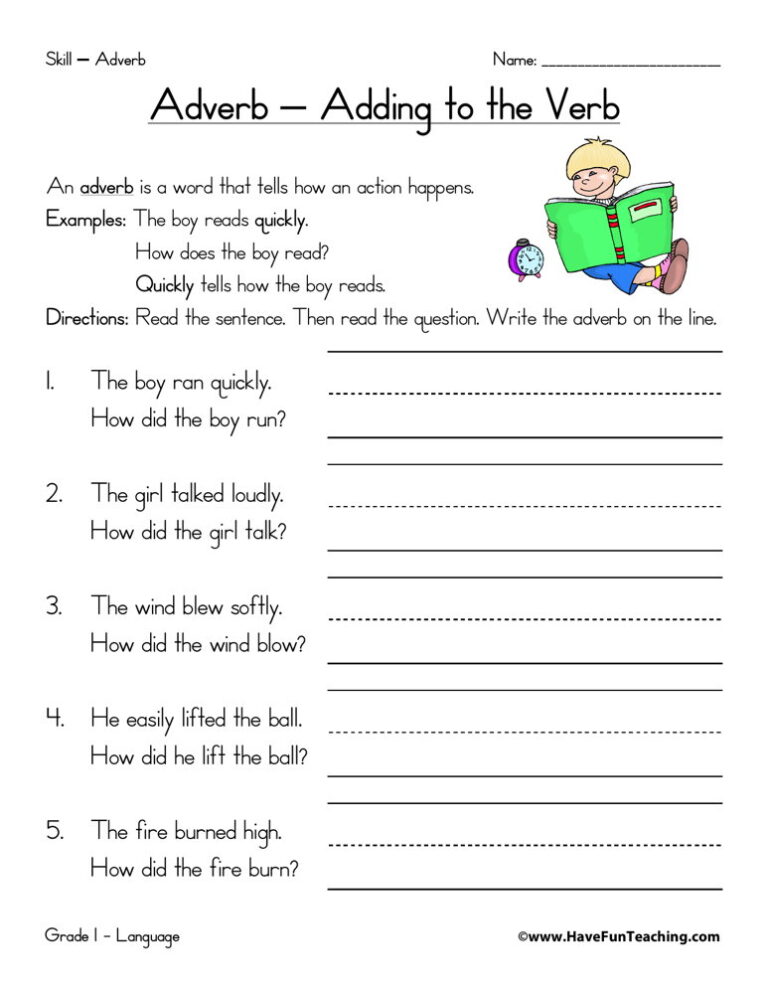
Practice adverbs that tell how with this Adverb How Worksheet for 2nd Grade. Kids find adverbs in sentences, pick words from a box, and check their work with the answer key.
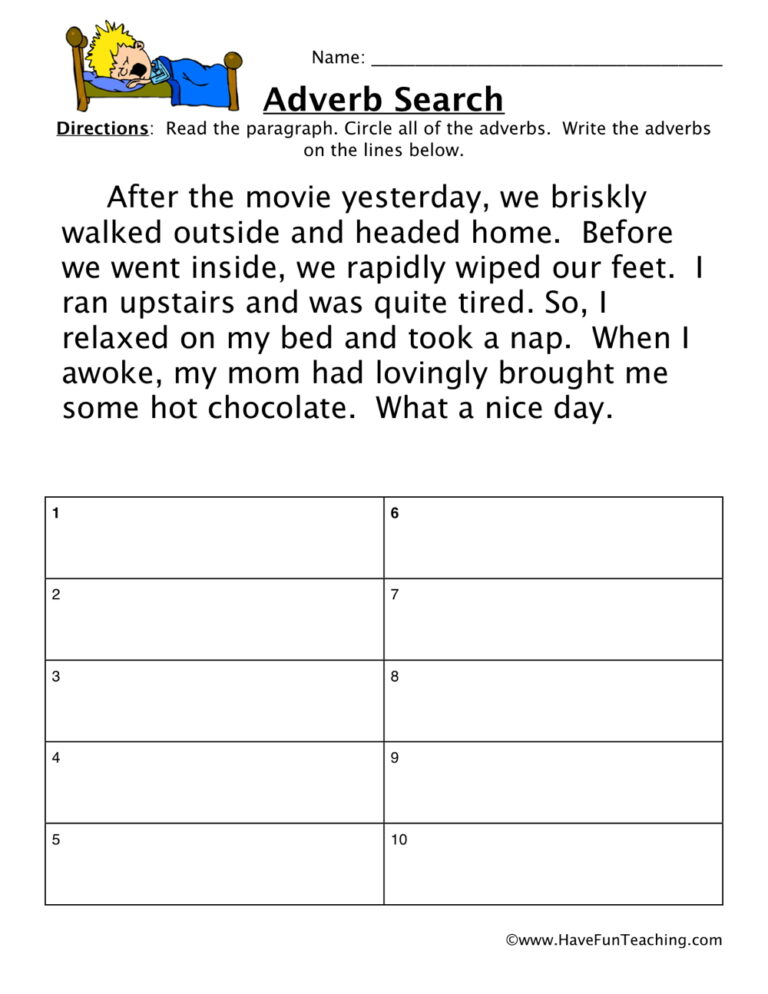
The Adverb Movie Worksheet has 2nd graders circle the adverbs in a fun movie-day story, then sort them by how, when, and where. An answer key is included for quick, easy checking.
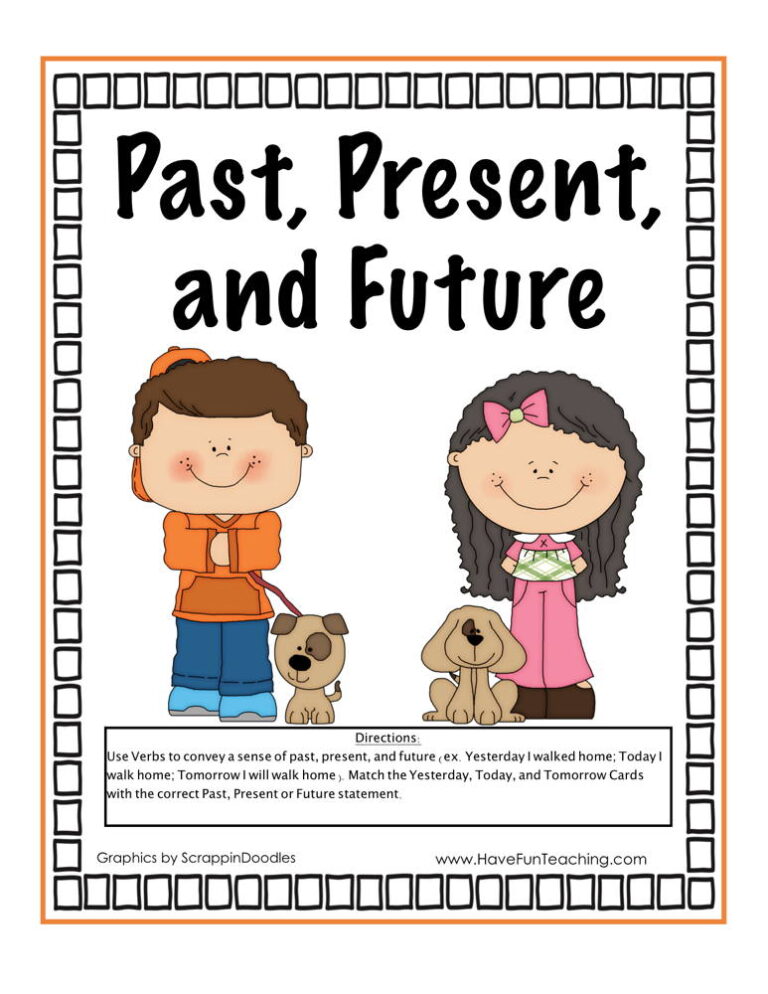
This past present future tense activity lets 1st to 4th grade students sort twelve verb cards by tense and write verbs in the right form. Answer key included for easy checking.
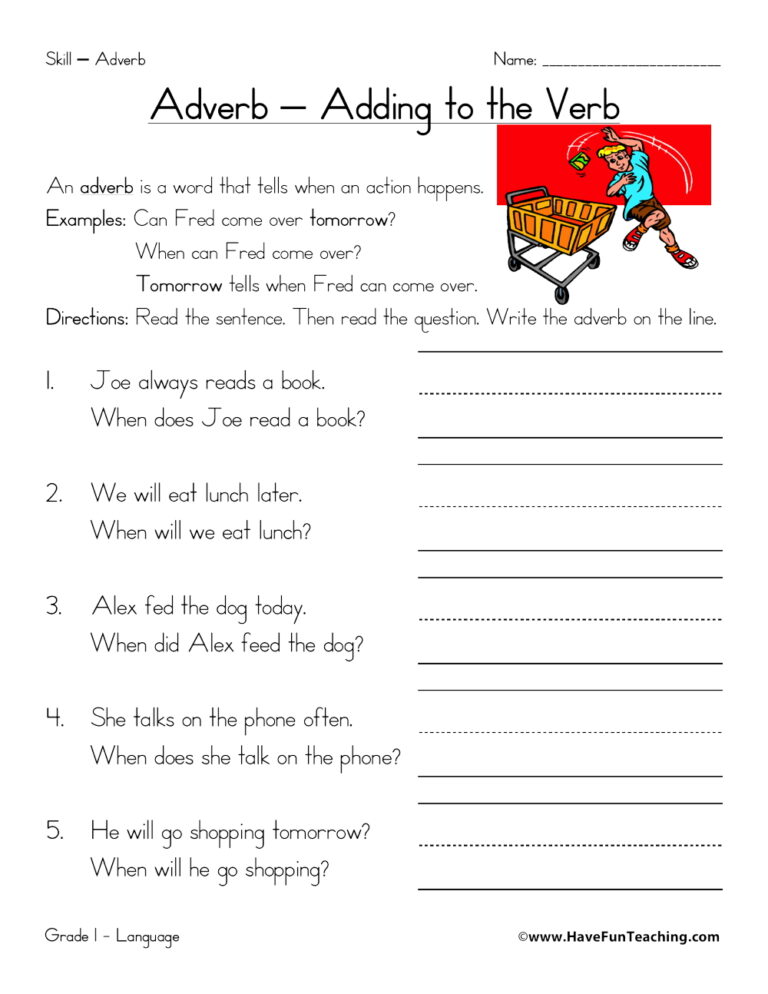
This When Adverbs Worksheet has 2nd graders find the time word in each sentence and sort six adverbs into past and future. An answer key is included, so grammar practice takes minutes to check.
Second graders know verbs are action words, and now they learn the tricky ones. Most past tense verbs just add -ed, like jump → jumped. But irregular verbs change completely: go → went, sit → sat, tell → told. Kids also learn to match verbs with their subjects: "The dog is," but "The dogs are." And they practice has, have and had. The click comes when a kid hears "I goed" and says, "Wait, it's went!"
Our favorite ways to make verbs stick
Second graders learn verbs best through action and lots of talking. These moves deliver both.
Verb rap time
Play a verb rap and have kids act out each verb as they hear it. Then switch to past tense: "Yesterday I..." and let them shout the past form. Moving and singing makes verbs unforgettable.
Why it works: a catchy, repeating tune gives the brain a hook to hang words on, so sung text is remembered better (Wallace, 1994).
Flash an action verb card and the class acts it out. Then call "Yesterday!" and kids say the past tense. Quick rounds work, and irregular verbs stick when they're said out loud often.
Why it works: researchers who compared ten study methods found practice testing is one of the two that work best (Dunlosky and colleagues, 2013).
Write "Today I go. Yesterday I..." and think aloud: "Goed sounds funny. It's went!" Keep a class chart of irregular verbs and add one each day. Kids can check the chart when they write.
Why it works: handing over the work step by step, from teacher to student, is one of the most widely used teaching frameworks (Pearson and Gallagher, 1983).
Irregular verbs don't add -ed in the past tense. Common ones for 2nd grade include go/went, sit/sat, hide/hid, tell/told, eat/ate and run/ran.
How do you explain verbs to a 2nd grader?
Verbs tell what someone or something does or is. Run, jump and eat are action verbs. Is, are and was are verbs too, and they tell how something is.
How do I teach past tense verbs?
Start with regular verbs that add -ed, like walked and played. Then teach irregular verbs a few at a time, practicing them in silly sentences and stories.
How can I practice verbs at home?
Play "What did you do?" at dinner and listen for past tense verbs. If your child says "I eated," just repeat it the right way: "Oh, you ate pizza!"
Written by the Have Fun Teaching team of elementary teachers and homeschoolers. Research: Wallace, W. T. (1994). Memory for music: Effect of melody on recall of text. Journal of Experimental Psychology: Learning, Memory, and Cognition, 20(6). Dunlosky, J., Rawson, K. A., Marsh, E. J., Nathan, M. J., & Willingham, D. T. (2013). Improving Students' Learning With Effective Learning Techniques. Psychological Science in the Public Interest, 14(1). Pearson, P. D., & Gallagher, M. C. (1983). The instruction of reading comprehension. Contemporary Educational Psychology, 8(3).
3 days free
2:39Ready to print!
Printables · Songs · Games
Loved by 2 million teachers & families
Where learning feels like play.
Printables, songs and games for every subject, Preschool through 6th. Ready to teach today, and kids beg for more.
$0due today
then $39.97$35.97for your first year, and $39.97 a year after that.






 Try it withVerb Rap Song (MP3)SongsOpen it →