
Small Smaller Smallest Worksheet
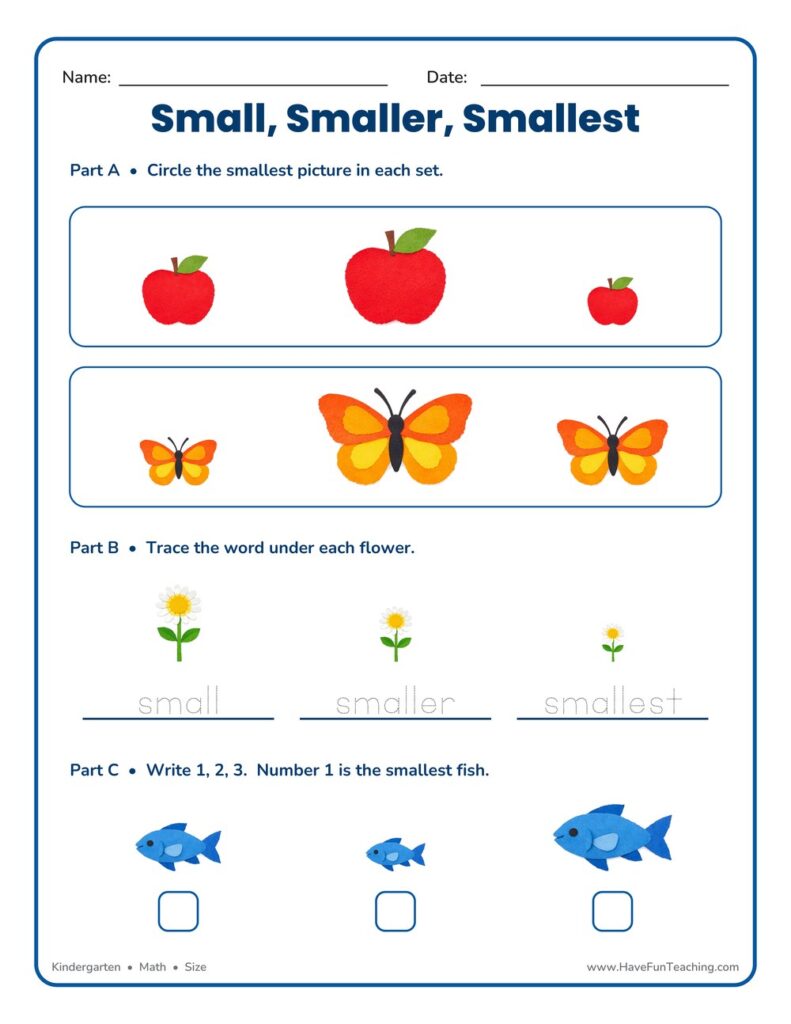
This Small Smaller Smallest Worksheet helps Kindergarten students compare three objects, trace the size words, and order pictures from smallest to largest. Answer key included, so size practice is ready in minutes.
$6.97
Or free with a membership — members pay $3.33/mo for all 10,000+ resources. See plans
Want this one free?
Tell us where to send it and it’s yours — no card, no catch.
One free resource per teacher. We’ll also send free teaching ideas each week — unsubscribe anytime.
Teaching is easier with a membership
Unlimited printables, games & videos for PreK–6th — for your classroom or homeschool. Cancel anytime.
Start your 3-day free trial$0 today · cancel anytime · Instant access to 10,000+ resources
About this resource
Description
Learning to compare size is one of the first measurement skills a young child masters, and this Small Smaller Smallest Worksheet gives Kindergarten students a clear, friendly way to practice it. Children look at three objects at a time, decide which one takes up the least space, and use the comparing words small, smaller, and smallest to describe what they see. Comparing objects this way builds the vocabulary and the careful looking that later measurement and comparison work depends on.
This printable Small Smaller Smallest Worksheet is a two-page download you can print and use right away. Students begin by circling the smallest picture in each set of apples and butterflies. Next they trace the words small, smaller, and smallest under three daisies that shrink from left to right, connecting each word to the size it names. Finally they number three fish from 1 to 3, with number 1 marking the smallest fish, so they order sizes rather than just spot them. Use it as morning work, as a math center, as guided practice after a size lesson, or as a quick check before you move on to measurement.
What’s Included
- One printable Kindergarten worksheet, ready to print in black-and-white or color
- Part A: circle the smallest picture in two picture sets
- Part B: trace the size words small, smaller, and smallest
- Part C: number three objects in order from smallest to largest
- A complete answer key on page two
Three Reasons This Helps Kids
- It builds comparison vocabulary. Tracing and reading small, smaller, and smallest gives children the exact words they need to describe what they notice, which is the language measurement lessons will keep using.
- It moves from recognizing to ordering. Spotting the smallest object is one skill; arranging three objects from smallest to largest is a harder one, and this kindergarten compare and contrast worksheet asks for both.
- It strengthens careful observation. The pictures differ only in size, so children have to look closely and compare rather than guess.
Ideas for Teachers and Parents
Before handing out the page, line up three classroom objects — a book, a notebook, and a sticky note — and let students point to the smallest one and say the word aloud. After the worksheet, send children on a size hunt around the room to find their own small, smaller, and smallest set and draw it on the back of the page. At home, sort spoons, socks, or stacking cups the same way while you talk through the comparing words. For extra practice, follow this page with a big-to-small activity so students hear both ends of the comparison.
Related Resources
What teachers say
Reviews
You must be logged in to post a review.
Using Characters, Settings, and Big Events Worksheet, students draw pictures and write a sentence for each to tell about the story elements in a book.
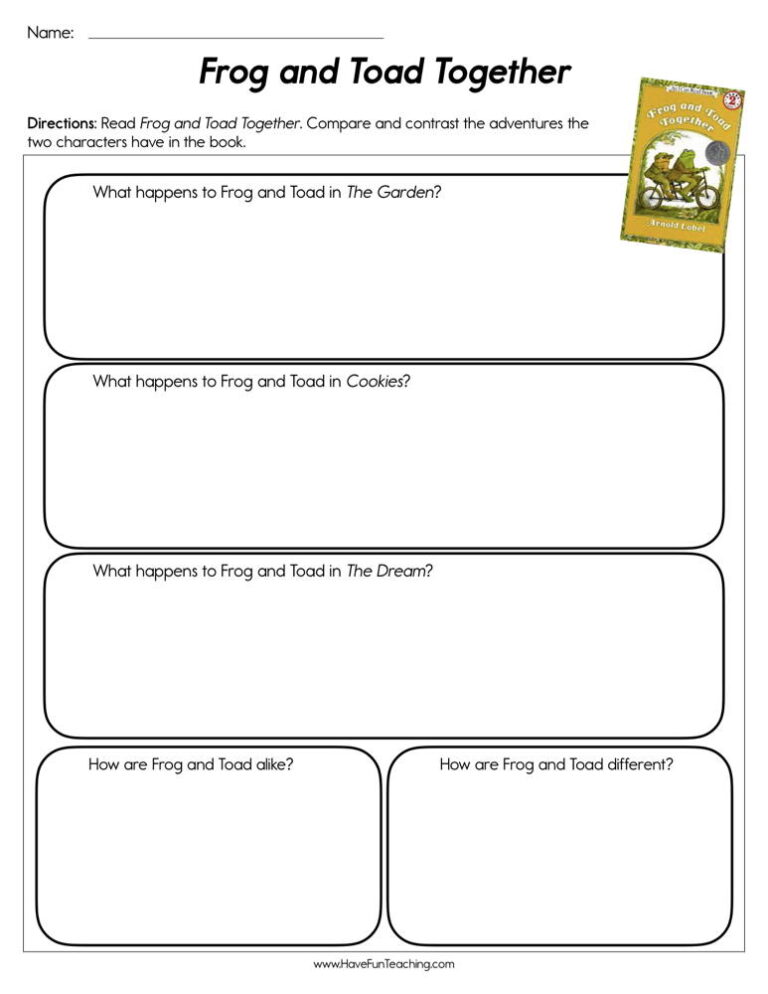
Using this Frog and Toad Together Worksheet, studentsread Frog and Toad Together to compare and contrast the adventures the two characters have in the book.

Using Compare and Contrast Characters Charlie Brown and Arthur Worksheet, students compare two different characters from two different stories you have read.

Using this Size Activity, students play Categories to practice identifying the sizes tall, short, big and small.

This things that go together worksheet asks kindergarten students to circle the two pictures that belong with each other and cross out the one that does not. An answer key is included, so checking takes seconds.
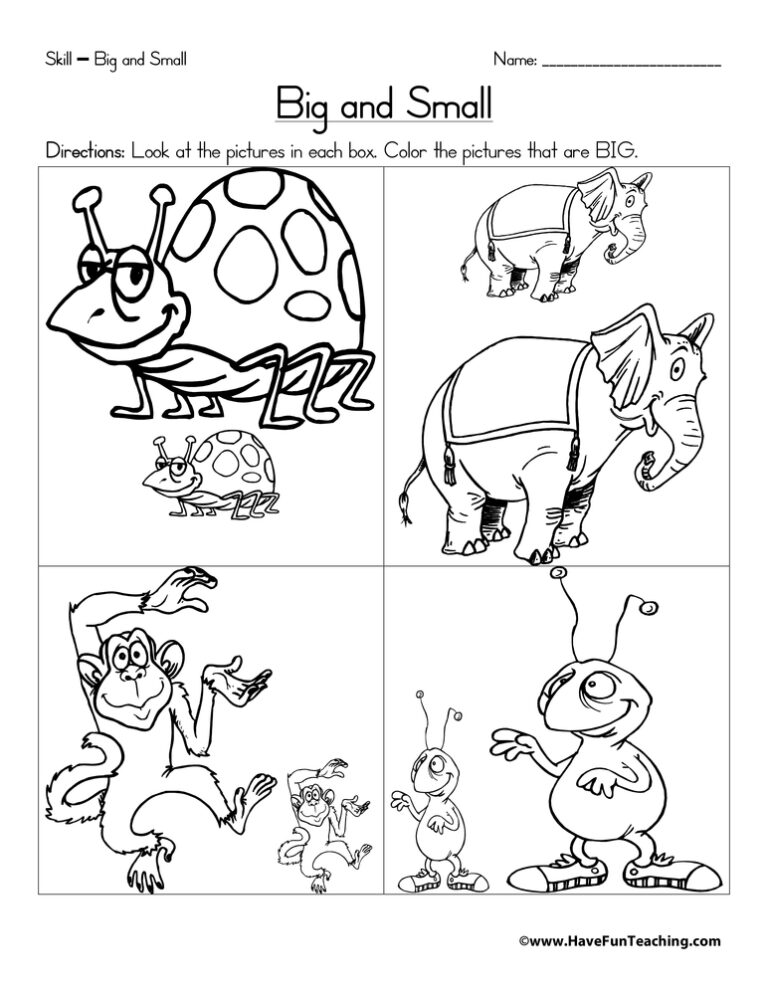
This Size Worksheet helps Kindergarten students compare two pictures of the same object and circle the big one or the small one. An answer key is included for quick, easy checking.
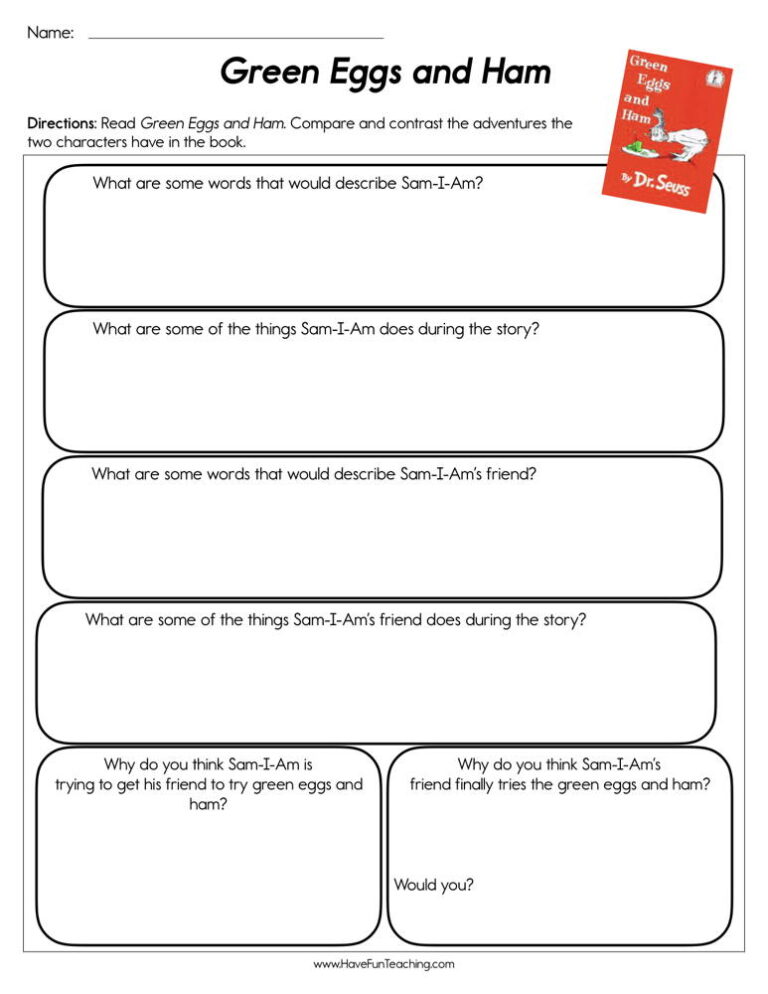
Using this Green Eggs and Ham Worksheet, studentsread Green Eggs and Ham to compare and contrast the adventures the two characters have in the book.

Using this Comparing Seasons Venn Diagram Worksheet, students compare two seasons using a Venn Diagram.

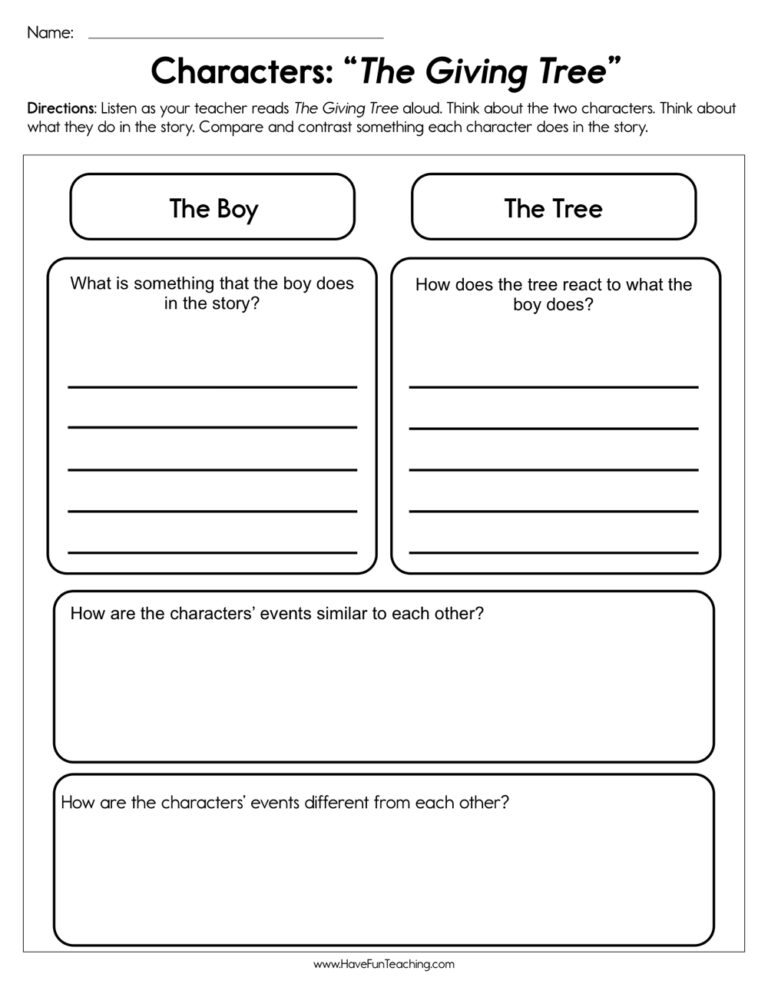
Using The Giving Tree Worksheet, students compare two characters from a story to determine how they are alike and different.
Using Comparing Two Stories Activity, students compare and contrast two or more versions of the same story by different authors or from different cultures.
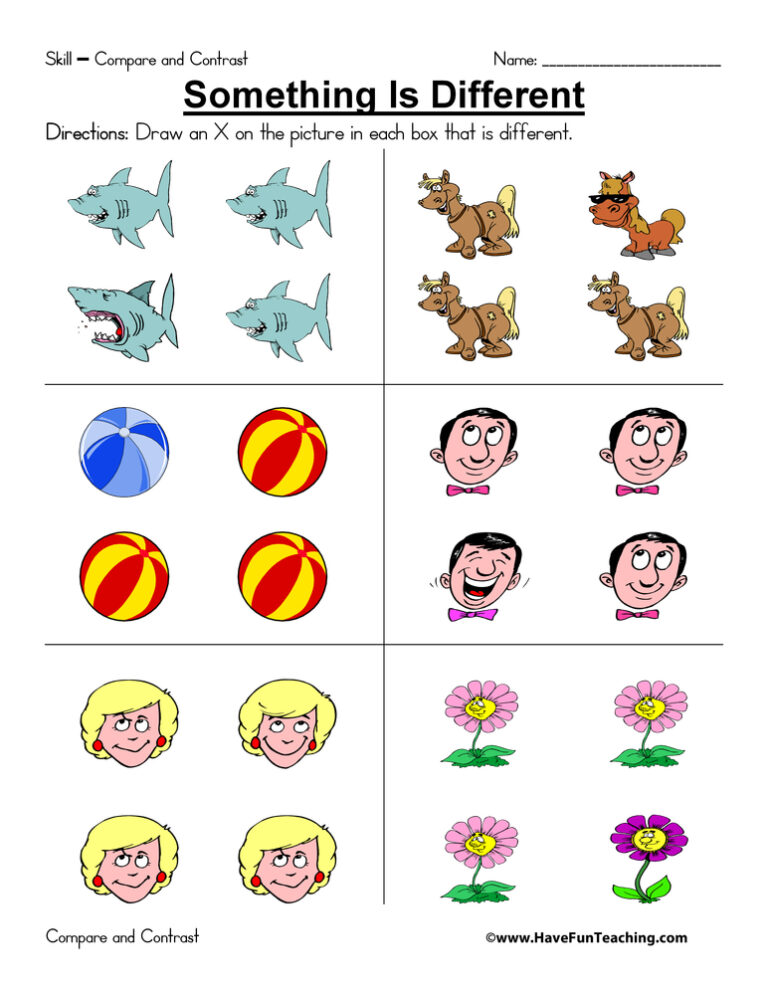
This compare and contrast cross out worksheet has Kindergarten students find and cross out the picture or shape that does not match. An answer key is included, making it a quick, no-prep way to build early comparing skills.
Using How are They the Same Compare and Contrast Story Elements Activity, students compare and contrast the themes, settings, and plots of stories written by the same author about the same or similar characters.




Reviews
There are no reviews yet