
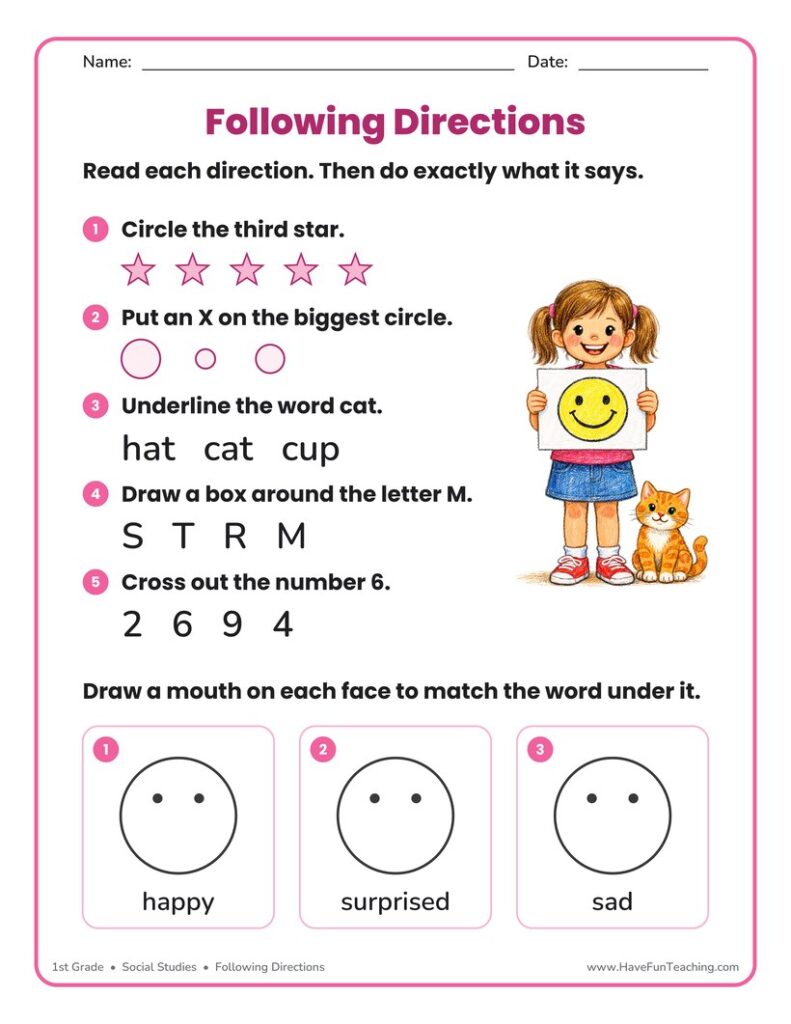
Smilies Follow Directions Worksheet
This Smilies Follow Directions Worksheet gives 1st graders five read-and-do directions plus three faces to finish. An answer key is included, so students build careful reading habits with no prep for you.
$6.97
Or free with a membership — members pay $3.33/mo for all 10,000+ resources. See plans
Want this one free?
Tell us where to send it and it’s yours — no card, no catch.
One free resource per teacher. We’ll also send free teaching ideas each week — unsubscribe anytime.
Teaching is easier with a membership
Unlimited printables, games & videos for PreK–6th — for your classroom or homeschool. Cancel anytime.
Start your 3-day free trial$0 today · cancel anytime · Instant access to 10,000+ resources
About this resource
Description
Following directions is one of the first independent-work skills a first grader really needs, and it takes more than listening. A student has to read a written instruction, hold it in mind, and then do exactly what it asks — circle, underline, box, cross out, or draw. This Smilies Follow Directions Worksheet gives children five short written directions and three friendly face templates so they can practice reading an instruction carefully and carrying it out on their own.
Each direction on this first grade following directions worksheet acts on its own row of pictures, words, letters, or numbers, so children see right away whether they did what the direction asked. Read the page together once, then let students work independently. Part A asks them to circle the third star, put an X on the biggest circle, underline the word cat, draw a box around the letter M, and cross out the number 6. Part B invites them to draw a happy, a surprised, and a sad mouth on three large smiley face templates. A complete answer key is included, so you can check the whole page in seconds.
What’s Included
- 1 print-ready PDF worksheet
- Answer key
- 5 read-and-do direction tasks plus 3 draw-the-face activities
Three reasons this Smilies Follow Directions Worksheet helps children learn the skill. First, every task uses a different action word — circle, put an X, underline, draw a box, cross out — so students learn that the verb, not the picture, tells them what to do. Second, the ordinal and comparison words built into the directions, such as third and biggest, are exactly the vocabulary that test directions rely on later. Third, the face-drawing section rewards careful reading with something genuinely fun, which keeps attention high all the way to the bottom of the page.
Teachers and parents can stretch this activity in a few easy ways. Read the directions aloud one at a time while students follow along silently, then have them reread each one on their own before they mark anything. At home, warm up with a quick two-step direction game — touch your nose, then clap twice — before sitting down with the page. You can also ask children to write a direction of their own for a partner, swap papers, and check each other’s work, which turns the skill into a game they can repeat all year.
Related Resources
What teachers say
Reviews
You must be logged in to post a review.

The Wheels on the Bus Song will help students learn in a fun way. This is the classic nursery rhyme that kids love to sing and do the motions.
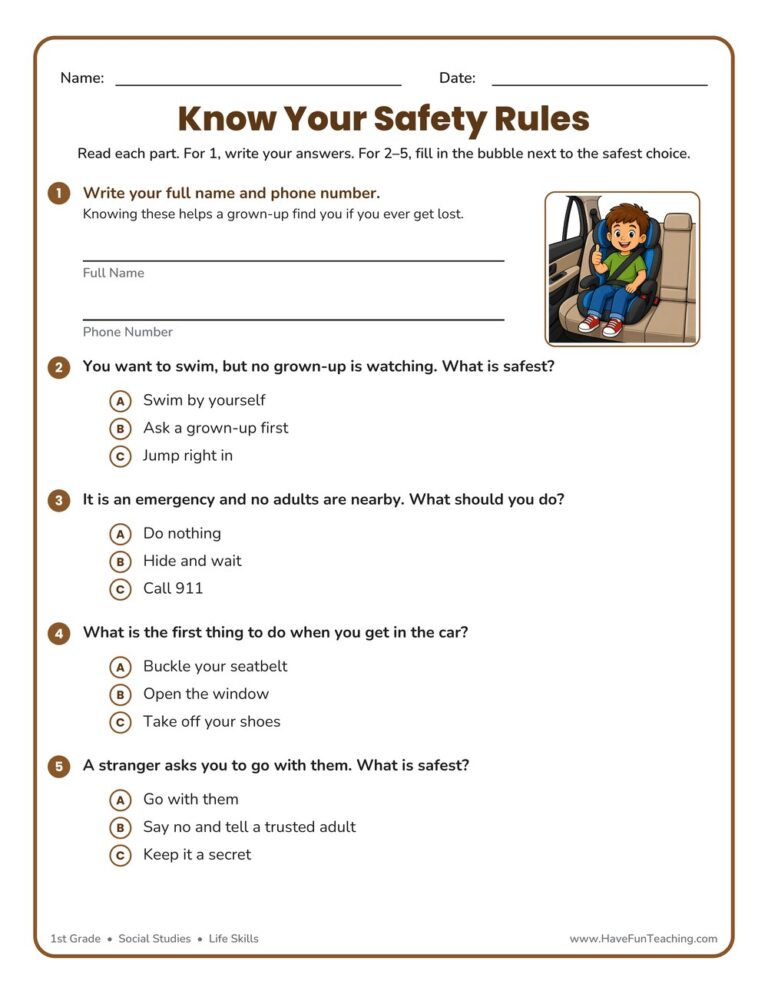
The Know Your Safety Rules Worksheet helps 1st graders make smart choices for swimming, emergencies, car rides, and strangers. Answer key included—a no-prep way to build real-life safety confidence.
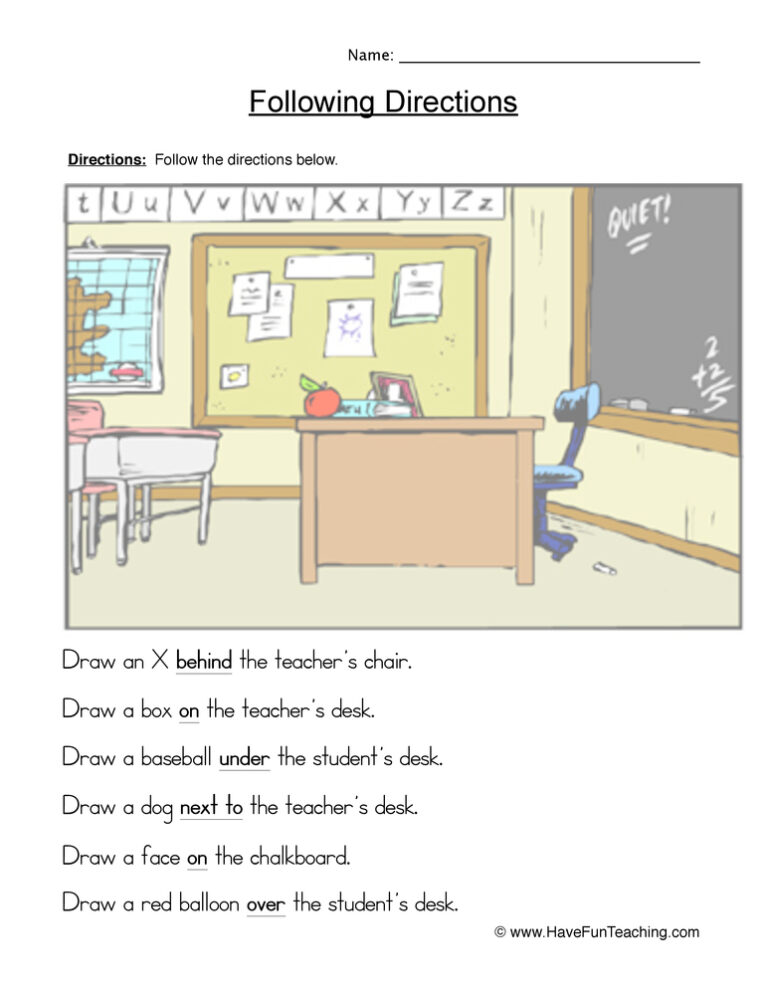
This drawing follow directions worksheet asks 1st Grade children to read six directions and draw each shape in the right box, with an answer key included, so position words become something they can do.


Using Position Words Activity, students place apples based on position cards to build their ability to give clear directions.
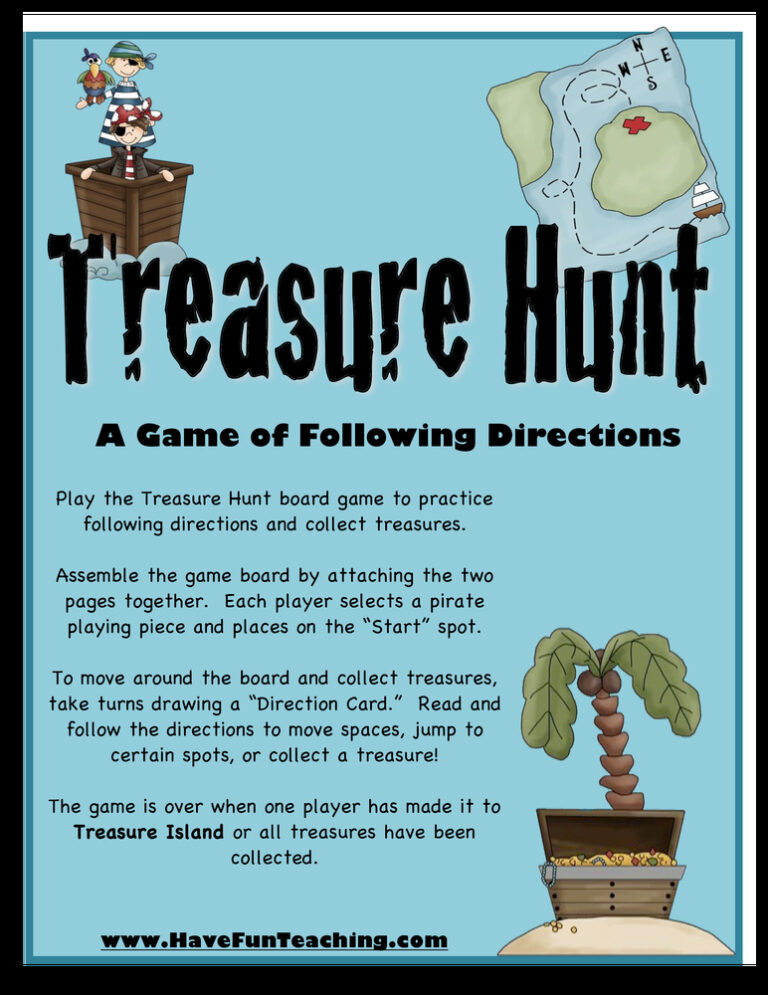
board games, following directions, directions activities, following board games, following directions activities
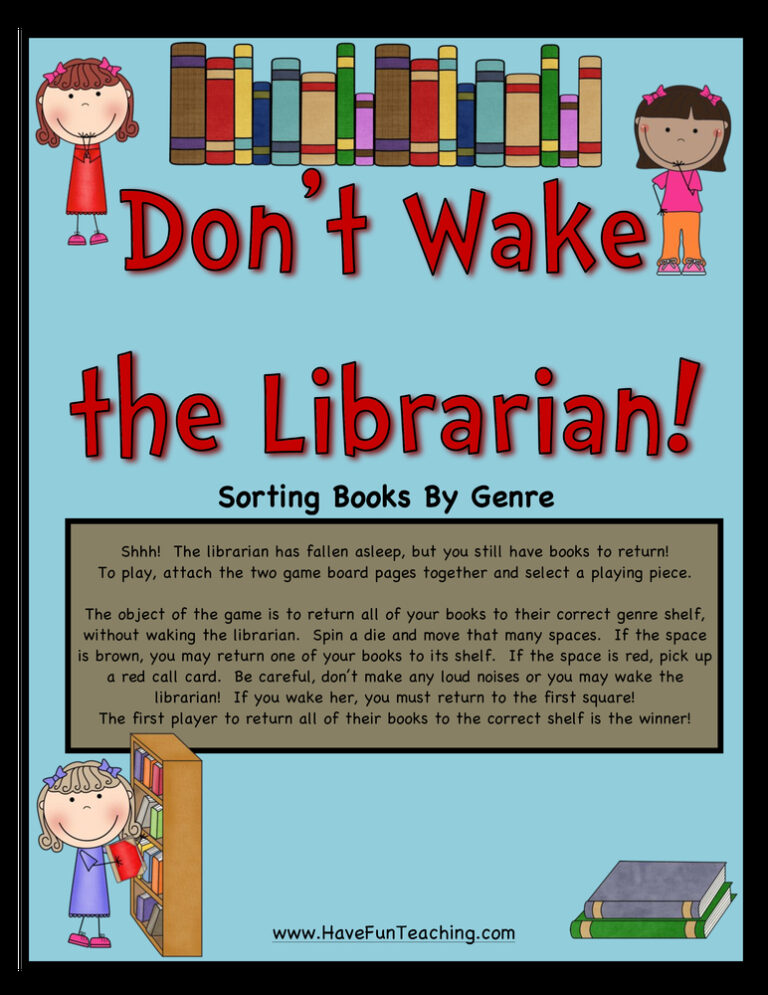
UsingDon't Wake the Librarian Sorting Books by Genre Activity, students will "return" books to the library based on genre type without waking the librarian!
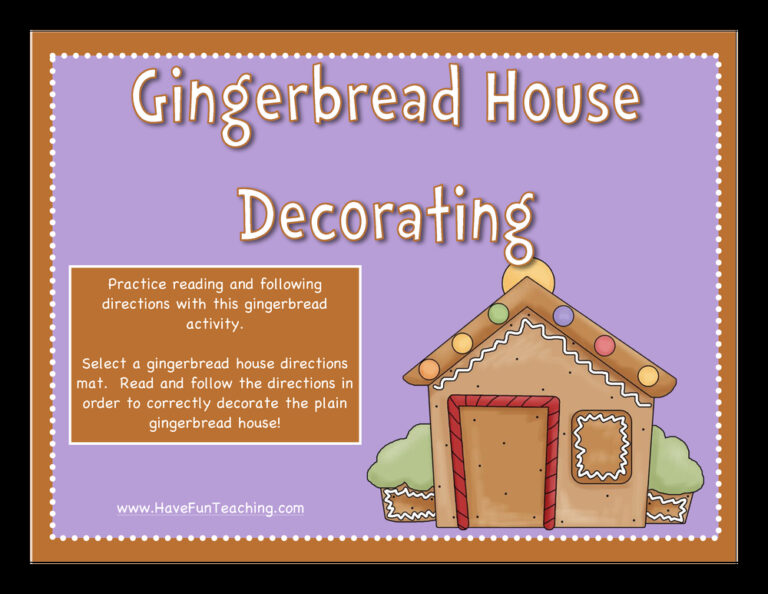
UsingGingerbread House Decorating Following Directions Activity, students practice reading and following directions with this gingerbread activity.

UsingLeft and Right Simon Says Opposites Activity, studentsplay this fun game to practice identifying left and right.

Using this On the Road to Gold Prepositions Activity, students demonstrate their understanding of the function of prepositions in general and their function in particular sentences.

Using Drawing to Add Details Activity, students add drawings or other visual displays to descriptions to provide additional detail.
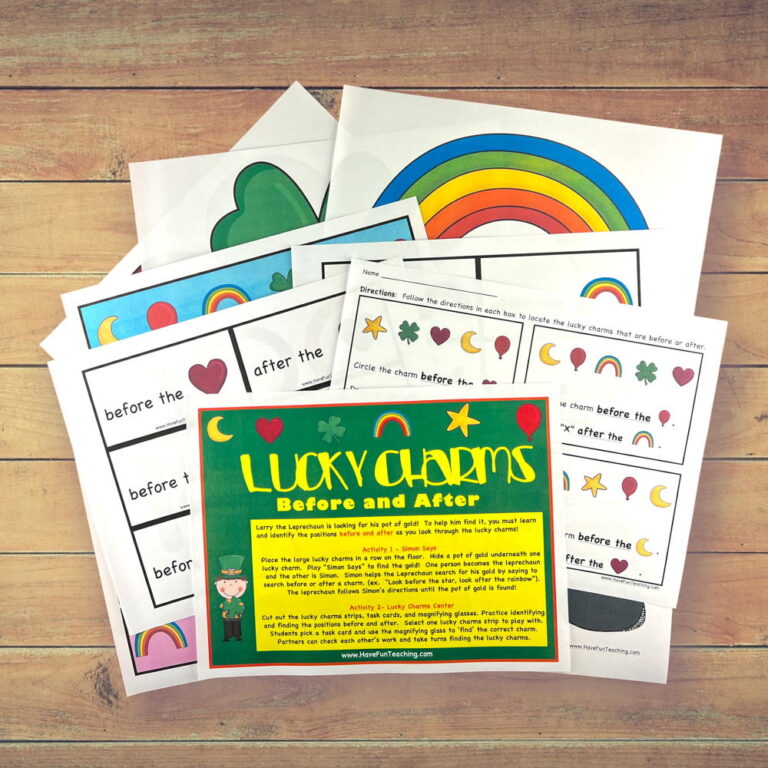
Using Lucky Charms Before and After Activity, studentsplay this fun game to practice identifying before and after.
Reviews
There are no reviews yet