

Using Two Units of Measurement Worksheet
A using two units of measurement worksheet where 2nd graders measure a crayon, a spoon, and a paintbrush in both inches and centimeters on a true-scale ruler. Answer key included for quick, no-prep practice.
$6.97
Want this one free?
Tell us where to send it and it’s yours — no card, no catch.
One free resource per teacher. We’ll also send free teaching ideas each week — unsubscribe anytime.
Free teacher account · no credit card
Membership
Get every game, song, & printable
- Every game, on any device
- 6,500+ resources
- Assign online with HFT Classroom
Then $39.97/year · cancel anytime · See plans
- Instant digital download
- Printable PDF + answer key
- Made by real teachers
Teacher / Family membership
Teaching is easier with every resource
One membership for your whole year: 6,500+ worksheets, games, songs and videos for Preschool–6th, for your classroom or homeschool.
- Unlimited printables & downloads
- Every game, on any device
- Assign online with HFT Classroom
- Cancel anytime
Teacher / Family membership · 3 days free
Yearly
Monthly would be $119.64 a year
$3.33/month
Billed $39.97 once a year
You save $79.67 every year
Start My 3 Free Days$0 today · cancel anytime
Monthly
$9.97/month
Flexible, month to month
Yearly is just $3.33/mo. Switch and save $79.67
Start My 3 Free Days$0 today · cancel anytime
About this resource
Description
Measuring the same object twice, once in inches and once in centimeters, is how children discover that the size of the unit changes the number. This using two units of measurement worksheet gives 2nd graders three objects and a real dual-scale ruler, then asks for both readings. When a crayon comes out as 3 inches and 8 centimeters, students see that a smaller unit takes more of them to cover the same length — the exact understanding the second-grade standard asks for when it says to measure an object twice with different units and describe how the measurements relate.
Each item on this 2nd grade measurement worksheet is laid out the way a child actually works: the object sits directly above a printed ruler with its left end lined up on zero, so there is no ruler to hold steady and no place for the object to slip. Inches run along the top edge of every ruler and centimeters along the bottom, both drawn to true scale, so a student measures right on the page. Two labeled lines below each ruler collect the answers. Use it after a hands-on measuring lesson, as a quick check of ruler skills, or as morning work — and pair it with a real ruler so students can measure the same three classroom objects for themselves.
What’s Included
- 1 print-ready PDF worksheet
- Answer key
- 3 objects to measure, each with a true-scale inch and centimeter ruler and two answer lines
There are three reasons this using two units of measurement worksheet helps kids learn the skill. First, the ruler is printed to true scale, so the answer a student reads off the page is the real length of the object — the practice transfers straight to a ruler in hand. Second, both scales sit on the same ruler, so the comparison between inches and centimeters is right in front of the child instead of spread across two separate pages. Third, lining every object up on zero builds the habit that stops the most common measuring mistake, starting at the end of the ruler instead of at zero.
To carry the idea further, give partners a ruler and a basket of classroom objects and let them record each one in both units, then look for the pattern in their numbers. Ask which unit always gives the bigger number and why, and let students explain it out loud before they write it. Measure something long, like a desk or a doorway, and talk about why inches and centimeters are awkward there and feet or meters work better. A simple measuring hunt around the room, with each child bringing back one object close to 10 centimeters, turns estimating into a game.
Related Resources
What teachers say
Reviews
Write a review, earn store credit
Get 25¢ in credit for every approved review of a resource you’ve downloaded, played or purchased — up to 15 a month. Credit applies automatically to your membership payments, so your reviews can help pay for your membership.
Honest reviews only — any star rating earns the same. Program rules
Log in to write a review and earn store credit.

A Measuring Inches Worksheet where 2nd graders read an inch ruler to measure four objects, then order the lengths from shortest to longest. Answer key included for fast, no-prep practice.

This Measuring in Centimeters and Inches Worksheet has 2nd graders measure a key, crayon, and pencil in two units on a ruler. Answer key included — a hands-on way to build ruler skills and early number sense.

Students measure two objects with an inch ruler and find the difference on this Comparing Two Measurements Worksheet, a 2nd grade printable with an answer key included that builds real measuring confidence.
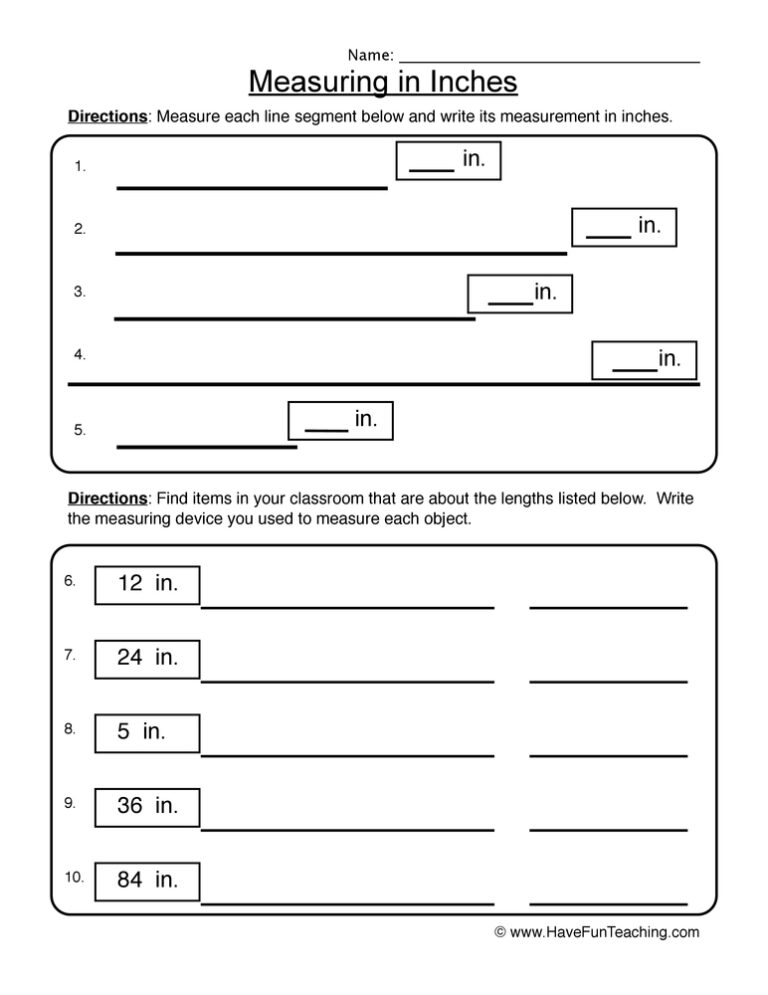
This measurement in inches worksheet gives 2nd graders three true-size objects to measure on a printed ruler, plus a comparison question. Answer key included for quick, no-prep measuring practice.

Students measure four everyday objects on an inch ruler, then use this comparing object lengths worksheet to find how many inches longer one object is than another. 2nd Grade, answer key included.

This estimating measurement worksheet gives 2nd grade students four picture problems and a true-size ruler task, so they learn to pick the right unit with confidence. Answer key included.

This Reading Thermometers Worksheet has 2nd graders read four Fahrenheit thermometers to the nearest two degrees, then color two more to match a given temperature. Answer key included for fast, no-prep measurement practice.
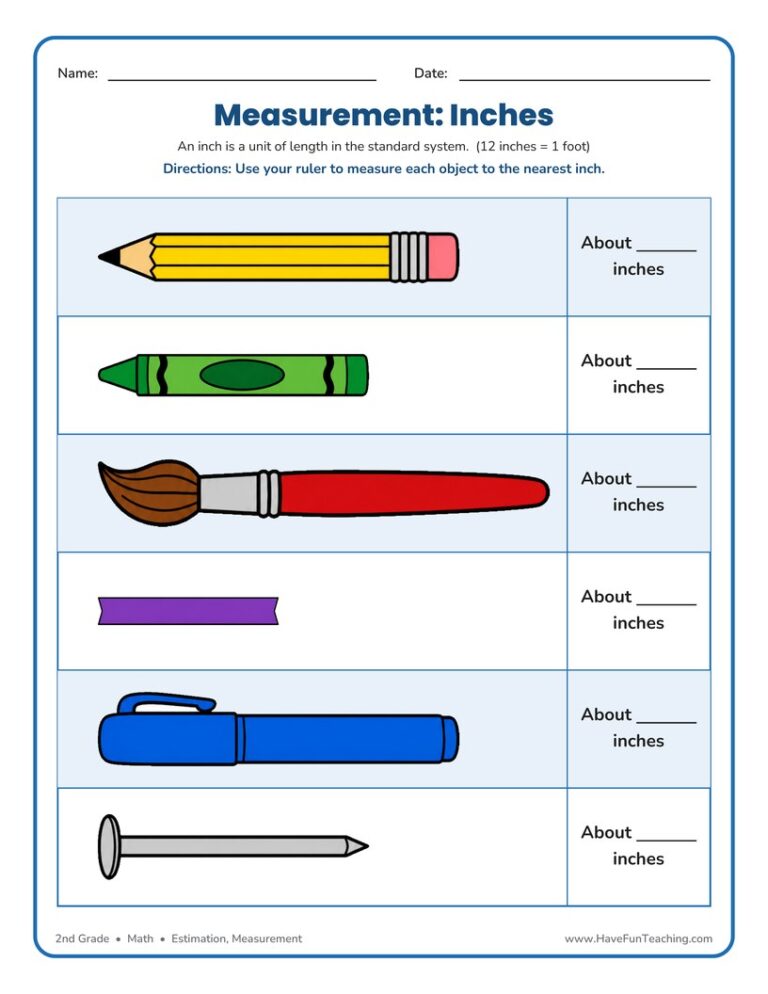
A measuring in inches worksheet where 2nd graders use a ruler to measure six objects to the nearest inch. Includes an answer key — great no-prep practice for estimation and measurement skills.

Students line up paper cubes to find how long school objects are in this measuring with cubes activity for 1st to 3rd grade, with a practice page and answer key included.
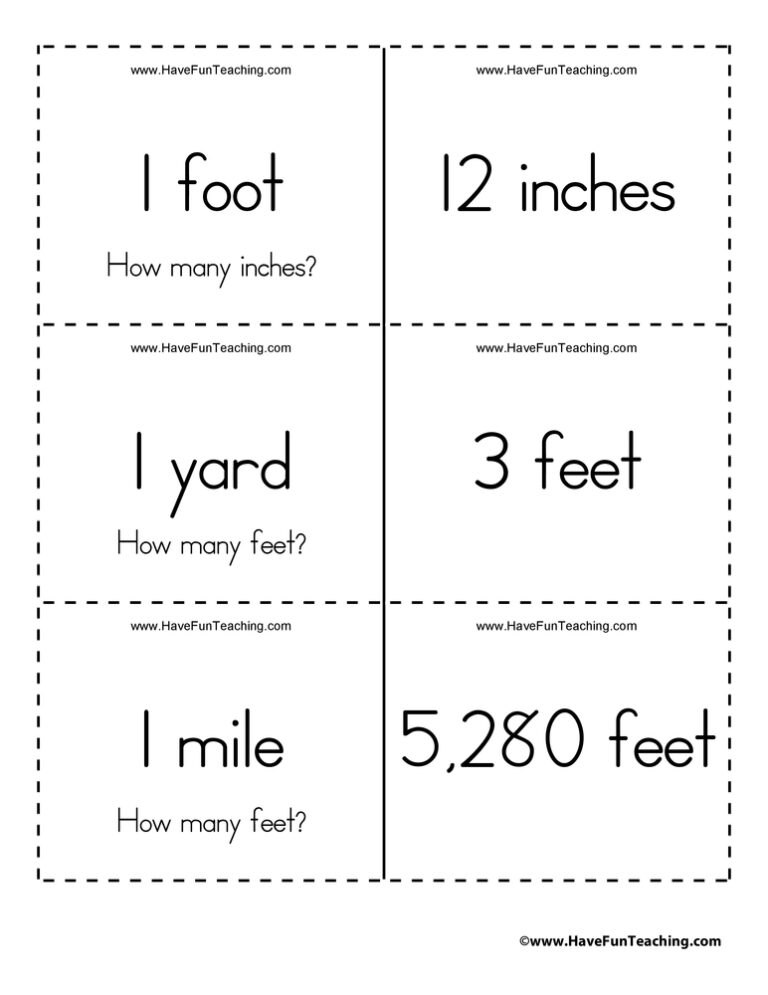
These measurement flash cards help 2nd to 5th grade students learn customary unit conversions for length, weight and capacity. Fold-over cards, a practice page and an answer key are included.
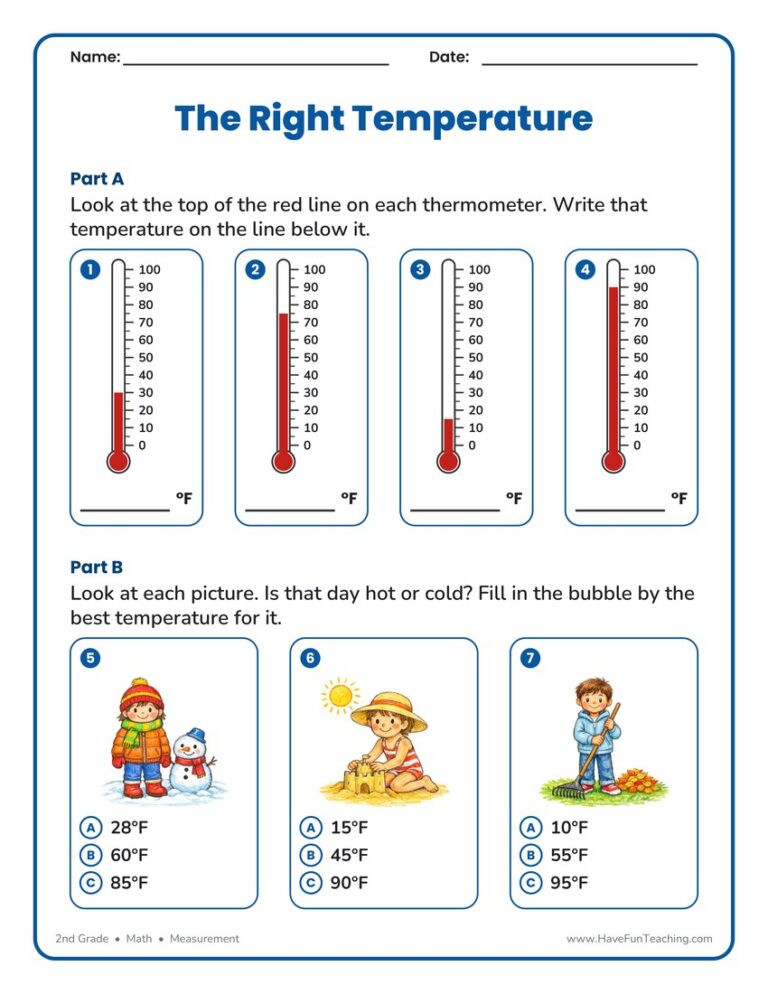
The Right Temperature Worksheet has 2nd graders read four Fahrenheit thermometers and match a temperature to three weather pictures. An answer key is included, so it works as no-prep morning work or a quick measurement check.
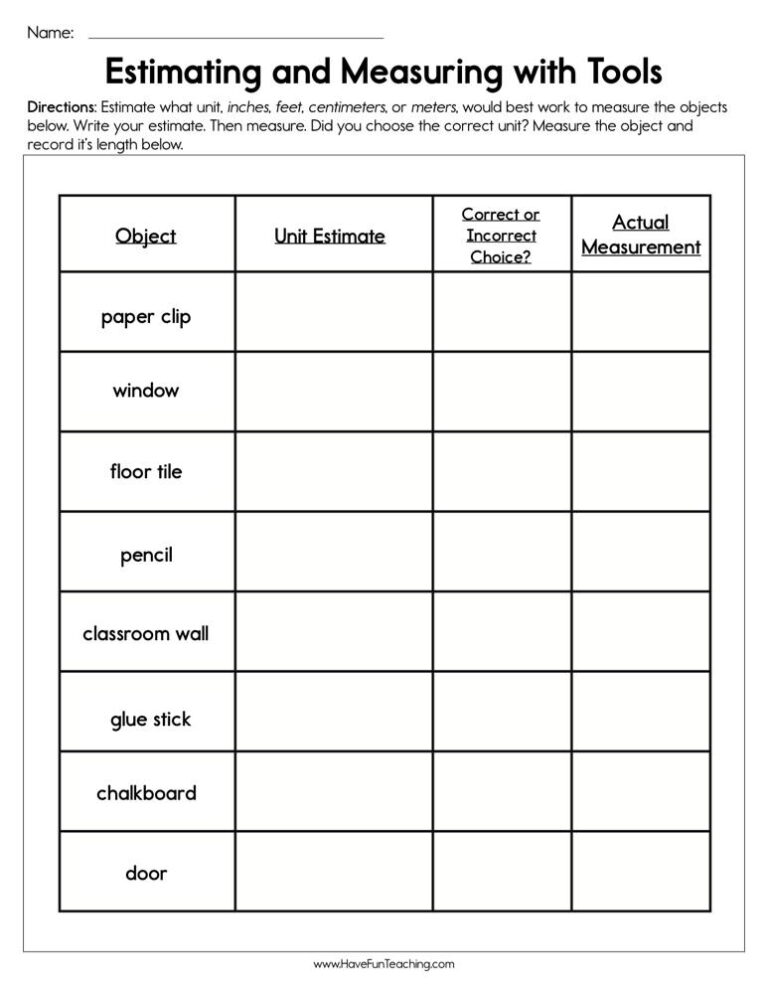
This estimating and measuring with tools worksheet has 2nd grade students complete five sentences with inches, feet, centimeters, meters, or ruler. An answer key is included, so checking takes seconds.




Reviews
There are no reviews yet