Skip to content
Start My 3 Free Days $0 today · cancel anytime

1st Grade Measurement Resources

25 1st grade measurement resources: 17 worksheets, 6 activities and 2 Common Core Lessons. How teachers use these

1st Grade Measurement Resources

25 1st grade measurement resources: 17 worksheets, 6 activities and 2 Common Core Lessons. How teachers use these

Worksheet
Worksheet1st GradeMeasuring Length Worksheet

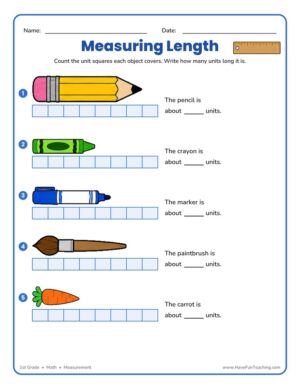
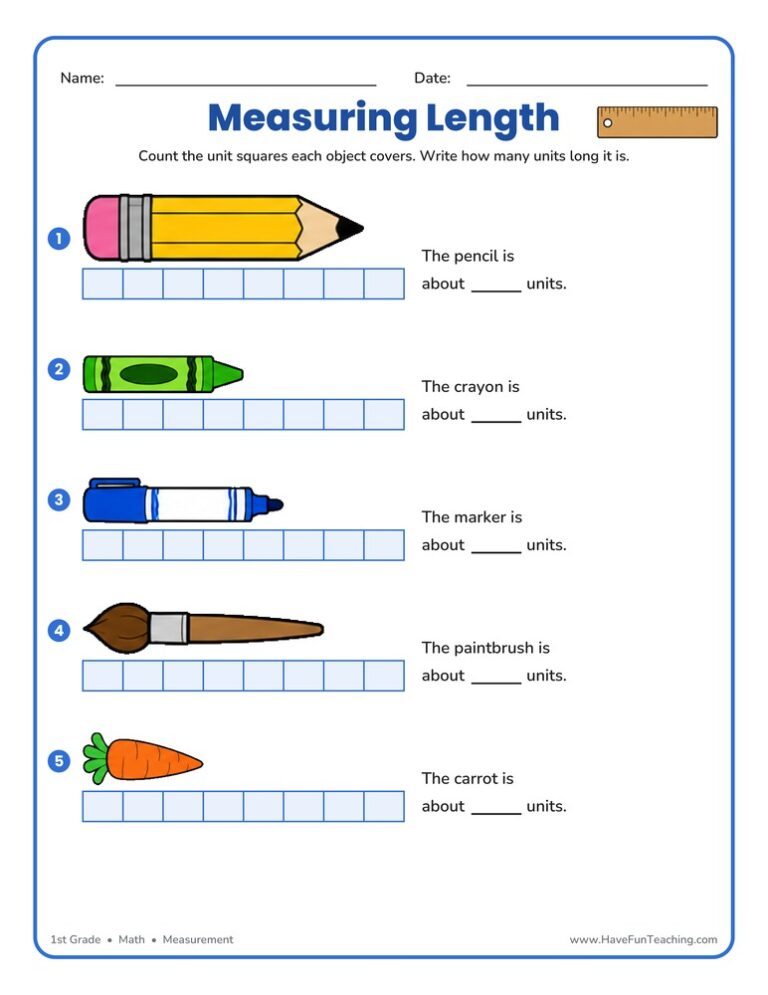
A hands-on measuring length worksheet where 1st graders count unit squares to measure a pencil, crayon, marker, paintbrush, and carrot. Includes a complete answer key — perfect for a no-prep introduction to measuring with units.

Worksheet
Worksheet1st GradeBig Bigger Biggest Worksheet

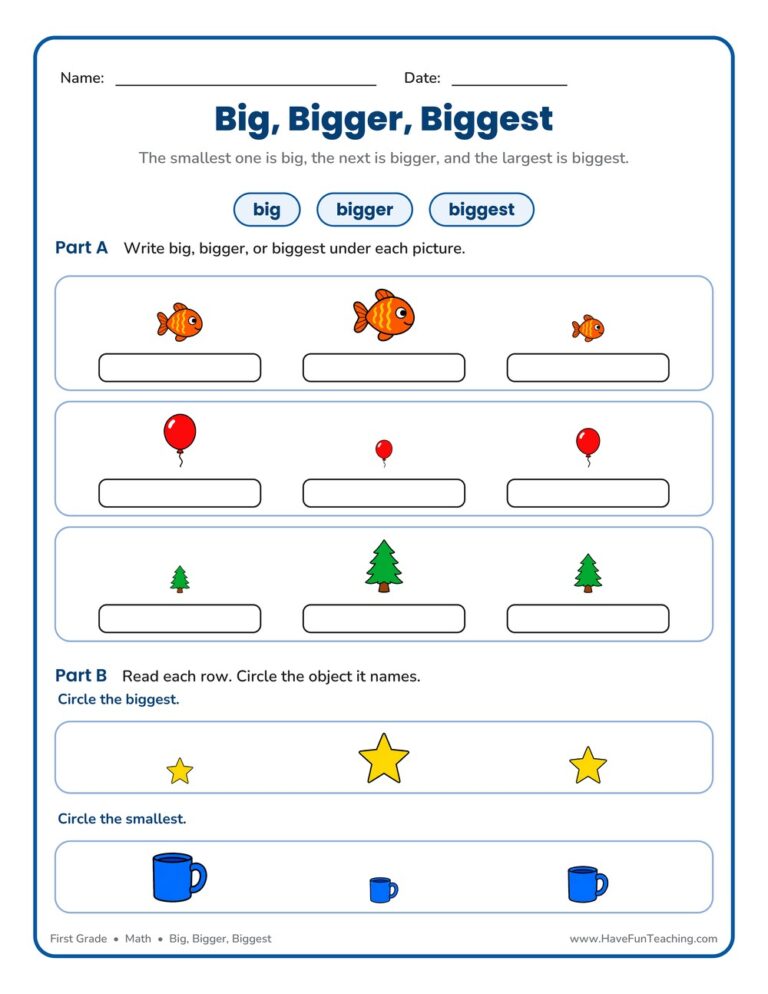
This Big, Bigger, Biggest Worksheet gives first grade students fun practice comparing objects by size, labeling big, bigger, and biggest and circling the biggest and smallest. An answer key is included to make learning simple.

Worksheet
Worksheet1st GradeShortest to Longest Worksheet

A picture-based Shortest to Longest Worksheet where 1st graders order pencils, snakes, crayons, and carrots by length. Includes a complete answer key for quick, no-prep measurement practice at home or school.

Worksheet
Worksheet1st GradeOrdering Objects by Length Worksheet

This Ordering Objects by Length Worksheet has 1st graders rank pencils, ribbons, and carrots from shortest to longest, then compare objects with words. An answer key is included for quick, no-prep measurement practice.

Worksheet
Worksheet1st GradeComparing Sizes Worksheet

This Comparing Sizes Worksheet has 1st graders compare pictures using taller, shorter, bigger, and smaller, then order three objects by length. An answer key is included, so it is ready for no-prep measurement practice.

Worksheet
Worksheet1st GradeUsing Length to Order Objects Worksheet

The Using Length to Order Objects Worksheet gives first graders playful, picture-based practice ordering objects from shortest to longest and spotting the longest and shortest. Includes a complete answer key for fast, no-prep measurement practice.

Worksheet
Worksheet1st GradeWhich Holds More? Capacity Worksheet

This Which Holds More capacity worksheet gives 1st graders four picture cards comparing everyday containers, plus a word bank task that ranks three of them. Answer key included.

Worksheet
Worksheet1st GradeBalance Worksheet

This balance worksheet has 1st graders add the weights on level scales to find each missing number, plus a pumpkin word problem. An answer key is included, so addition practice is quick and easy.

Activity
Activity1st GradeMeasuring with Cubes Activity

Students line up paper cubes to find how long school objects are in this measuring with cubes activity for 1st to 3rd grade, with a practice page and answer key included.

Worksheet
Worksheet1st GradeMeasuring the Length of Objects Worksheet

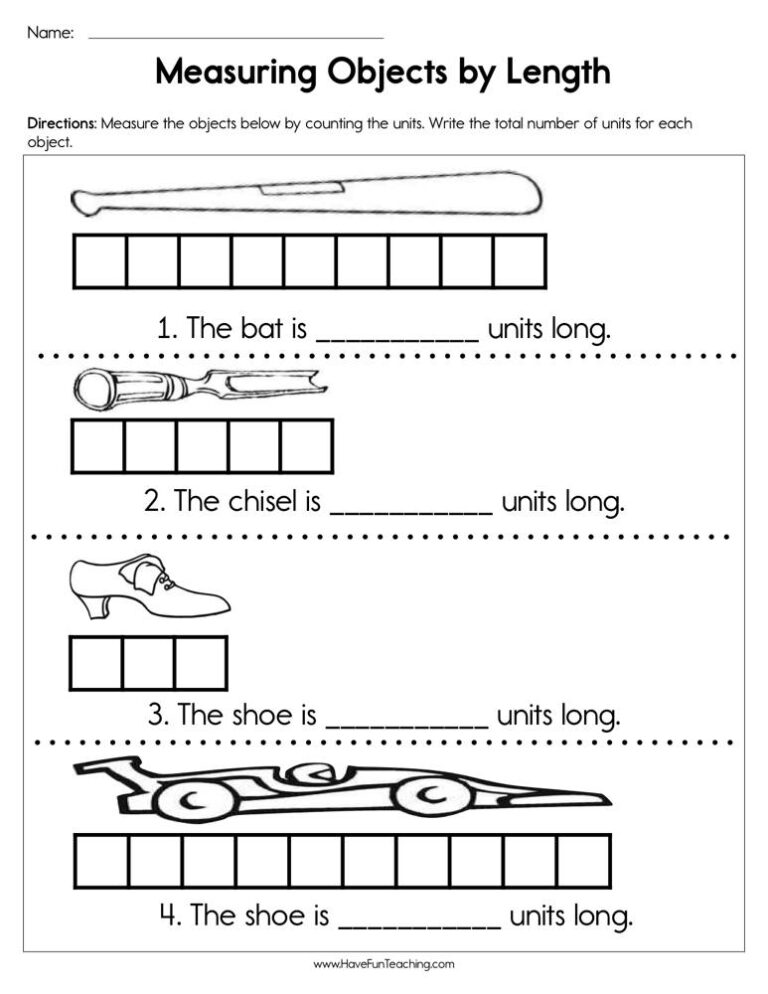
This Measuring the Length of Objects Worksheet has 1st graders count same-size units to measure four everyday objects, then compare lengths. An answer key is included, so checking work takes seconds.

Worksheet
Worksheet1st GradeMeasuring Objects by Length Worksheet

A hands-on measuring objects by length worksheet where 1st graders count same-size units to measure a paintbrush, carrot, pencil, and feather, then compare them. Answer key included for fast, no-prep measurement practice.

Worksheet
Worksheet1st GradeMeasuring With Tools Worksheet

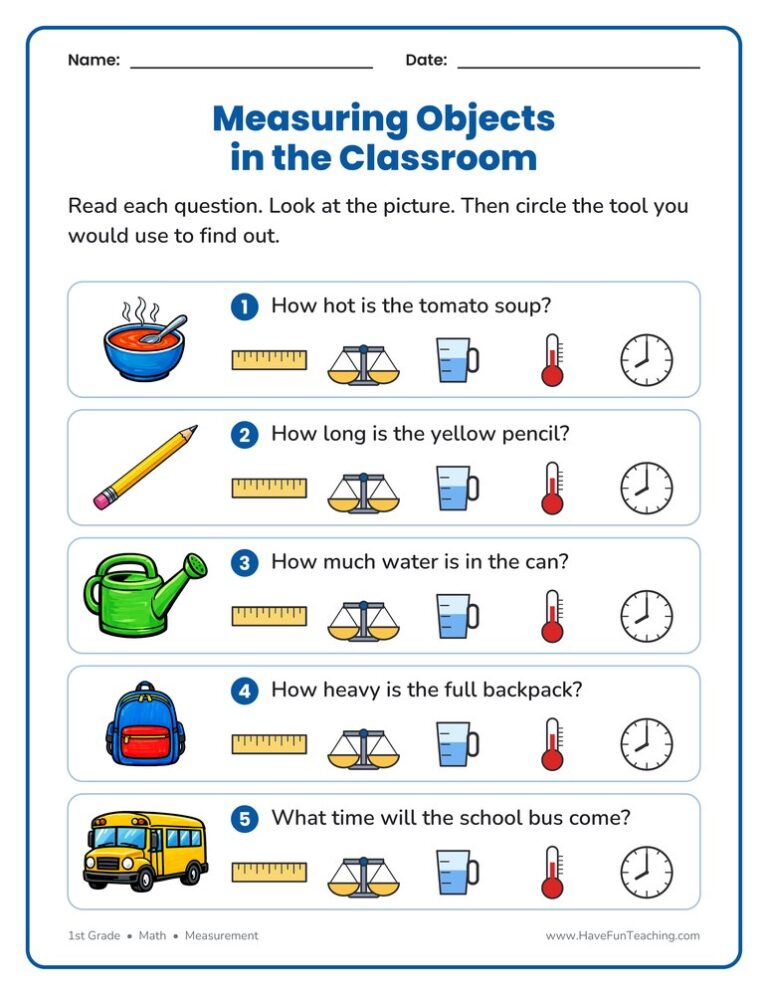
This measuring with tools worksheet asks 1st grade students to read five questions and circle the right tool for each one. An answer key is included, making measurement practice quick to check.

Worksheet
Worksheet1st GradeComparing Two Lengths Worksheet

This comparing two lengths worksheet gives 1st Grade students four picture cards and a strip ordering task for practicing longer and shorter. An answer key is included, so children build real measurement sense in minutes.

Worksheet
Worksheet1st GradeMeasuring Objects Worksheet

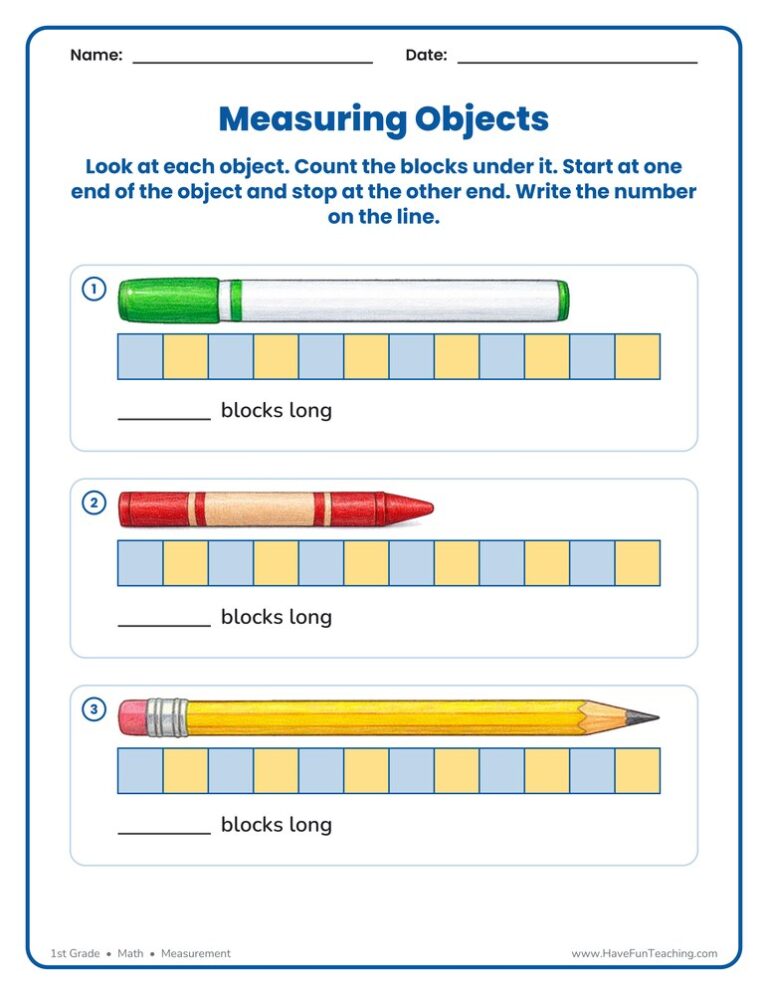
This measuring objects worksheet has 1st Grade students count unit blocks to find how long a marker, a crayon, and a pencil are. An answer key is included for quick checking and confident measuring.

Activity
Activity1st GradeGarden Vegetables Measuring Activity

This garden vegetables measuring activity has 1st and 2nd grade students measure true-size vegetable cards in inches and make a line plot. Answer key included.

Worksheet
Worksheet1st GradeComparing Measurement Worksheet

This comparing measurement worksheet gives 1st grade students four picture cards and three sentences to finish using taller, heavier, bigger and lighter. An answer key is included, so checking work takes seconds.

Worksheet
Worksheet1st GradeHeavy or Light Worksheet

The Heavy or Light Worksheet helps 1st graders sort objects as heavy or light and compare which one is heavier. An answer key is included, making it a quick, no-prep way to practice early weight and measurement skills.

Activity
Activity1st GradeMeasurable Attributes Activity

This measurable attributes activity has 1st to 3rd grade children sort picture cards by weight and height on two mats, then compare objects and cube towers. Answer key included.

Worksheet
Worksheet1st GradeHot and Cold Pictures Worksheet

This hot and cold pictures worksheet has 1st Grade students circle the hot things and finish three sentences from a word box. An answer key is included for quick, easy checking.

Worksheet
Worksheet1st Grade1.MD.2 Common Core Worksheet

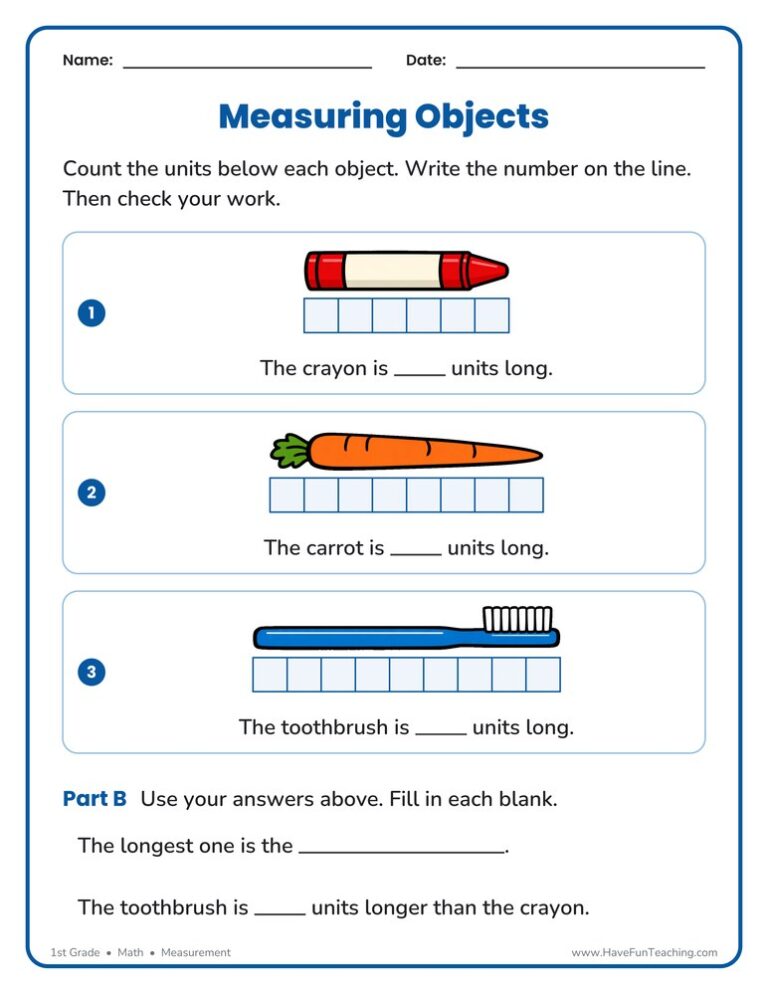
This 1.MD.2 Common Core Worksheet has 1st graders measure a crayon, a carrot, and a toothbrush by counting same-size units, then compare the lengths. Answer key included for fast, no-prep measurement practice.

From our teachers' playbook

How long? Let's find out!

What do 1st graders learn about measurement?

First grade measurement is all about length. Kids put three objects in order from shortest to longest, and compare two objects using a third one ("the pencil is longer than the crayon, and the crayon is longer than the eraser, so..."). Then they measure by lining up same-size units, like cubes or paper clips, end to end with no gaps: The book is 9 cubes long. The big idea is that a measurement is a count of equal units. The click moment comes when a child notices that the same desk measures more paper clips than shoes, and can explain why.

Our favorite ways to teach measurement

Measuring is a verb! These moves keep kids up, moving and measuring real things.

Cube it

Give partners a bag of snap cubes and a list of classroom objects. They build a cube train the length of each one and record the count. Watch for gaps and overlaps, and have kids check each other's trains before they write.

Why it works: the U.S. Department of Education's guide for teaching elementary math recommends moving from hands-on objects to drawings to numbers.

Measuring with Cubes ActivityTry it withMeasuring with Cubes ActivityActivitiesOpen it →

Line them up

Draw three ribbons on the board that don't start at the same spot and ask which is longest. Kids will guess wrong! It's the perfect moment to teach that we line things up at the same starting point before we compare.

Why it works: pairing a picture with each word gives kids two ways to remember it, a well-tested principle of how people learn (Mayer, 2009).

Using Length to Order Objects WorksheetTry it withUsing Length to Order Objects WorksheetWorksheetsOpen it →

Longer, shorter, compare

Mix quick comparison pairs into morning work: a shoe and a book, a pencil and a marker. Kids write "longer" or "shorter" and then prove it with real objects at their table.

Why it works: shuffled practice teaches kids to choose the right strategy, not just repeat one, and it improved test scores in research (Rohrer and Taylor, 2007).

Comparing Two Lengths WorksheetTry it withComparing Two Lengths WorksheetWorksheetsOpen it →

Questions parents and teachers ask us

What measurement do 1st graders learn?

First graders mostly learn length. They order objects by length, compare lengths using a third object, and measure with non-standard units like cubes or paper clips laid end to end.

Do 1st graders use rulers?

Usually not yet for inches or centimeters. First graders measure with same-size objects first so they understand what a unit is. Rulers with standard units come in 2nd grade.

Why do we measure with paper clips instead of a ruler?

Counting equal objects shows kids what a ruler really does. Once they see that a measurement is just a count of equal units with no gaps, rulers make sense instead of being a mystery.

How can I practice measurement at home?

Measure things with LEGO bricks, spoons or your child's own feet. Ask "How many spoons long is the table?" and then "Would it be more or fewer forks?" Comparing units builds real understanding.