

Comparing Object Lengths Worksheet
Students measure four everyday objects on an inch ruler, then use this comparing object lengths worksheet to find how many inches longer one object is than another. 2nd Grade, answer key included.
$6.97
Or free with a membership — members pay $3.33/mo for all 10,000+ resources. See plans
Want this one free?
Tell us where to send it and it’s yours — no card, no catch.
One free resource per teacher. We’ll also send free teaching ideas each week — unsubscribe anytime.
Teaching is easier with a membership
Unlimited printables, games & videos for PreK–6th — for your classroom or homeschool. Cancel anytime.
Start your 3-day free trial$0 today · cancel anytime · Instant access to 10,000+ resources
About this resource
Description
Measuring is one of the first places where second graders see math describing the real world, and comparing two lengths is the step that turns a measurement into an answer. This comparing object lengths worksheet asks students to line an object up with an inch ruler, read the length at the far end, and then work out how much longer one object is than another. That last step is the heart of the standard: a length difference is not just a bigger number, it is an amount, and it has to be reported in the same unit both objects were measured in.
Part A of this 2nd grade measurement worksheet gives students four real objects — a paper clip, a paintbrush, a crayon, and a key — each printed at true size beside its own inch ruler. Students line the left end of the object up with the zero mark, read the length where the object ends, and write it in the box. Part B then turns those four measurements into three comparison sentences, including one that reaches across both rulers, so students have to look back at the answers they recorded rather than reread a single picture.
What’s Included
- 1 print-ready PDF worksheet
- Answer key
- 4 ruler measuring activities and 3 length comparison sentences
Three things make this comparing object lengths worksheet stick. First, every object is drawn at actual size, so a child who lays a real ruler on the page gets the same answer the printed ruler gives, and measuring stops being a picture exercise. Second, the objects are everyday classroom items at believable lengths, which keeps the numbers honest and gives students something concrete to picture later. Third, the comparison sentences ask for the unit as well as the number, so three becomes three inches and the answer keeps its meaning.
Away from the page, hand students a ruler and send them hunting for something exactly four inches long, then for something two inches longer than that. Line crayons, pencils, and erasers up shortest to longest before measuring, and check afterward whether the order held. Ask students to measure one object twice, once starting at zero and once starting at the one-inch mark, and talk about why the second reading comes out wrong. Comparing measurements at home works just as well, since shoes, spoons, and library books all make good practice.
Related Resources
What teachers say
Reviews
You must be logged in to post a review.

This Measuring in Centimeters and Inches Worksheet has 2nd graders measure a key, crayon, and pencil in two units on a ruler. Answer key included — a hands-on way to build ruler skills and early number sense.

A Measuring Inches Worksheet where 2nd graders read an inch ruler to measure four objects, then order the lengths from shortest to longest. Answer key included for fast, no-prep practice.

This Reading Thermometers Worksheet has 2nd graders read four Fahrenheit thermometers to the nearest two degrees, then color two more to match a given temperature. Answer key included for fast, no-prep measurement practice.

Students measure two objects with an inch ruler and find the difference on this Comparing Two Measurements Worksheet, a 2nd grade printable with an answer key included that builds real measuring confidence.
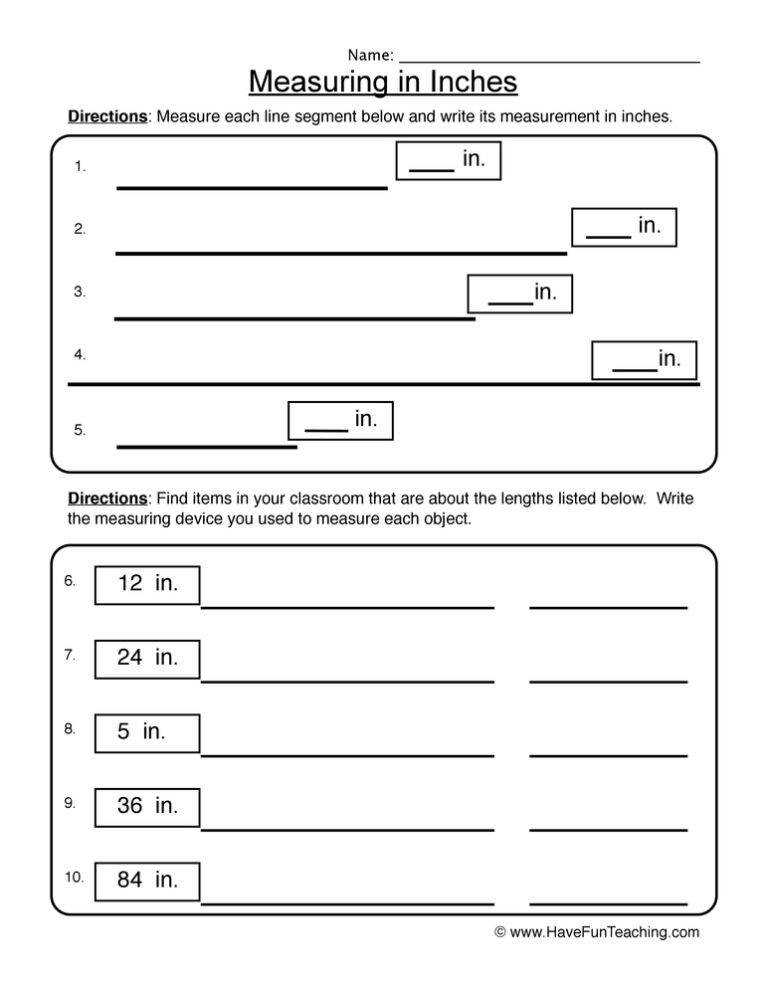
This measurement in inches worksheet gives 2nd graders three true-size objects to measure on a printed ruler, plus a comparison question. Answer key included for quick, no-prep measuring practice.
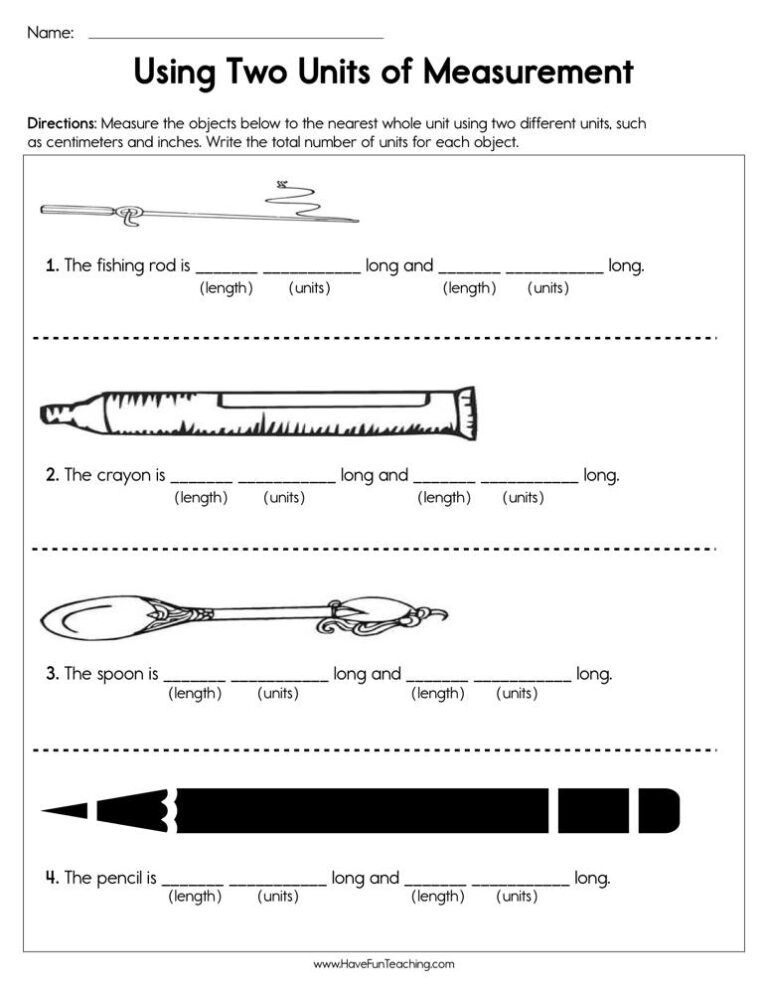
A using two units of measurement worksheet where 2nd graders measure a crayon, a spoon, and a paintbrush in both inches and centimeters on a true-scale ruler. Answer key included for quick, no-prep practice.
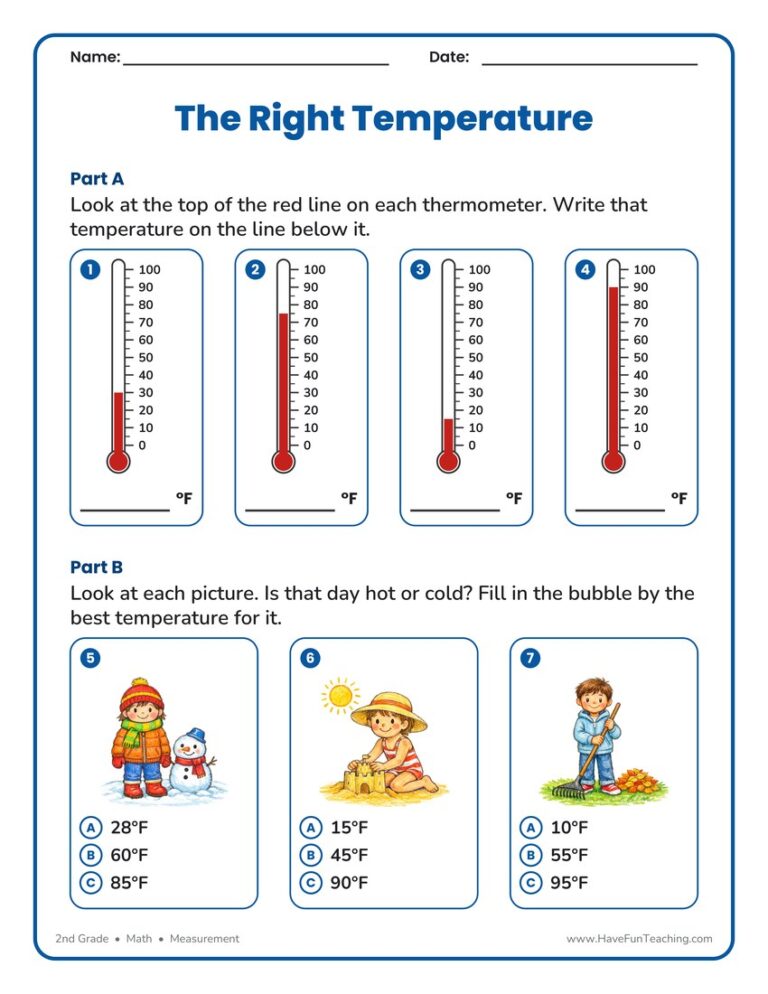
The Right Temperature Worksheet has 2nd graders read four Fahrenheit thermometers and match a temperature to three weather pictures. An answer key is included, so it works as no-prep morning work or a quick measurement check.
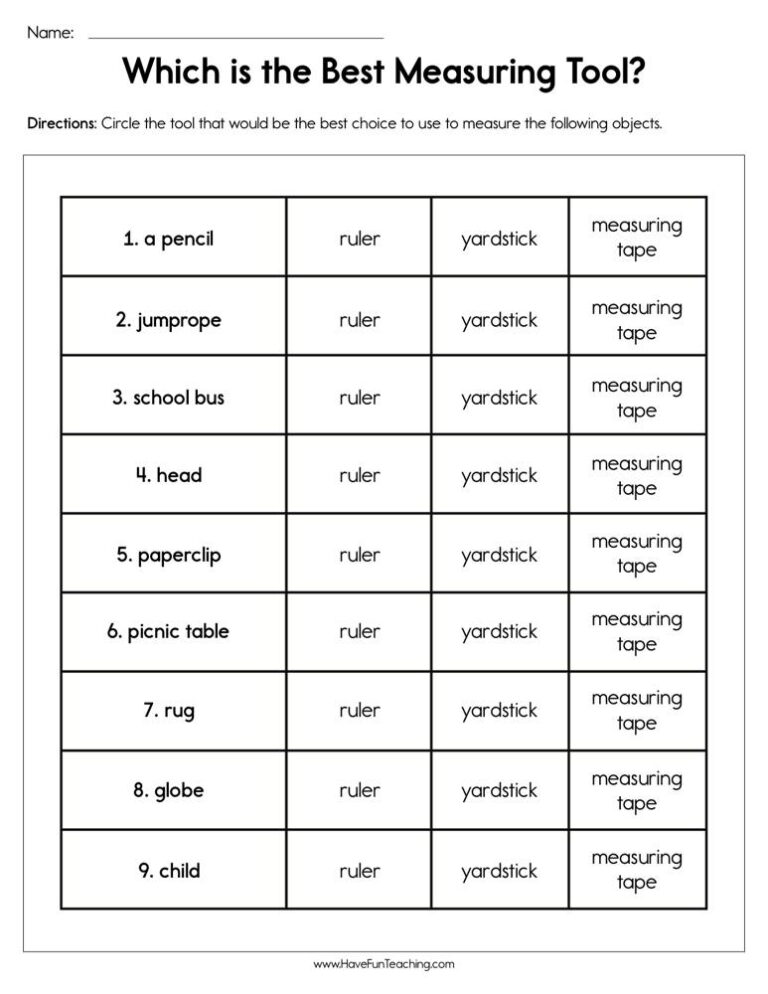
This which is the best measuring tool worksheet asks 2nd graders to pick a ruler, yardstick, or measuring tape for six everyday objects. Answer key included, so measurement practice takes no prep at all.

This reading a thermometer worksheet gives 2nd graders four Fahrenheit scales to read and three real-life pictures to match to a temperature. Answer key included, so practice is quick to check and ready to print.
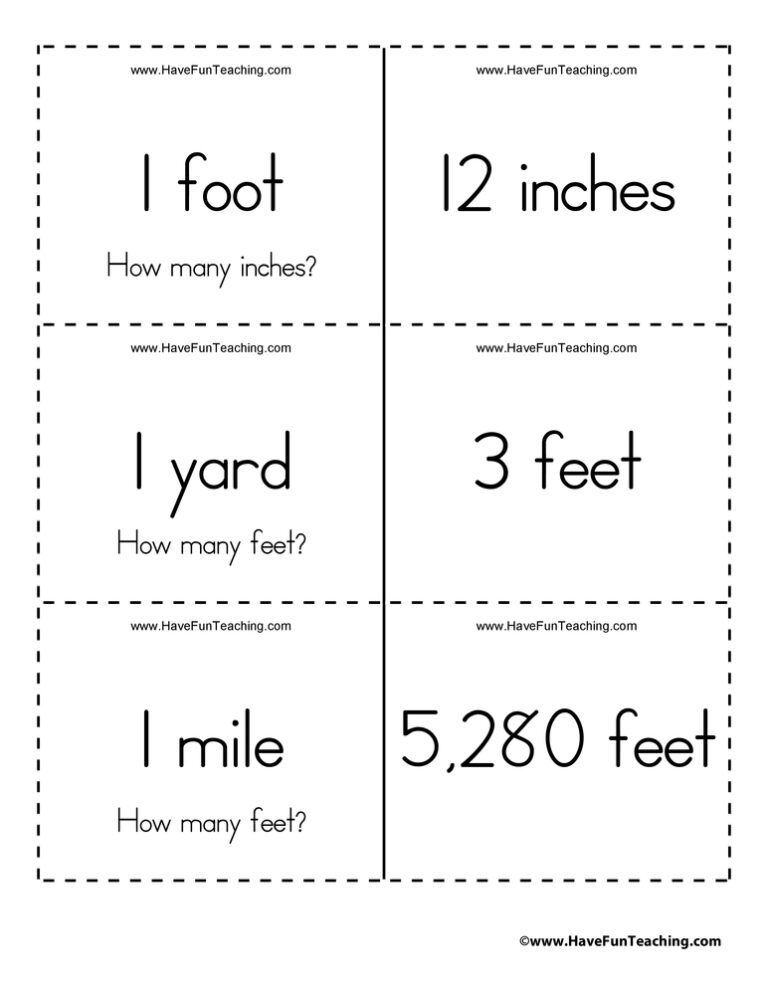
Using Measurement Flash Cards, students build their understanding of unit conversions by matching two units.
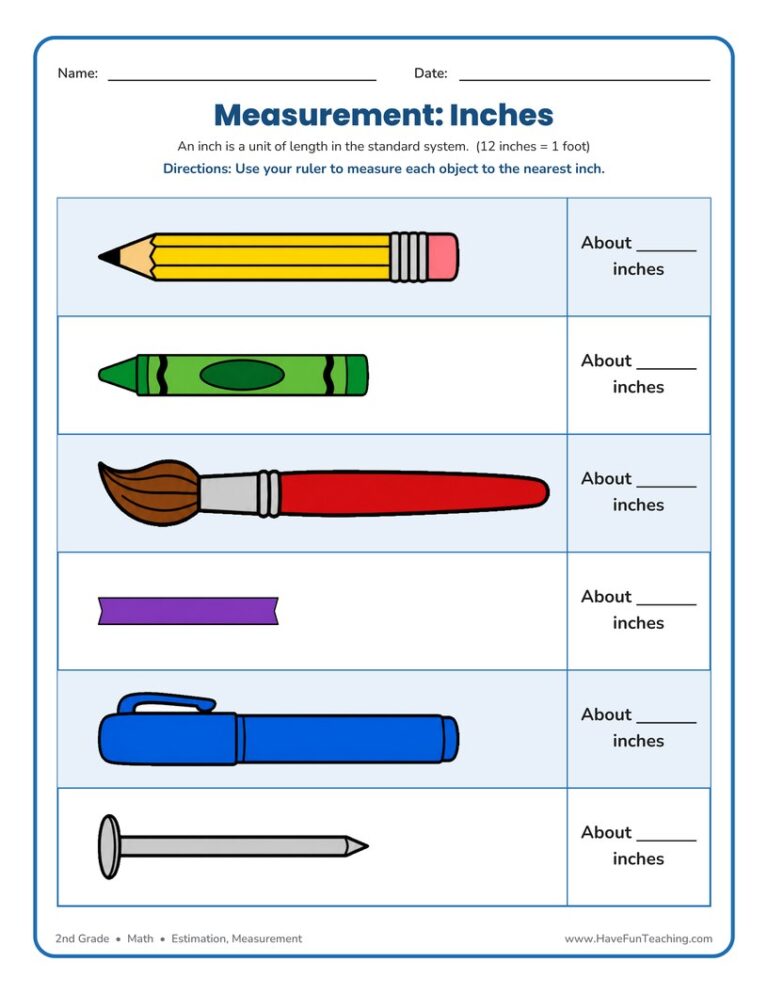
A measuring in inches worksheet where 2nd graders use a ruler to measure six objects to the nearest inch. Includes an answer key — great no-prep practice for estimation and measurement skills.
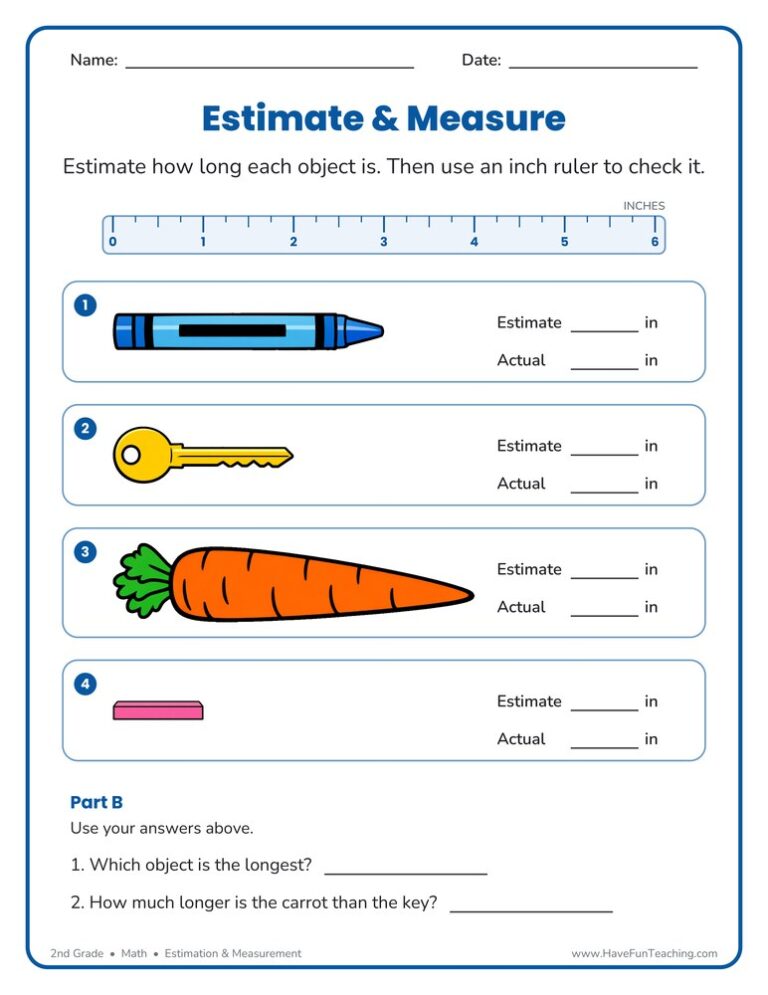
An estimate and measure inches worksheet where 2nd graders guess the length of four everyday objects, then measure each one with a ruler. Answer key included — no-prep practice that builds real number sense.




Reviews
There are no reviews yet