

Working Together Worksheet
This Working Together Worksheet gives 1st graders four partner-talk choices to make and one habit to write down. Answer key included, so teamwork practice takes no prep.
$6.97
Or free with a membership — members pay $3.33/mo for all 10,000+ resources. See plans
Want this one free?
Tell us where to send it and it’s yours — no card, no catch.
One free resource per teacher. We’ll also send free teaching ideas each week — unsubscribe anytime.
Free teacher account · no credit card
- Instant digital download
- Printable PDF + answer key
- Made by real teachers
Teaching is easier with a membership
Unlimited printables, games & videos for PreK–6th — for your classroom or homeschool. Cancel anytime.
Start your 3-day free trial$0 today · cancel anytime · Instant access to 10,000+ resources
About this resource
Description
Working together is one of the first real conversation skills a young student
practices at school. Before a first grader can plan a project with a classmate, they have to
learn the quiet habits that make partner talk work: look at the person who is speaking, wait
for a turn instead of talking over someone, ask a friendly question when a partner has a
different idea, and say thank you when the job is finished. This Working Together Worksheet
turns those habits into four clear choices a child can read, think about, and answer on their
own.
This first grade social skills worksheet opens with four fill-in-the-bubble questions. Each
one describes a small, familiar moment with a partner — someone is talking, someone wants
to share an idea, someone disagrees, someone finishes a job — and asks the student to pick
the response a good partner would choose. A short writing prompt at the bottom asks the child to
put one of those habits into their own words. Use it as a whole-class discussion starter before
partner work, as morning-meeting practice, or as a quiet follow-up after a group activity that
did not go smoothly.
What’s Included
- 1 print-ready PDF worksheet
- Answer key
- 4 fill-in-the-bubble partner-talk questions and 1 written response
There are three reasons this working together worksheet helps children learn the skill.
First, it makes an invisible skill visible: instead of hearing “be a good partner,”
the child sees four specific things a good partner actually does. Second, the multiple-choice
format lets a beginning reader succeed independently, because every option is a short sentence
built from words a first grader already knows. Third, the writing prompt asks the child to
choose a habit and commit to it, which is the step that carries the lesson off the page and into
the next group activity.
Teachers and parents can stretch the lesson in simple ways. Role-play each question with two
volunteers and let the class vote on the best response. Post the four habits on an anchor chart
and point to one before every partner activity. Give partners a talking object so only the
person holding it speaks, then ask the listener to repeat one thing they heard. At home, try the
same four moments at dinner, or read a picture book about friendship and pause to ask what a
good partner would do next.
Related Resources
What teachers say
Reviews
You must be logged in to post a review.
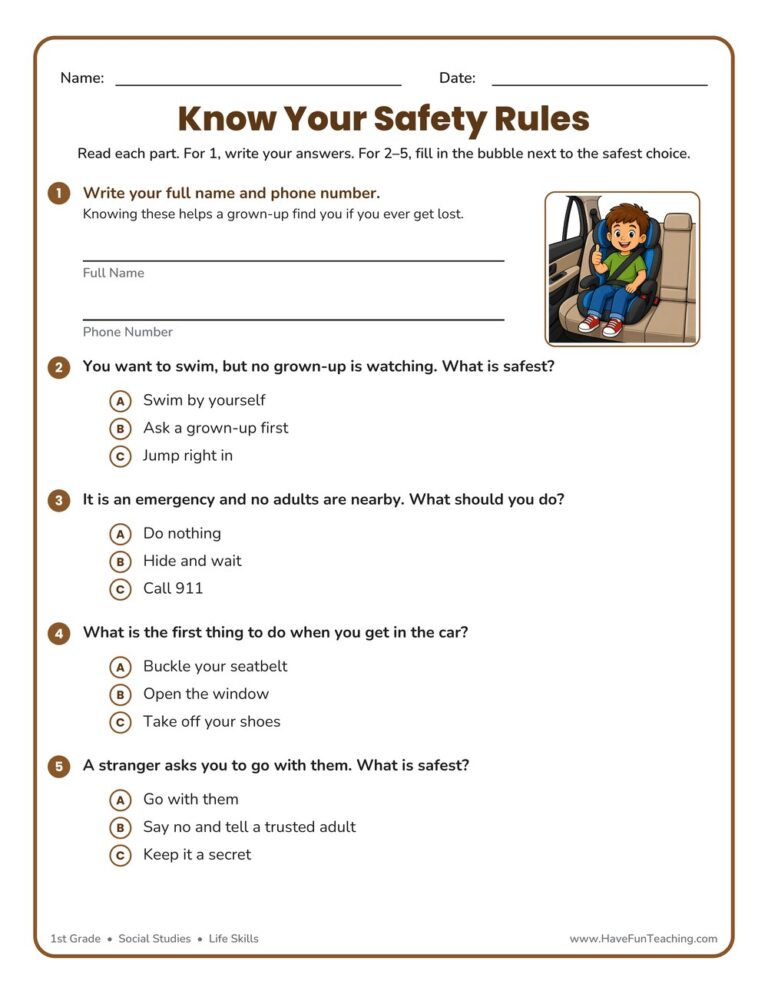
The Know Your Safety Rules Worksheet helps 1st graders make smart choices for swimming, emergencies, car rides, and strangers. Answer key included—a no-prep way to build real-life safety confidence.


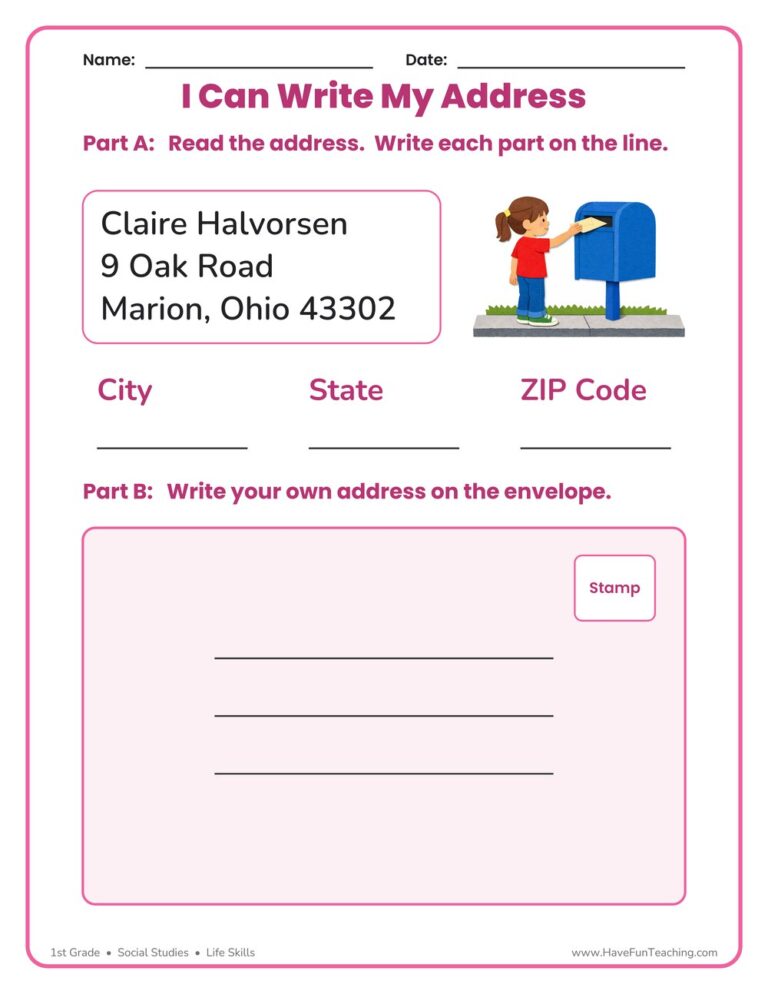
This My Address Envelopes and Letters Worksheet has first graders read a sample address, write the city, state, and ZIP code, then address their own envelope. Answer key included, with no prep beyond printing.

This fire safety worksheet has 1st Grade students match four safety pictures to their words, then trace and write 9 1 1. An answer key is included, so it is ready to print and go.


This Writing Your Address Worksheet helps 1st graders write their street address, city, state, and ZIP code, then match each part of an address to its name. Answer key included for quick, no-prep practice.

Using Writing Phone Number Activity, students practice writing your phone number on the worksheet and then color in the phone with the correct numbers.

Help first graders learn their important telephone numbers with this worksheet. Kids write two phone numbers in digit boxes and choose when to call 911 or family. Includes an answer key and builds real safety confidence.

Using these Bathroom Door Signs - Enter and Do Not Enter, students improve their bathroom procedures by using these signs to know if the bathroom is occupied or not.

This Work Ethic Reading Comprehension Digital Worksheet is an online digital worksheet for Google Classroom & online distance learning.
Reviews
There are no reviews yet