
Skip to content
Start My 3 Free Days $0 today · cancel anytime

Speaking and Listening Resources

118 speaking and listening resources: 41 worksheets, 37 activities, 36 Common Core Lessons and more. How teachers use these

Speaking and Listening Resources

118 speaking and listening resources: 41 worksheets, 37 activities, 36 Common Core Lessons and more. How teachers use these

Worksheet
Worksheet2nd GradeKey Ideas and Details Worksheet

This key ideas and details worksheet asks 2nd graders to read a short passage about rain, bubble in the main idea, and write two supporting details. Answer key included for quick, no-prep reading practice.

Worksheet
Worksheet1st GradeAsking Questions About Pictures Worksheet

This Asking Questions About Pictures Worksheet gives 1st Grade students an illustrated scene, four fill-in-the-bubble questions, and room to write a question of their own. Answer key included, so checking takes seconds.

Worksheet
Worksheet2nd GradeCollaboration Worksheet

Collaboration Worksheet asks 2nd grade students to mark six group-work sentences Y or N and match four group skills back to them, with an answer key, so cooperating becomes something they can name.

Worksheet
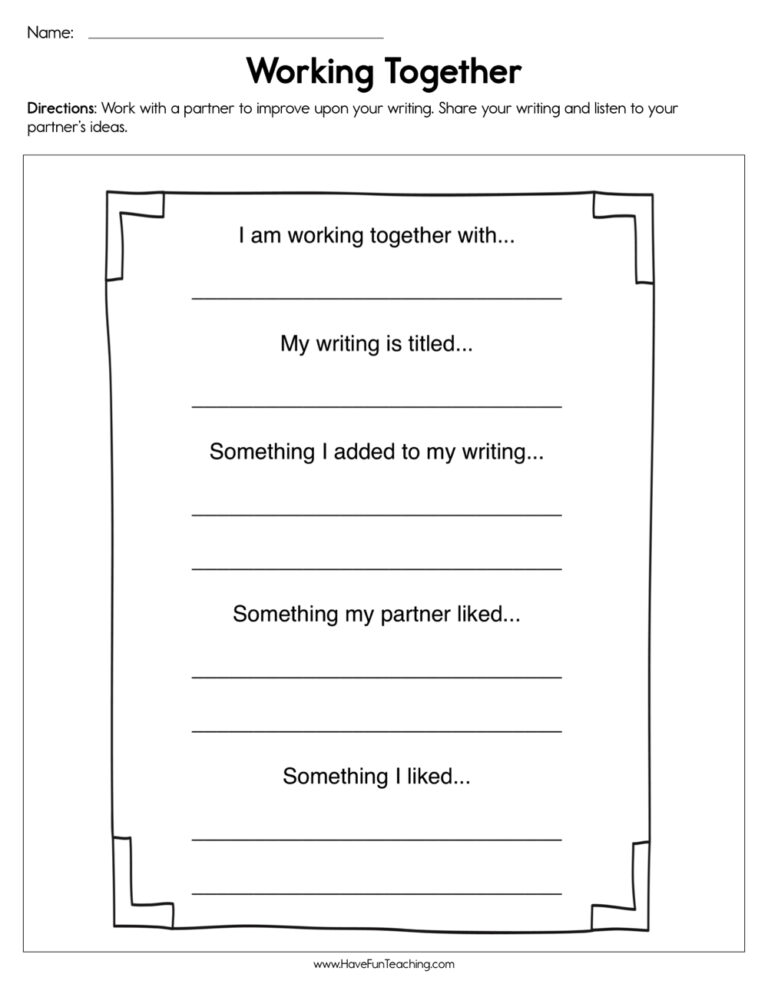
Worksheet1st GradeWorking Together Worksheet

This Working Together Worksheet gives 1st graders four partner-talk choices to make and one habit to write down. Answer key included, so teamwork practice takes no prep.

Worksheet
Worksheet2nd GradeSmall Group Checklist Worksheet

This small group checklist worksheet lets 2nd grade students check off six discussion rules they followed and finish one sentence about what they learned from their group that day.

Worksheet
Worksheet3rd GradeCollaboration Discussion Worksheet

A 3rd Grade collaboration discussion worksheet that guides students through group talk with a six-rule checklist and note spaces for others' ideas, their own thinking, and what they learned.

Worksheet
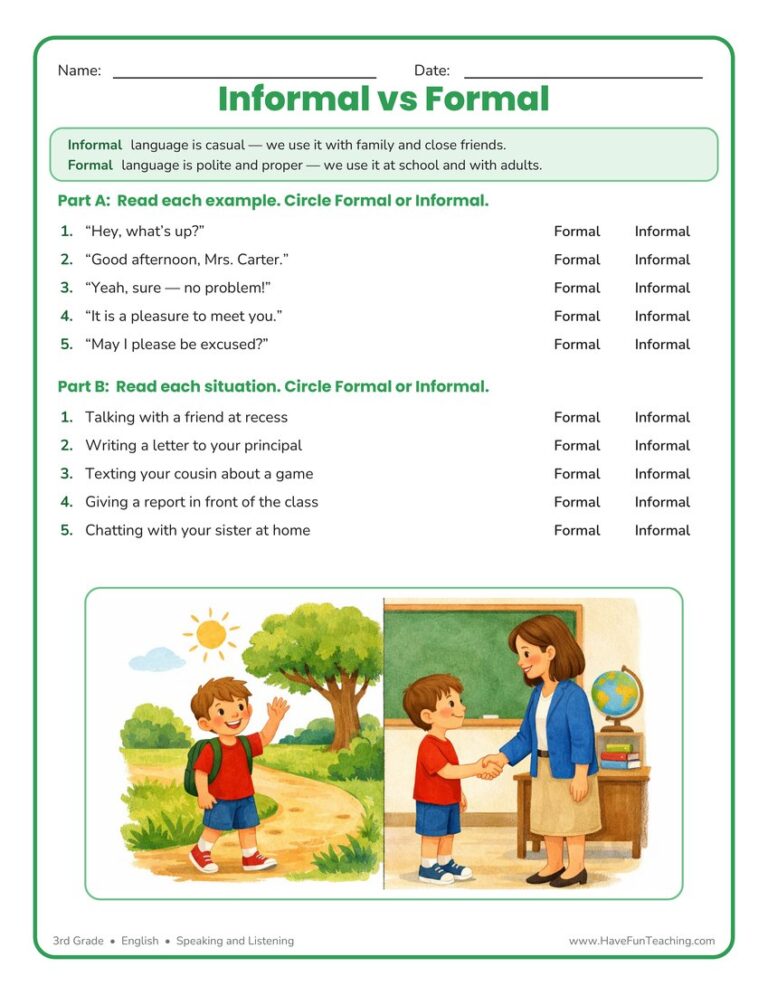
Worksheet3rd GradeInformal vs Formal Worksheet

This Informal vs Formal Worksheet helps 3rd graders decide when to use formal or informal language across real examples and everyday situations. A complete answer key is included for quick, no-prep speaking and listening practice.

Worksheet
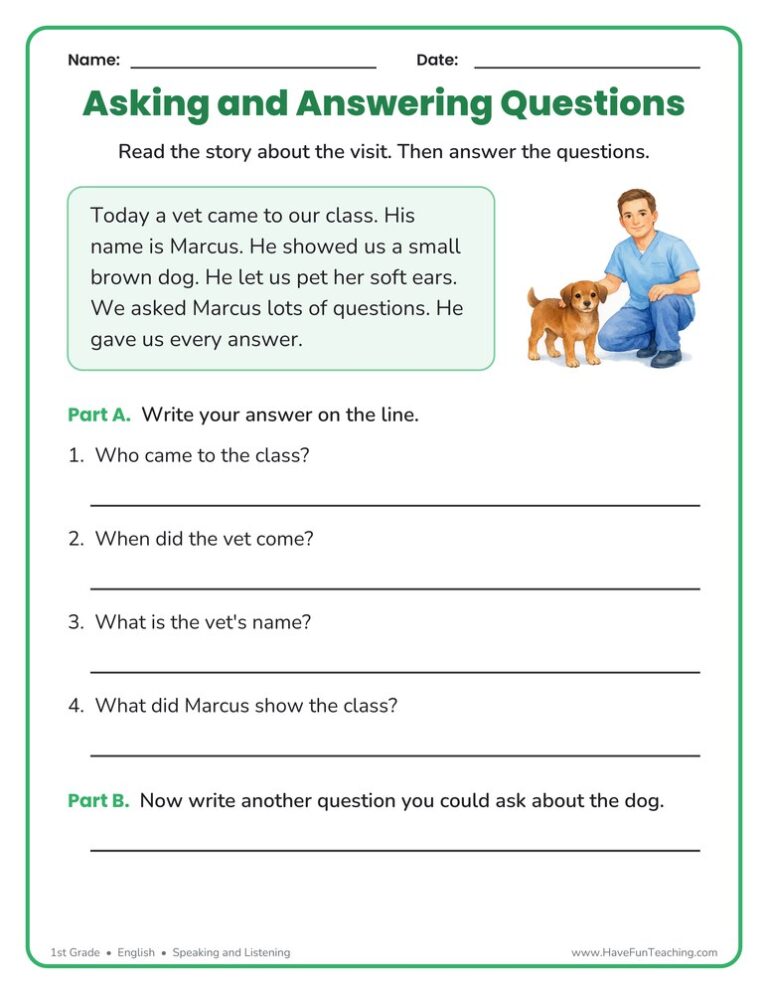
Worksheet1st GradeAsking and Answering Questions Worksheet

This Asking and Answering Questions Worksheet gives 1st Grade students a short story, four text-based questions, and room to write a question of their own. Answer key included, so checking work takes seconds.

Worksheet
WorksheetKindergartenAbout Me Worksheet

This About Me worksheet lets kindergarten students draw a self-portrait and share their name, age, and favorite things for back to school. A no-prep, open-ended way to build confidence and classroom community.

Worksheet
Worksheet1st GradeSpeaking Worksheet

This speaking worksheet helps 1st graders practice eye contact, clear words, and a strong voice, then write their own friendly greeting. Answer key included for fast, no-prep speaking and listening practice.

Workbook
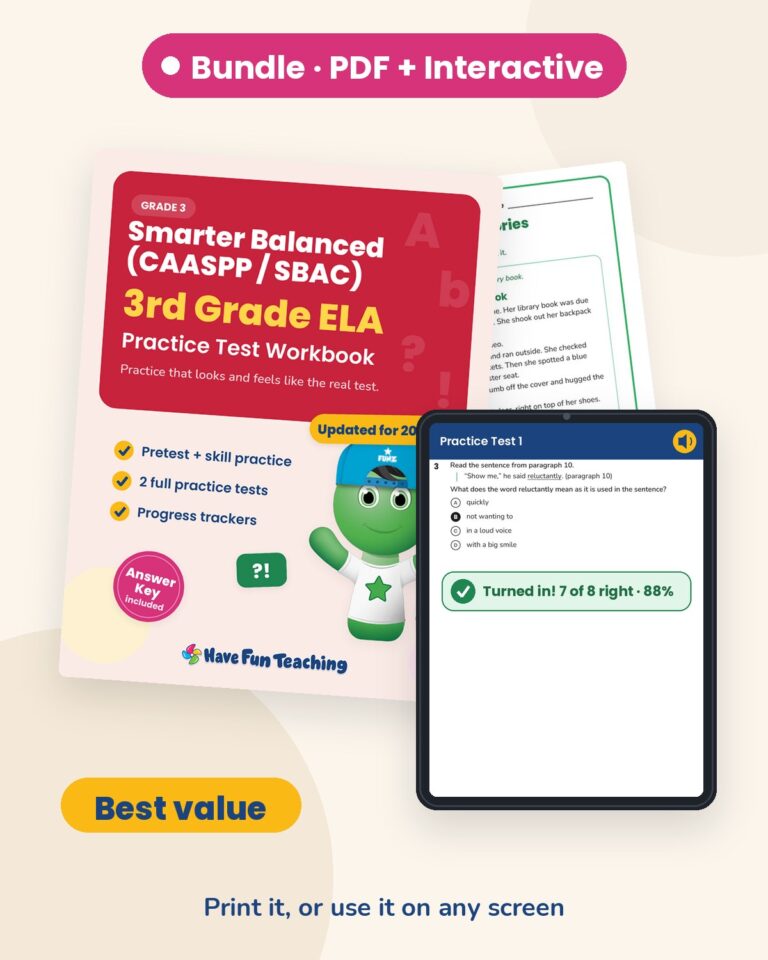
Workbook3rd GradeSmarter Balanced (CAASPP / SBAC) 3rd Grade ELA Practice Test Workbook

A Smarter Balanced (CAASPP / SBAC) 3rd grade ELA practice test workbook for teachers, with a pretest, skill practice for all 24 standards, mixed review and 2 full-length practice tests. Answer key included, so test prep is ready to go.

Worksheet
Worksheet3rd GradeWriting Formal vs. Informal Letters Worksheet

This Writing Formal vs. Informal Letters Worksheet gives 3rd Grade students practice labeling letter lines, swapping casual phrases for formal ones, and matching a letter to its reader. An answer key is included.

Worksheet
Worksheet1st GradeOral Storytelling Worksheet

Using this oral storytelling worksheet, first grade students put three story pictures in order, add the time words First, Next, and Last, and then retell the whole story out loud. An answer key is included.

Activity
Activity1st GradeDescribing Nouns Adjective Activity

This describing nouns adjective activity has 1st and 2nd Grade partners describe picture cards with adjectives and play a guessing game. Answer key included.

Activity
Activity1st GradeDescribing Words Activity

This describing words activity has 1st and 2nd Grade students match 8 picture cards with 16 adjective cards, with a recording sheet, practice page and answer key included.

Worksheet
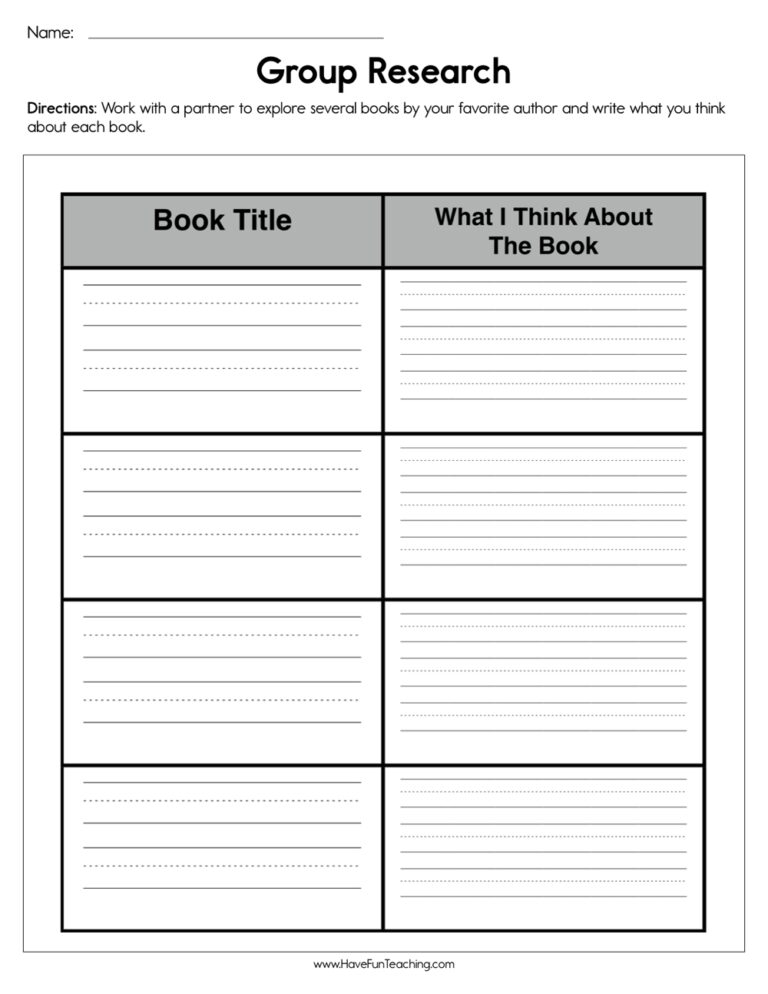
Worksheet2nd GradeGroup Research Worksheet

The Group Research Worksheet lets 2nd grade partners read books by one author, list each title, and write what they think, building reading response and teamwork skills.

Worksheet
Worksheet2nd GradeFormal vs Informal Worksheet

The Formal vs Informal Worksheet helps 2nd graders tell polite, formal language from relaxed, informal language through a sorting activity and a matching activity. Complete answer key included—a quick, no-prep speaking and listening practice.

Workbook
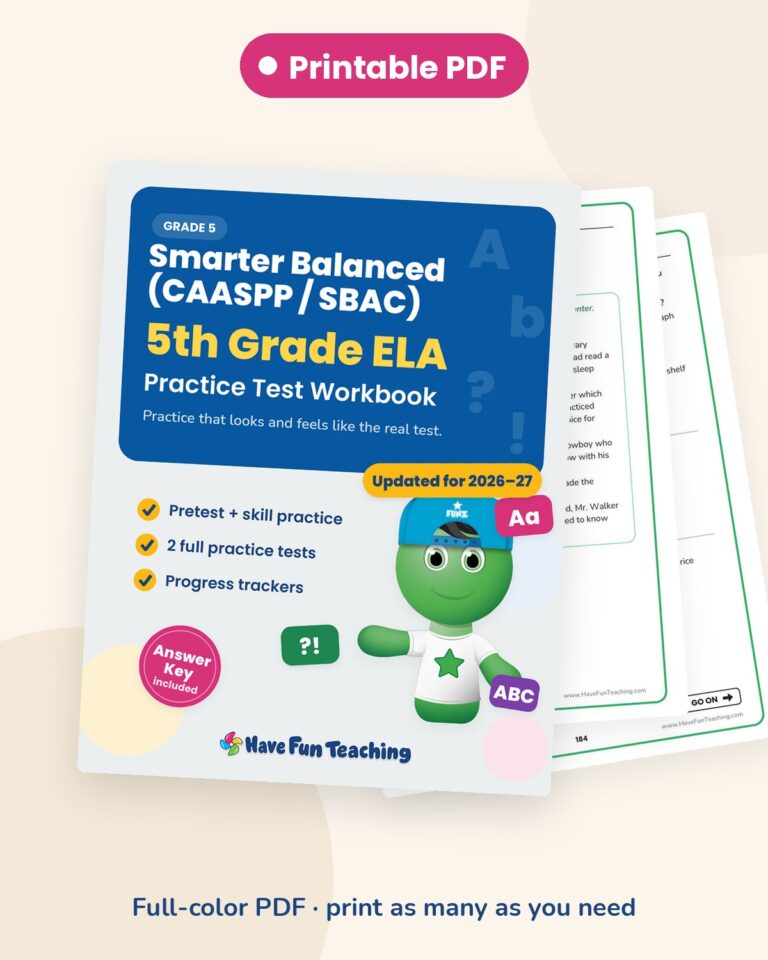
Workbook5th GradeSmarter Balanced (CAASPP / SBAC) 5th Grade ELA Practice Test Workbook

A Smarter Balanced (CAASPP / SBAC) 5th grade ELA practice test workbook for teachers, with a pretest, skill practice for all 24 standards, mixed review and 2 full-length practice tests. Answer key included, so test prep is ready to go.

Activity
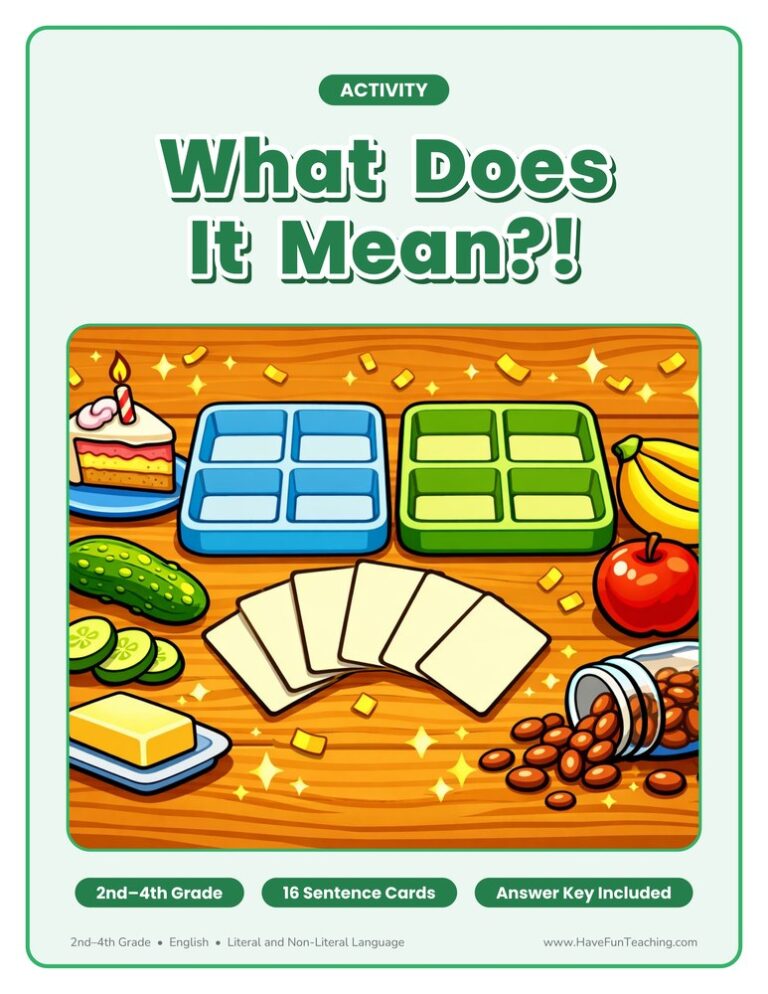
Activity2nd GradeWhat Does it Mean Literal Non-Literal Language Activity

This what does it mean literal non-literal language activity has 2nd to 4th grade students sort 16 food sentence cards and explain idioms. A practice page and answer key are included.

Worksheet
Worksheet2nd GradeSpeaking in Complete Sentences Worksheet

A Speaking in Complete Sentences Worksheet that helps 2nd graders tell a whole sentence from a fragment, find the naming part, and say and write one about a picture. Answer key included for confident sentence practice.

From our teachers' playbook

Talk it out, listen it in

What do kids learn about speaking and listening?

Speaking and listening skills help kids share ideas and learn from others. Young students practice taking turns, listening without interrupting, and asking and answering questions about a story or a picture. They learn to speak in complete sentences, describe things with detail, and tell a story in order. As they grow, kids join small group discussions, build on each other's ideas ("I agree with Mia because..."), and learn when to use formal language, like in a presentation, versus informal language with friends. These skills show up in every subject, every day.

How we teach speaking and listening

Kids learn to talk well by talking a lot, with a little structure. These moves give them both.

Sentence starters on the wall

Post starters like "I agree because...", "I have a different idea..." and "Can you tell me more about...?" Model using them in a class discussion. Kids start borrowing them, and your discussions become more respectful and thoughtful.

Why it works: showing first, practicing together, then letting kids try alone is the "gradual release" model teachers have relied on for decades (Pearson and Gallagher, 1983).

Collaboration Discussion WorksheetTry it withCollaboration Discussion WorksheetWorksheetsOpen it →

Turn and talk with a job

During partner talk, give one child the speaker job and the other the listener job. The listener must repeat back one thing they heard. Then switch. It turns "talk time" into real listening practice.

Why it works: the U.S. Department of Education's guide for teaching elementary math recommends moving from hands-on objects to drawings to numbers.

Asking and Answering Questions WorksheetTry it withAsking and Answering Questions WorksheetWorksheetsOpen it →

Formal or informal?

Read short sentences aloud and have kids decide whether they sound like a job interview or a chat with a friend. Then practice saying the same idea both ways. Kids love the silly fancy voices!

Why it works: in a well-known study, a few short sessions of a simple number board game measurably boosted young children's number skills (Ramani and Siegler, 2008).

Is it Formal or Informal WorksheetTry it withIs it Formal or Informal WorksheetWorksheetsOpen it →

Speaking and listening questions

What are speaking and listening skills?

They include listening carefully, taking turns, asking and answering questions, speaking clearly in complete sentences, and adjusting language for different situations.

Why are speaking and listening skills important?

Kids use them to learn in every subject, work in groups, make friends and share ideas. Strong oral language also supports reading and writing.

How can I help my child become a better listener?

Make eye contact, give one direction at a time, and ask your child to repeat back what they heard. Reading aloud and talking about the story helps a lot too.

What is the difference between formal and informal language?

Formal language is polite and complete, used in presentations or letters. Informal language is relaxed, used with friends and family.

Keep exploring



