Skip to content
Start My 3 Free Days $0 today · cancel anytime

5th Grade Estimation Resources

5 5th grade estimation resources: 3 worksheets, 2 test prep, 2 assessments and more. How teachers use these

5th Grade Estimation Resources

5 5th grade estimation resources: 3 worksheets, 2 test prep, 2 assessments and more. How teachers use these

Worksheet
Worksheet5th GradeRound to the Nearest Ten Word Problems Worksheet

This round to the nearest ten word problems worksheet gives 3rd graders four problems to solve and round, plus one written explanation. An answer key is included, so it prints and goes.

Workbook
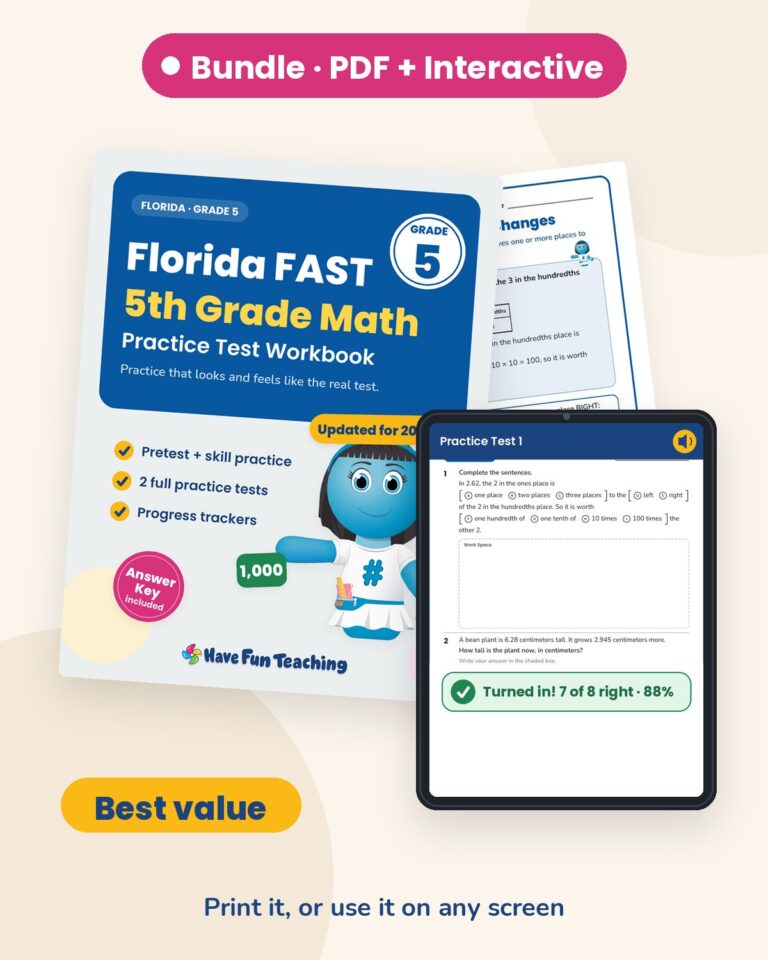
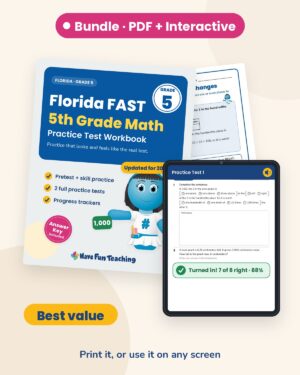
Workbook5th GradeFlorida FAST 5th Grade Math Practice Test Workbook

A Florida FAST 5th grade math practice test workbook for teachers, with a pretest, skill practice for all 36 benchmarks, mixed review and 2 full-length practice tests. Answer key included, so test prep is ready to go.

Worksheet
Worksheet5th GradeRounding to Hundred Millions Worksheet

This Rounding to Hundred Millions Worksheet gives 5th Grade students six numbers to round plus two multi-step story problems, with an answer key that makes checking quick.

Workbook
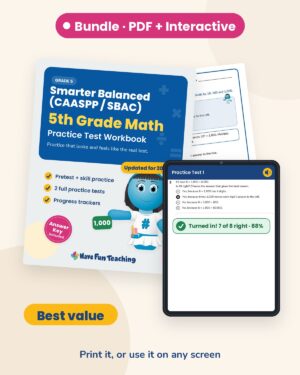
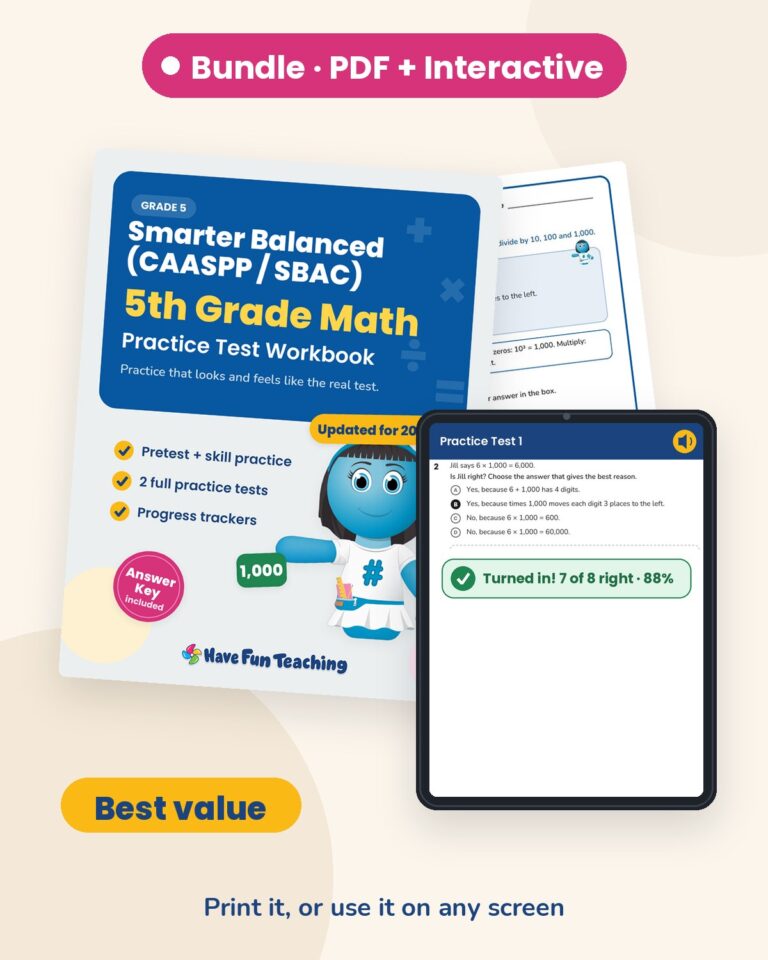
Workbook5th GradeSmarter Balanced (CAASPP / SBAC) 5th Grade Math Practice Test Workbook

A Smarter Balanced (CAASPP / SBAC) 5th grade math practice test workbook for teachers, with a pretest, skill practice for all 37 standards, mixed review and 2 full-length practice tests. Answer key included, so test prep is ready to go.

Worksheet
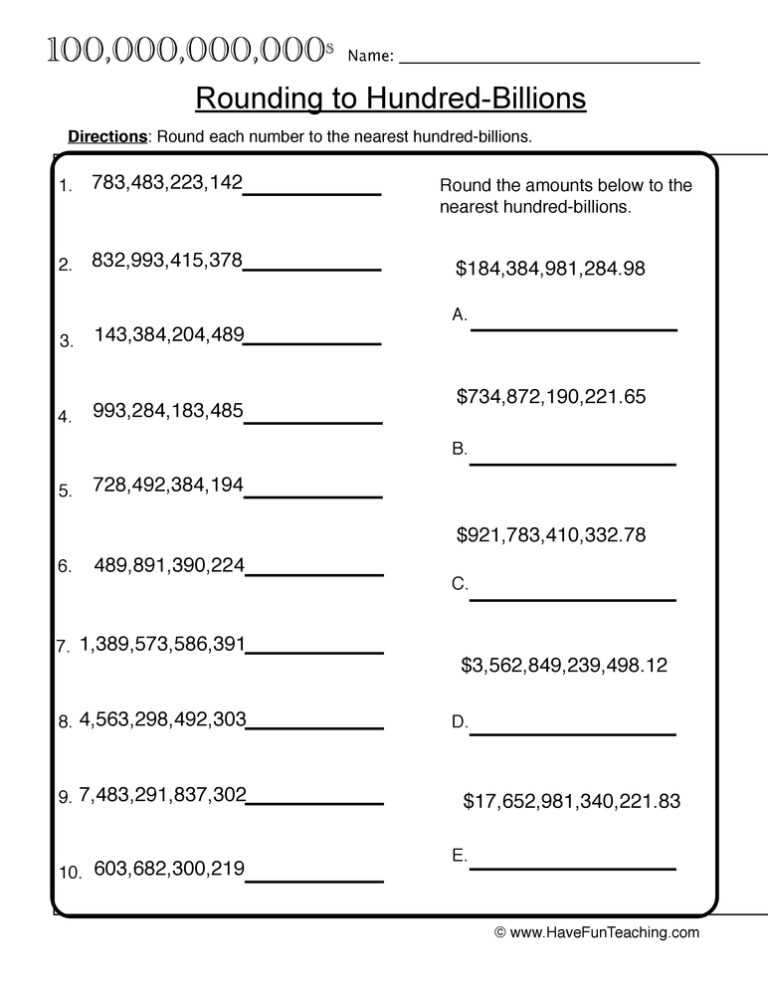
Worksheet5th GradeRounding to Hundred Billions Worksheet

This Rounding to Hundred Billions Worksheet gives 5th grade students six twelve-digit numbers and two story problems to round, with an answer key, to build strong place value and estimation skills.

From our teachers' playbook

Close enough is a superpower

What do 5th graders learn about estimation?

In 5th grade, estimation becomes a checking tool. Kids round whole numbers to any place and decimals to the nearest whole, tenth or hundredth. They estimate products and quotients with compatible numbers, like 412 ÷ 8 ≈ 400 ÷ 8 = 50, and estimate sums of fractions using benchmarks like 0, ½ and 1. Most importantly, they learn to ask "Does my answer make sense?" The click comes when a kid catches their own mistake because the exact answer is nowhere near the estimate.

Our favorite ways to teach estimation in 5th grade

Estimation sticks when kids use it every day, not just in one chapter. These moves make it a habit.

Estimate first, every time

Before solving any word problem, kids write a quick estimate in the corner. After solving, they circle it if the answer is close and redo the problem if it is not. A few weeks of this and kids start catching their own errors.

Why it works: short practice spread over several days beats one long session, according to a large review of learning research (Dunlosky and colleagues, 2013).

Round to the Nearest Ten Word Problems WorksheetTry it withRound to the Nearest Ten Word Problems WorksheetWorksheetsOpen it →
Mixed reasoning practice

Mix estimation questions into regular practice: "Which is the best estimate for 6.8 × 31?" Choosing between close options pushes kids to think about place value instead of just rounding by rote.

Why it works: mixing different kinds of problems in one practice set helped students do far better on a later test (Rohrer and Taylor, 2007).

Florida FAST 5th Grade Math Practice Test WorkbookTry it withFlorida FAST 5th Grade Math Practice Test WorkbookAssessmentsOpen it →

Count squares, then check

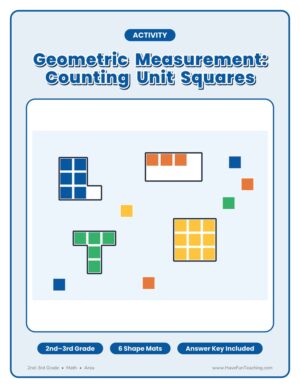
Have kids estimate the area of a shape on a grid, then count the unit squares to check. Talk about why their estimate was too high or too low. Estimating with a picture builds a feel for size that numbers alone cannot.

Why it works: the U.S. Department of Education's guide for teaching elementary math recommends moving from hands-on objects to drawings to numbers.

Geometric Measurement Estimate and Count Unit Squares ActivityTry it withGeometric Measurement Estimate and Count Unit Squares ActivityActivitiesOpen it →

Questions about teaching estimation in 5th grade

What estimation skills do 5th graders need?

Fifth graders round whole numbers and decimals, estimate sums, differences, products and quotients, and use estimates to check if answers are reasonable. They also estimate with fractions using benchmarks like ½.

What are compatible numbers?

Compatible numbers are numbers that are easy to compute mentally. To estimate 238 ÷ 6, a student might use 240 ÷ 6 = 40, since 24 and 6 are friendly together.

How is estimating different from rounding?

Rounding is one way to estimate, by changing a number to the nearest ten, hundred or tenth. Estimating is the bigger goal of finding an answer that is close enough, and it can also use compatible numbers or benchmarks.

Why does estimation matter?

Estimating helps kids check their work and catch mistakes like a misplaced decimal. It is also the math people use every day, like guessing a grocery total before checkout.