
Skip to content
Start My 3 Free Days $0 today · cancel anytime

5th Grade Poetry Resources

6 5th grade poetry resources: 5 worksheets and 1 activity. How teachers use these

5th Grade Poetry Resources

6 5th grade poetry resources: 5 worksheets and 1 activity. How teachers use these

Worksheet
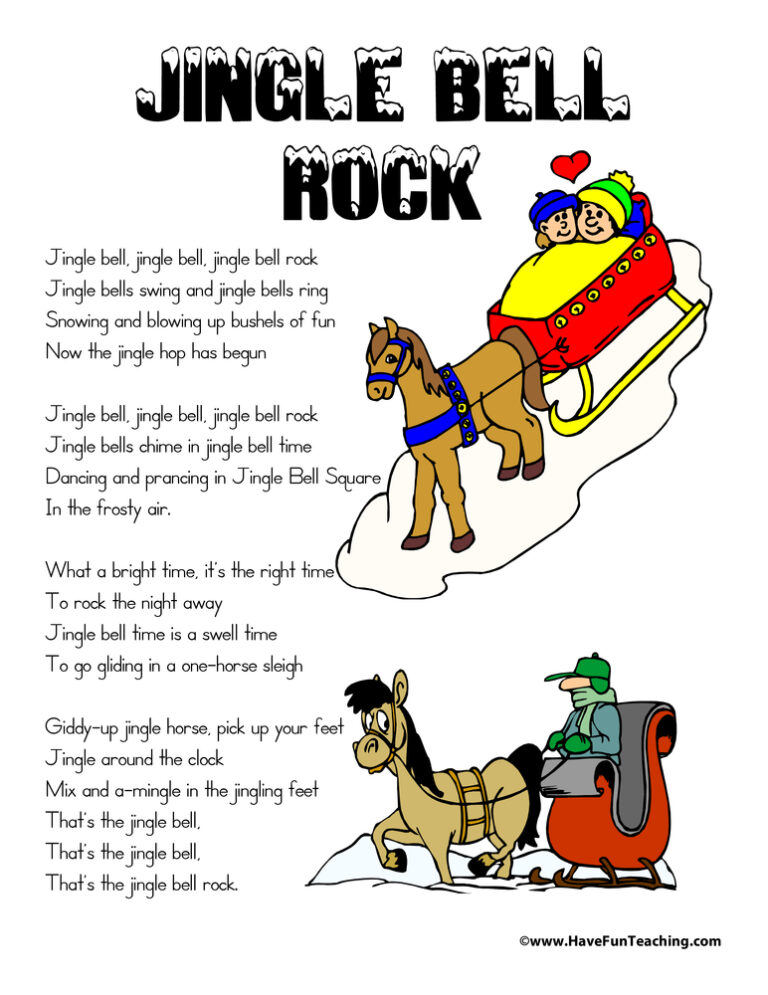
Worksheet5th GradeJingle Bells Lyrics

Using Jingle Bells Lyrics, students can follow along with the memorable song in order to know the which words to sing!

Worksheet
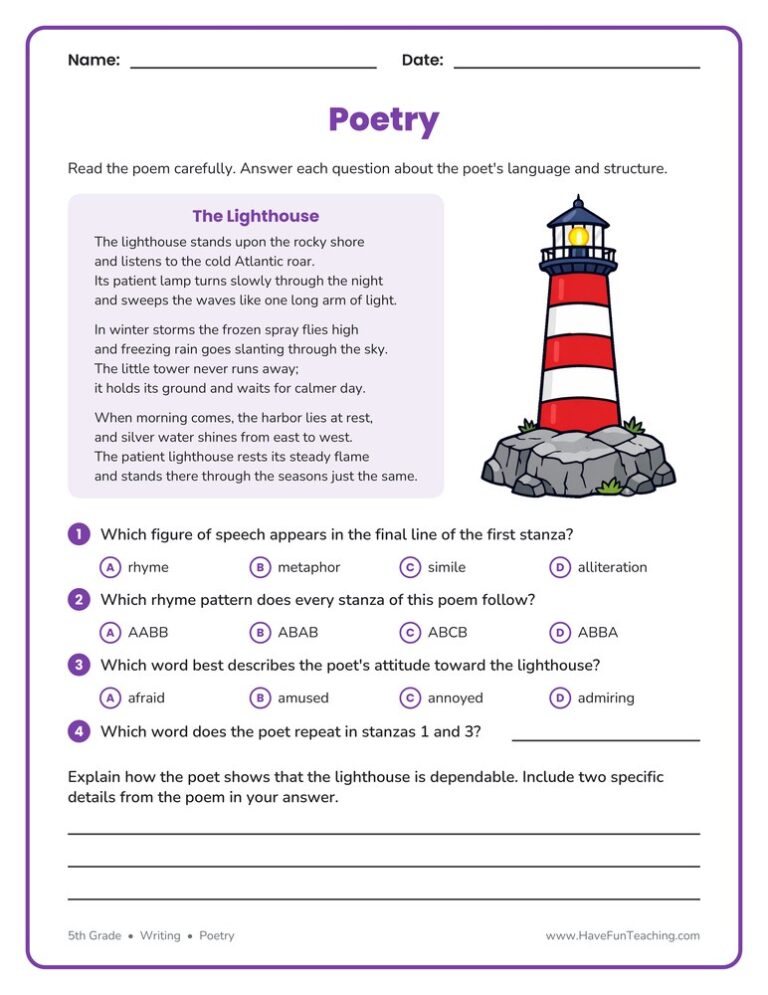
Worksheet5th GradePoetry Response Worksheet

This poetry response worksheet gives 5th grade students an original poem plus questions on simile, rhyme pattern, tone, and repetition. An answer key is included, so checking work takes a minute.

Worksheet
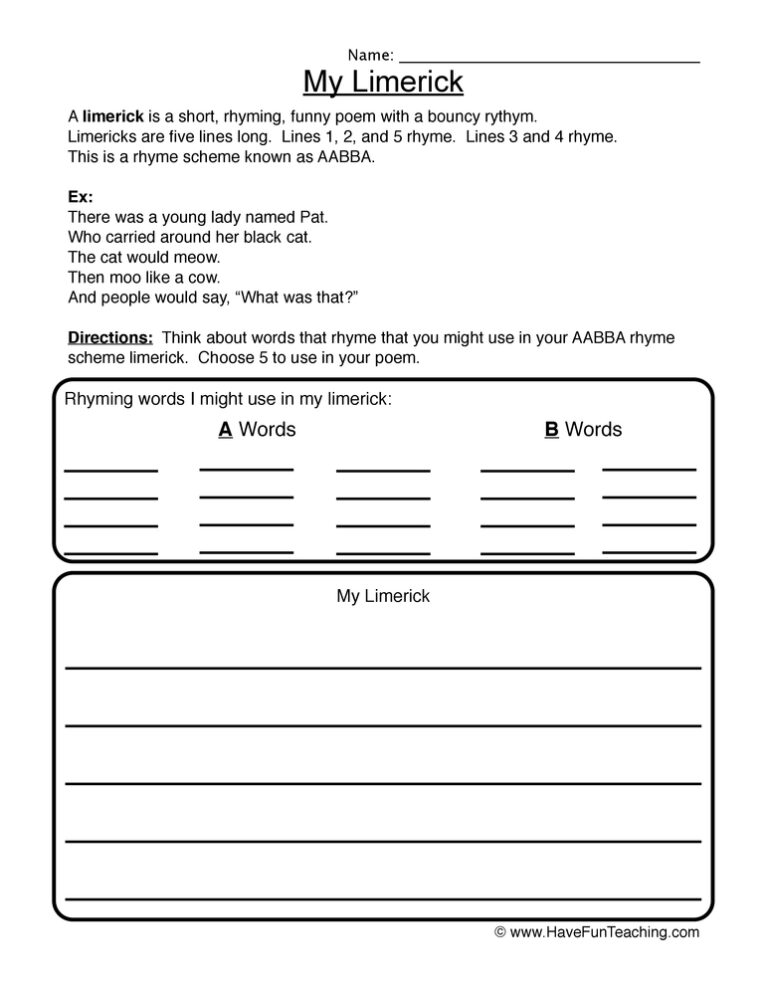
Worksheet5th GradeMy Limerick Worksheet

My Limerick Worksheet gives 4th graders a five-line poem to label, two rhyming word columns to fill, and space to write a limerick of their own. Answer key included for fast, no-prep poetry practice.

Worksheet
Worksheet5th GradeReading Prose and Poetry Worksheet

This Reading Prose and Poetry Worksheet gives 5th grade readers a reading log for recording titles and authors, naming each form and rating every piece they read on their own.

Activity
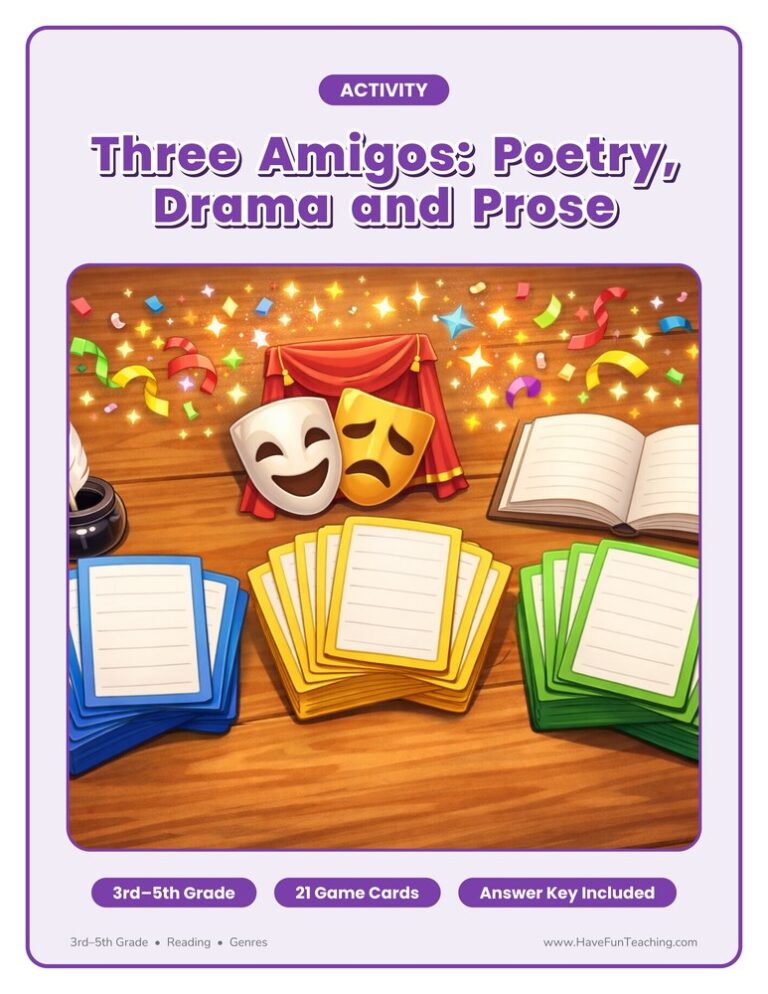
Activity5th GradeThree Amigos Poetry Drama Prose Activity

This three amigos poetry drama prose activity has 3rd to 5th grade students sort short texts by how they are written: poem, play, or prose. Answer key included.

From our teachers' playbook

Rhythm, rhyme and big feelings

What do 5th graders learn about poetry?

Fifth graders read and write poems on purpose. They learn how poets use stanzas, rhythm, rhyme, repetition and figurative language like similes and metaphors. They try forms like limericks, haiku and free verse, and explain how a poem differs from prose and drama. Then they write their own, choosing every word. The click comes when kids read a poem aloud and feel how the line breaks and sounds change the meaning.

Our favorite ways to teach poetry

Poetry is meant to be heard and played with. These moves get kids reading, talking and writing.

Read it twice, out loud

Read a poem aloud once just to enjoy it. Read it again and stop to think aloud about one word choice or line break. Then kids reread with a partner and mark the line they like best. Hearing it is half the meaning.

Why it works: handing over the work step by step, from teacher to student, is one of the most widely used teaching frameworks (Pearson and Gallagher, 1983).
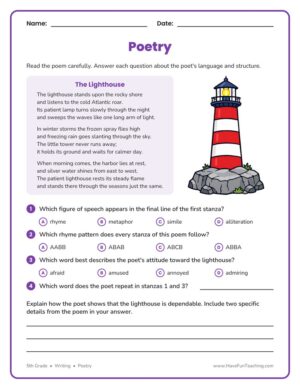
Poetry Response WorksheetTry it withPoetry Response WorksheetWorksheetsOpen it →
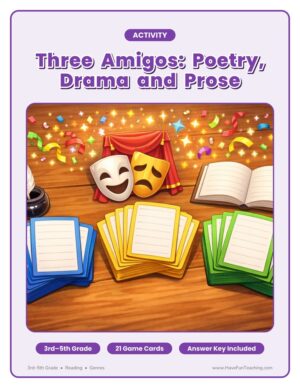
Poem, prose or play?

Give short pieces of poetry, prose and drama mixed together. Kids sort them and name the clue that gave each one away. Comparing side by side shows what makes a poem a poem.

Why it works: shuffled practice teaches kids to choose the right strategy, not just repeat one, and it improved test scores in research (Rohrer and Taylor, 2007).

Three Amigos Poetry Drama Prose ActivityTry it withThree Amigos Poetry Drama Prose ActivityActivitiesOpen it →

Write in a form

Start with the limerick: five lines, a bouncy beat, a silly ending. Kids clap the rhythm first, then fill in their own. A clear form gives shy writers a place to start.

Why it works: going from real objects to pictures to symbols is a core recommendation of the U.S. Department of Education's elementary math guide.

My Limerick WorksheetTry it withMy Limerick WorksheetWorksheetsOpen it →

Questions parents and teachers ask

What poetry should 5th graders learn?

They study stanzas, rhyme, rhythm and figurative language, and read forms like limericks, haiku, narrative poems and free verse. They also write poems of their own.

How do I teach poetry in 5th grade?

Read poems aloud often, talk about word choices, and give kids clear forms to try. Mix reading and writing so kids see how poets make choices.

What is the difference between poetry and prose?

Prose is written in sentences and paragraphs. Poetry is written in lines and stanzas and often uses rhythm, rhyme and sound.

How can I help my child enjoy poetry?

Read funny poems together and take turns reading lines aloud. Let your child write a poem about something they love, with no rules at first.



