

My Limerick Worksheet
My Limerick Worksheet gives 4th graders a five-line poem to label, two rhyming word columns to fill, and space to write a limerick of their own. Answer key included for fast, no-prep poetry practice.
$6.97
Or free with a membership — members pay $3.33/mo for all 10,000+ resources. See plans
Want this one free?
Tell us where to send it and it’s yours — no card, no catch.
One free resource per teacher. We’ll also send free teaching ideas each week — unsubscribe anytime.
Teaching is easier with a membership
Unlimited printables, games & videos for PreK–6th — for your classroom or homeschool. Cancel anytime.
Start your 3-day free trial$0 today · cancel anytime · Instant access to 10,000+ resources
About this resource
Description
Writing poetry gives students a playful way to hear how language works, and a limerick is one of the friendliest forms to start with. A limerick is a short, funny, five-line poem with a bouncy beat and a fixed AABBA rhyme scheme: the first, second, and fifth lines rhyme with one another, while the shorter third and fourth lines share a rhyme of their own. My Limerick Worksheet walks fourth graders through that pattern one step at a time, so the rules of the form become something they can see on the page instead of something they have to memorize.
This 4th grade poetry worksheet opens with a complete limerick about a girl and her puppy splashing through a creek. Students read it, then label each line A or B to show which lines rhyme, which turns the rhyme scheme into a quick, checkable task rather than an abstract rule. Next they gather their own rhyming words in two columns, one for the A rhymes and one for the B rhymes, building a small word bank before they write. Finally, they draft an original limerick on the five numbered lines at the bottom of the page. Use it as an independent writing station, a poetry unit warm-up, or a homework page during National Poetry Month.
What’s Included
- 1 print-ready PDF worksheet
- Answer key
- 3 activities: labeling an AABBA rhyme scheme, collecting rhyming words in two columns, and writing an original five-line limerick
My Limerick Worksheet helps students in three ways. First, labeling the rhyme scheme on a finished poem builds the ear for sound patterns that every kind of poetry depends on. Second, brainstorming rhyming words before drafting removes the biggest roadblock young poets hit, because they are choosing from a list they already made instead of hunting for a rhyme mid-sentence. Third, the five numbered lines make the shape of the form visible, so students can count their own lines and check their work against the example without a teacher standing beside them.
Teachers and parents can stretch this activity in a lot of directions. Read a few limericks aloud and have students clap the beat so they feel the bouncy rhythm before they write. Turn the rhyming columns into a class chart and add to it all week. Let students trade finished limericks and read a partner’s poem out loud, which is the fastest way to hear whether the meter works. For a fun twist, pick a class pet, a favorite snack, or a school event as a shared topic and see how many different limericks the group can write about the same subject.
Related Resources
What teachers say
Reviews
You must be logged in to post a review.
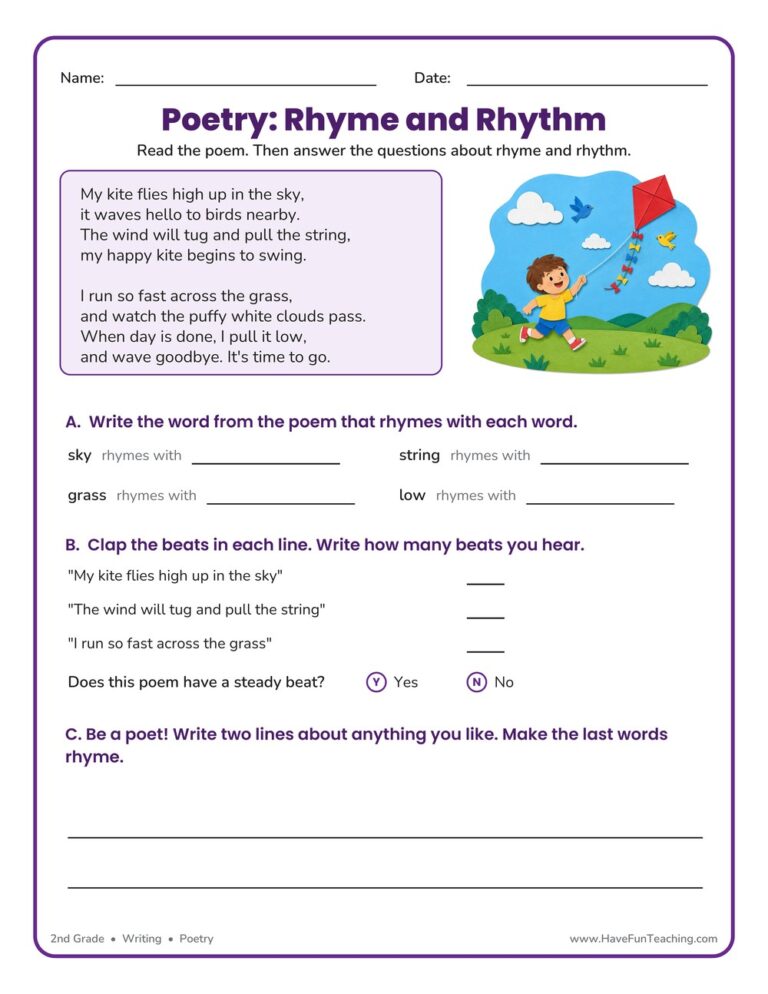
A kite-themed Poetry Rhyme and Rhythm Worksheet where 2nd graders read a poem, find rhyming words, clap out the beat, and write their own rhyming lines. Includes an answer key for quick, no-prep poetry practice.
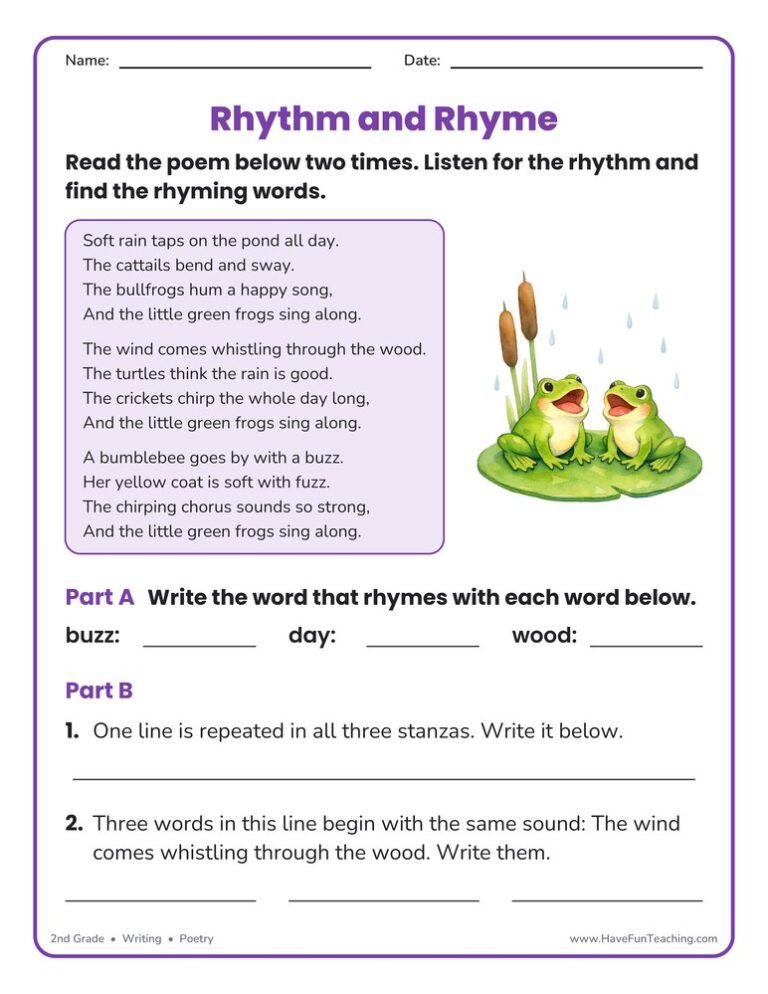
This RL.2.4 Common Core Worksheet gives 2nd graders an original rain-and-pond poem, then asks for its rhyming words, its repeated line, and three alliteration words. Answer key included for quick poetry practice.

This dozen donuts reading comprehension worksheet gives 2nd grade students a short bakery story, four multiple-choice questions, and a written response. An answer key is included, so checking the work is quick.
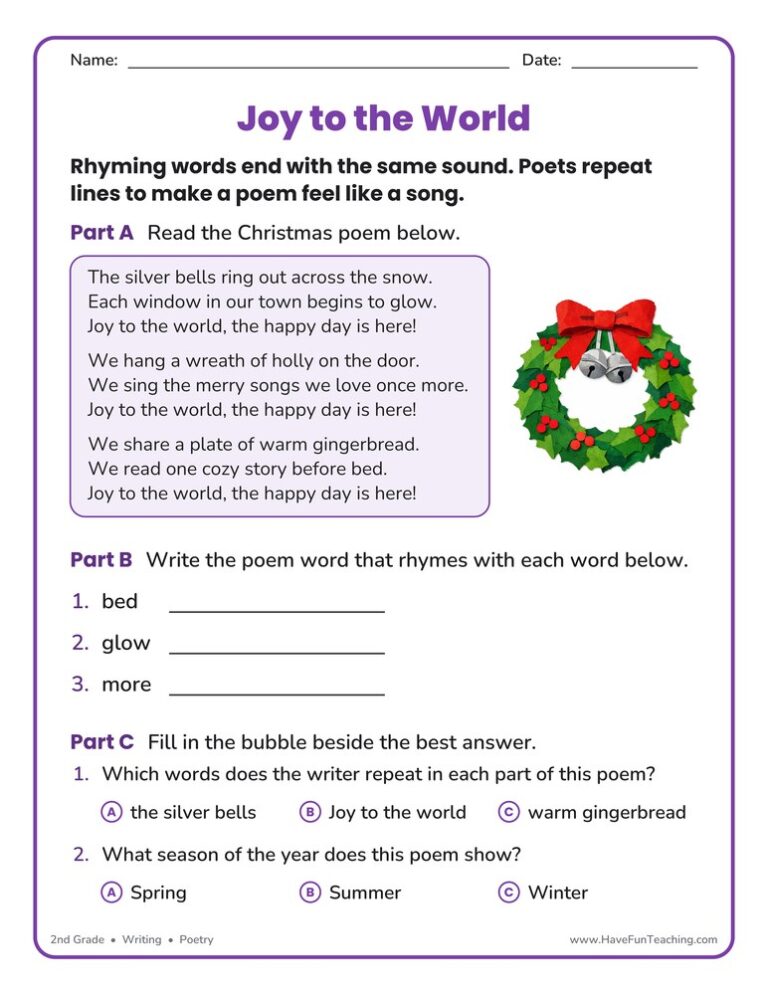
A Joy to the World Lyrics page where 2nd graders read an original Christmas poem, find its rhyming pairs, and spot the repeated refrain. Answer key included, so practice checks itself.

Using Jingle Bells Lyrics, students can follow along with the memorable song in order to know the which words to sing!
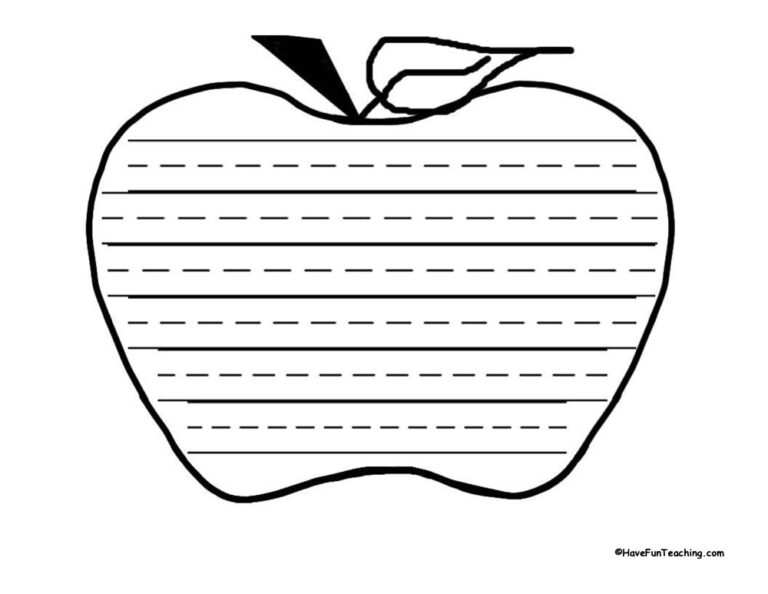
Using thisApple Shape Book Activity, students will enhance their apple writing when they write in this apple shaped book.

Using Reading Prose and Poetry Worksheet, students keep track of the stories they read this year by writing the title and the rating each book.
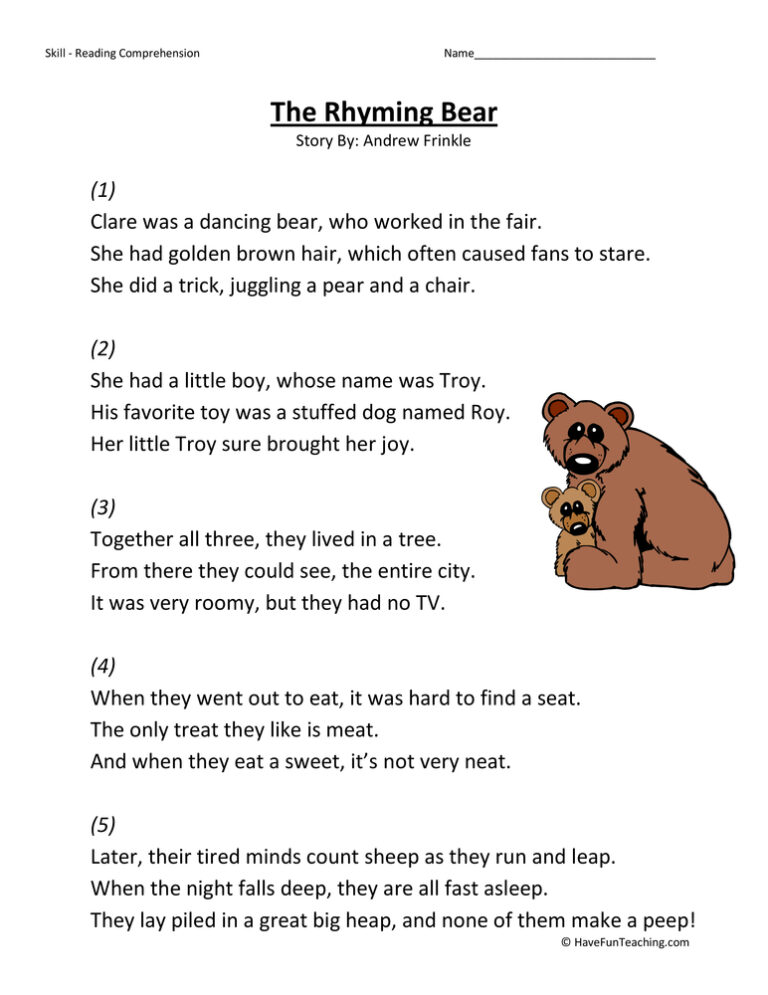
This Rhyming Bear Reading Comprehension Worksheet gives 2nd grade readers an original five-stanza poem plus four multiple-choice questions and a written response. An answer key is included, so students build reading stamina and teachers grade in seconds.
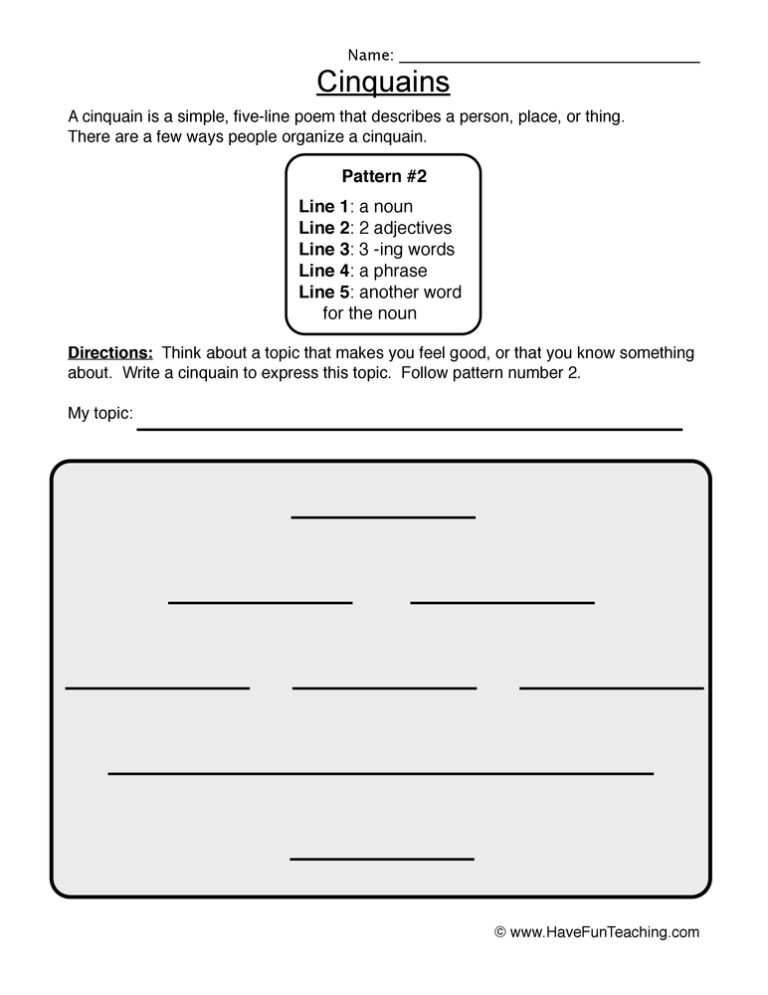
This Cinquain Worksheet - Pattern 2 walks 3rd grade writers through a model poem and then a five-line frame of their own. An answer key is included, so students leave with a finished poem and real confidence.
Using thisApple Themed Writing Activity, students practice their comparing, sequencing, and poem writing skills while writing all about apples!

Using this Computer Shape Book Activity, your students can create quick and simple books about stories or what they know about computers.
Using this Flower Shape Book Activity, your students can create quick and simple books about themselves or stories about flowers or Springtime.




Reviews
There are no reviews yet