
Skip to content
Start My 3 Free Days $0 today · cancel anytime

1st Grade Synonyms Resources

4 1st grade synonyms resources: 2 flash cards and 1 activity. How teachers use these

1st Grade Synonyms Resources

4 1st grade synonyms resources: 2 flash cards and 1 activity. How teachers use these

Flash Cards
Flash Cards1st GradeOpposites Flash Cards

Opposites flash cards for Preschool through 1st Grade: 12 fold-over picture cards teach 24 opposite words, with a practice page and answer key included for fun, hands-on vocabulary review.

Flash Cards
Flash Cards1st GradeShades of Meaning Flash Cards

These shades of meaning flash cards for preschool to 4th grade have children sort 24 words into groups and order them weakest to strongest. Answer key included.

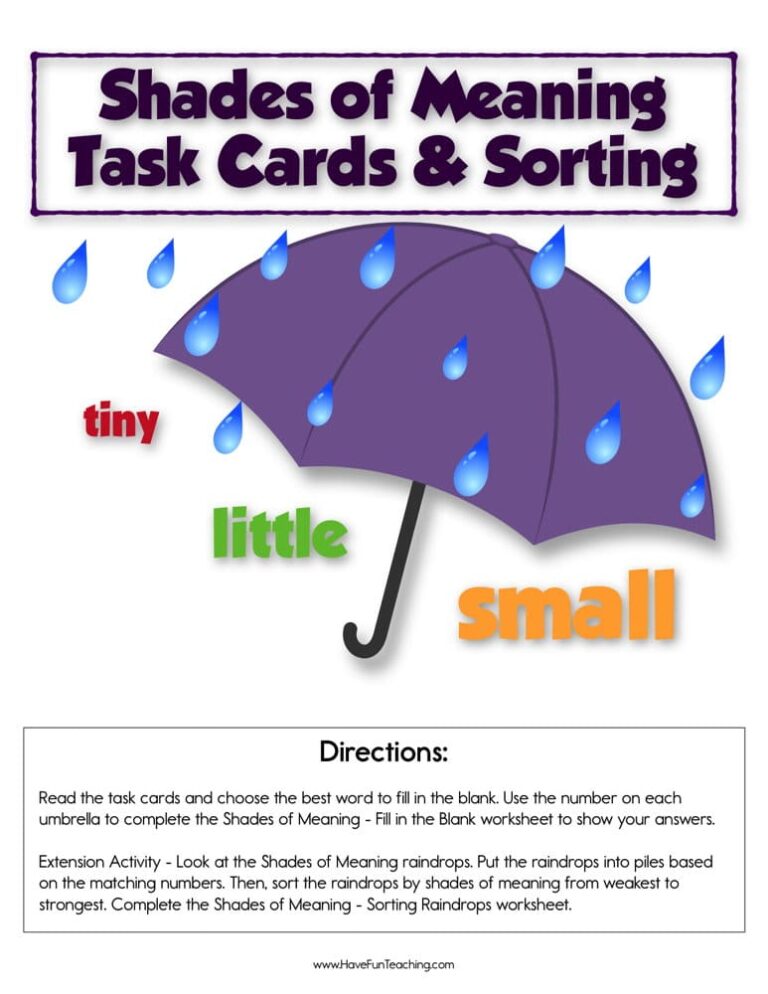
1st GradeShades of Meaning Activity

Using the Shades of Meaning Activity, your kids can read the task cards and choose the best word to fill in the blank. This is a fun synonyms activity!

Activity
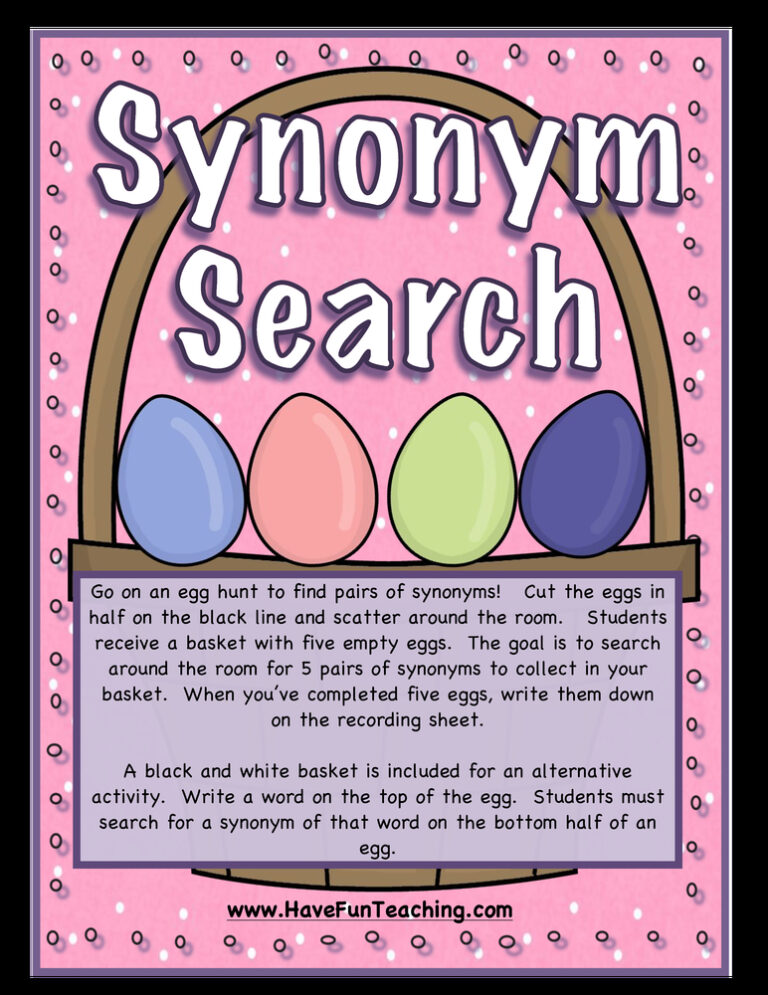
Activity1st GradeSynonym Search Activity

This synonym search activity sends 1st to 3rd grade students on a spring egg hunt to match 12 pairs of words that mean the same. Answer key included.

From our teachers' playbook

Different words, same big idea

What do 1st graders learn about synonyms?

Synonyms are words that mean the same or almost the same thing, like big / large, happy / glad and fast / quick. First graders learn to find synonyms and swap them into sentences so their writing does not say "good" ten times. They also start noticing shades of meaning: look, peek, stare and glare all mean seeing, but each one feels different. Lining them up from weakest to strongest is a big 1st grade skill. The click moment comes when a child crosses out "said" and writes "shouted" all on their own.

Our favorite ways to teach synonyms in 1st grade

Synonyms grow vocabulary and spice up writing. Here is how we get 1st graders using them.

Line up the shades of meaning

Give kids cards like warm, hot and boiling and have them line them up from least to most. Then act each word out. A few quick sets a week help 1st graders feel the small differences between words that mean almost the same thing.

Why it works: researchers who compared ten study methods found practice testing is one of the two that work best (Dunlosky and colleagues, 2013).

Shades of Meaning Flash CardsTry it withShades of Meaning Flash CardsFlash CardsOpen it →

Go on a synonym search

Hide word cards around the room and have kids find a partner word that means the same thing. When they find a match, they read both words and use one in a sentence. Hunting makes it a game, and talking makes it stick.

Why it works: in a well-known study, a few short sessions of a simple number board game measurably boosted young children's number skills (Ramani and Siegler, 2008).

Synonym Search ActivityTry it withSynonym Search ActivityActivitiesOpen it →

Same or opposite?

Mix synonym pairs with antonym pairs and have kids sort them into two piles: "same" and "opposite." Comparing the two side by side is the fastest way to keep synonyms and antonyms straight.

Why it works: pairing a picture with each word gives kids two ways to remember it, a well-tested principle of how people learn (Mayer, 2009).

Opposites Flash CardsTry it withOpposites Flash CardsFlash CardsOpen it →

1st grade synonym questions

What is a synonym?

A synonym is a word that means the same or almost the same as another word. Little and small, jump and hop, and smart and clever are synonym pairs.

What are shades of meaning?

Shades of meaning are the small differences between words that mean nearly the same thing. Toss, throw and hurl all mean throwing, but each shows a different amount of force.

How do I teach synonyms to my 1st grader?

When reading together, stop at a word and ask, "What is another word that means the same?" Make a list of fun synonyms for words like happy, big and said, and use them in writing.

Why are synonyms important in 1st grade?

Synonyms help kids understand new words, describe things more precisely and make their writing more interesting to read.



