
Skip to content
Start My 3 Free Days $0 today · cancel anytime

4th Grade Homophones Resources

5 4th grade homophones resources: 4 activities and 1 worksheet. How teachers use these

4th Grade Homophones Resources

5 4th grade homophones resources: 4 activities and 1 worksheet. How teachers use these

Worksheet
Worksheet4th GradeFinding Homophones Worksheet

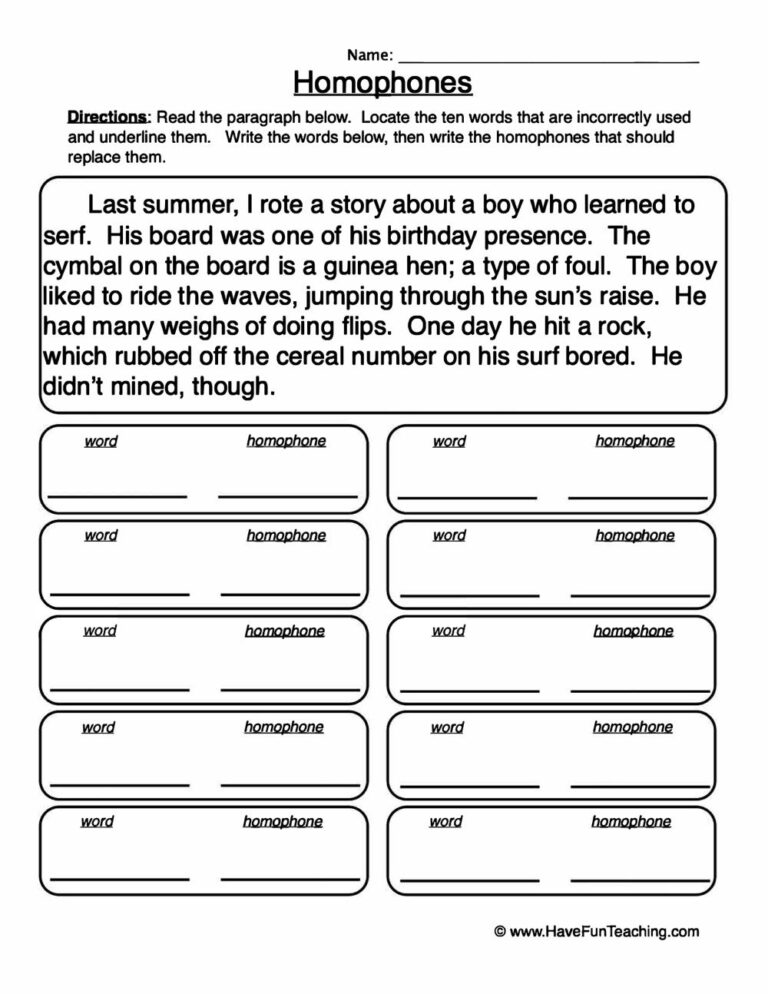
This finding homophones worksheet asks 4th grade students to hunt down eight misused homophones inside a garden paragraph and write the word that belongs. An answer key is included, so checking the work takes seconds.

Activity
Activity4th GradeDouble Dip Homographs Activity

This double dip homographs activity for 2nd to 4th Grade has kids match cone words to two scoop sentences, one for each meaning. Answer key included for quick checking.

Activity
Activity4th GradeGet The Scoop On Confusing Words Activity

This get the scoop on confusing words activity has 2nd to 4th grade students match ice cream cone sentences to the homophone scoop that completes them. Answer key included.

Activity
Activity4th GradeL.4.4 Common Core Activity

Using this L.4.4 Common Core Activity, students will determine or clarify the meaning of unknown or multiple meaning words.

Activity
Activity4th GradeHomophoneopoly Homophones Activity

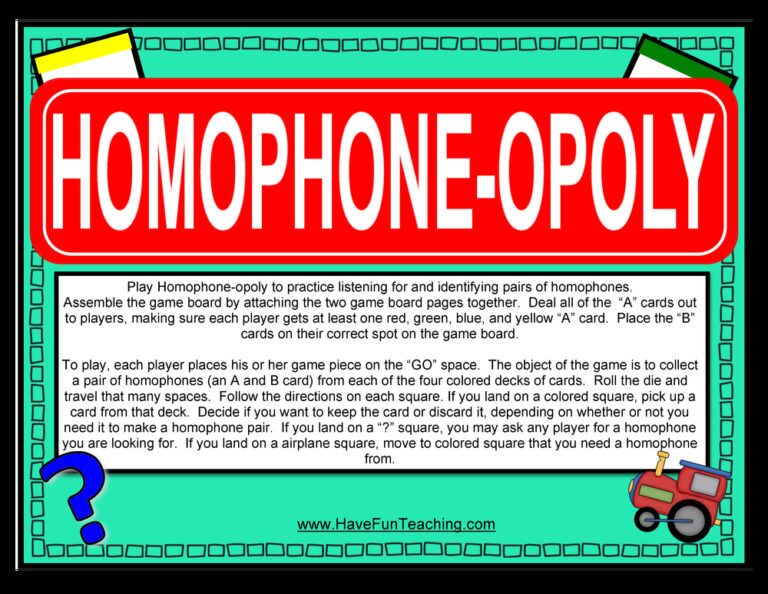
Using Homophoneopoly Homophones Activity, students play Homophone-opoly to practice listening for and identifying pairs of homophones.

From our teachers' playbook

Same sound, different meaning, big mix-ups

What do 4th graders learn about homophones?

Fourth graders learn that homophones are words that sound the same but have different spellings and meanings, like their, there and they're, or to, too and two. They practice choosing the right one in their own writing and using context clues to figure out which word a sentence needs. They also meet homographs, words spelled the same but with different meanings, like bat (animal) ≠ bat (baseball). The click comes when kids catch homophone mistakes in their own writing before you do!

Our favorite ways to teach homophones

Homophones trip up even adult writers. These moves give 4th graders tricks and practice that last.

Context clue detective

Write a sentence with a blank, like "The kids left ___ backpacks by the door." Think aloud about which homophone fits and why. Then kids explain their choices for three more sentences with a partner.

Why it works: handing over the work step by step, from teacher to student, is one of the most widely used teaching frameworks (Pearson and Gallagher, 1983).

L.4.4 Common Core ActivityTry it withL.4.4 Common Core ActivityActivitiesOpen it →

Draw the difference

Kids fold a paper in half and draw both meanings of a homophone pair, like "pair" and "pear," labeling each. Silly pictures help the right spelling stick to the right meaning.

Why it works: pairing a picture with each word gives kids two ways to remember it, a well-tested principle of how people learn (Mayer, 2009).

Finding Homophones WorksheetTry it withFinding Homophones WorksheetWorksheetsOpen it →

Mixed mix-up practice

Instead of practicing one pair at a time, mix several pairs in one short set. Deciding between their, there and they're in one minute, then to and too the next, builds the quick choice kids need when writing.

Why it works: mixing different kinds of problems in one practice set helped students do far better on a later test (Rohrer and Taylor, 2007).

Get The Scoop On Confusing Words ActivityTry it withGet The Scoop On Confusing Words ActivityActivitiesOpen it →

Questions about teaching homophones

What are homophones for 4th grade?

Homophones are words that sound alike but have different spellings and meanings. Common examples are their, there and they're; to, too and two; and your and you're.

What is the difference between homophones and homographs?

Homophones sound the same but are spelled differently, like knight and night. Homographs are spelled the same but have different meanings and sometimes different sounds, like bow (to bend) and bow (for hair).

How can I help my child with their, there and they're?

Teach one quick trick for each: there has "here" inside it for places, their has "heir" for belonging, and they're means they are. Have your child say "they are" to test the contraction.

Why do kids mix up homophones?

Because they sound exactly alike, kids often spell the one they see most often. Practice choosing in context, not just memorizing lists, is what helps most.