Skip to content
Start My 3 Free Days $0 today · cancel anytime

4th Grade Idioms Resources

12 4th grade idioms resources: 7 activities, 4 worksheets and 1 Common Core Lesson. How teachers use these

4th Grade Idioms Resources

12 4th grade idioms resources: 7 activities, 4 worksheets and 1 Common Core Lesson. How teachers use these

Worksheet
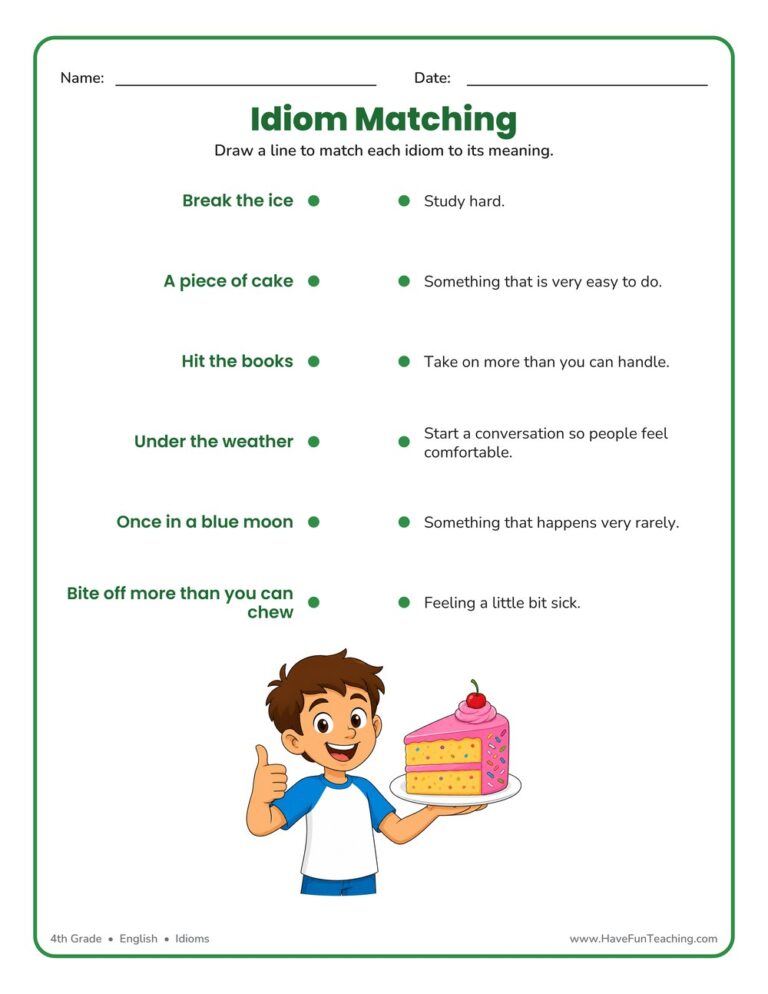
Worksheet4th GradeMatching Idioms Worksheet

A matching idioms worksheet where 4th graders draw a line to connect six common idioms to their meanings. Includes an answer key for quick, no-prep figurative language practice.

Activity
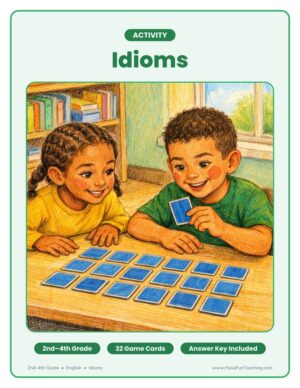
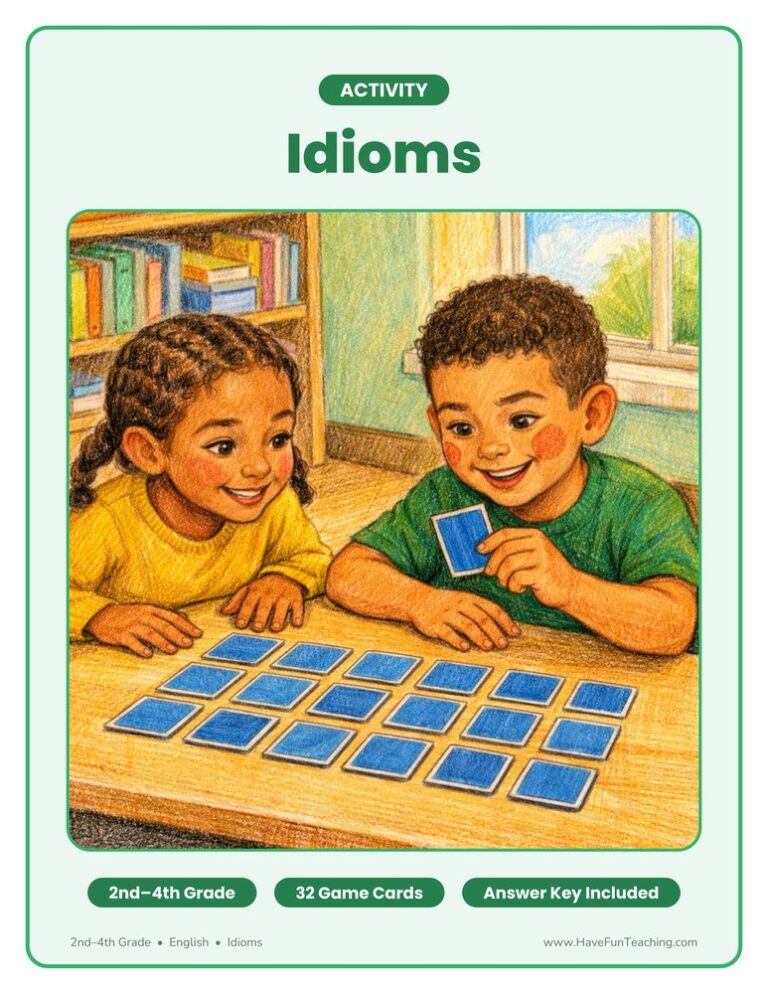
Activity4th GradeIdioms Figurative Language Activity

This idioms figurative language activity lets 2nd to 4th grade students match idioms to their real meanings in a fun card game, then draw and explain them. Answer key included.

Activity
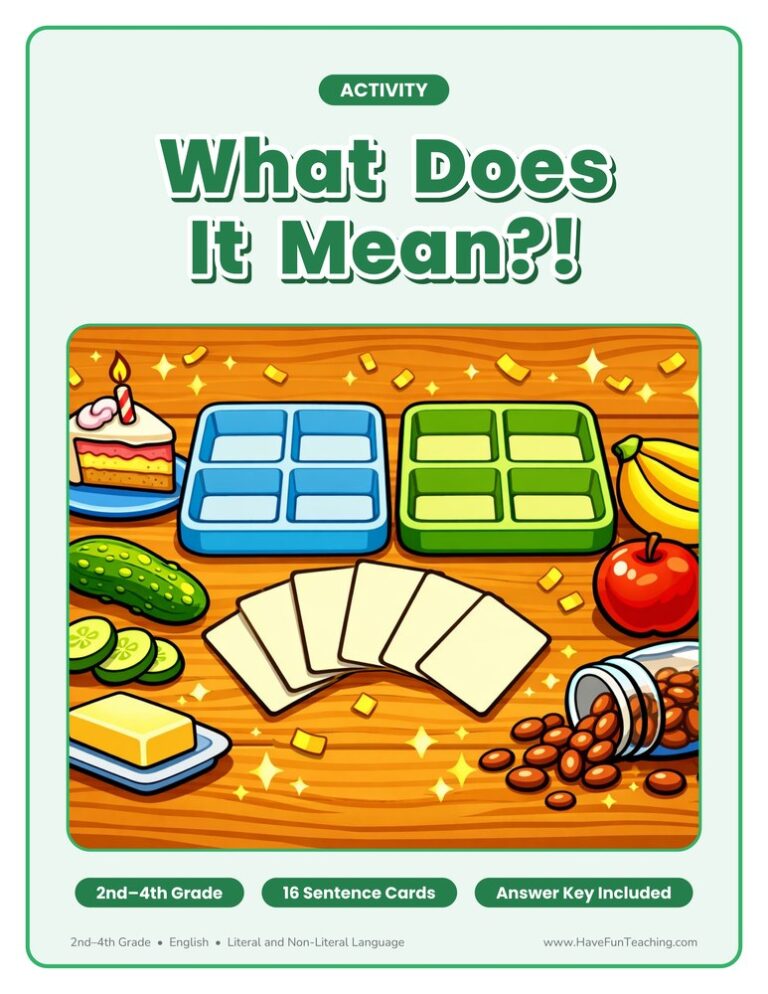
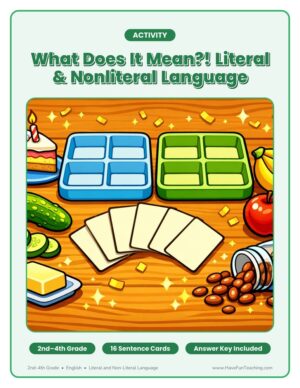
Activity4th GradeWhat Does it Mean Literal Non-Literal Language Activity

This what does it mean literal non-literal language activity has 2nd to 4th grade students sort 16 food sentence cards and explain idioms. A practice page and answer key are included.

Activity
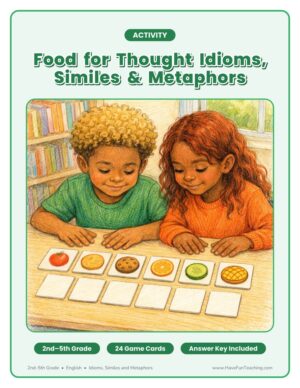
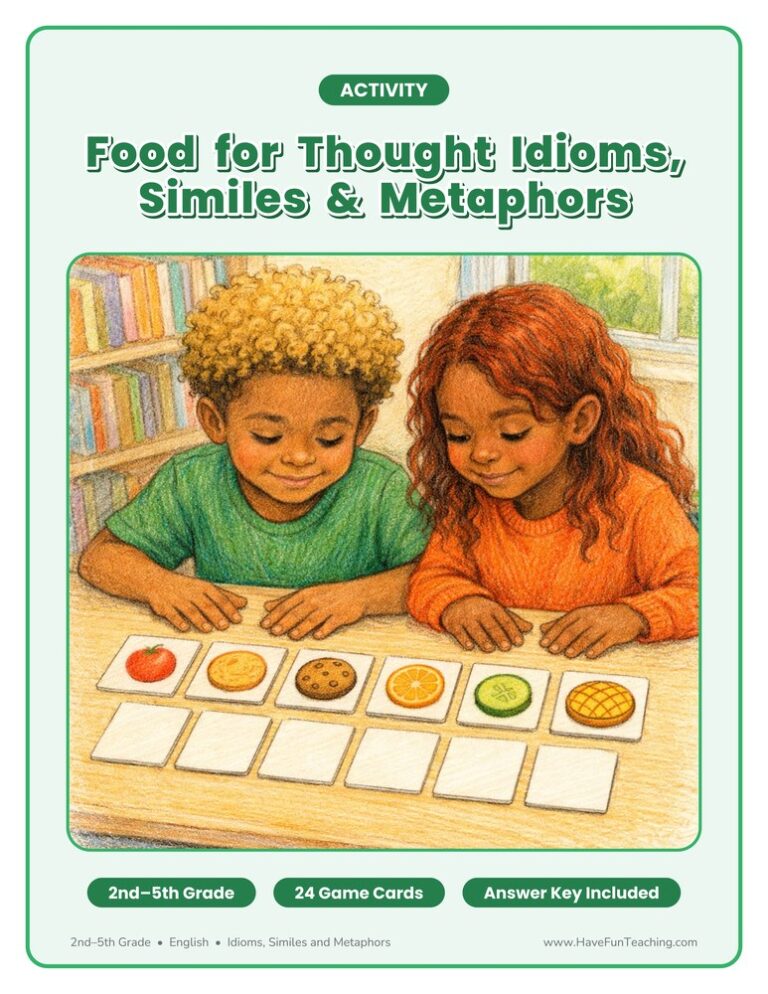
Activity4th GradeFood for Thought Idiom Simile Metaphor Activity

Students match food idioms, similes, and metaphors to their meanings and sort them by kind in this food for thought idiom simile metaphor activity for 2nd to 5th grade, with an answer key included.

Worksheet
Worksheet4th GradeFilling in Idioms Worksheet

This filling in idioms worksheet gives 4th grade students five sentences to complete from a word box and three idioms to explain in writing. An answer key is included, so checking the work takes a moment.

Activity
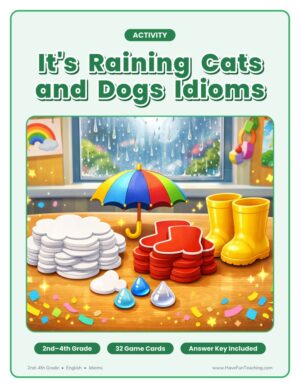
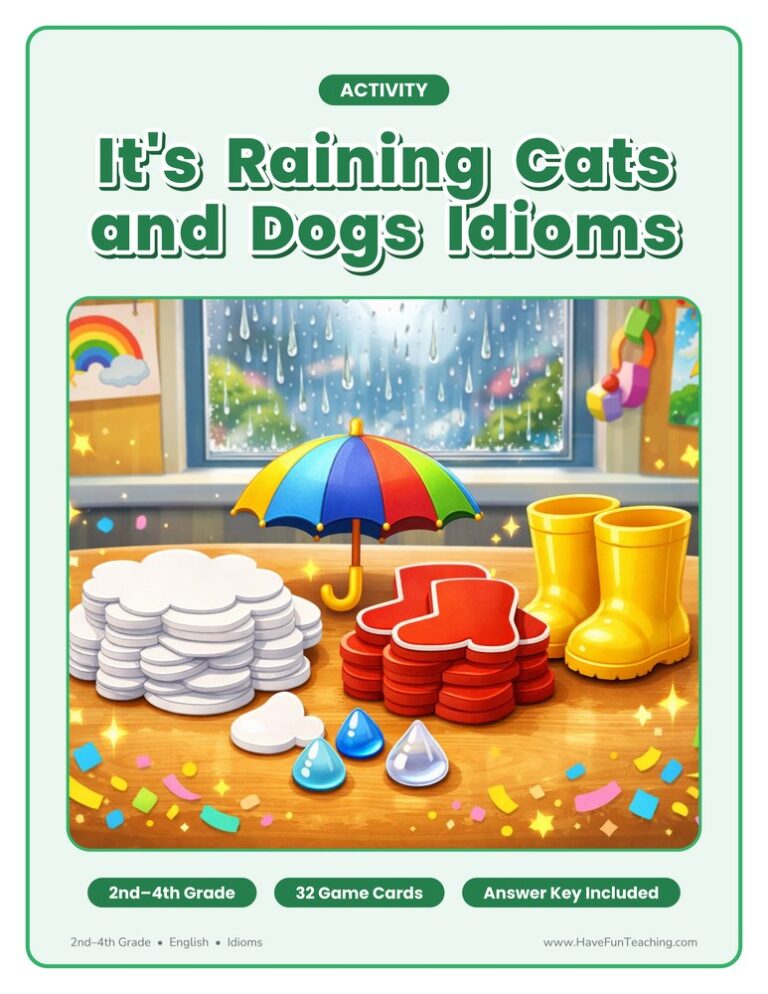
Activity4th GradeIt's Raining Cats and Dogs Idioms Activity

This it's raining cats and dogs idioms activity helps 2nd to 4th grade students match idioms to their real meanings in a rainy-day game. A practice page and an answer key are included.

Worksheet
Worksheet4th GradeUsing Idioms Worksheet

This using idioms worksheet helps 4th grade students finish sentences with the right idiom and then write original sentences with new idioms. An answer key is included to make checking quick and simple.

Activity
Activity4th GradePlaying With Idioms Activity

This playing with idioms activity has 3rd to 5th grade students match idiom cards to their real meanings, draw funny literal pictures and read idioms in stories. An answer key is included.

Common Core Lesson
Common Core Lesson4th GradeL.4.5 Fourth Grade Common Core Lesson

Using L.4.5 Fourth Grade Common Core Lesson, students match idioms to their meanings in order to use figurative language in their writing.

Worksheet
Worksheet4th GradeDescribing Idioms Worksheet

Using Describing Idioms Worksheet, students choose four idioms to describe through writing and drawing in order to use them in their writing.

Activity
Activity4th GradeL.3.5 Common Core Activity

This L.3.5 common core activity gives 3rd to 5th grade students idiom task cards, a tips chart, and a practice page. An answer key is included for quick checking.

Activity
Activity4th GradeFlip-a-Chip Idioms Activity

This flip-a-chip idioms activity is a memory game where 2nd to 4th grade students match idioms to their real meanings. A draw and explain sheet, practice page and answer key are included.

From our teachers' playbook

Raining cats and dogs? Let's find out!

What do 4th graders learn about idioms?

Fourth graders learn that idioms are phrases that mean something different from their words. "It's raining cats and dogs" means it's raining hard, and "break a leg" means good luck! Students compare the literal meaning with the figurative meaning, use context clues to figure out new idioms, and try them in their own writing. They also tell idioms apart from similes and metaphors. The click moment is when a student hears an idiom in a story and laughs because they finally get the joke.

Our favorite ways to teach idioms

Idioms are naturally funny, so let that humor do the teaching.

Draw it literally

Give each student an idiom to illustrate two ways: what the words say and what they really mean. A cat and dog falling from the sky next to a heavy rainstorm always gets giggles and makes the difference clear.

Why it works: pairing a picture with each word gives kids two ways to remember it, a well-tested principle of how people learn (Mayer, 2009).
What Does it Mean Literal Non-Literal Language ActivityTry it withWhat Does it Mean Literal Non-Literal Language ActivityActivitiesOpen it →

Match the meaning

Give students idioms on one side and meanings on the other to match. Then have them pick two and use each in a sentence about their own life. Matching first, then writing, builds real understanding.

Why it works: the U.S. Department of Education's guide for teaching elementary math recommends moving from hands-on objects to drawings to numbers.

Matching Idioms WorksheetTry it withMatching Idioms WorksheetWorksheetsOpen it →

Idiom, simile or metaphor?

Mix idioms with similes and metaphors and have students sort them. Ask what clues helped them decide. Mixing them stops kids from calling every figurative phrase an idiom.

Why it works: shuffled practice teaches kids to choose the right strategy, not just repeat one, and it improved test scores in research (Rohrer and Taylor, 2007).

Food for Thought Idiom Simile Metaphor ActivityTry it withFood for Thought Idiom Simile Metaphor ActivityActivitiesOpen it →

Questions teachers and parents ask

What is an idiom for 4th grade?

An idiom is a phrase whose meaning is different from the meaning of its words. "Piece of cake" means something is easy, not that it is dessert.

What is the difference between an idiom and a simile?

A simile compares two things using "like" or "as." An idiom is a common saying with a hidden meaning. "Fast as lightning" is a simile; "hit the books" is an idiom.

How do I teach idioms to 4th graders?

Have students draw the literal meaning and the real meaning, match idioms to definitions, and find idioms in stories. Using context clues is a key skill.

What are some common idioms for kids?

Popular ones include "piece of cake," "break a leg," "under the weather," "hit the books" and "let the cat out of the bag."