Skip to content
Start My 3 Free Days $0 today · cancel anytime

4th Grade Cause and Effect Resources

4 4th grade cause and effect resources: 2 Common Core Lessons, 1 test prep, 1 assessment and more. How teachers use these

4th Grade Cause and Effect Resources

4 4th grade cause and effect resources: 2 Common Core Lessons, 1 test prep, 1 assessment and more. How teachers use these

Workbook
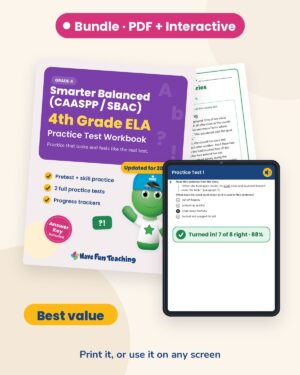
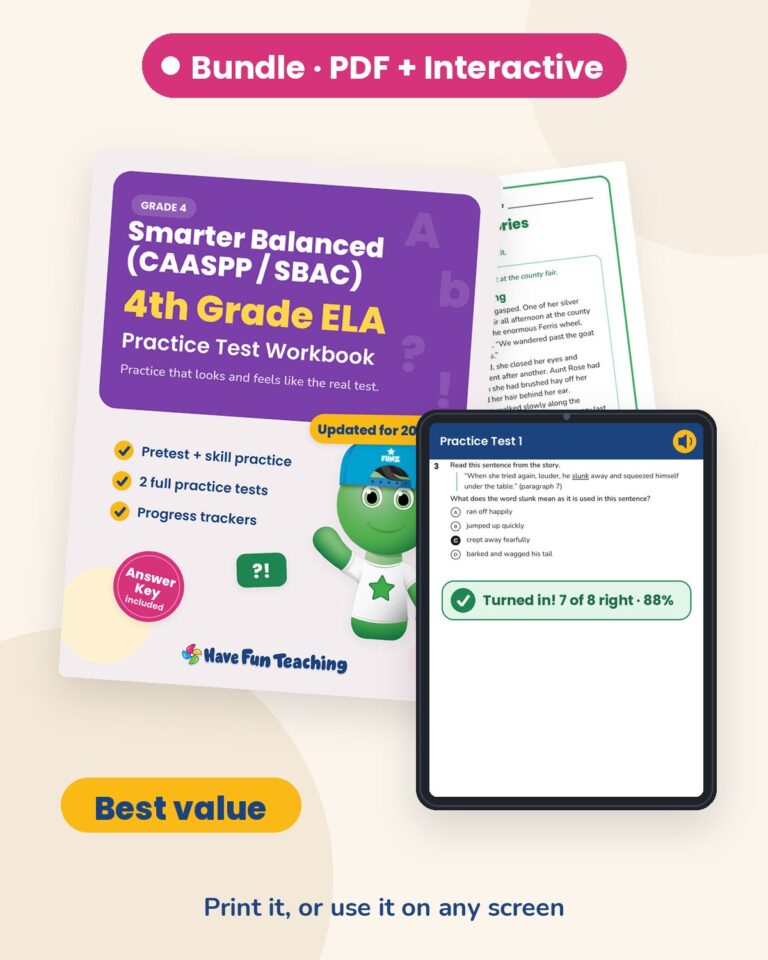
Workbook4th GradeSmarter Balanced (CAASPP / SBAC) 4th Grade ELA Practice Test Workbook

A Smarter Balanced (CAASPP / SBAC) 4th grade ELA practice test workbook for teachers, with a pretest, skill practice for all 24 standards, mixed review and 2 full-length practice tests. Answer key included, so test prep is ready to go.

Activity
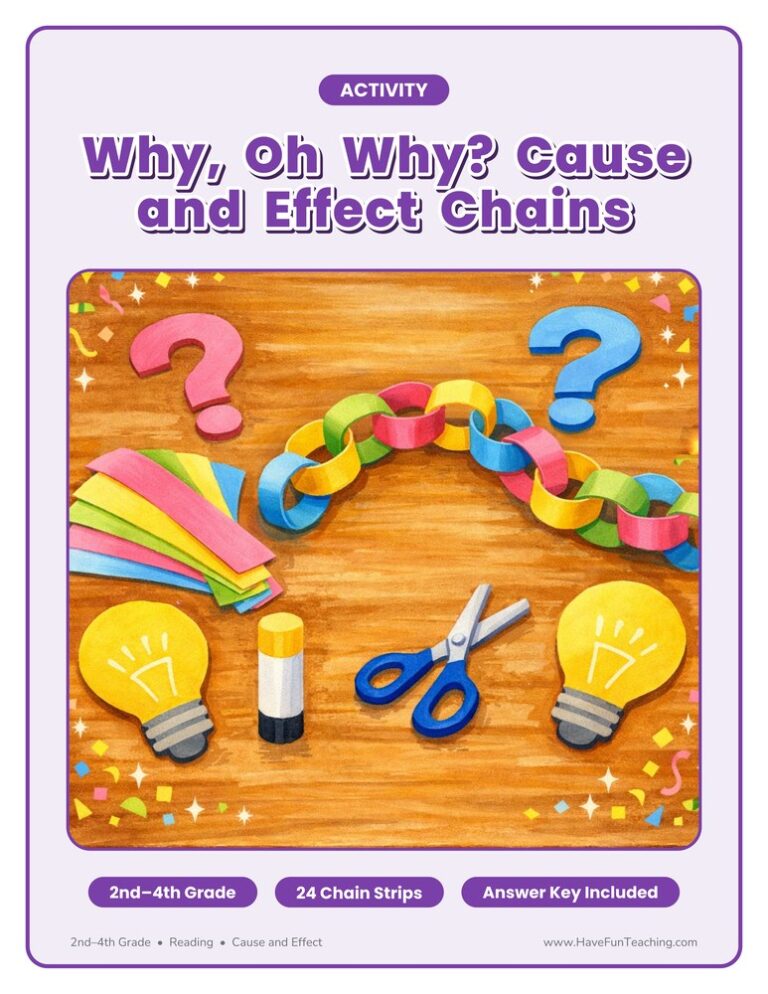
Activity4th GradeWhy oh Why Story Details Activity

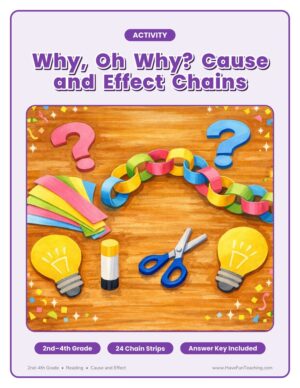
This why oh why story details activity lets 2nd-4th grade students match 12 effects to their causes and build paper chains. A practice page and answer key are included.

Common Core Lesson
Common Core Lesson4th GradeRI.4.3 Fourth Grade Common Core Lesson

Using RI.4.3 Fourth Grade Common Core Lesson, students describe the relationship between a series of historical events, scientific ideas or concepts, or steps in technical procedures in a text.

Common Core Lesson
Common Core Lesson4th GradeRI.4.5 Fourth Grade Common Core Lesson

Using RI.4.5 Fourth Grade Common Core Lesson, students describe the overall structureof events, ideas, concepts, or information in a text or part of a text.

From our teachers' playbook

Why did it happen? Let's find out!

What do 4th graders learn about cause and effect?

In 4th grade, cause and effect moves into real nonfiction. Kids explain what happened and why in science and history texts, like how heavy rain caused a river to flood a town. They also spot when an author organizes a whole passage as cause and effect, using signal words like because, so, as a result and therefore. And they learn that one cause can lead to many effects, like a chain of dominoes. The click comes when they find the cause even when the author never says "because."

How we teach cause and effect in 4th grade

Fourth graders are ready for chains and hidden clues. These moves build that thinking.

Think aloud the "why"

Read a short science article aloud and stop at an effect: "The crops died. Why? Let me look back... there was no rain for months." Underline the cause and draw an arrow to the effect. Do two together, then let partners do the rest.

Why it works: handing over the work step by step, from teacher to student, is one of the most widely used teaching frameworks (Pearson and Gallagher, 1983).

RI.4.3 Fourth Grade Common Core LessonTry it withRI.4.3 Fourth Grade Common Core LessonCommon Core LessonsOpen it →
Build a domino chain

Give groups strips of paper to write one event each, then link them into a paper chain from first cause to final effect. Kids see how one event sets off the next. Hang the chains up and compare them.

Why it works: the U.S. Department of Education's guide for teaching elementary math recommends moving from hands-on objects to drawings to numbers.

Why oh Why Story Details ActivityTry it withWhy oh Why Story Details ActivityActivitiesOpen it →

Map the text structure

Have kids sketch a quick organizer: a box for the cause and several arrows to effect boxes. Use it with a passage that's built around cause and effect. Seeing the shape helps them understand how the author put the text together.

Why it works: pairing a picture with each word gives kids two ways to remember it, a well-tested principle of how people learn (Mayer, 2009).

RI.4.5 Fourth Grade Common Core LessonTry it withRI.4.5 Fourth Grade Common Core LessonCommon Core LessonsOpen it →

Questions parents and teachers ask

What is cause and effect in 4th grade reading?

It's understanding why something happened (the cause) and what happened as a result (the effect). In 4th grade, kids explain causes and effects in nonfiction and notice texts organized around them.

What are cause and effect signal words?

Common ones are because, so, since, as a result, therefore, due to and consequently. They act like clues pointing to the cause or the effect.

How do you find a cause that isn't stated?

Start with the effect and ask "Why did this happen?" Then look back in the text for clues. Sometimes you have to put two details together to figure it out.

How can I practice cause and effect at home?

Talk through everyday moments: "The milk spilled. Why?" Ask about causes and effects in books, shows and even the weather. It becomes a habit fast.