
Skip to content
Start My 3 Free Days $0 today · cancel anytime

4th Grade Weather Resources

15 4th grade weather resources: 8 worksheets, 3 activities, 2 songs and more. How teachers use these

4th Grade Weather Resources

15 4th grade weather resources: 8 worksheets, 3 activities, 2 songs and more. How teachers use these

Worksheet
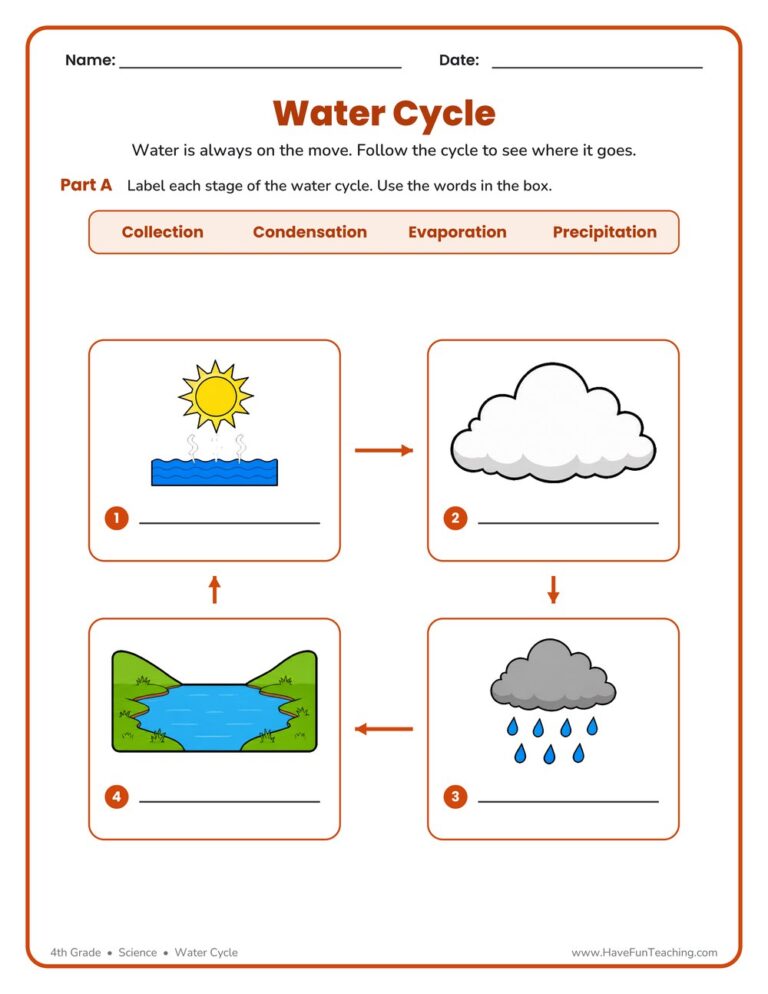
Worksheet4th GradeWater Cycle Worksheet

This Water Cycle Worksheet helps 4th graders label the stages of the water cycle, match science terms to clues, and explain the process in their own words. Includes an answer key — a no-prep way to reinforce earth science vocabulary.

Video
Video4th GradeWeather Song (Animated Music Video)

While watching the Weather Song (Animated Music Video), students learn about different types of weather conditions by listening to the repetitive lyrics loaded with key vocabulary.

Worksheet
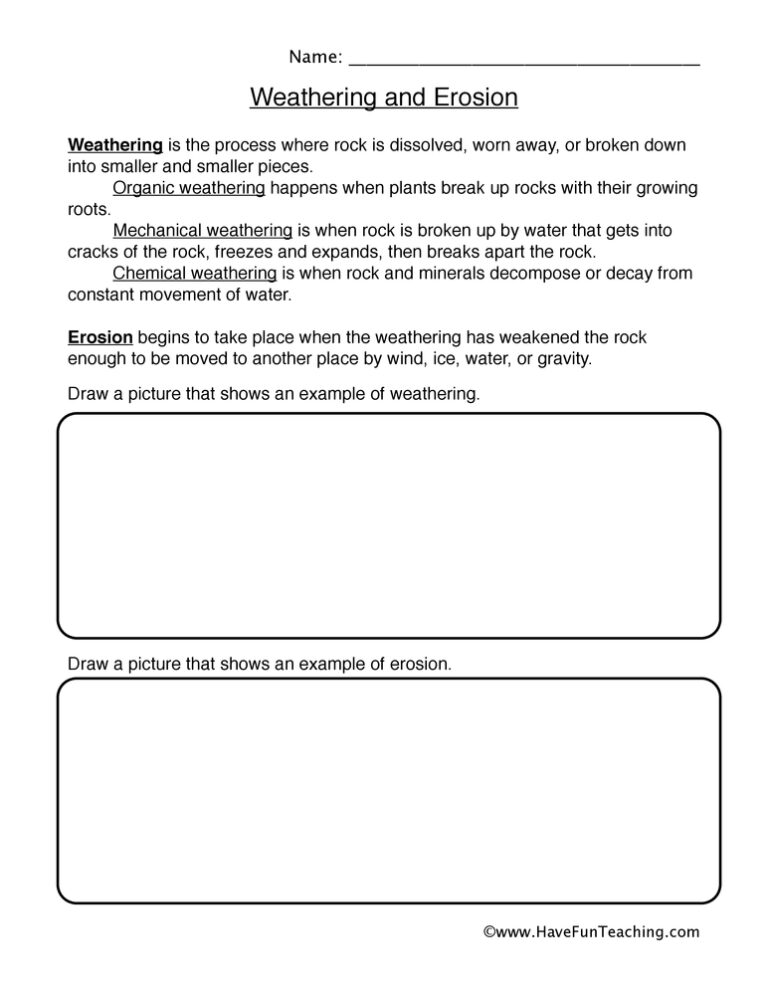
Worksheet4th GradeErosion Drawing Worksheet

This erosion drawing worksheet asks 4th graders to label six examples as weathering or erosion, then draw and label their own picture of erosion at work. Answer key included.

Worksheet
Worksheet4th GradeNatural Disasters Research Worksheet

This natural disasters research worksheet has 4th graders match each event to how it forms, then research and record one fact and one safety step for earthquakes, tornadoes, blizzards, and floods. Answer key included for quick checking.

Worksheet
Worksheet4th GradeWeather Instruments Match Worksheet

A Weather Instruments Match Worksheet for 4th Grade: students match six weather tools to what they measure, pick the right instrument for real situations, and explain their thinking. Answer key included for fast, no-prep science practice.

Activity
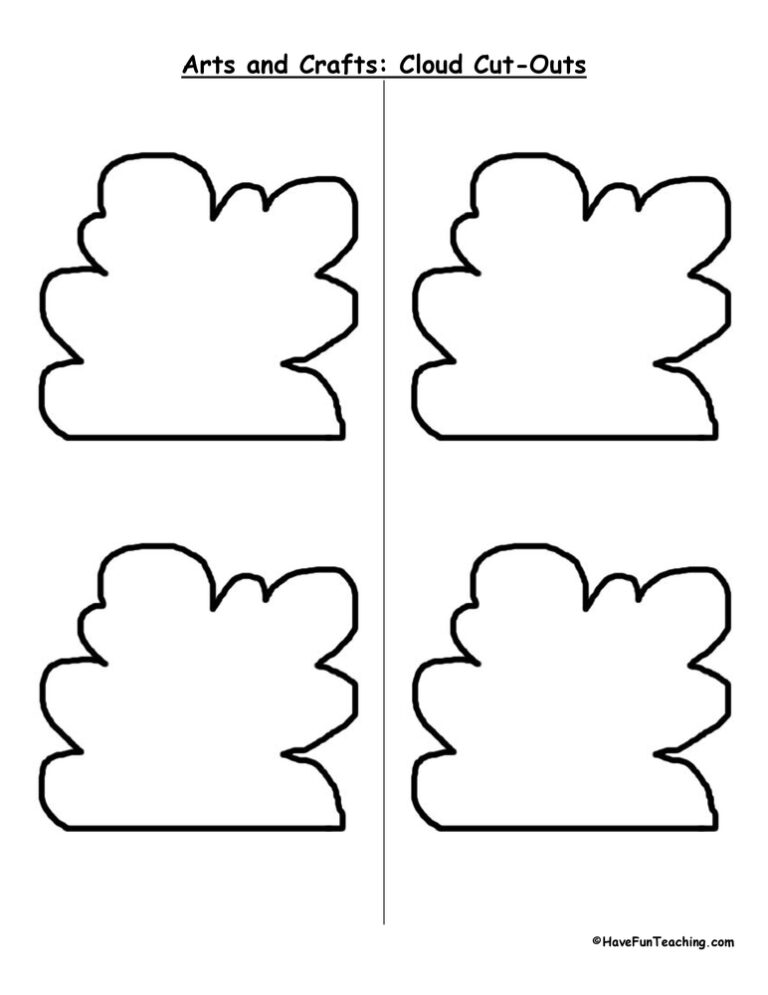
Activity4th GradeCloud Cut Outs

These Cloud Cut Outs quickly give you templates that can be easily cut and applied for classroom decoration or student activities

Worksheet
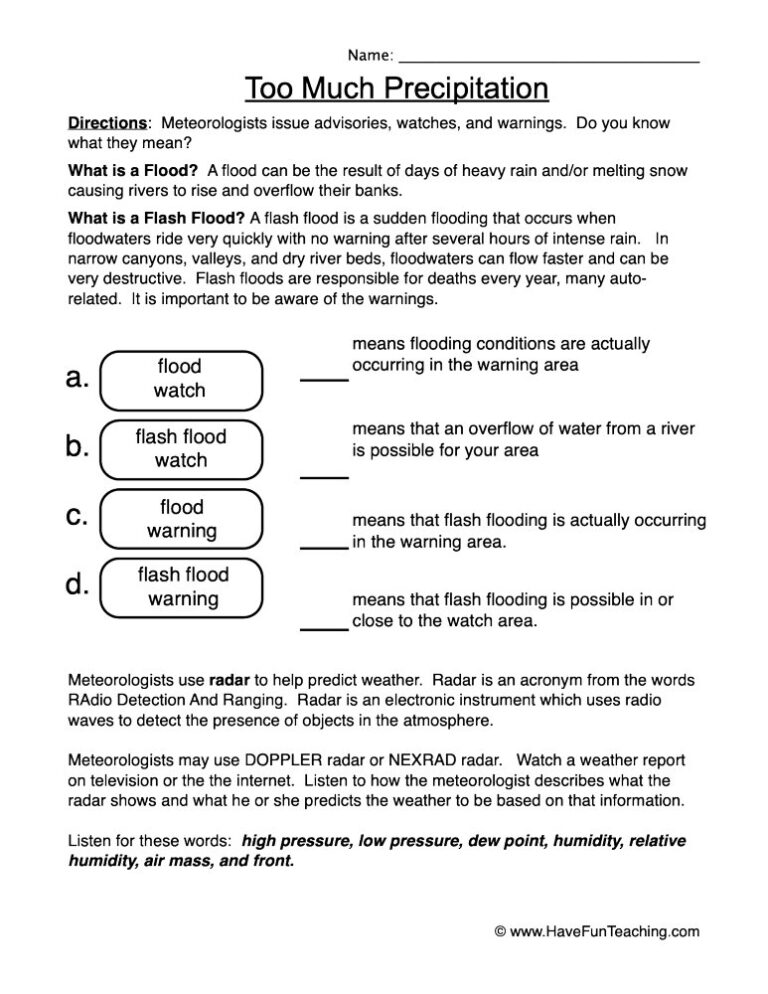
Worksheet4th GradeToo Much Precipitation Weather Worksheet

The Too Much Precipitation Weather Worksheet helps 4th Grade students tell a flood from a flash flood and a watch from a warning. An answer key is included, so kids build weather vocabulary and stay prepared.

Workbook
Workbook4th GradeWeather Mini Pack

Using this Weather Mini Pack, students learn about Weather through ten fun worksheets and three activities.

Worksheet
Worksheet4th GradeCloud Elevation Map Worksheet

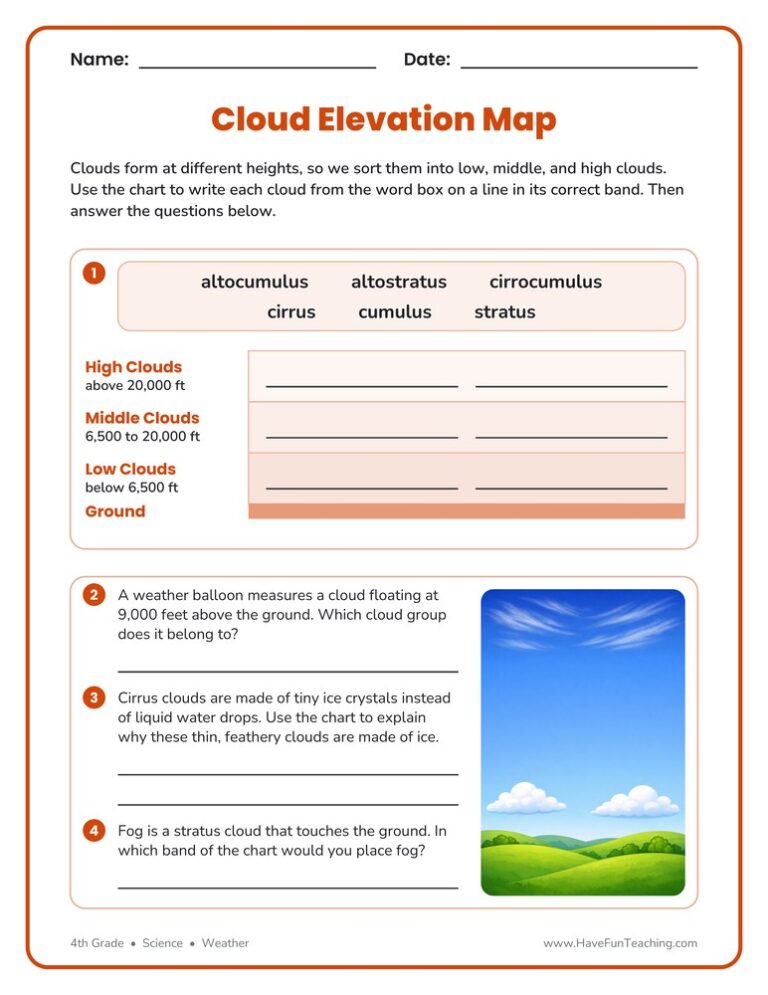
With this cloud elevation map worksheet, 4th graders sort six cloud types into high, middle, and low bands and explain their thinking. An answer key makes checking quick.

Video
Video4th GradeWeather Song (MP3)

While listening to the Weather Song (MP3), students learn about different types of weather conditions by listening to the repetitive lyrics loaded with key vocabulary.

Activity
Activity4th GradeJeopardy Natural Disasters Activity

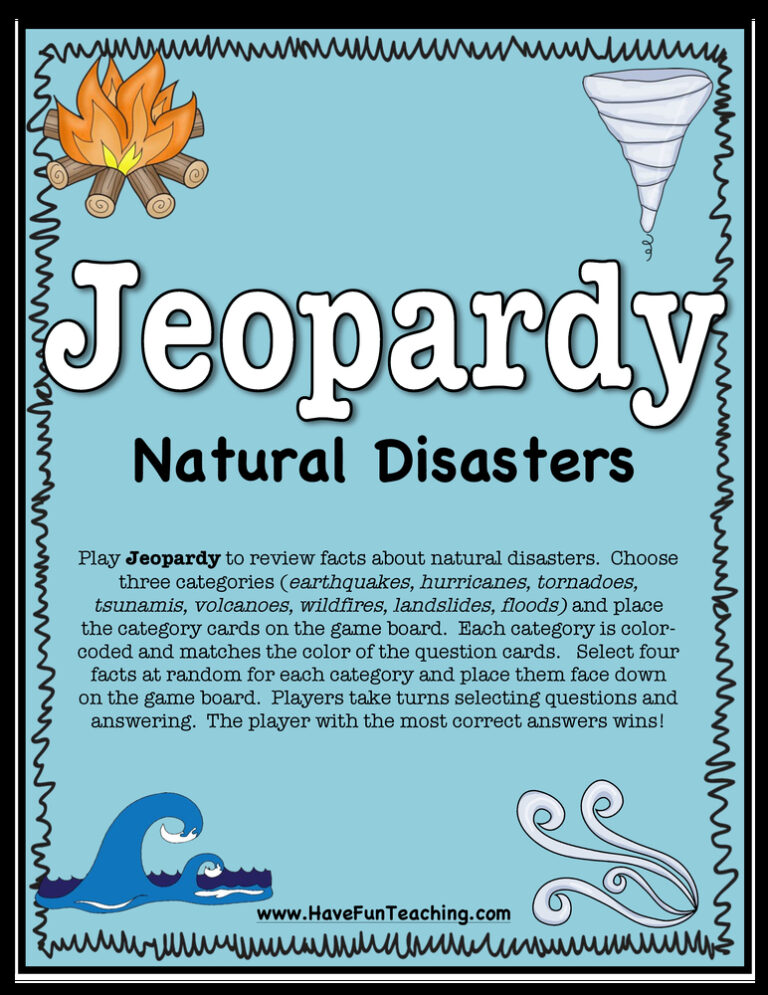
UsingJeopardy Natural Disasters Activity, students play to review facts about natural disasters that occur on Earth.

Worksheet
Worksheet4th GradeWeather Warning Vocabulary Worksheet

This weather warning vocabulary worksheet helps 4th graders tell an advisory from a watch from a warning, and adds forecast, humidity and thermometer. Answer key included for fast, no-prep science review.

Activity
Activity4th GradeSave the Snowman Temperature Activity

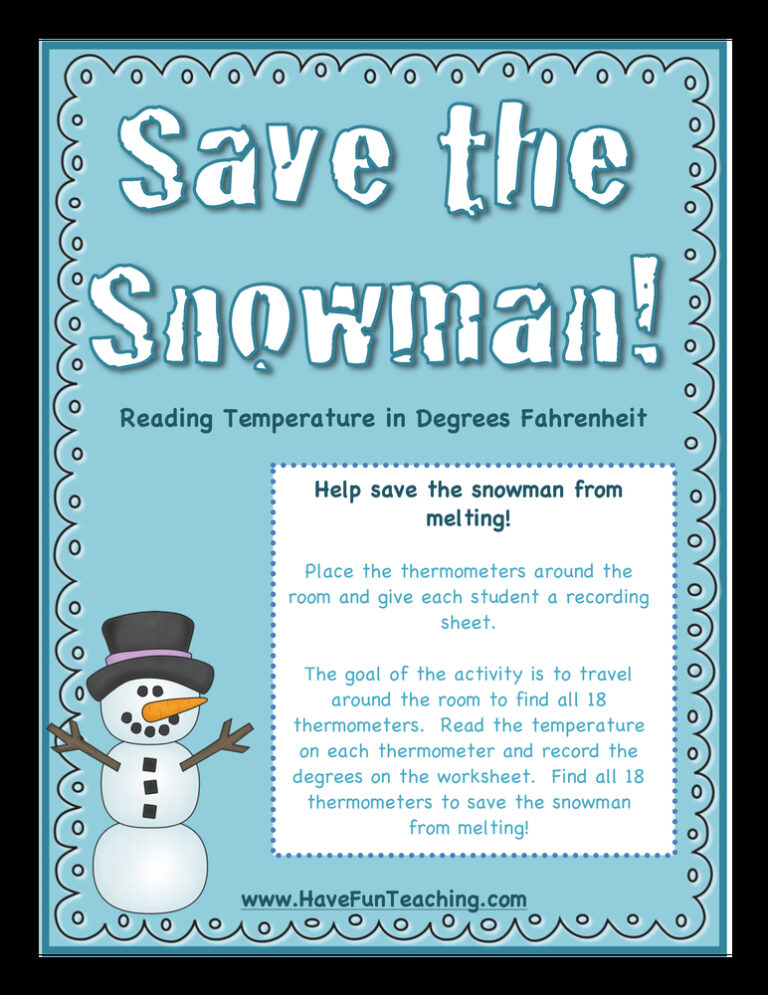
This save the snowman temperature activity has 2nd-4th grade students hunt for snowman cards, read each thermometer and decide if the snowman melts. Answer key included.

Assessment
Assessment4th GradeStorm Warning Reading Comprehension Worksheet

This Storm Warning Reading Comprehension Worksheet helps 4th grade students read a two page storm story and answer questions with text evidence. An answer key is included for quick, easy checking.

Flash Cards
Flash Cards4th GradeBasic Weather Flash Cards

Using these Basic Weather Flash Cards, students improve their weather condition vocabulary by describing the colorful flash cards.

From our teachers' playbook

Clouds, storms and weather detectives.

What do 4th graders learn about weather?

In 4th grade, kids learn that weather is what the air is doing right now, and that scientists measure it with tools. They read a thermometer, a rain gauge, a barometer and an anemometer, then use the data to describe and predict weather. They connect weather to the water cycle: water evaporates, condenses into clouds and falls as precipitation. Kids also learn how to tell cloud types apart and what makes weather dangerous, from floods to tornadoes, and how people prepare for them. The click moment is when kids look at dark, towering clouds and say, "Storm's coming!"

Our favorite ways to teach weather

Weather is happening right outside the window. These moves turn kids into real weather watchers.

Sing the weather words

Kick off the unit with a weather song and have kids act out each kind of weather they hear. Then post the new words on a chart. A song gives everyone the same vocabulary before the science gets deeper.

Why it works: a catchy, repeating tune gives the brain a hook to hang words on, so sung text is remembered better (Wallace, 1994).
Weather Song (Animated Music Video)Try it withWeather Song (Animated Music Video)SongsOpen it →

Match the tool to the job

Show pictures of weather instruments and ask "What does this one measure?" Then set up a mini weather station outside and record readings for a week. Kids remember the tools they actually used.

Why it works: children learn more from words and pictures together than from words alone (Mayer, 2009).

Weather Instruments Match WorksheetTry it withWeather Instruments Match WorksheetWorksheetsOpen it →

Cut and sort the clouds

Have kids cut out cloud shapes and sort them by type and height in the sky. Then step outside and match the real clouds to the sorted ones. Repeat on different days to see how clouds change with the weather.

Why it works: the U.S. Department of Education's guide for teaching elementary math recommends moving from hands-on objects to drawings to numbers.

Cloud Cut OutsTry it withCloud Cut OutsActivitiesOpen it →

Questions parents and teachers ask us

What weather topics do 4th graders learn?

Fourth graders learn about weather instruments, cloud types, the water cycle, weather patterns and severe weather. They use weather data to describe conditions and make simple predictions.

What is the difference between weather and climate?

Weather is what is happening in the air today, like rain or sunshine. Climate is the usual weather pattern in a place over many years, like a desert being hot and dry.

What tools do scientists use to measure weather?

A thermometer measures temperature, a rain gauge measures rainfall, a barometer measures air pressure and an anemometer measures wind speed. A wind vane shows wind direction.

How can kids study weather at home?

Keep a weather journal for a week: record the temperature, cloud types and whether it rained. Then look for patterns. A simple rain gauge made from a clear jar works well too.



