Skip to content
Start My 3 Free Days $0 today · cancel anytime

4th Grade Temperature Resources (Math)

5 4th grade temperature resources: 4 worksheets, 1 assessment and 1 activity. How teachers use these

4th Grade Temperature Resources (Math)

5 4th grade temperature resources: 4 worksheets, 1 assessment and 1 activity. How teachers use these

Worksheet
Worksheet4th GradeAverage State Temperatures Graphing Worksheet

This average state temperatures graphing worksheet has 4th graders read a scaled bar graph of monthly temperatures, then find the average of four of them. Answer key included, so data practice takes no prep.

Assessment
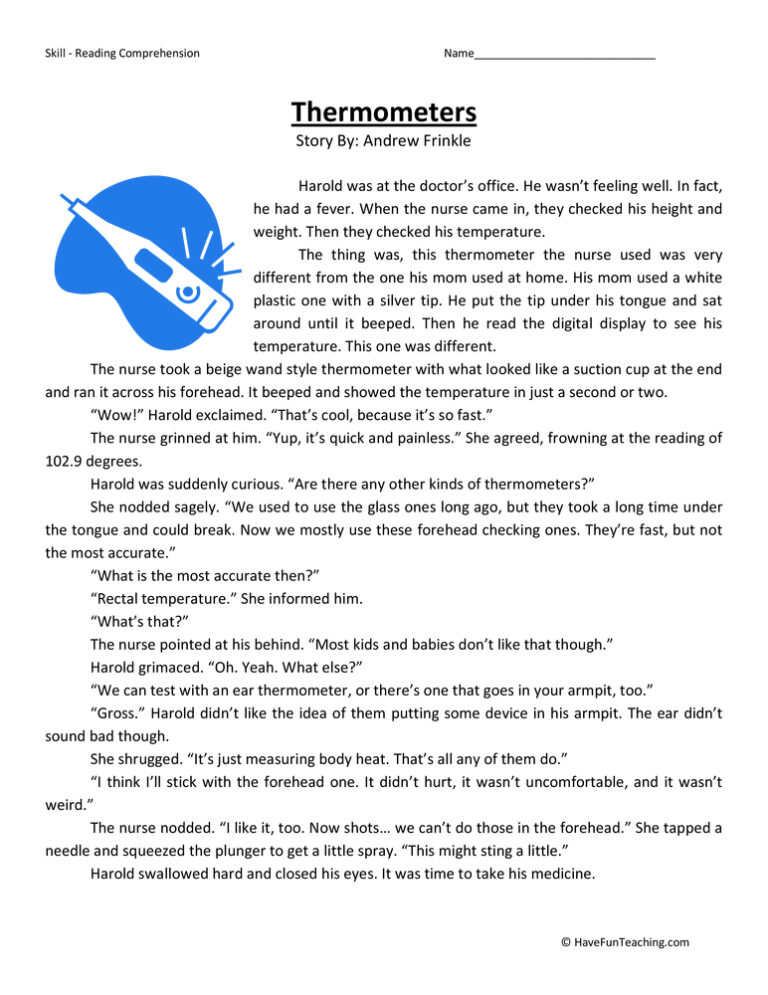
Assessment4th GradeThermometers Reading Comprehension Worksheet

Thermometers Reading Comprehension Worksheet gives 4th grade students a two page non-fiction passage about how thermometers measure heat, four multiple choice questions and a written response. An answer key is included.

Worksheet
Worksheet4th GradeWeather Warning Vocabulary Worksheet

This weather warning vocabulary worksheet helps 4th graders tell an advisory from a watch from a warning, and adds forecast, humidity and thermometer. Answer key included for fast, no-prep science review.

Activity
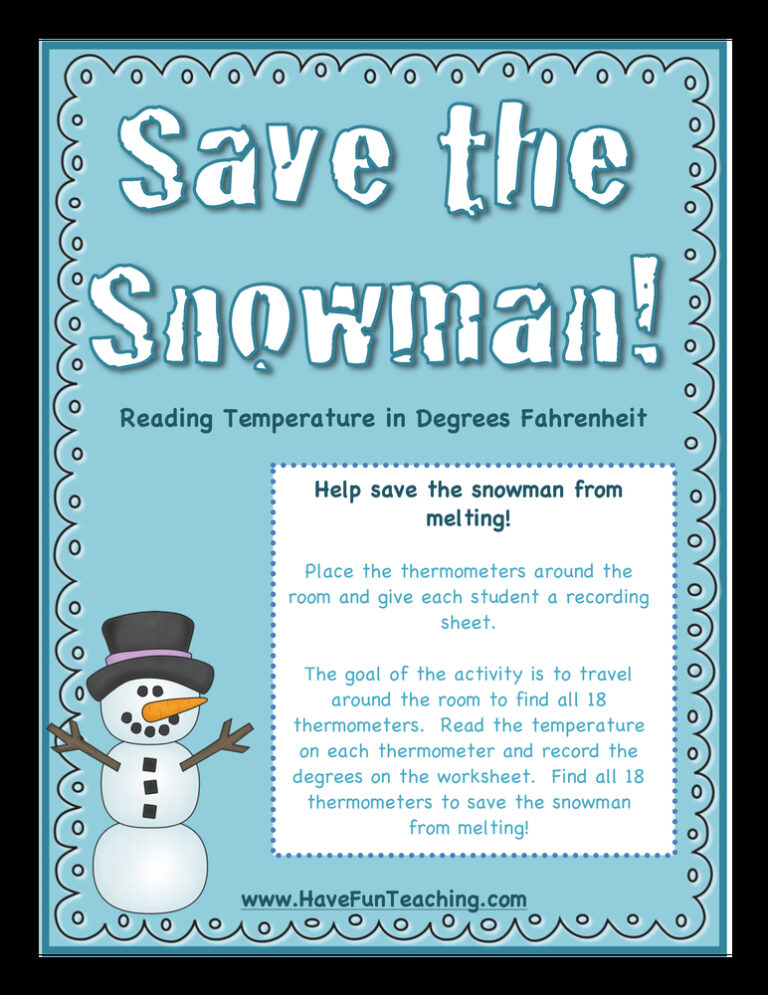
Activity4th GradeSave the Snowman Temperature Activity

This save the snowman temperature activity has 2nd-4th grade students hunt for snowman cards, read each thermometer and decide if the snowman melts. Answer key included.

Worksheet
Worksheet4th GradeDegrees on a Thermometer Worksheet

This Degrees on a Thermometer Worksheet has 4th graders read Celsius and Fahrenheit thermometers and solve temperature change word problems, with an answer key for quick checking.

From our teachers' playbook

Hot, cold and counting by degrees

What do 4th graders learn about temperature in math?

In 4th grade, temperature becomes a measurement kids can calculate with. They read thermometers in Fahrenheit and Celsius where each tick mark might count by 2s or 5s, not just 1s. Then they solve temperature change problems: a 48°F morning that warms 17 degrees = 65°F. They also graph temperatures over a week or across states and read the data to find the warmest day or the biggest drop. The click moment is when kids see a thermometer is really just a vertical number line.

Our favorite ways to teach temperature

Temperature is a great place to practice scales, number lines and data all at once. These moves keep it concrete.

Count the ticks out loud

Hold up a thermometer image and model: "The labels go 20, 30, 40, and there are five spaces between, so each tick is 2 degrees." Then read the next one together. Most wrong answers come from assuming every tick is 1, and thinking aloud fixes that fast.

Why it works: handing over the work step by step, from teacher to student, is one of the most widely used teaching frameworks (Pearson and Gallagher, 1983).

Degrees on a Thermometer WorksheetTry it withDegrees on a Thermometer WorksheetWorksheetsOpen it →

Explain the graph

Put up a week of temperatures on a bar graph and ask partners, "What happened between Tuesday and Wednesday? How do you know?" Kids have to name the change and prove it with numbers. Talking through the data builds both math reasoning and vocabulary.

Why it works: when kids say the precise math words, their understanding gets sharper, a recommendation of the U.S. Department of Education's elementary math guide.

Average State Temperatures Graphing WorksheetTry it withAverage State Temperatures Graphing WorksheetWorksheetsOpen it →

Mix it with other measures

Don't teach temperature as an island. In one practice set, mix a thermometer reading, a length question and an elapsed time problem. Kids have to decide which tool and which scale each question needs, and that choice is what makes the skill stick.

Why it works: shuffled practice teaches kids to choose the right strategy, not just repeat one, and it improved test scores in research (Rohrer and Taylor, 2007).

Thermometers Reading Comprehension WorksheetTry it withThermometers Reading Comprehension WorksheetWorksheetsOpen it →

Questions parents and teachers ask about 4th grade temperature

What do 4th graders learn about temperature?

They read Fahrenheit and Celsius thermometers with different scales, solve problems about temperatures rising and falling, and graph temperature data. It ties into measurement, number lines and data.

How do you find a temperature change?

Subtract the lower temperature from the higher one. If it was 38°F at dawn and 61°F at noon, it warmed 23 degrees. A thermometer drawn as a number line helps kids count up instead.

What is the difference between Fahrenheit and Celsius?

They are two scales for measuring temperature. Water freezes at 32°F, which is 0°C, and boils at 212°F, which is 100°C. Most science uses Celsius, and U.S. weather reports use Fahrenheit.

How can kids practice temperature at home?

Check the weather together each morning and evening and ask how many degrees it changed. Keeping a week-long chart on the fridge turns it into a real graph to read.