Skip to content
Start My 3 Free Days $0 today · cancel anytime

Kindergarten Temperature Resources (Math)

3 kindergarten temperature resources: 2 activities and 1 lesson plan. How teachers use these

Kindergarten Temperature Resources (Math)

3 kindergarten temperature resources: 2 activities and 1 lesson plan. How teachers use these

Lesson Plan
Lesson PlanKindergartenTemperature Lesson Plan

Our Temperature Lesson Plan comes with two Thermometer Activities and seven Thermometer Worksheets. We have book recommendations

Activity
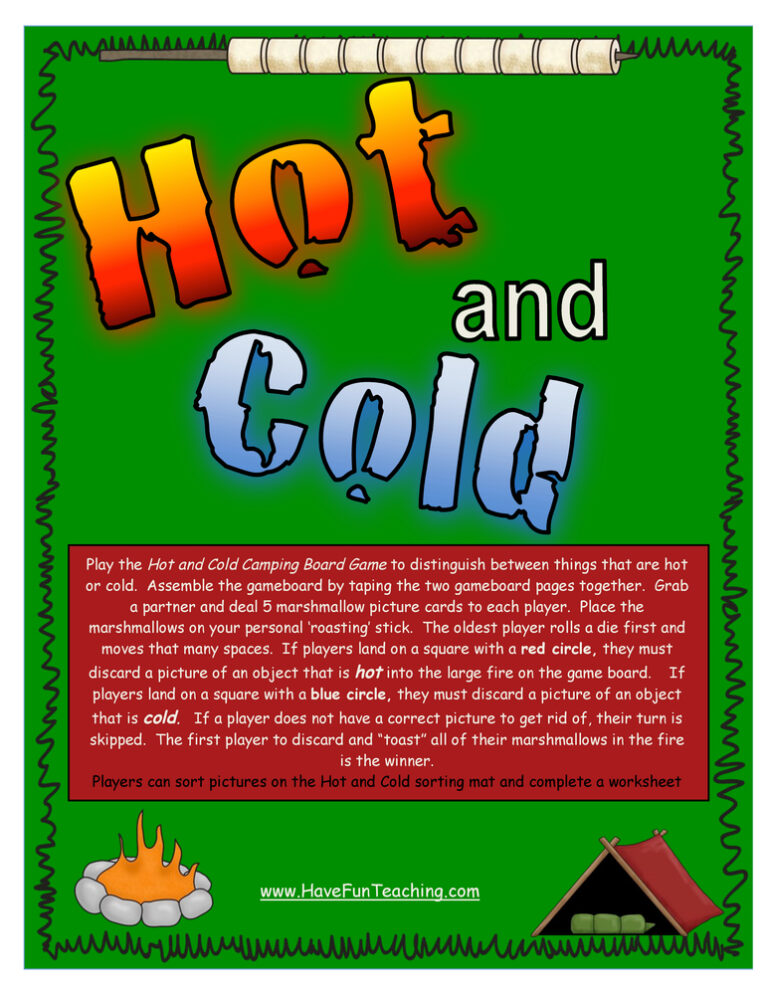
ActivityKindergartenHot and Cold Activity

This hot and cold activity lets children sort 12 picture cards onto a Hot and Cold mat to learn about temperature. For kindergarten to 2nd grade, answer key included.

Activity
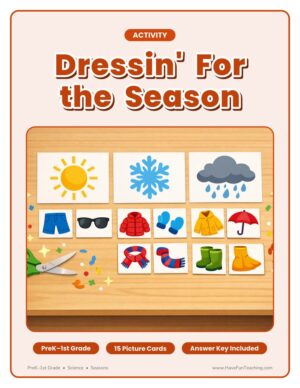
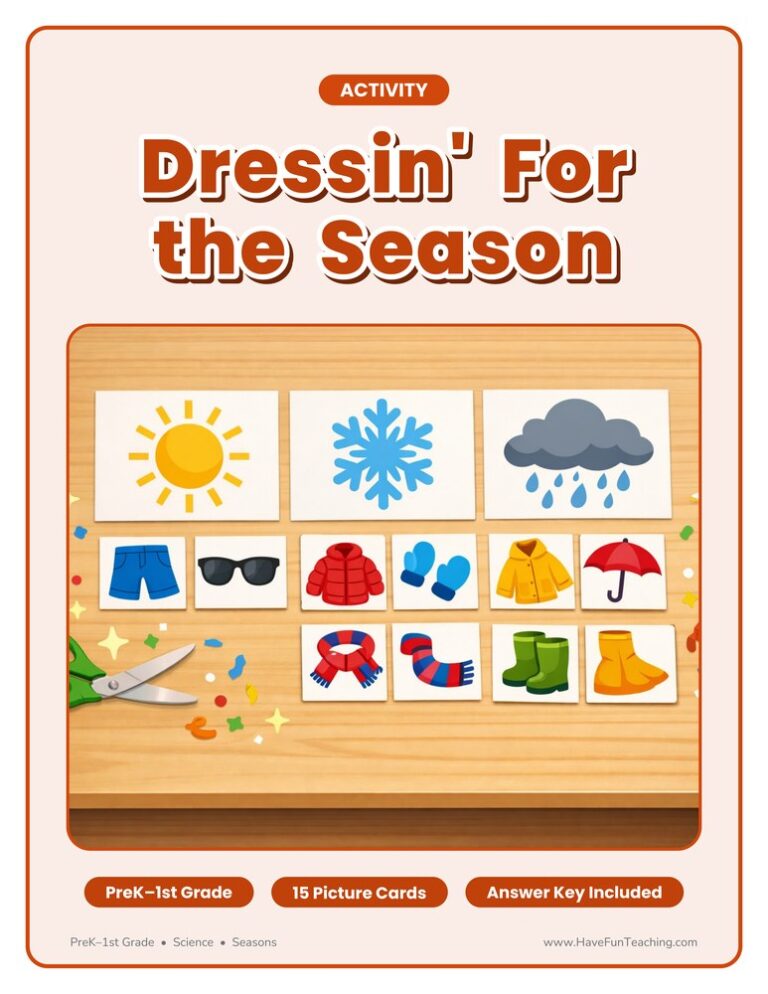
ActivityKindergartenDressin For the Season Seasons Activity

In this dressin for the season seasons activity, PreK to 1st grade kids sort clothing picture cards by hot, cold and rainy weather. Answer key included.

From our teachers' playbook

Brrr or phew? Let's find out!

What do kindergarteners learn about temperature?

In kindergarten, temperature starts with the body: does it feel hot, warm, cool or cold? Kids sort pictures (a mug of cocoa, a snowman, a sunny beach) and compare two things: "Which is hotter?" They notice how weather changes from season to season and choose the right clothes for it. Some classes peek at a real thermometer and see the red line climb when they hold the bulb. The click moment is when a child says, "It's cold, so I need my mittens!" and connects the word to a real choice.

Our favorite ways to teach temperature to little ones

Five-year-olds learn hot and cold best with their hands, their eyes and a little bit of silliness. Here are the moves we use.

Feel it first

Set out three cups of water: warm, room temperature and icy. Kids dip a finger in each and line the cups up from coldest to hottest. Then they match a picture card to each cup. Real sensations before words make "warmer" and "colder" mean something.

Why it works: kids understand an idea best when they touch it, then draw it, then write it, the order the U.S. Department of Education recommends for elementary math.

Temperature Lesson PlanTry it withTemperature Lesson PlanLesson PlansOpen it →

Hot and cold picture sort

Draw a big sun on one side of the board and a snowflake on the other. Kids take turns placing picture cards where they belong and say the sentence: "Soup is hot." Keep a few tricky ones, like a lamp or a puddle, for great talk.

Why it works: children learn more from words and pictures together than from words alone (Mayer, 2009).

Hot and Cold ActivityTry it withHot and Cold ActivityActivitiesOpen it →

Dress for the weather

Call out a weather report in your best TV voice: "Today it is freezing and snowy!" Kids pick the clothes that fit, either from a pile of real dress-up items or on a cut-and-paste page. Switch to a heat wave and watch the giggles when someone grabs a scarf.

Why it works: in a well-known study, a few short sessions of a simple number board game measurably boosted young children's number skills (Ramani and Siegler, 2008).

Dressin For the Season Seasons ActivityTry it withDressin For the Season Seasons ActivityActivitiesOpen it →

Questions parents and teachers ask

What should kindergarteners know about temperature?

They should describe things as hot, warm, cool or cold and compare two things to tell which is hotter or colder. Many also connect temperature to weather and choosing clothes. Reading exact numbers on a thermometer usually comes later.

Do kindergarteners need to read a thermometer?

Not yet. It's enough for them to see that the line goes up when it gets hotter and down when it gets colder. Reading degrees is usually taught in 2nd and 3rd grade.

How can I teach hot and cold at home?

Talk about it during everyday moments: bath water, a bowl of soup, a popsicle, the car in summer. Ask "Is it hot or cold? How do you know?" Those quick chats build the vocabulary fast.

How does temperature connect to science in kindergarten?

Kindergarten science looks at weather and how the sun warms the Earth. Kids notice that sunny spots feel warmer than shady ones, which is a great first experiment.