
Skip to content
Start My 3 Free Days $0 today · cancel anytime

Kindergarten Inference Resources

1 kindergarten inference resources: 1 activity. How teachers use these

Kindergarten Inference Resources

1 kindergarten inference resources: 1 activity. How teachers use these

Activity
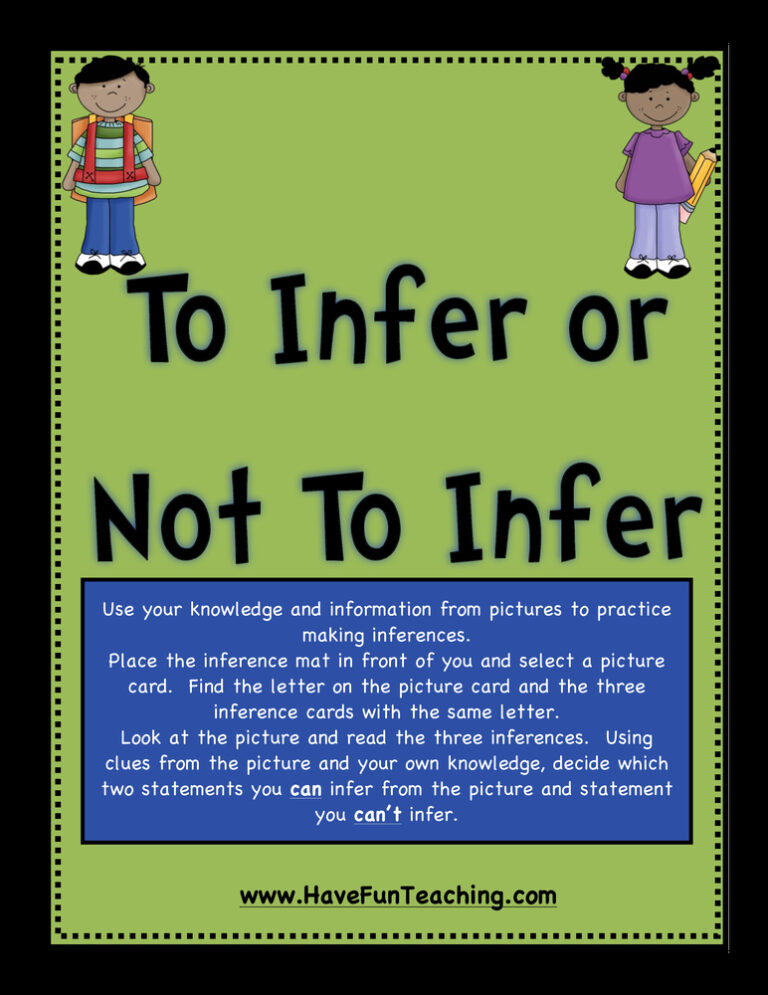
ActivityKindergartenTo Infer or not to Infer Inferences Activity

Using To Infer or not to Infer Inferences Activity, students use clues from the picture and your own knowledge to build inference skills. This is perfect for making inferences and drawing conclusions.

From our teachers' playbook

Little detectives, big clues

What do kindergartners learn about inference?

Kindergartners learn that good readers are detectives. They use clues from the pictures and words, plus what they already know, to figure out things the story doesn't say. If a picture shows a child in a coat and boots with snow falling, they can infer it is cold outside. A simple formula helps: clues + what I know = my guess. They practice with pictures, riddles and read-alouds. The click moment is when a child says, "The book didn't say it, but I can tell!"

Our favorite ways to teach inference

Five-year-olds infer all day long. These moves help them notice they're doing it.

Picture clue detective

Show a picture, like a muddy dog next to a bathtub, and ask, "What do you think happened?" Kids point to the clues that prove their guess. Starting with pictures lets every child practice inference before they can read the words.

Why it works: children learn more from words and pictures together than from words alone (Mayer, 2009).

To Infer or not to Infer Inferences ActivityTry it withTo Infer or not to Infer Inferences ActivityActivitiesOpen it →

Think aloud during a read-aloud

Pause on a page and wonder out loud: "Her face is red and her fists are tight. I think she feels angry." Then pause again and let kids try. Hearing your thinking shows them how to use clues.

Why it works: showing first, practicing together, then letting kids try alone is the "gradual release" model teachers have relied on for decades (Pearson and Gallagher, 1983).

Who am I? riddles

Give three clues, like "I have a trunk. I am big and gray. I live in the zoo." Kids guess the answer and name the clue that helped. Quick daily riddles build inference fast and kids love them.

Why it works: pulling an answer out of memory makes it stick far better than rereading it, one of the strongest findings in learning research (Dunlosky and colleagues, 2013).

What's on this page

Teacher favorites right now: To Infer or not to Infer Inferences Activity.

Questions parents and teachers ask about kindergarten inference

What is inference for kindergarten?

Inference means using clues and what you already know to figure out something that isn't said. Kindergartners practice with pictures, riddles and stories.

How do you teach inferencing to a 5-year-old?

Start with pictures. Ask, "What do you think is happening? How do you know?" Praise the clues they find, not just the answer.

What is the difference between inference and prediction?

A prediction is a guess about what will happen next. An inference is figuring out something happening now that the story doesn't say, like how a character feels.

How can I practice inference at home?

During a bedtime story, ask how a character feels and why. In the car, play "I spy" with clues instead of colors. Little moments add up.


