Skip to content
Start My 3 Free Days $0 today · cancel anytime

Inference Resources

45 inference resources: 26 worksheets, 11 graphic organizers, 8 activities and more. How teachers use these

Inference Resources

45 inference resources: 26 worksheets, 11 graphic organizers, 8 activities and more. How teachers use these

Worksheet
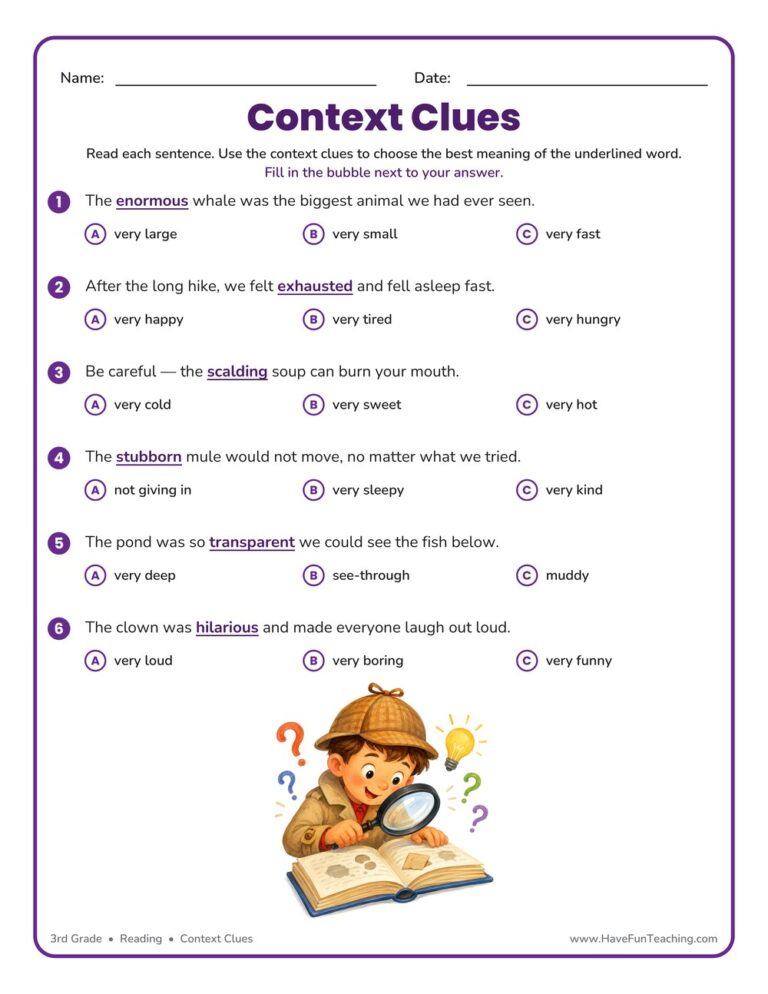
Worksheet3rd GradeContext Clues Worksheet

A 3rd grade Context Clues Worksheet with six multiple-choice sentences where students use the surrounding words to find the meaning of each underlined word. Answer key included for fast, no-prep vocabulary practice.

Worksheet
Worksheet2nd GradeMaking Inferences Story Worksheet

A Making Inferences Story Worksheet for 2nd grade: read one short story about a snowy morning, then use the clues to answer four questions and write your own evidence. Answer key included for quick, no-prep practice.

Worksheet
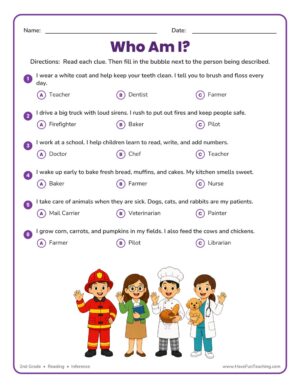
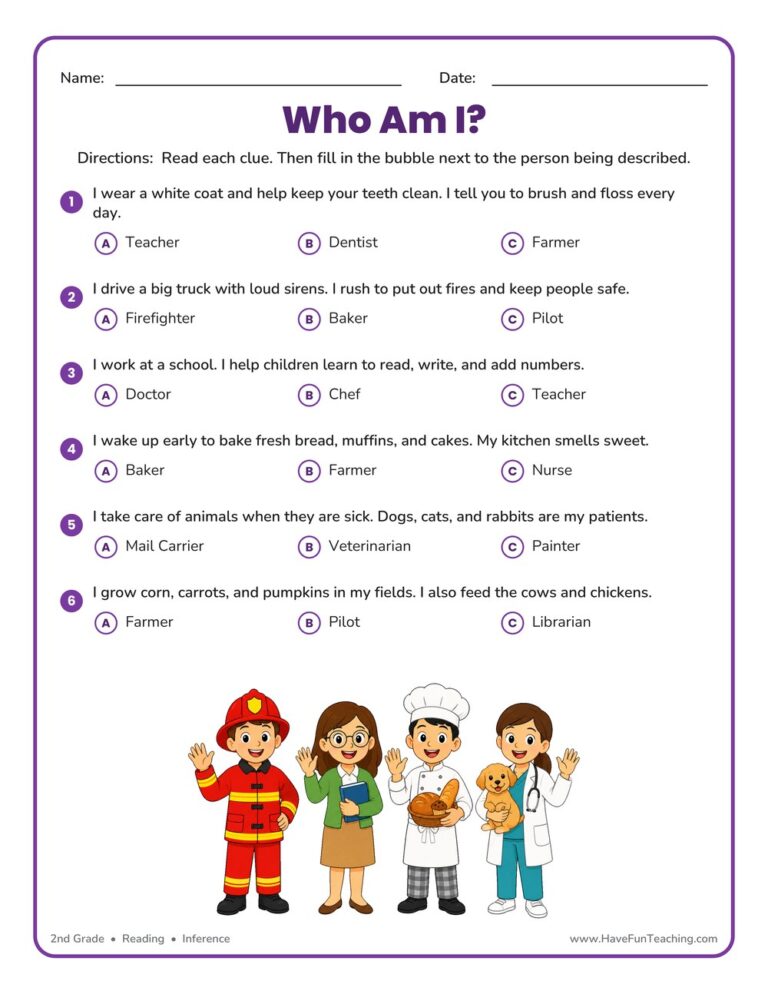
Worksheet2nd GradePeople Inferences Worksheet

A 2nd grade people inferences worksheet where readers solve six “Who Am I?” clues about community helpers using text evidence. Includes a complete answer key — great for no-prep reading-comprehension practice at home or school.

Worksheet
Worksheet3rd GradeWhat I Read What I Know Inference Graphic Organizer Worksheet

A reusable What I Read What I Know Inference Graphic Organizer Worksheet that walks 3rd grade readers from text clues to background knowledge to a written inference. Use it with any book, all year long.

Worksheet
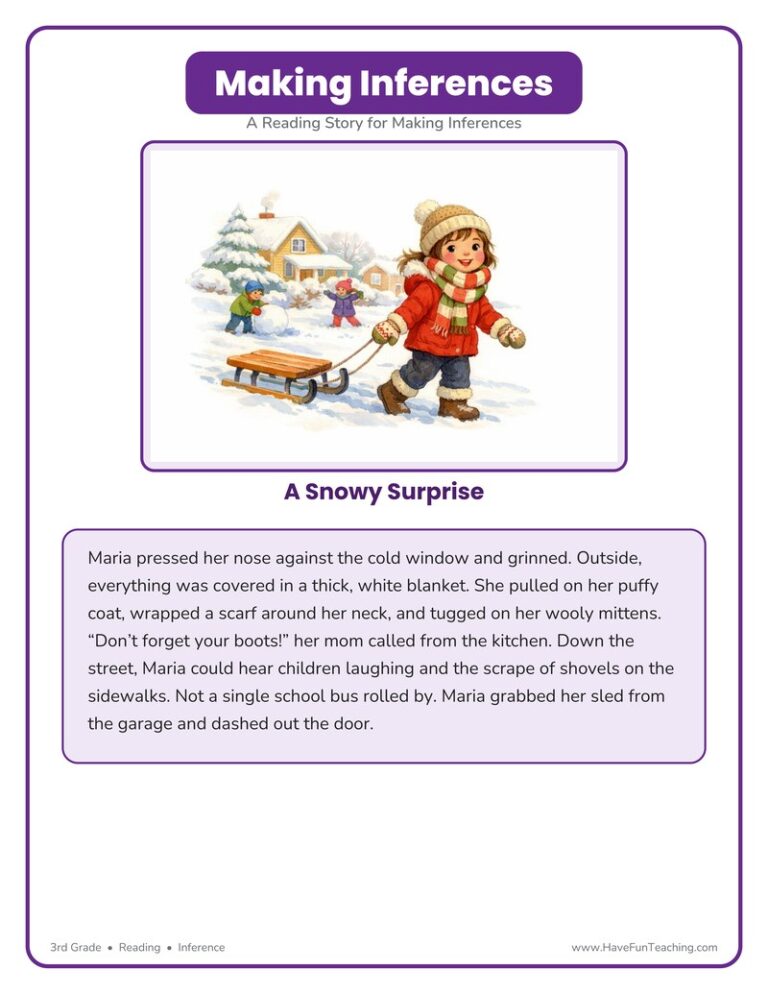
Worksheet3rd GradeReading Inferences Worksheet

This reading inferences worksheet gives 3rd graders a short snow-day story and five clue-based questions that build evidence-driven thinking. Includes a complete answer key — perfect for no-prep reading comprehension practice at home or in class.

Activity
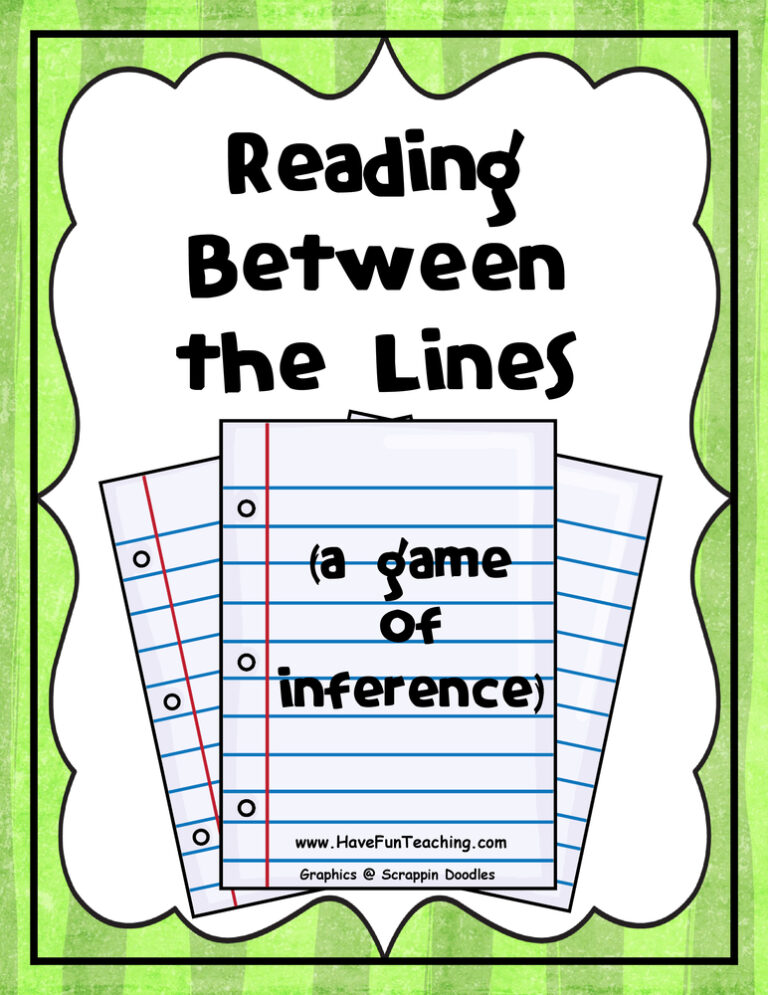
Activity1st GradeReading Between The Lines Inference Activity

This reading between the lines inference activity lets 1st to 3rd grade students use story clues to figure out how a character feels. An answer key is included for easy checking.

Worksheet
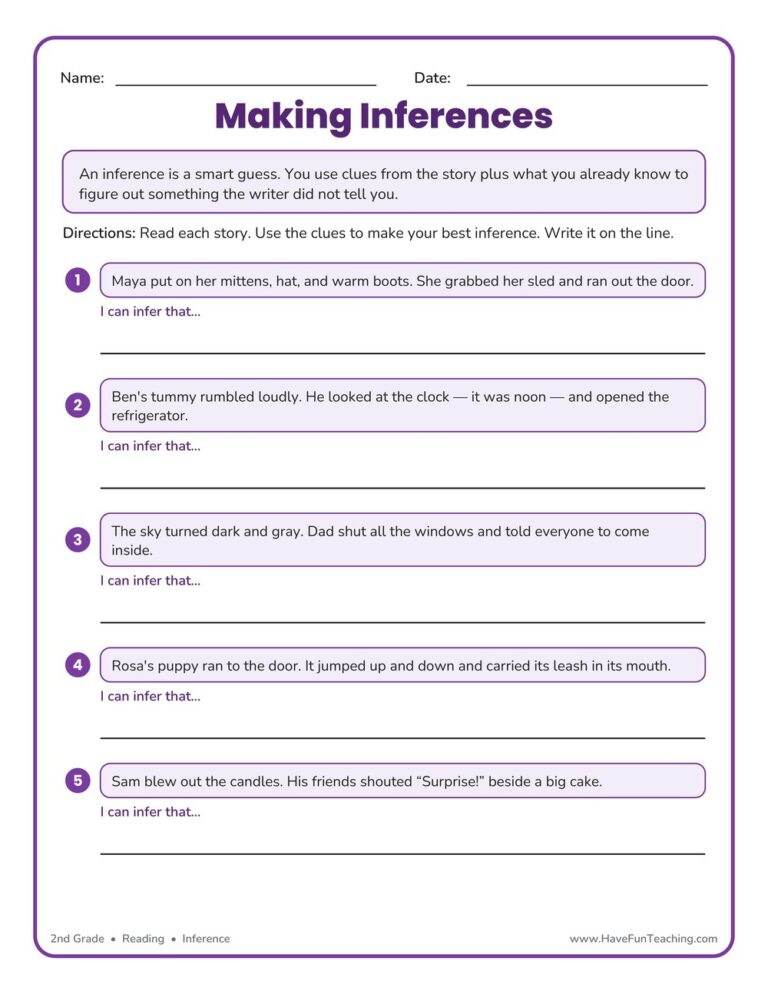
Worksheet2nd GradeMaking Inferences Worksheet

This making inferences worksheet gives 2nd graders five short stories to read for clues and draw smart conclusions. Includes an answer key — perfect for quick, no-prep reading practice at home or in class.

Worksheet
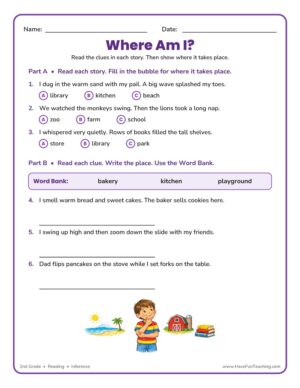
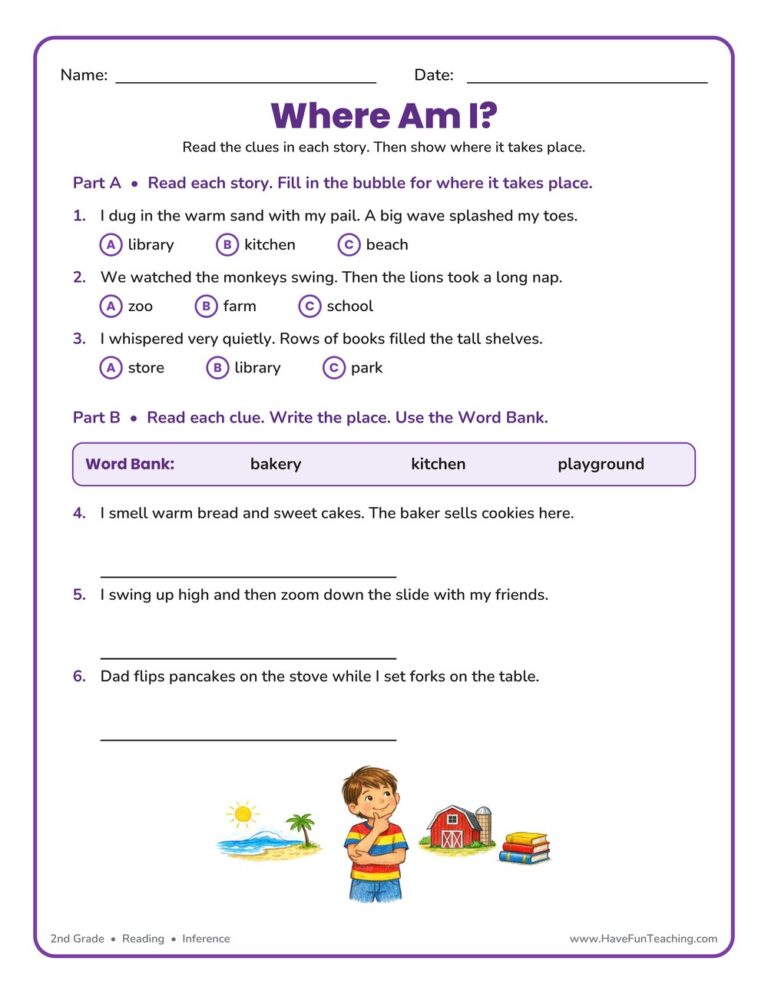
Worksheet2nd GradeLocations Inferences Worksheet

The Locations Inferences Worksheet gives 2nd graders fun practice reading clues to figure out where each story happens. Includes a complete answer key, a quick, no-prep way to build inference and reading comprehension skills.

Activity
Activity3rd GradeInference Chains Activity

This inference chains activity has 3rd to 5th grade students match each inference to two supporting clues and build paper chains. Answer key included.

Workbook
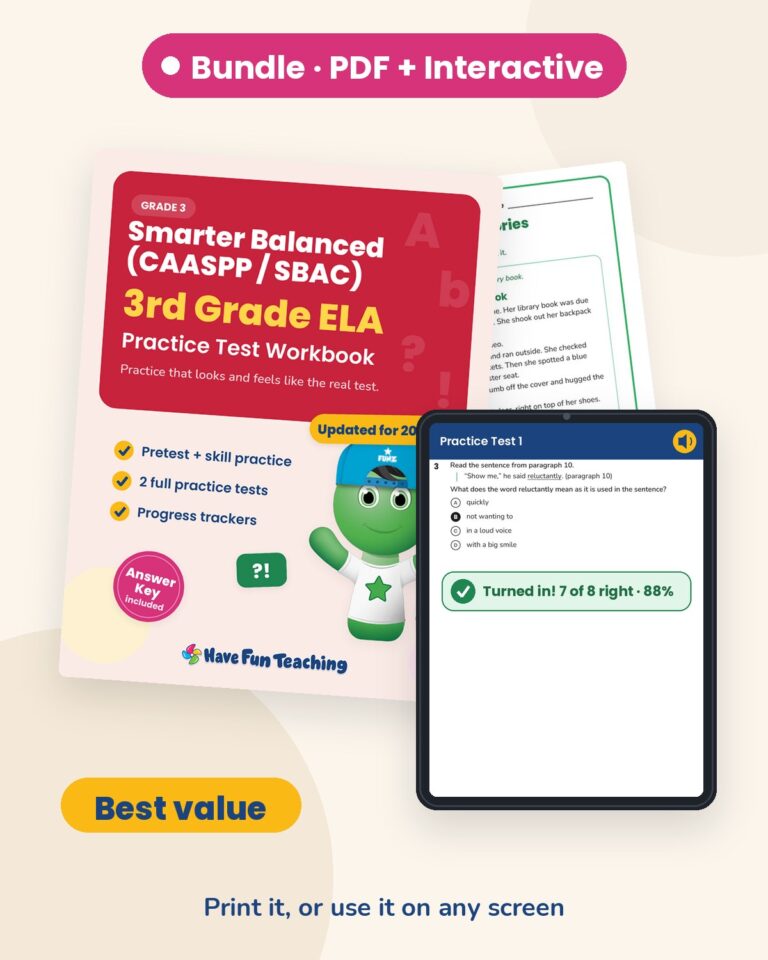
Workbook3rd GradeSmarter Balanced (CAASPP / SBAC) 3rd Grade ELA Practice Test Workbook

A Smarter Balanced (CAASPP / SBAC) 3rd grade ELA practice test workbook for teachers, with a pretest, skill practice for all 24 standards, mixed review and 2 full-length practice tests. Answer key included, so test prep is ready to go.

Workbook
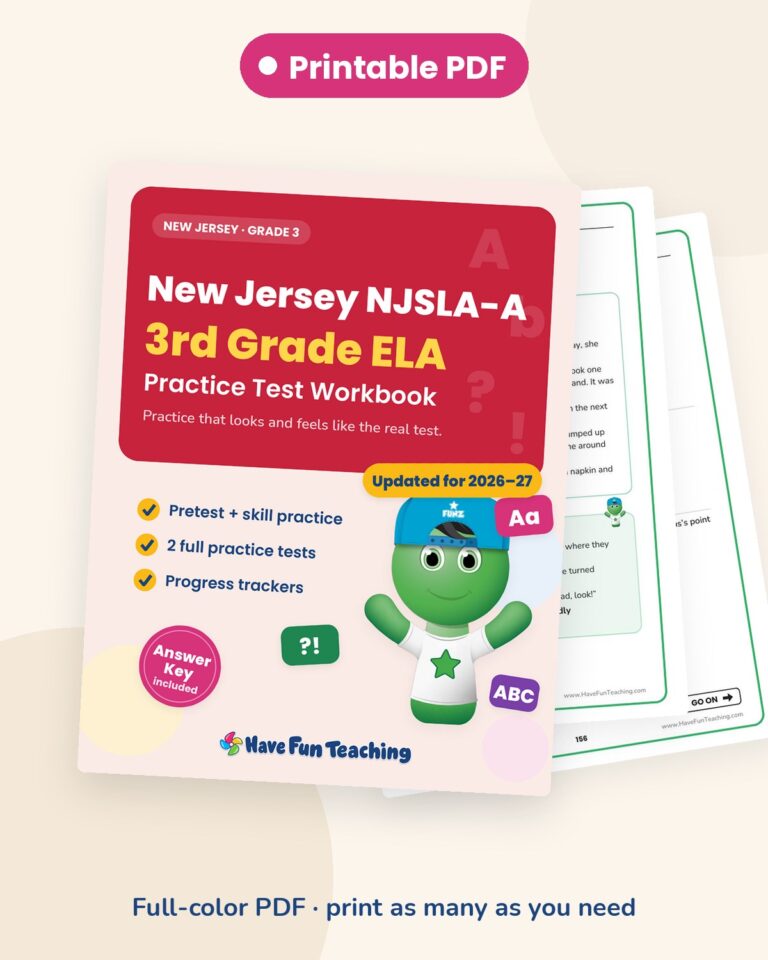
Workbook3rd GradeNew Jersey NJSLA-A 3rd Grade ELA Practice Test Workbook

A NJSLA-A 3rd grade ELA practice test workbook for teachers, with a pretest, skill practice for all 19 standards, mixed review and 2 full-length practice tests. Answer key included, so test prep is ready to go.

Worksheet
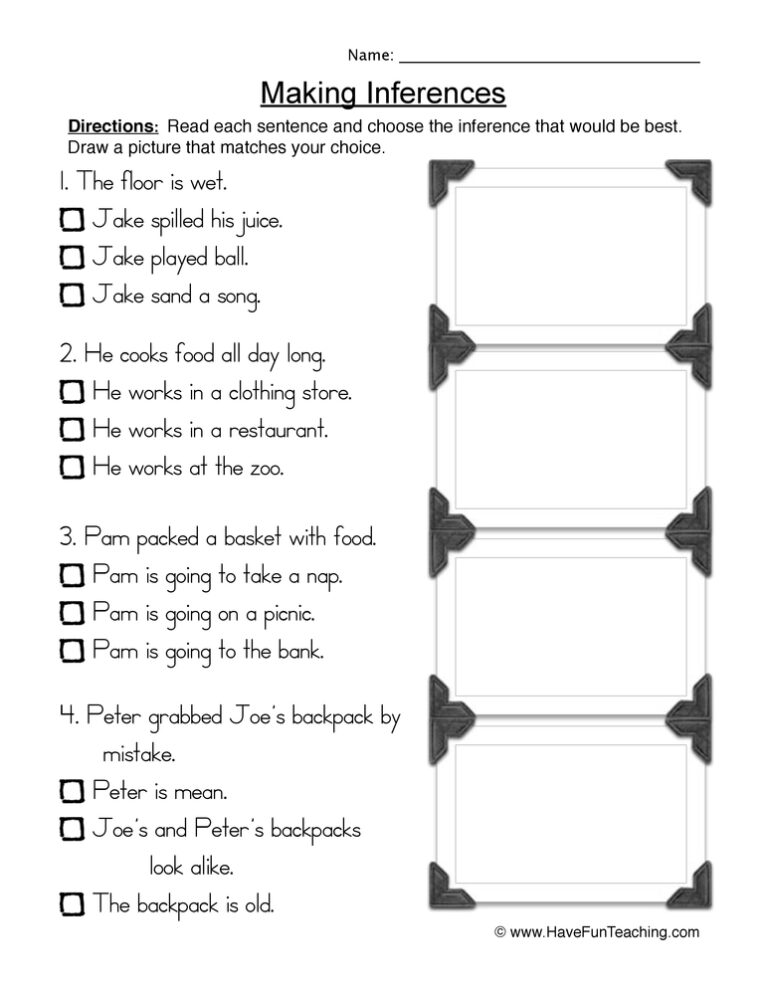
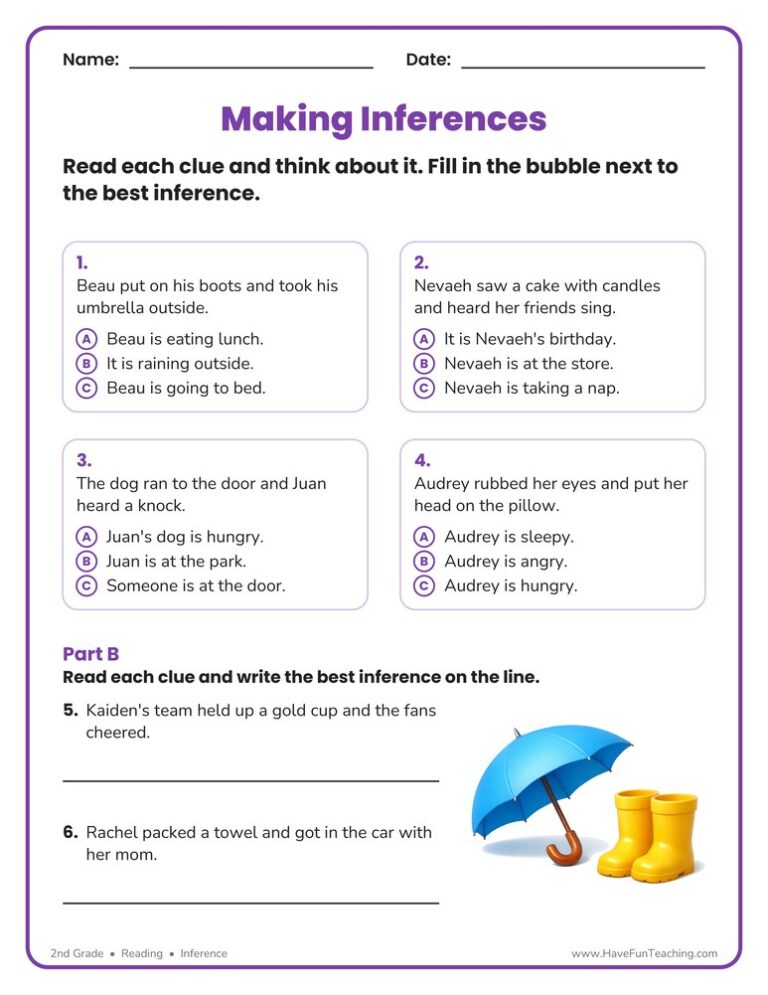
Worksheet2nd GradeDrawing Inferences Worksheet

Students use this drawing inferences worksheet to read short clues, choose the best inference, and write two of their own. Made for 2nd grade, with an answer key included so checking work takes seconds.

Workbook
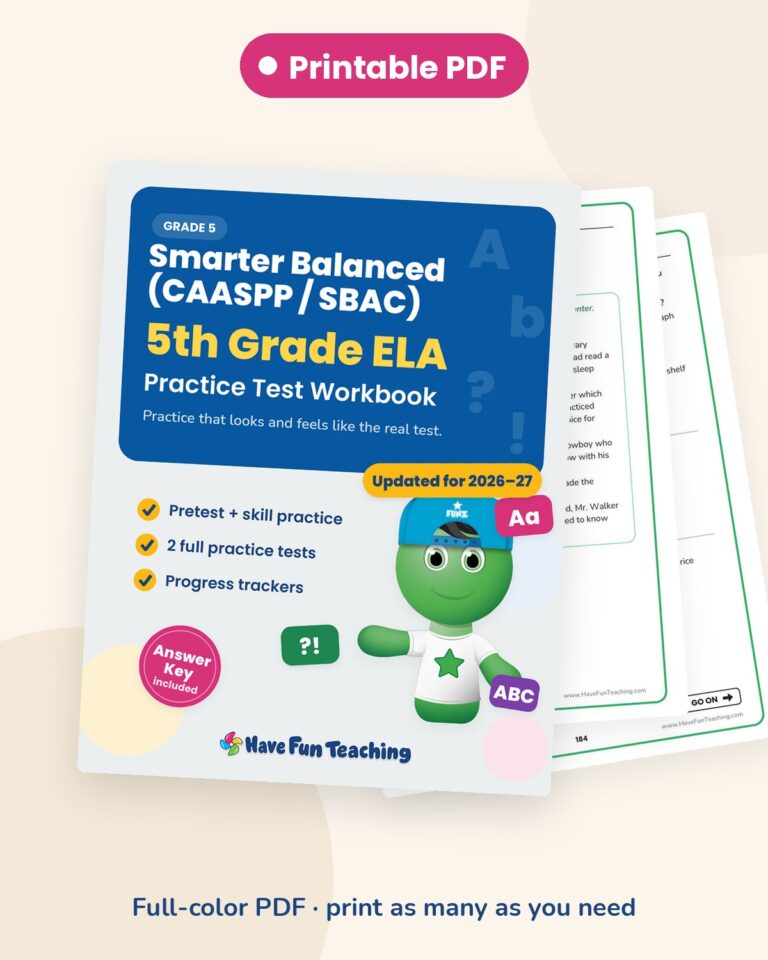
Workbook5th GradeSmarter Balanced (CAASPP / SBAC) 5th Grade ELA Practice Test Workbook

A Smarter Balanced (CAASPP / SBAC) 5th grade ELA practice test workbook for teachers, with a pretest, skill practice for all 24 standards, mixed review and 2 full-length practice tests. Answer key included, so test prep is ready to go.

Worksheet
Worksheet4th GradeInference Recording Worksheet

This inference recording worksheet has 4th grade students record clues from any book, connect them to what they know, and write their own inferences to build deeper reading comprehension.

Worksheet
Worksheet4th GradeCompare and Contrast Worksheet Fiction and Non-Fiction

This compare and contrast worksheet fiction and non-fiction pairs a sea otter article with a short story so 4th graders can chart what is alike and different. Answer key included for fast, no-prep paired-text practice.

Worksheet
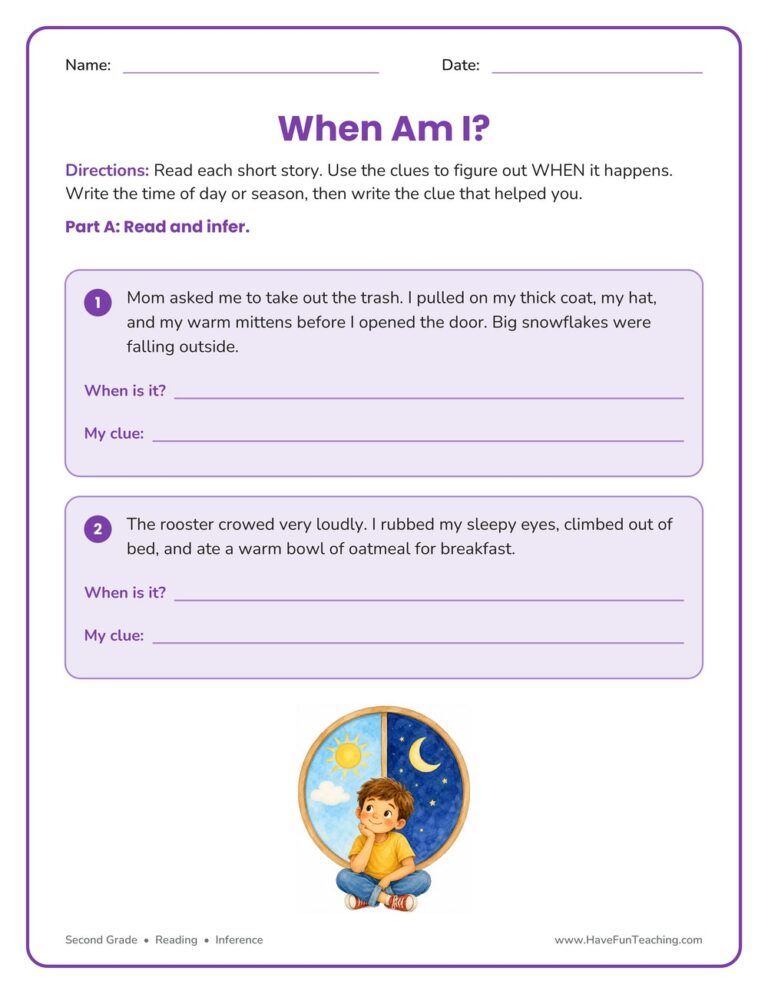
Worksheet2nd GradeTime Inferences Worksheet

The Time Inferences Worksheet helps 2nd graders use story clues to infer the time of day and season. Includes an answer key — perfect for building evidence-based reading and comprehension practice at home or school.

Activity
Activity1st GradeMaking Inferences Pictures Activity

This making inferences pictures activity has 1st to 3rd Grade readers use tool clues to infer which community helper uses them. Includes a record sheet, practice page and answer key.

Worksheet
Worksheet2nd GradeMaking Inferences Special Night Worksheet

This making inferences special night worksheet asks 2nd graders to pick the ending the campout clues support and draw it. An answer key is included, so it is ready to print and teach.

Workbook
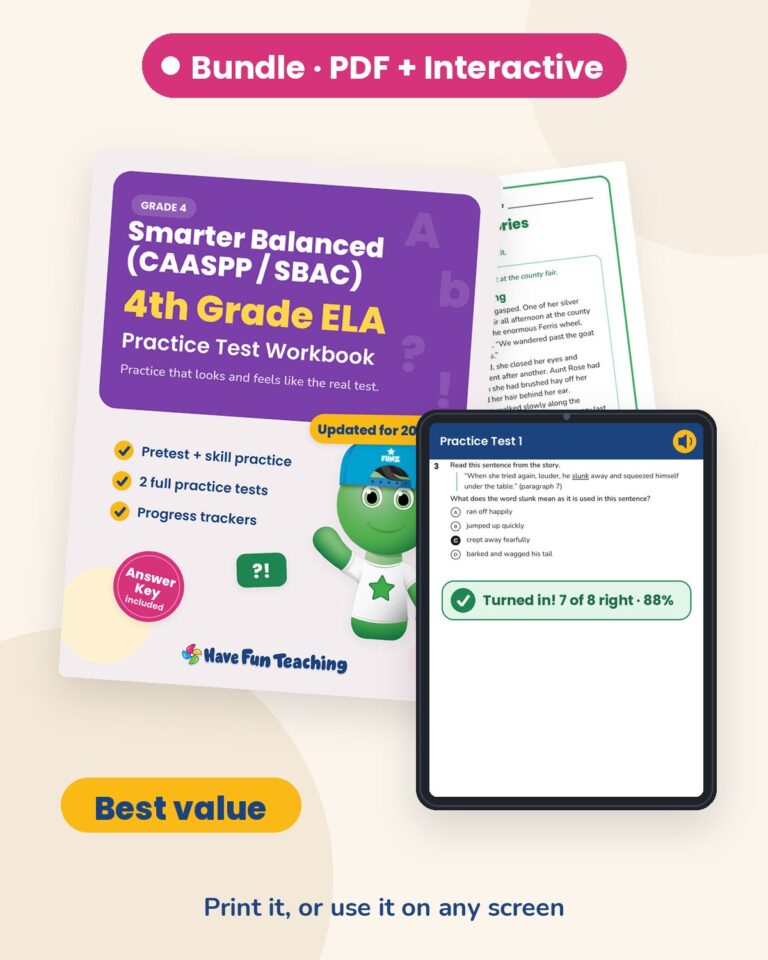
Workbook4th GradeSmarter Balanced (CAASPP / SBAC) 4th Grade ELA Practice Test Workbook

A Smarter Balanced (CAASPP / SBAC) 4th grade ELA practice test workbook for teachers, with a pretest, skill practice for all 24 standards, mixed review and 2 full-length practice tests. Answer key included, so test prep is ready to go.

Worksheet
Worksheet5th GradeMaking Inferences Graphic Organizer Worksheet

This making inferences graphic organizer worksheet gives 5th grade readers three short stories to find clues, add what they know, and write an inference. An answer key is included for easy checking.

From our teachers' playbook

Read between the lines like a detective!

What do kids learn about inference?

Making an inference means figuring out something the author doesn't say directly. Kids combine clues from the text with what they already know: clues + what I know = inference. If a character grabs an umbrella and frowns at the sky, kids can infer it's about to rain. They learn to back up every inference with evidence. The click moment is when kids realize they make inferences all day long, and reading is just one more place to do it.

Our favorite ways to teach inference

Inference is a thinking skill. These moves make that thinking visible.

Clues plus what I know

Read a short paragraph and think aloud with a two-column organizer: "The text says she yawned. I know people yawn when they're tired. So she's probably sleepy." Then kids try one. Seeing both columns makes inference less mysterious.

Why it works: showing first, practicing together, then letting kids try alone is the "gradual release" model teachers have relied on for decades (Pearson and Gallagher, 1983).

What I Read What I Know Inference Graphic Organizer WorksheetTry it withWhat I Read What I Know Inference Graphic Organizer WorksheetWorksheetsOpen it →

Infer from pictures

Start with pictures before text. Show a picture and ask, "What do you think just happened? What clues tell you?" Pictures let every reader practice inference, even before reading longer texts.

Why it works: pairing a picture with each word gives kids two ways to remember it, a well-tested principle of how people learn (Mayer, 2009).

Inference Drawings WorksheetTry it withInference Drawings WorksheetWorksheetsOpen it →

Reading between the lines

Give kids a set of clue cards and have them build an inference step by step. Moving the cards shows how clues add up to a conclusion.

Why it works: going from real objects to pictures to symbols is a core recommendation of the U.S. Department of Education's elementary math guide.

Reading Between The Lines Inference ActivityTry it withReading Between The Lines Inference ActivityActivitiesOpen it →

Questions parents and teachers ask us

What is an inference for kids?

An inference is a smart guess using clues from the text and what you already know. It's figuring out something the author didn't say directly.

How do you teach inferencing to kids?

Start with pictures and everyday examples, then move to short texts. Use the formula: clues plus what I know equals my inference. Always ask kids to show their evidence.

What is the difference between an inference and a prediction?

An inference figures out something happening now that isn't stated. A prediction is a guess about what will happen next. Both use clues from the text.

What grade learns inference?

Kids make simple inferences in kindergarten and 1st grade with pictures. Inference becomes a major skill in 3rd through 5th grade reading.

Keep exploring