
Skip to content
Start My 3 Free Days $0 today · cancel anytime

Kindergarten Force Resources

4 kindergarten force resources: 2 worksheets and 2 activities. How teachers use these

Kindergarten Force Resources

4 kindergarten force resources: 2 worksheets and 2 activities. How teachers use these

Worksheet
WorksheetKindergartenPush or Pull Force Worksheet

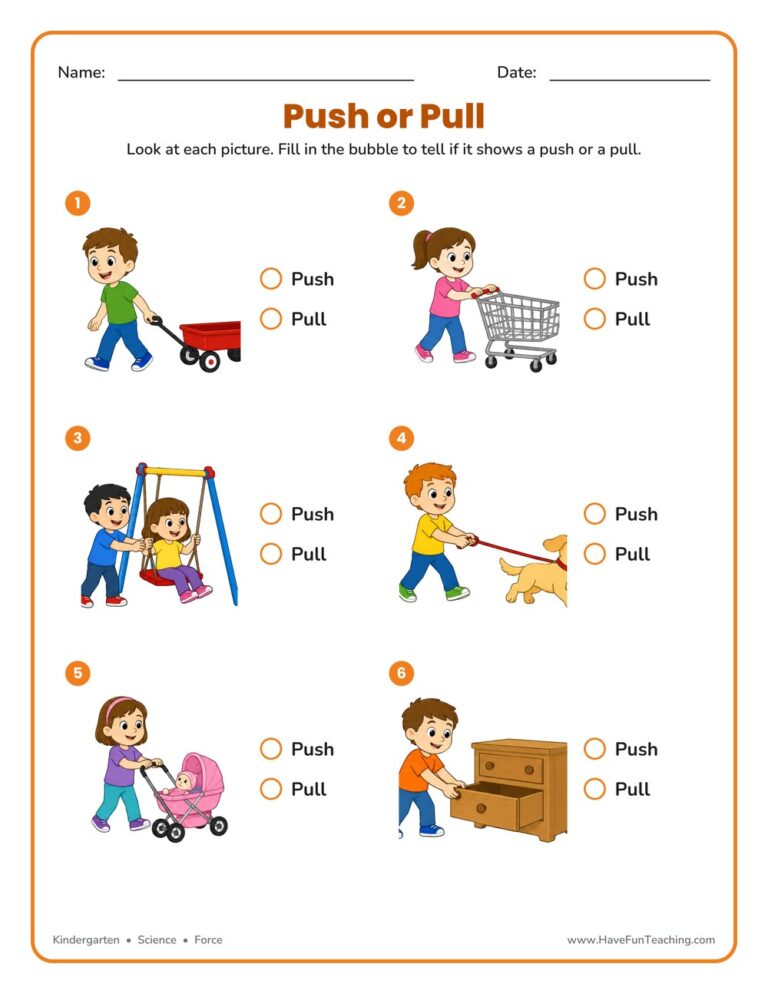
This push or pull force worksheet lets kindergarten students look at six pictures and fill in the bubble to show whether each action is a push or a pull. Includes an answer key—a simple, no-prep introduction to force.

Activity
ActivityKindergartenMagnet Activity

This magnet activity has kindergarten to 3rd grade students sort picture cards into things a magnet will pull and things it will not, with a sorting mat, practice page and answer key.

Activity
ActivityKindergartenSink or Float Activity

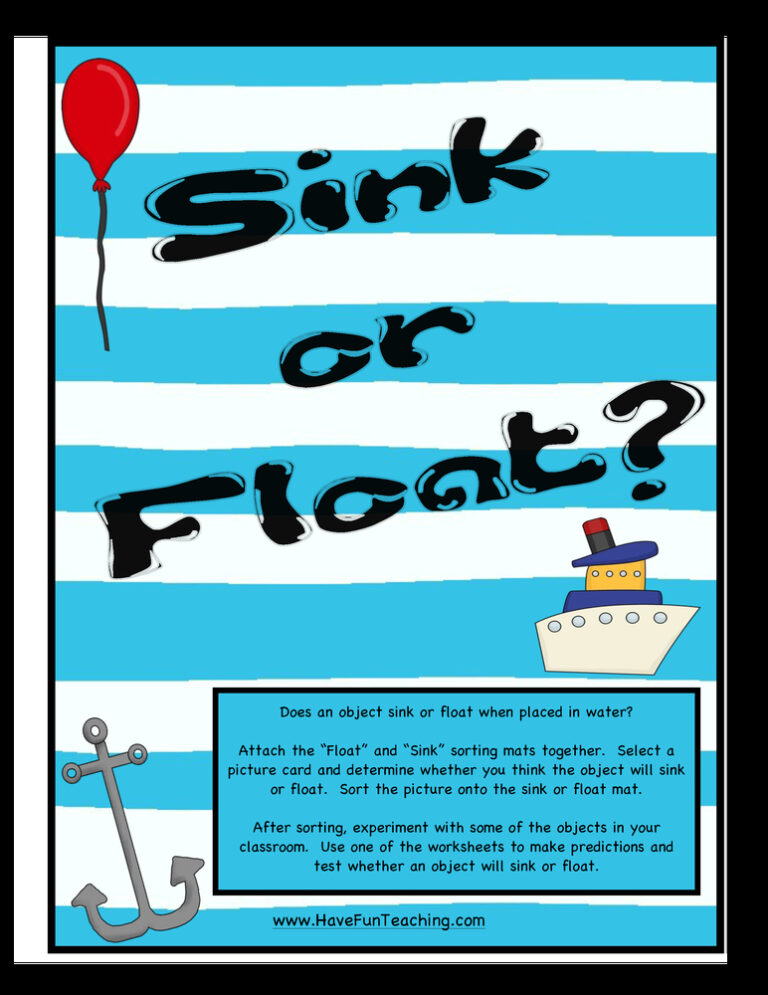
This sink or float activity has kindergarten and 1st grade scientists predict and sort 12 picture cards on a Float and Sink mat, then circle new floating objects. Answer key included.

Worksheet
WorksheetKindergartenPeople Walking Transportation Worksheet

This people walking transportation worksheet helps kindergarten students circle safe walking choices and draw a place they can walk to, with an answer key that makes checking quick and easy.

From our teachers' playbook

Push it, pull it, watch it go!

What do kindergarteners learn about force?

Kindergarteners learn that a force is a push or a pull, and that forces make things move, stop or change direction. They test it with balls, toy cars and blocks: a big push sends a ball far, a little push sends it a short way. They also notice that objects bump into each other and change direction. The click is when kids figure out they can make a toy car go farther just by pushing harder.

Our favorite ways to teach force

Force is the perfect hands-on science topic. Kids learn it by doing it.

Push or pull it

Set out a wagon, a door, a drawer and a ball. Kids try moving each one and tell whether they pushed or pulled. Then they sort pictures the same way.

Why it works: kids understand an idea best when they touch it, then draw it, then write it, the order the U.S. Department of Education recommends for elementary math.
Push or Pull Force WorksheetTry it withPush or Pull Force WorksheetWorksheetsOpen it →

Big push, little push

Roll a ball with a soft push and mark where it stops with tape. Then roll it with a strong push. Ask, "What changed?" Kids learn that bigger forces make bigger motion.

Why it works: handing over the work step by step, from teacher to student, is one of the most widely used teaching frameworks (Pearson and Gallagher, 1983).

People Walking Transportation WorksheetTry it withPeople Walking Transportation WorksheetWorksheetsOpen it →

Magnet mystery

Magnets pull without touching! Let kids test which objects a magnet pulls and which it doesn't. It's a great way to show a pull you can't see.

Why it works: in a well-known study, a few short sessions of a simple number board game measurably boosted young children's number skills (Ramani and Siegler, 2008).

Magnet ActivityTry it withMagnet ActivityActivitiesOpen it →

Force questions, answered

What is force for kindergarten?

A force is a push or a pull. Forces can make things start moving, stop, speed up, slow down or change direction.

What are examples of push and pull?

Pushing a swing, kicking a ball and closing a door are pushes. Pulling a wagon, opening a drawer and tugging a rope are pulls.

How do you teach force to young kids?

Let them try it with real objects. Balls, toy cars, ramps and blocks are perfect. Ask them to describe what happened and why.

Is gravity a force?

Yes! Gravity is a pull that brings things down toward the ground. Kindergarteners can see it by dropping safe objects and watching them fall.



