Skip to content
Start My 3 Free Days $0 today · cancel anytime

Kindergarten Senses Resources

10 kindergarten senses resources: 4 worksheets, 3 activities, 2 songs and more. How teachers use these

Kindergarten Senses Resources

10 kindergarten senses resources: 4 worksheets, 3 activities, 2 songs and more. How teachers use these

Worksheet
WorksheetKindergartenSenses Sight Worksheet

This senses sight worksheet asks kindergarten students to circle the objects that help their eyes see, then color four shapes. An answer key is included, so children learn what sight tells them about the world.

Worksheet
WorksheetKindergartenSenses Taste Worksheet

This Senses Taste Worksheet asks Kindergarten students to circle the things they can taste and color four shapes, with an answer key included, so the sense of taste becomes a rule a young child can use.

Worksheet
WorksheetKindergartenSenses Writing Worksheet

This senses writing worksheet has Kindergarten students look at five body parts and write the sense word that matches each one. Answer key included — an easy, no-prep way to build five senses vocabulary and handwriting at once.

Video
VideoKindergartenSenses Song (MP3)

While listening to the Senses Song (MP3), students learn the five senses and examples of how you use each sense daily.

Video
VideoKindergartenSenses Song (Animated Music Video)

While watching the Senses Song (Animated Music Video), students learn about the five senses. The senses song teaches Touch, Taste, Smell, Sight, and Sound.

Flash Cards
Flash CardsKindergartenFive Senses Flash Cards

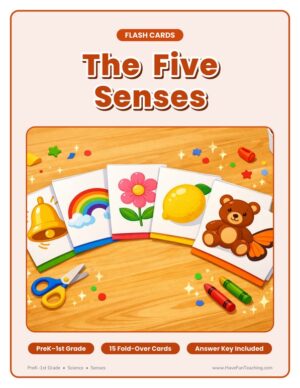
Five senses flash cards for Preschool through 1st Grade: 15 fold-over picture cards pair each sense with its body part, plus a practice page and answer key included to make learning the senses hands-on.

Workbook
WorkbookKindergartenFive Senses Mini Pack

Using this Five Senses Mini Pack, students learn about Five Senses through ten fun worksheets and two activities.

Worksheet
WorksheetKindergartenSenses Draw and Write Worksheet

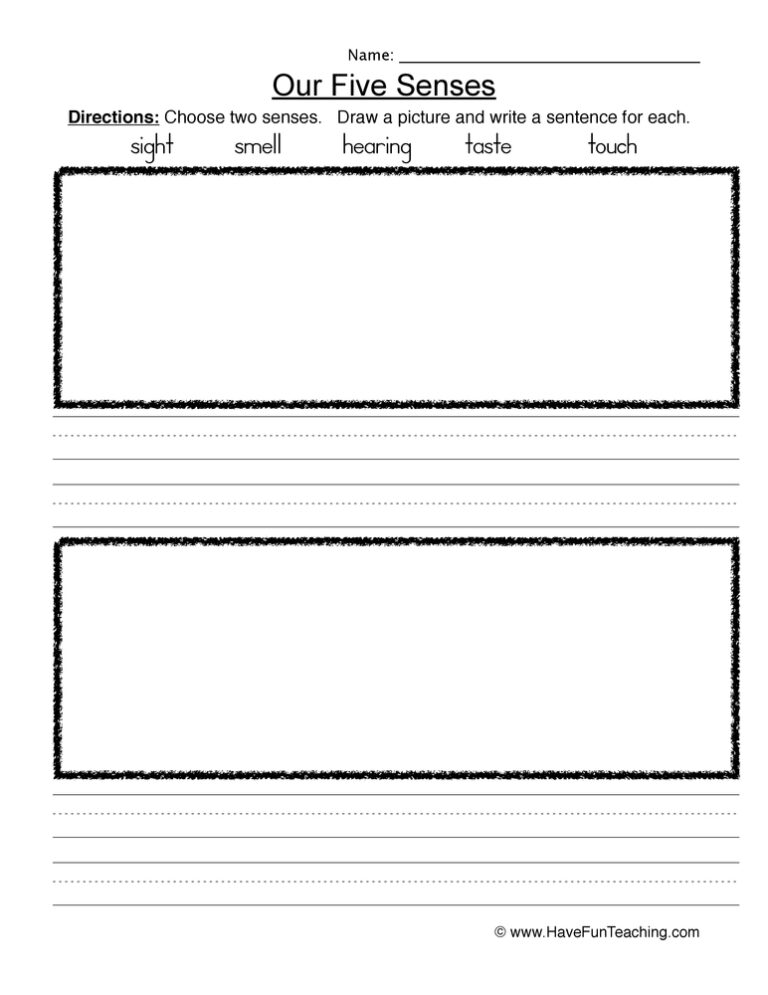
This senses draw and write worksheet has kindergarten students draw something they see, hear, smell, and taste, then finish a sentence about touch to practice early science writing.

Activity
ActivityKindergartenFive Senses Board Game Activity

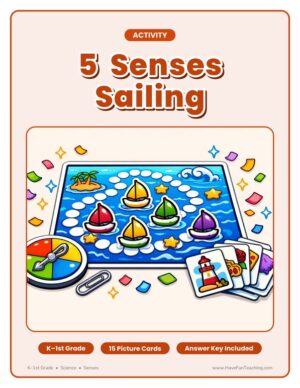
This five senses board game activity lets children sail around an ocean board and match 15 picture cards to a sense. Made for Kindergarten and 1st grade, with a practice page and answer key included.

Activity
ActivityKindergartenFive Senses Sense Quest Activity

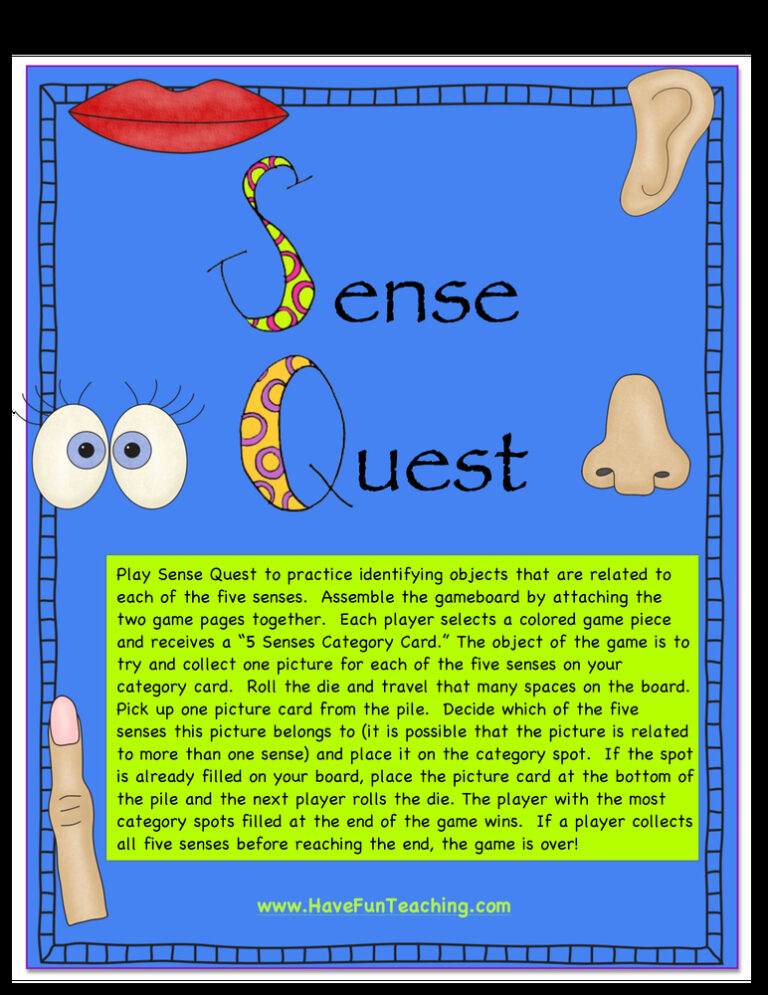
This five senses sense quest activity is a board game where children match 15 picture cards to a sense. Made for Kindergarten and 1st grade, with a practice page and answer key included.

From our teachers' playbook

Look, listen, touch, taste and smell

What do kindergartners learn about the five senses?

Kindergartners learn that our body has five senses to explore the world: sight, hearing, touch, taste and smell. They match each sense to its body part (eyes, ears, skin, tongue, nose) and use describing words like bumpy, sour, loud and soft. Senses are also a kindergartner's first science tools, because observing is how scientists learn! The click comes when kids describe a lemon using all five senses and realize they just made five observations.

How we teach the five senses in kindergarten

Senses are meant to be explored, not just talked about. These are our go-to moves.

Sing and point

Play the senses song and have kids point to their eyes, ears, nose, tongue and hands as each one is sung. Sing it again at the start of every senses lesson. The motions make the matching automatic.

Why it works: a catchy, repeating tune gives the brain a hook to hang words on, so sung text is remembered better (Wallace, 1994).

Senses Song (Animated Music Video)Try it withSenses Song (Animated Music Video)SongsOpen it →
Picture card match

Hold up a picture card, like a bell or a cupcake, and ask "Which sense do you use?" Kids point to the body part. Then show tricky ones like popcorn, which uses lots of senses! It gets kids thinking, not just memorizing.

Why it works: children learn more from words and pictures together than from words alone (Mayer, 2009).

Five Senses Flash CardsTry it withFive Senses Flash CardsFlash CardsOpen it →

Sense stations

Set up five little stations: a feely bag, a smell jar, a sound shaker, a taste test and a look-closely tray with a magnifier. Kids rotate and draw one thing they noticed at each. Real exploring builds real vocabulary.

Why it works: going from real objects to pictures to symbols is a core recommendation of the U.S. Department of Education's elementary math guide.

Five Senses Mini PackTry it withFive Senses Mini PackWorkbooksOpen it →

Questions parents and teachers ask

What are the five senses for kindergarten?

Sight, hearing, touch, taste and smell. Kids learn that we see with our eyes, hear with our ears, touch with our skin, taste with our tongue and smell with our nose.

How do you teach the five senses to kindergarten?

Let kids explore with real objects, sing a senses song, and match pictures to body parts. Hands-on stations and describing words make it stick.

What are easy five senses activities at home?

Try a blindfold taste test, a feely bag with mystery objects, a listening walk, or smelling spices from the kitchen. Ask your child to describe each one.

Why do kindergartners learn about senses?

Senses are how kids observe the world, which is the first step in science. Learning about them also builds describing words for reading and writing.