
Skip to content
Start My 3 Free Days $0 today · cancel anytime

Experiments Resources

5 experiments resources: 4 worksheets and 3 activities. How teachers use these

Experiments Resources

5 experiments resources: 4 worksheets and 3 activities. How teachers use these

Worksheet
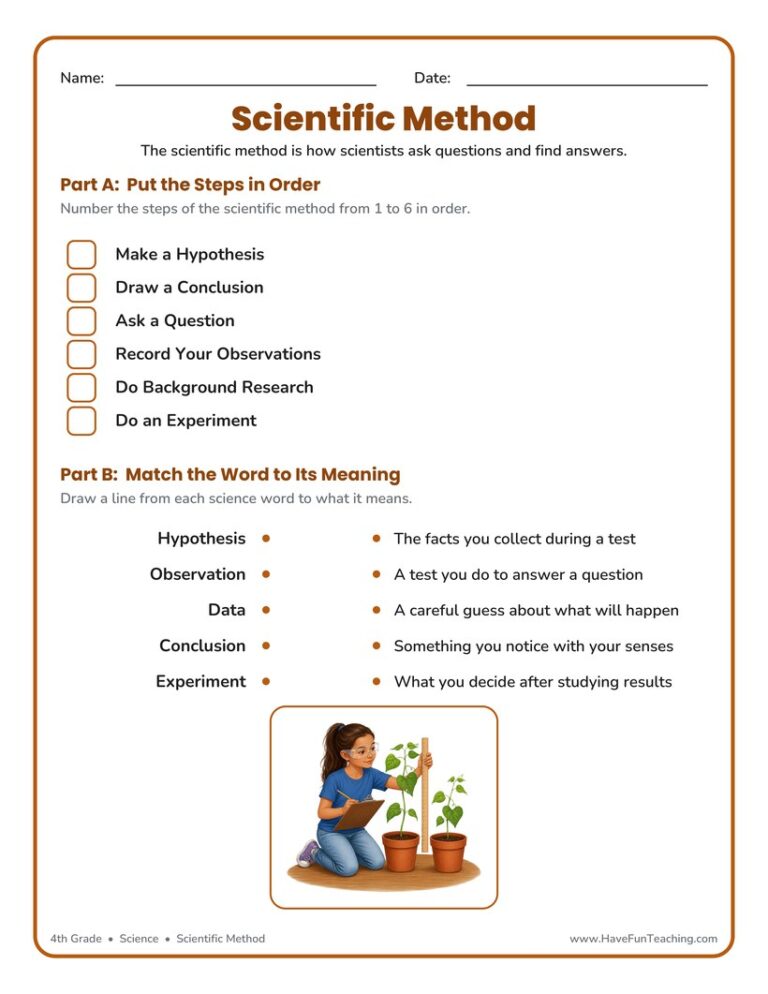
Worksheet4th GradeScientific Method Worksheet

This Scientific Method Worksheet helps 4th graders order the six steps of an investigation, match key science words, and analyze a real bean-plant experiment. Answer key included — a no-prep way to build real science-thinking skills.

Worksheet
Worksheet4th GradeScientific Observation Worksheet

This scientific observation worksheet gives 4th graders practice sorting observations from inferences, recording what they notice, and judging a science note. Answer key included for quick, no-prep science practice.

Activity
Activity3rd GradeScience Notebook Activity Booklet

This science notebook activity booklet walks 3rd graders through a real experiment, one page per step, from a focus question to claims, evidence and new questions they can test next.

Activity
Activity1st GradeScientific Method Activity Booklet

Using this Scientific Method Activity Booklet, studentsfollow the scientific method when conducting an experiment or proving a hypothesis.

Activity
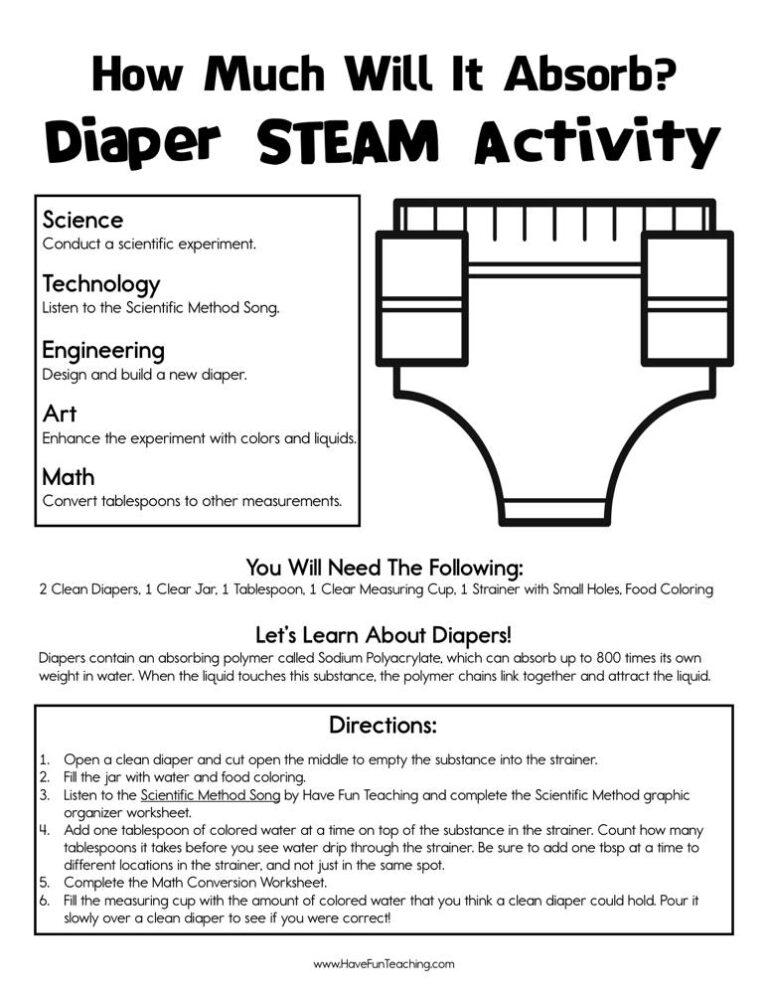
Activity4th GradeHow Much Will It Absorb Diaper STEAM Activity

Run the How Much Will It Absorb Diaper STEAM Activity as a real lab for 4th to 6th grade: test diaper gel, convert capacity units, and design a diaper, with an answer key included.

From our teachers' playbook

Ask it, test it, find out!

What do kids learn from science experiments?

Experiments teach kids that science is something you do, not just read about. They learn to ask a testable question, make a prediction, change one thing at a time, observe carefully and record what happens. Younger kids start with simple questions like "Which ball bounces highest?" while older kids learn about variables, controls and repeating a test to be sure. Every experiment ends with the best part: deciding whether the prediction was right and what the results really mean. The click moment comes when a kid says "Let's test it!" before you do.

Our favorite ways to teach science experiments

Great experiments are less about fizzing and more about thinking. These moves build real scientists.

Walk through the scientific method

Do the first experiment together and stop at every step: question, prediction, test, results, conclusion. Write each step on chart paper as you go. Next time, kids lead and you just point to the chart.

Why it works: showing first, practicing together, then letting kids try alone is the "gradual release" model teachers have relied on for decades (Pearson and Gallagher, 1983).
Scientific Method WorksheetTry it withScientific Method WorksheetWorksheetsOpen it →

Draw what you see

Before anyone writes, have kids sketch exactly what they observe, with labels. Drawing slows them down and makes them notice details. Then they add one sentence that starts with "I noticed".

Why it works: pairing a picture with each word gives kids two ways to remember it, a well-tested principle of how people learn (Mayer, 2009).

Scientific Observation WorksheetTry it withScientific Observation WorksheetWorksheetsOpen it →

Keep a science notebook

Give every student a notebook that stays with them all year. Each experiment gets its own page with the question, prediction and results. Looking back at old pages helps kids see how their thinking has grown.

Why it works: spreading practice out over days is one of the two most effective study methods in a major research review (Dunlosky and colleagues, 2013).

Science Notebook Activity BookletTry it withScience Notebook Activity BookletWorksheetsOpen it →

Questions about teaching science experiments

What are the steps of a science experiment for kids?

Ask a question, make a prediction, plan and run a test, observe and record what happens, then draw a conclusion. Younger kids can use just three steps: wonder, test and tell.

What is a fair test?

A fair test changes only one thing at a time and keeps everything else the same. That way you know what caused the result. It is the big idea behind every good experiment.

What age can kids start doing experiments?

Even preschoolers can test simple questions, like what sinks and floats. The steps get more detailed as kids grow, with variables and data tables in the upper grades.

How can I do science experiments at home?

Use what is in the kitchen: baking soda, water, paper towels and cups. Ask your child to predict what will happen first, then test it together and talk about the results.

Keep exploring



