Skip to content
Start My 3 Free Days $0 today · cancel anytime

Sun Resources

9 sun resources: 7 worksheets and 2 activities. How teachers use these

Sun Resources

9 sun resources: 7 worksheets and 2 activities. How teachers use these

Worksheet
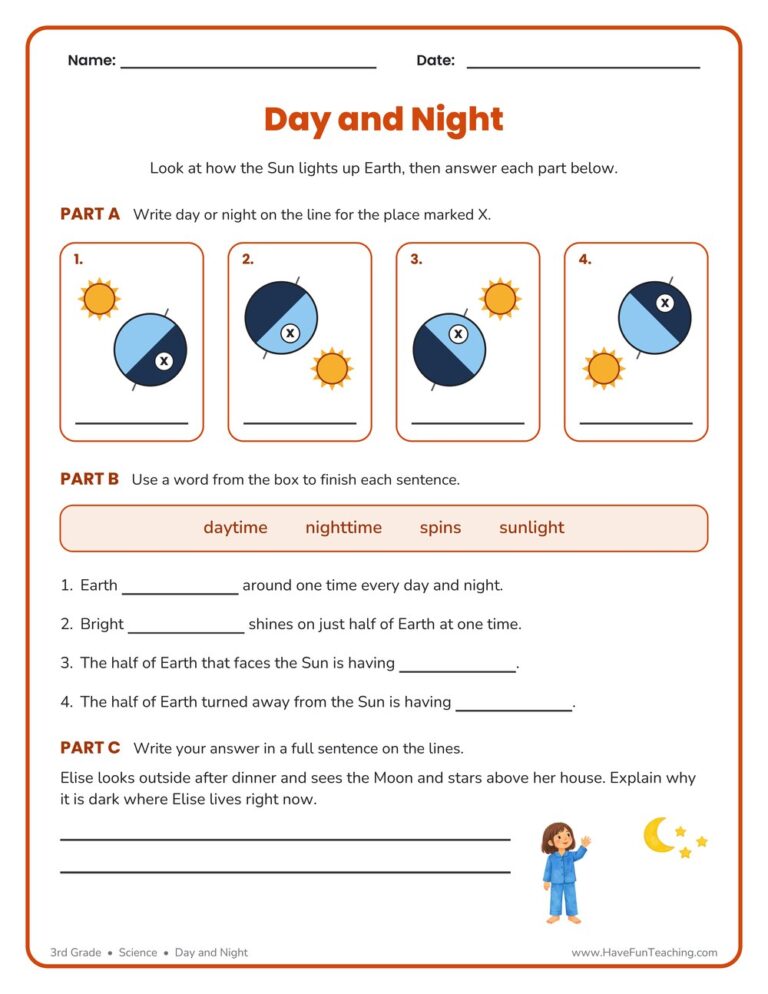
Worksheet3rd GradeDay and Night Worksheet

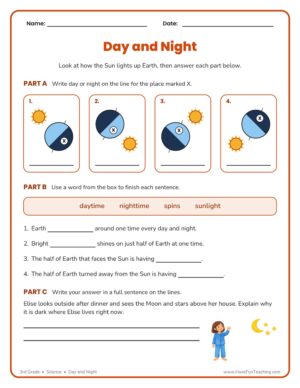
A hands-on day and night worksheet where 3rd graders read Sun and Earth diagrams, finish science sentences from a word box, and explain what makes it dark. Answer key included for quick, no-prep review.

Worksheet
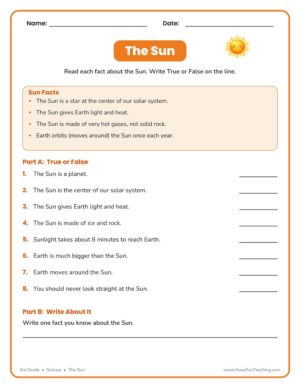
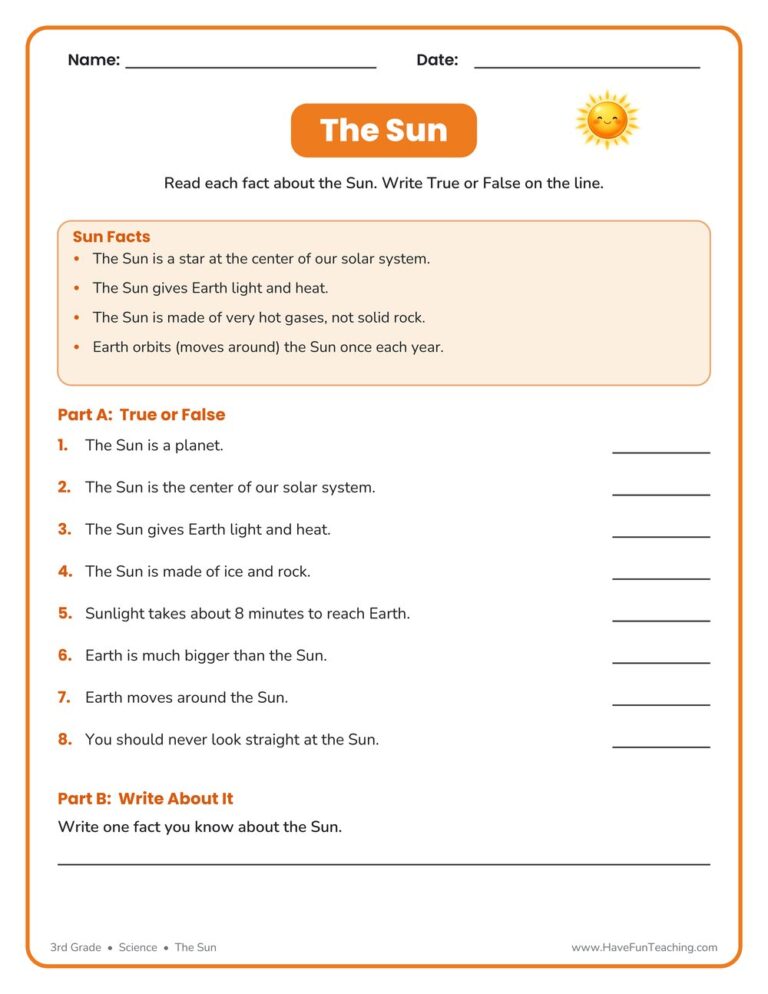
Worksheet3rd GradeSun Facts Worksheet

A 3rd grade sun facts worksheet where students read about the Sun and mark each statement true or false. Includes an answer key — perfect for quick, no-prep Earth and space science practice.

Activity
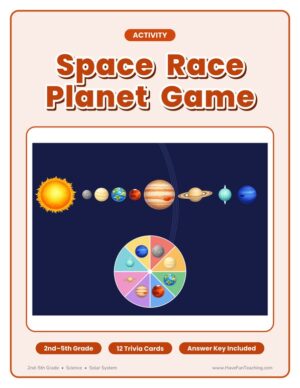
Activity2nd GradeSolar System Activity

This solar system activity is a Space Race game where 2nd to 5th Grade students spin, write and color the eight planets in order. Includes trivia cards, practice and answer key.

Worksheet
Worksheet1st GradeSun Writing Worksheet

This sun writing worksheet lets 1st graders complete six Sun facts with words from a word bank. An answer key is included, and kids build science knowledge while they read and write.

Activity
Activity1st GradeSun Activity

This sun activity sends 1st and 2nd grade children on a read-the-room hunt for twelve sun fact cards, with a recording sheet, a Yes or No practice page and answer keys included.

Worksheet
Worksheet2nd GradeSun True or False Worksheet

This Sun True or False Worksheet gives 2nd grade students eight short sentences about the Sun to judge as true or false, with bubble answers and a full answer key included.

Worksheet
Worksheet5th GradeTotal Solar Eclipse Worksheet

A diagram-based total solar eclipse worksheet where 5th graders label the umbra and penumbra, then explain why the Moon can cover the Sun. Answer key included for fast, no-prep space science practice.

Worksheet
Worksheet2nd GradeSolar Eclipse Word Scramble Worksheet

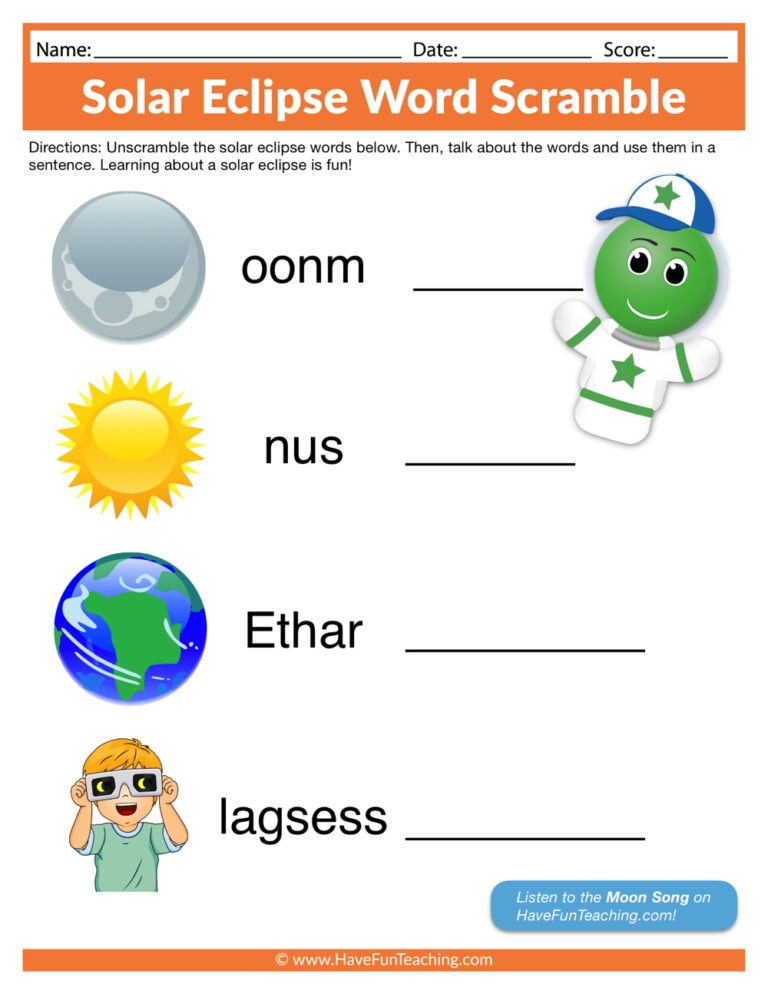
This Solar Eclipse Word Scramble Worksheet gives second grade students six scrambled science words and a word box to unscramble them. An answer key is included, so checking eclipse vocabulary takes only a moment.

Worksheet
Worksheet4th GradeEarth Shadows the Moon Worksheet

This earth shadows the moon worksheet helps 4th grade students draw Earth's shadow, spot a total lunar eclipse, and explain when eclipses happen. An answer key is included for quick checking.

From our teachers' playbook

Our star, our light, our warmth!

What do kids learn about the sun?

The sun is a star, the closest one to Earth, and it gives us light and heat. Young learners notice that the sun seems to move across the sky and that shadows change during the day. Next they learn that the sun does not actually move around us: Earth spins, which gives us day and night, and Earth travels around the sun once a year. Older students learn about the solar system, the sun's huge size and eclipses. The click comes when a child holds a flashlight up to a spinning globe and sees their own town slide from day into night.

How we teach the sun

Big space ideas need small, hands-on models. Here are our go-to moves.

Flashlight and globe

Darken the room, shine a flashlight on a globe and slowly spin it. Put a sticker on your town and ask kids to call out "day!" or "night!" as it turns. Seeing it happen makes the idea that Earth spins, not the sun, finally make sense.

Why it works: going from real objects to pictures to symbols is a core recommendation of the U.S. Department of Education's elementary math guide.
Day and Night WorksheetTry it withDay and Night WorksheetWorksheetsOpen it →

True or false facts

Read a handful of sun facts together, then give a quick true or false check. Kids explain why the false ones are wrong. Correcting myths like "the sun goes around the Earth" is the heart of this topic.

Why it works: a big review of study methods ranked quick self-quizzing among the most powerful ways to remember (Dunlosky and colleagues, 2013).

Sun True or False WorksheetTry it withSun True or False WorksheetWorksheetsOpen it →

Shadow tracking

Go outside three times in one day and trace a student's shadow with chalk from the same spot. Back inside, compare the drawings. Kids discover the pattern on their own and connect it to the sun's position in the sky.

Why it works: children learn more from words and pictures together than from words alone (Mayer, 2009).

Sun Facts WorksheetTry it withSun Facts WorksheetWorksheetsOpen it →

Questions parents and teachers ask

Is the sun a star?

Yes! The sun is a medium-sized star. It looks much bigger and brighter than other stars because it is so much closer to Earth.

Why do we have day and night?

Earth spins like a top, making one full turn about every 24 hours. When your side of Earth faces the sun, it is day; when it turns away, it is night.

What grade learns about the sun?

Kindergarten and 1st grade often study the sun's light, heat and patterns in the sky. Upper elementary students learn about Earth's rotation and orbit, the solar system and eclipses.

How can I teach about the sun safely?

Never look directly at the sun, even for a moment. Study it with shadows, flashlight models and photos instead, and use special eclipse glasses only during an eclipse.

Keep exploring