Skip to content
Start My 3 Free Days $0 today · cancel anytime

Water Cycle Resources

9 water cycle resources: 6 worksheets, 2 songs, 2 videos and more. How teachers use these

Water Cycle Resources

9 water cycle resources: 6 worksheets, 2 songs, 2 videos and more. How teachers use these

Video
VideoPreschoolWater Cycle Song (Animated Music Video)

While watching the Water Cycle Song (Animated Music Video), students learn about the process of the water cycle by listening to the repetitive lyrics loaded with key vocabulary.

Worksheet
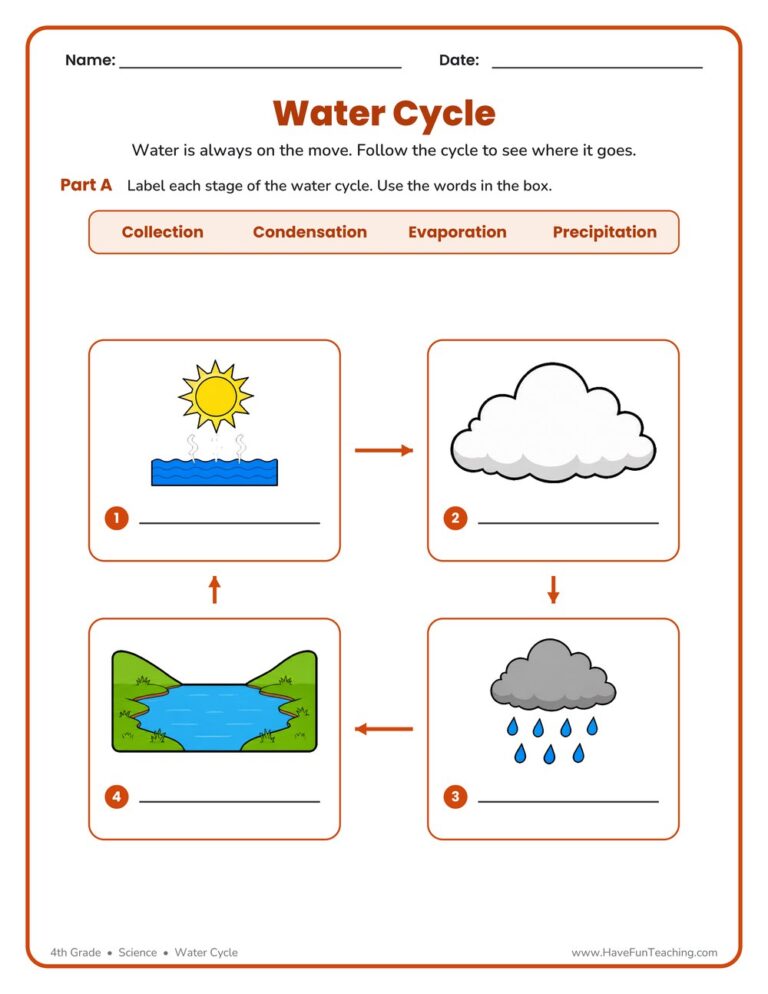
Worksheet4th GradeWater Cycle Worksheet

This Water Cycle Worksheet helps 4th graders label the stages of the water cycle, match science terms to clues, and explain the process in their own words. Includes an answer key — a no-prep way to reinforce earth science vocabulary.

Worksheet
Worksheet3rd GradeWater Cycle Experiment Worksheet

This water cycle experiment worksheet guides 3rd grade students through a simple bag model, then has them match evaporation, condensation, precipitation, and collection to what they see. An answer key is included.

Activity
ActivityPreschoolCloud Cut Outs

These Cloud Cut Outs quickly give you templates that can be easily cut and applied for classroom decoration or student activities

Worksheet
Worksheet3rd GradeClouds Worksheet - Research

This Clouds Worksheet has third graders read five sky reports, name the cloud each one describes, and predict the weather it brings. An answer key is included, so cloud types get checked fast.

Worksheet
Worksheet4th GradeWeather Instruments Match Worksheet

A Weather Instruments Match Worksheet for 4th Grade: students match six weather tools to what they measure, pick the right instrument for real situations, and explain their thinking. Answer key included for fast, no-prep science practice.

Video
VideoPreschoolWater Cycle Song (MP3)

While listening to the Water Cycle Song (MP3), students learn about the process of the water cycle by listening to the repetitive lyrics loaded with key vocabulary.

Worksheet
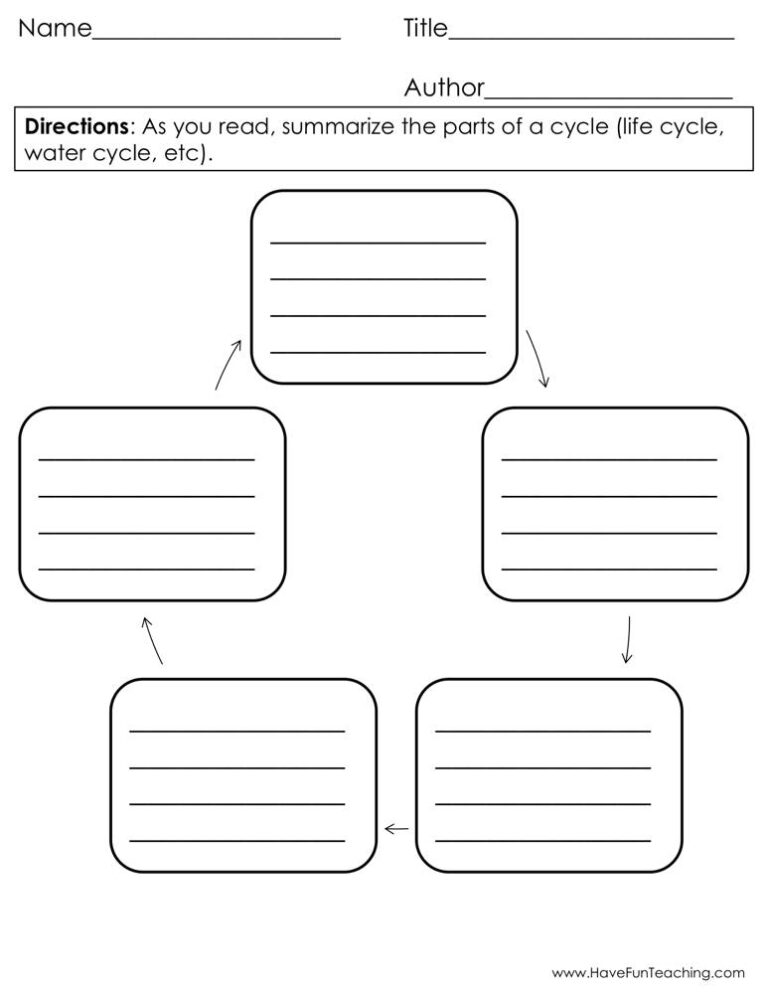
Worksheet2nd GradeParts of a Cycle Graphic Organizer Worksheet

This parts of a cycle graphic organizer worksheet lets 2nd grade students draw and write each part of a life cycle or the water cycle in order, building strong summarizing skills.

Worksheet
Worksheet3rd GradePrecipitation Research Worksheet

This precipitation research worksheet helps 3rd grade students tell rain, snow, sleet, and hail apart and explain weather using temperature. An answer key is included for quick, easy checking.

From our teachers' playbook

Up, up, and down it comes

What do kids learn about the water cycle?

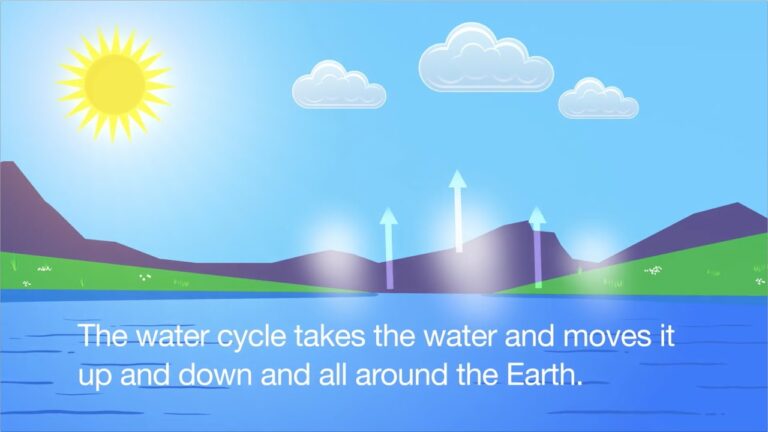
The water cycle is the path water takes as it moves around Earth, over and over. The Sun warms water in oceans and lakes, and it rises as vapor: that's evaporation. High up, it cools and forms clouds through condensation. When the drops get heavy, they fall as rain, snow, sleet or hail: precipitation. The water then collects in rivers, lakes and the ground, and the cycle starts again: evaporation → condensation → precipitation → collection. The click moment is realizing the water in today's rain might once have been in an ocean far away.

Our favorite ways to make the water cycle stick

The water cycle is invisible most of the time, so we make it visible, singable and drawable.

Sing the four steps

Play the Water Cycle Song and add a hand motion for each stage: wiggle fingers up for evaporation, make a cloud shape for condensation, fingers raining down, scoop hands for collection. After a few days, kids can retell the cycle with motions alone.

Why it works: a catchy, repeating tune gives the brain a hook to hang words on, so sung text is remembered better (Wallace, 1994).
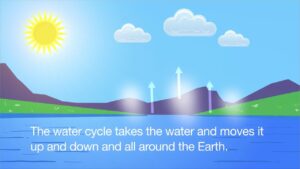
Water Cycle Song (Animated Music Video)Try it withWater Cycle Song (Animated Music Video)SongsOpen it →

Cycle in a bag

Draw the Sun and clouds on a zip bag, add a little water, seal it and tape it to a sunny window. Over a few days kids watch droplets form at the top and slide down. Recording what they see makes the cycle real.

Why it works: the U.S. Department of Education's guide for teaching elementary math recommends moving from hands-on objects to drawings to numbers.

Water Cycle Experiment WorksheetTry it withWater Cycle Experiment WorksheetWorksheetsOpen it →

Draw the circle

Kids fill in a cycle organizer with a drawing and one sentence for each stage. Insist on arrows going around in a circle. That arrow shape is the whole point: water never really ends, it just keeps moving.

Why it works: pairing a picture with each word gives kids two ways to remember it, a well-tested principle of how people learn (Mayer, 2009).

Parts of a Cycle Graphic Organizer WorksheetTry it withParts of a Cycle Graphic Organizer WorksheetGraphic OrganizersOpen it →

Questions teachers and parents ask

What are the 4 stages of the water cycle?

Evaporation, condensation, precipitation and collection. Water rises as vapor, forms clouds, falls as rain or snow, and gathers in oceans, lakes and the ground before rising again.

How do you explain the water cycle to kids?

Start with something they've seen: a puddle drying up, a cold glass getting wet on the outside, rain falling. Then connect each one to a stage of the cycle.

What grade learns the water cycle?

Many schools introduce it around 2nd grade and study it in more depth in 4th and 5th grade, when kids connect it to weather and Earth's systems.

What's an easy water cycle experiment?

Water cycle in a bag: put a little water in a sealed zip bag and tape it to a sunny window. In a day or two you'll see condensation and "rain" running down the sides.

Keep exploring