Skip to content
Start My 3 Free Days $0 today · cancel anytime

2nd Grade Idioms Resources

5 2nd grade idioms resources: 5 activities. How teachers use these

2nd Grade Idioms Resources

5 2nd grade idioms resources: 5 activities. How teachers use these

Activity
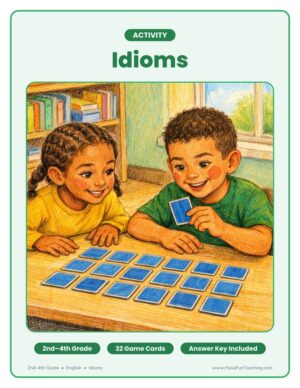
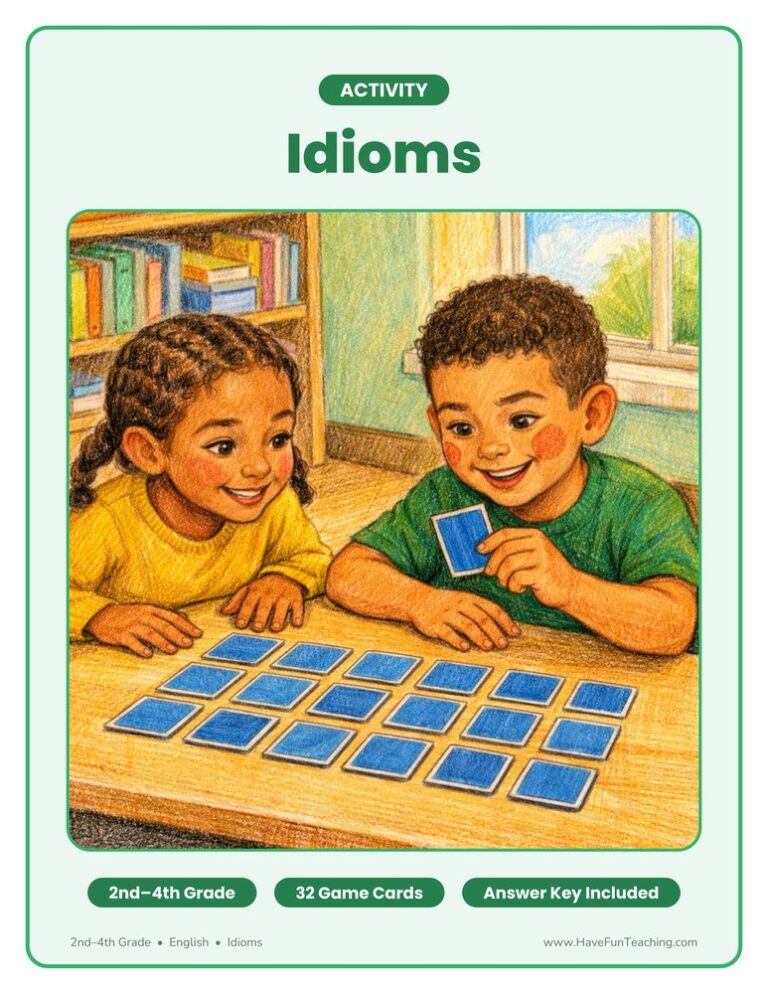
Activity2nd GradeIdioms Figurative Language Activity

This idioms figurative language activity lets 2nd to 4th grade students match idioms to their real meanings in a fun card game, then draw and explain them. Answer key included.

Activity
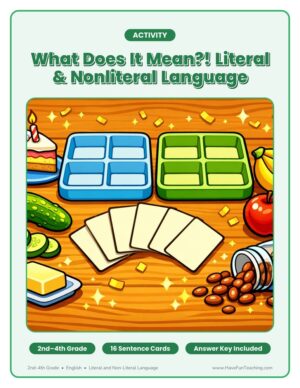
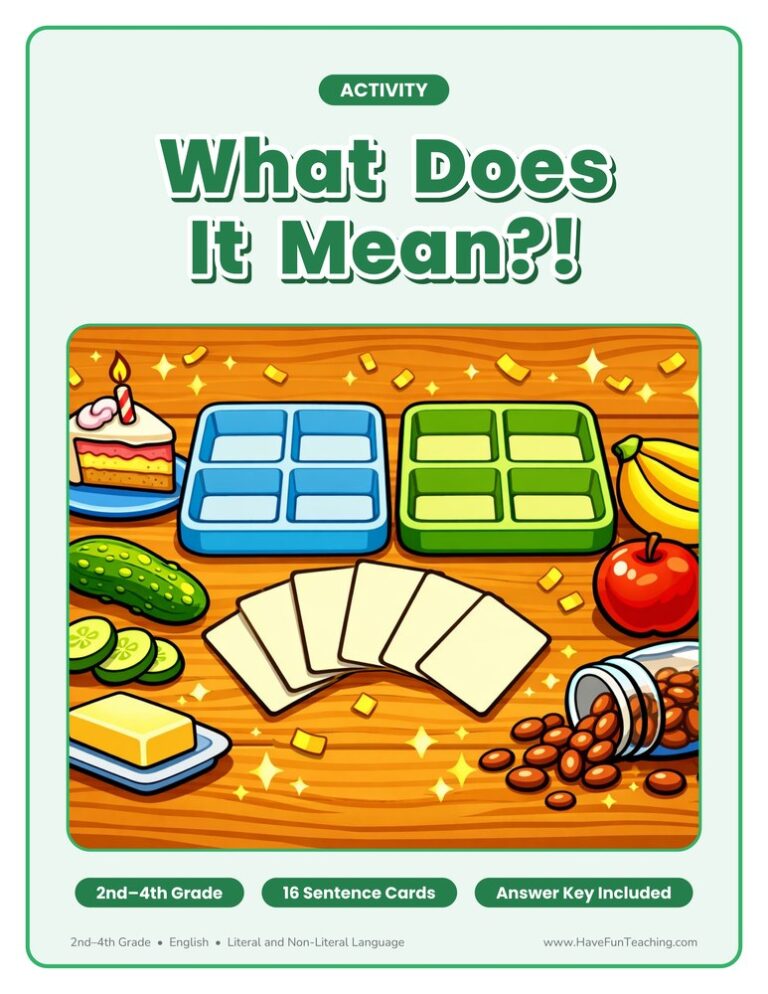
Activity2nd GradeWhat Does it Mean Literal Non-Literal Language Activity

This what does it mean literal non-literal language activity has 2nd to 4th grade students sort 16 food sentence cards and explain idioms. A practice page and answer key are included.

Activity
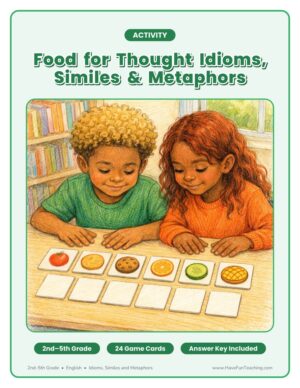
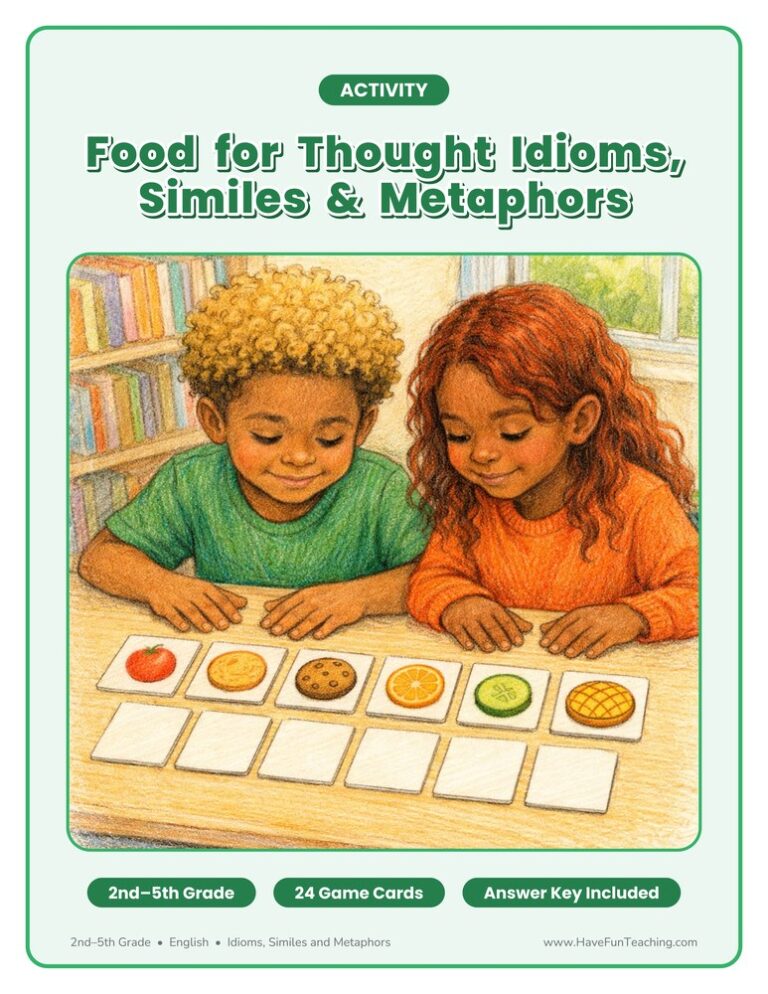
Activity2nd GradeFood for Thought Idiom Simile Metaphor Activity

Students match food idioms, similes, and metaphors to their meanings and sort them by kind in this food for thought idiom simile metaphor activity for 2nd to 5th grade, with an answer key included.

Activity
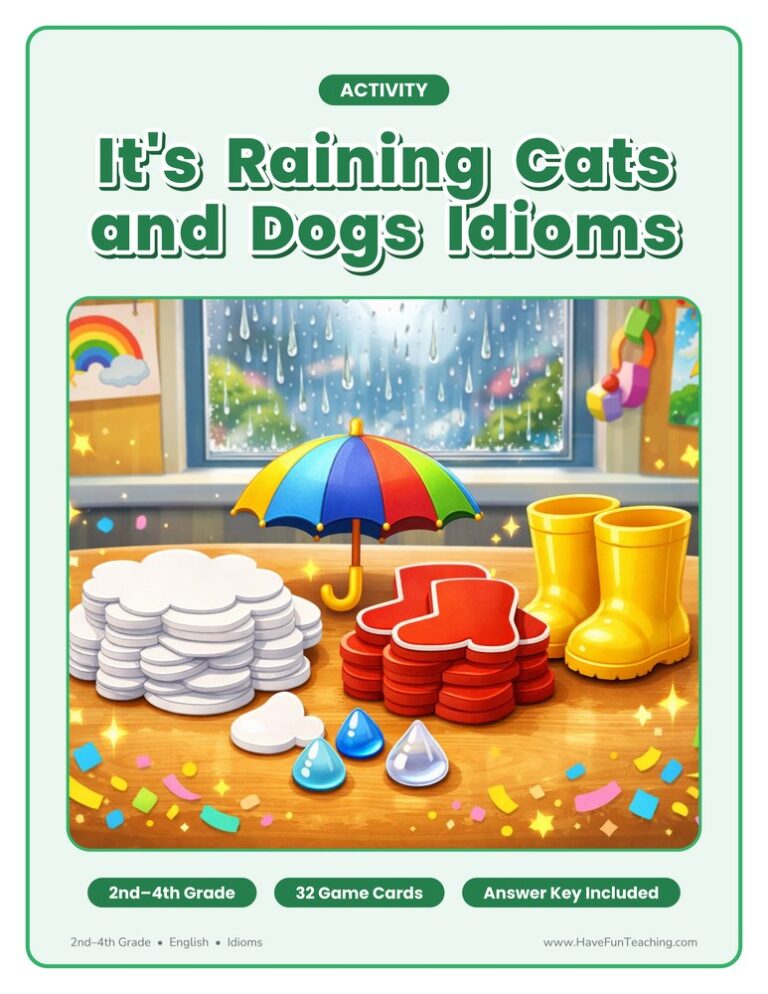
Activity2nd GradeIt's Raining Cats and Dogs Idioms Activity

This it's raining cats and dogs idioms activity helps 2nd to 4th grade students match idioms to their real meanings in a rainy-day game. A practice page and an answer key are included.

Activity
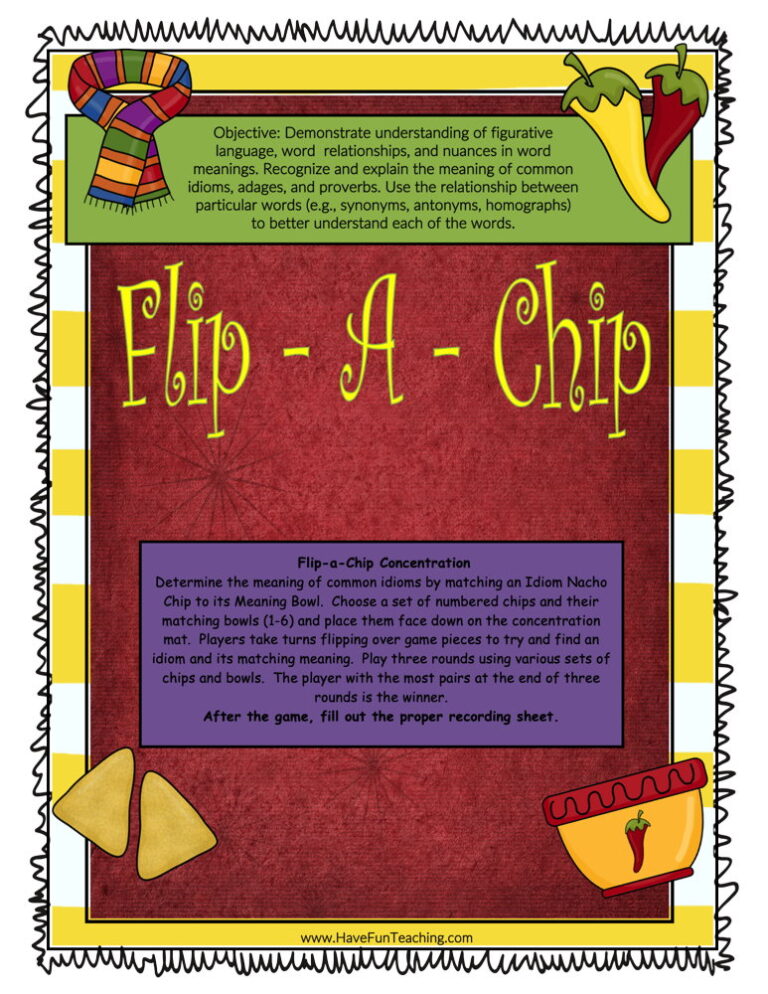
Activity2nd GradeFlip-a-Chip Idioms Activity

This flip-a-chip idioms activity is a memory game where 2nd to 4th grade students match idioms to their real meanings. A draw and explain sheet, practice page and answer key are included.

From our teachers' playbook

It's raining cats and dogs!

What do 2nd graders learn about idioms?

Second graders learn that an idiom is a saying that means something different from its words. "It's raining cats and dogs" doesn't mean pets are falling from the sky. It means it is raining very hard! Kids practice telling literal meanings (what the words say) from non-literal meanings (what people really mean). They use clues in the story to figure out idioms like "piece of cake" or "break a leg." The click comes when a kid hears an idiom in a book or show and laughs because they finally get the joke.

Our favorite ways to teach idioms

Idioms are silly by nature, so we lean into the laughs. These moves help second graders figure out what people really mean.

Draw it two ways

Kids fold a paper in half. On one side they draw what the idiom says, like cats and dogs falling from clouds. On the other side they draw what it really means. The silly picture makes the real meaning stick.

Why it works: the U.S. Department of Education's guide for teaching elementary math recommends moving from hands-on objects to drawings to numbers.
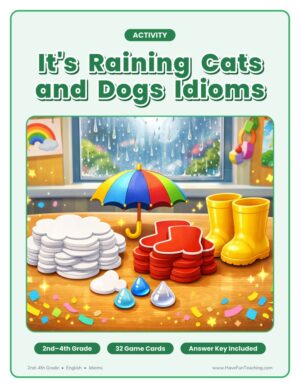
It's Raining Cats and Dogs Idioms ActivityTry it withIt's Raining Cats and Dogs Idioms ActivityActivitiesOpen it →

Flip a chip

Kids flip a chip to land on an idiom, read it and explain what it means. Partners give a thumbs up if they agree. A quick game gives lots of practice without feeling like a lesson.

Why it works: in a well-known study, a few short sessions of a simple number board game measurably boosted young children's number skills (Ramani and Siegler, 2008).

Flip-a-Chip Idioms ActivityTry it withFlip-a-Chip Idioms ActivityActivitiesOpen it →

An idiom a day

Post one idiom each morning and use it a few times during the day. "This math is a piece of cake!" Kids start catching you and using it themselves. One a day adds up fast.

Why it works: short practice spread over several days beats one long session, according to a large review of learning research (Dunlosky and colleagues, 2013).

Idioms Figurative Language ActivityTry it withIdioms Figurative Language ActivityActivitiesOpen it →

Questions parents and teachers ask

What is an idiom for 2nd grade?

An idiom is a saying that means something different from the actual words. "Hold your horses" means wait, not grab a horse.

What are easy idioms for kids?

Try "piece of cake" (easy), "raining cats and dogs" (raining hard), "hold your horses" (wait), "break a leg" (good luck) and "under the weather" (feeling sick).

How do I teach idioms to 2nd graders?

Have kids draw the silly literal meaning and then the real meaning. Talk about clues in the sentence that show what the speaker really means. Using idioms in class talk helps too.

What is the difference between literal and non-literal language?

Literal language means exactly what the words say. Non-literal language, like idioms, means something different. "I'm so hungry I could eat a horse" is non-literal.