Skip to content
Start My 3 Free Days $0 today · cancel anytime

2nd Grade Force Resources

5 2nd grade force resources: 3 activities, 1 worksheet and 1 flash card. How teachers use these

2nd Grade Force Resources

5 2nd grade force resources: 3 activities, 1 worksheet and 1 flash card. How teachers use these

Activity
Activity2nd GradeMotion Activity

This motion activity helps 2nd to 5th grade students sort everyday actions into pushes and pulls, with 14 sorting cards, a practice page, and an answer key included.

Worksheet
Worksheet2nd GradePeople Riding Transportation Worksheet

This people riding transportation worksheet asks 2nd grade students to name the vehicle in each clue and draw a place they travel to. An answer key is included for fast, easy checking.

Activity
Activity2nd GradeMagnet Activity

This magnet activity has kindergarten to 3rd grade students sort picture cards into things a magnet will pull and things it will not, with a sorting mat, practice page and answer key.

Flash Cards
Flash Cards2nd GradeForce and Motion Word Wall

Post these force and motion word wall flash cards for 2nd to 5th grade: 16 science words with kid-friendly meanings, plus a vocabulary practice page, answer key included.

Activity
Activity2nd GradeFun with Magnets Science Activity

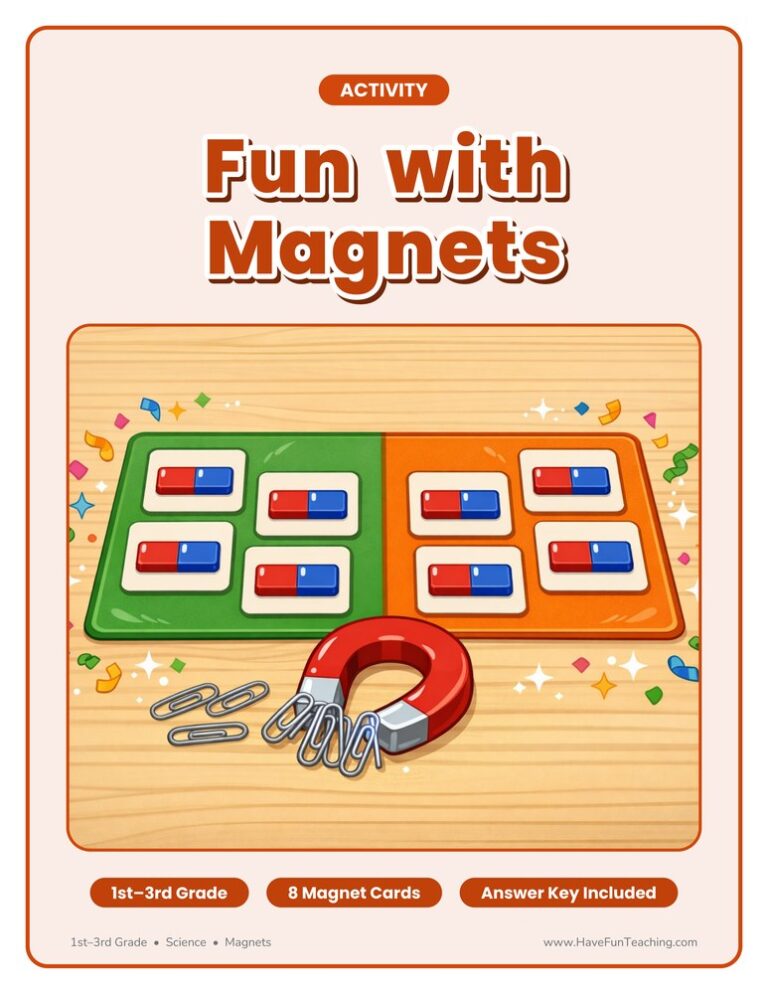
This fun with magnets science activity has 1st to 3rd grade students predict, sort and check whether magnet poles attract or repel. Answer key included.

From our teachers' playbook

Push it, pull it, watch it go!

What do 2nd graders learn about force?

Second graders learn that a force is a push or a pull that can make things start, stop, speed up, slow down or change direction. A bigger push makes a ball go farther and faster. They also explore magnets, which can push or pull without even touching! The click comes when kids notice forces everywhere: kicking a ball, opening a door, and pulling a wagon.

Our favorite ways to teach force

Force is something kids do all day. These moves make them notice it.

Push it, pull it, test it

Give each group a toy car and a ramp. Kids give a soft push and a hard push and measure how far it goes. Real tests show that a bigger force makes a bigger change.

Why it works: the U.S. Department of Education's guide for teaching elementary math recommends moving from hands-on objects to drawings to numbers.
Motion ActivityTry it withMotion ActivityActivitiesOpen it →

Force word wall

Post force words like push, pull, speed and direction on the word wall. Point to a word and kids act it out. Quick daily rounds help the science words stick.

Why it works: pulling an answer out of memory makes it stick far better than rereading it, one of the strongest findings in learning research (Dunlosky and colleagues, 2013).

Force and Motion Word WallTry it withForce and Motion Word WallFlash CardsOpen it →

Magnet mysteries

Let kids test which objects a magnet pulls. Then turn two magnets so they push apart. That "no touching" force always gets a gasp.

Why it works: in a well-known study, a few short sessions of a simple number board game measurably boosted young children's number skills (Ramani and Siegler, 2008).

Magnet ActivityTry it withMagnet ActivityActivitiesOpen it →

Questions parents and teachers ask

What is force for 2nd graders?

A force is a push or a pull. Forces can make things move, stop or change direction.

What are examples of push and pull?

Pushing a swing, kicking a ball and closing a door are pushes. Pulling a wagon, opening a drawer and tugging a rope are pulls.

How do I teach force and motion?

Let kids test it with toy cars, balls and ramps. Ask what happens with a gentle push versus a strong push.

What is a fun force activity at home?

Roll a ball across the floor with different pushes and measure how far it goes. Then try on carpet and tile to see what changes.