Skip to content
Start My 3 Free Days $0 today · cancel anytime

Community Worksheets

53 community worksheets. Teacher favorites: Being a Good Citizen Worksheet and Good Citizenship Worksheet. How teachers use these

Community Worksheets

53 community worksheets. Teacher favorites: Being a Good Citizen Worksheet and Good Citizenship Worksheet. How teachers use these

Worksheet
Worksheet2nd GradeBeing a Good Citizen Worksheet

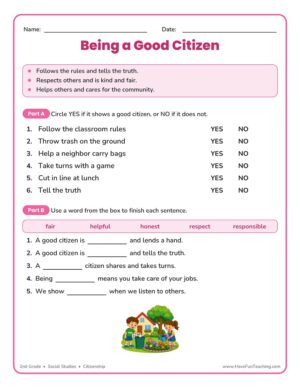
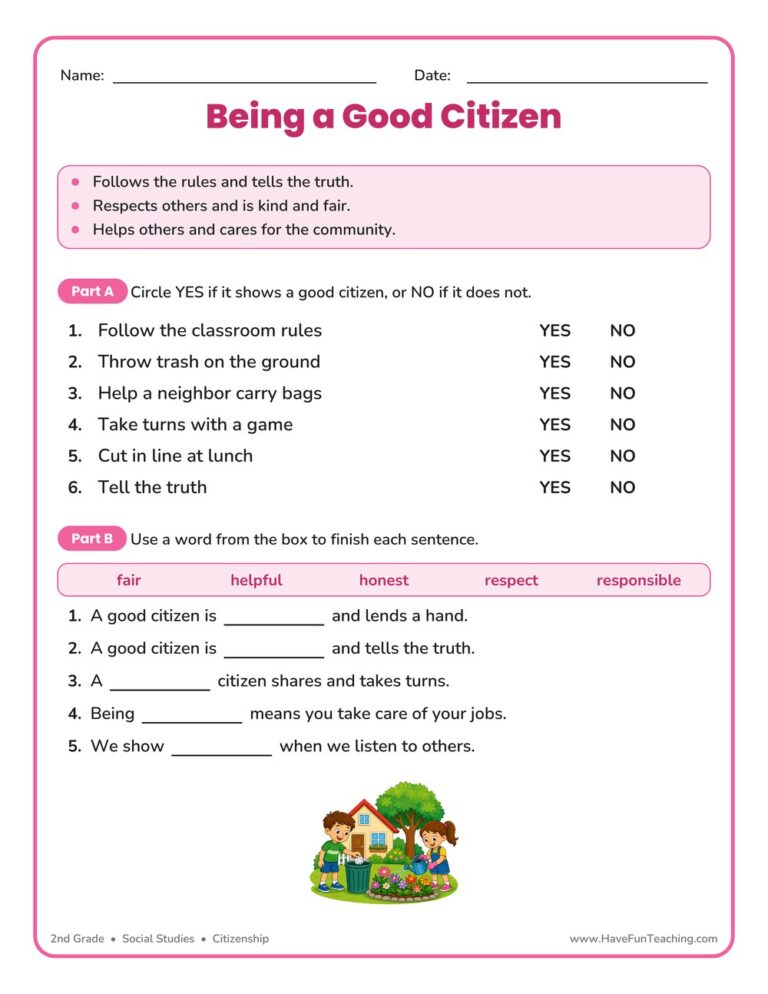
This being a good citizen worksheet helps 2nd graders spot good-citizen actions and build character words like honest, fair, and responsible. Includes an answer key for easy, no-prep social studies practice.

Worksheet
Worksheet2nd GradeGood Citizenship Worksheet

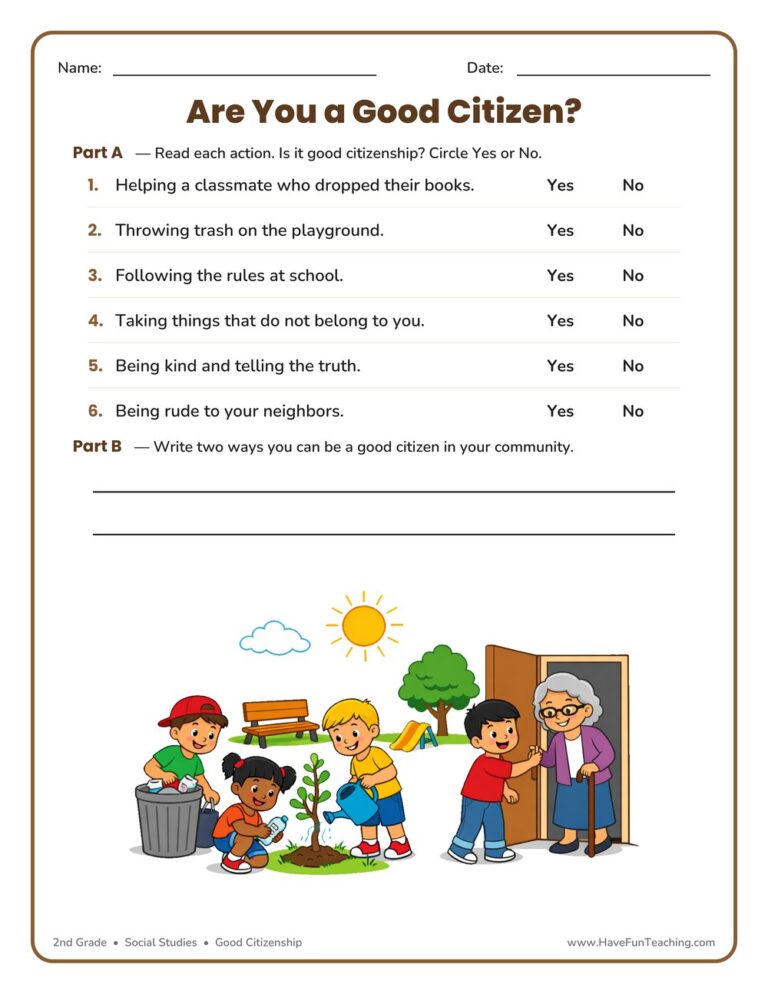
This good citizenship worksheet helps 2nd graders recognize responsible actions and write ways to help their community. An answer key is included for quick, no-prep character education practice.

Worksheet
Worksheet3rd GradeMy Culture Worksheet

This my culture worksheet gives 3rd graders a six-part chart for their own family's food, language, songs, and celebrations, plus two writing prompts about sharing culture in their community.

Worksheet
Worksheet3rd GradeIdentifying Careers Worksheet

This identifying careers worksheet has 3rd grade students match community workers to the jobs they do using a word box and clue lines. An answer key is included for quick, easy checking.

Worksheet
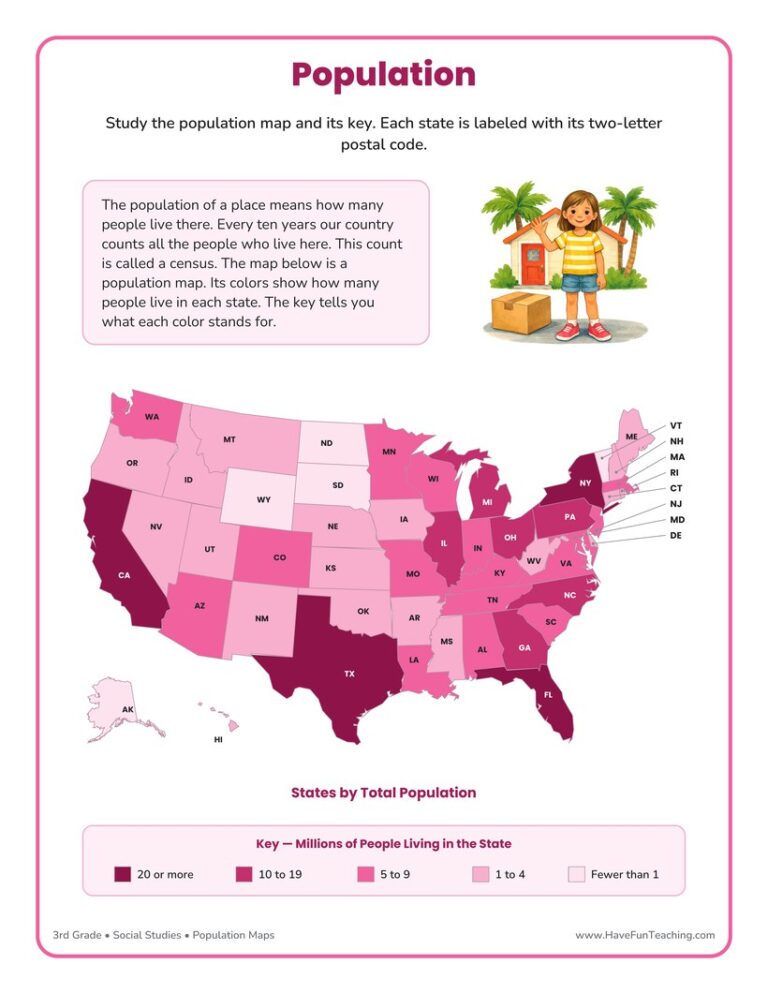
Worksheet3rd GradePopulation Map Worksheet

Students read a full-color U.S. population map worksheet, use the map key to compare states, and explain their thinking. Built for 3rd grade with a complete answer key - no-prep geography practice.

Worksheet
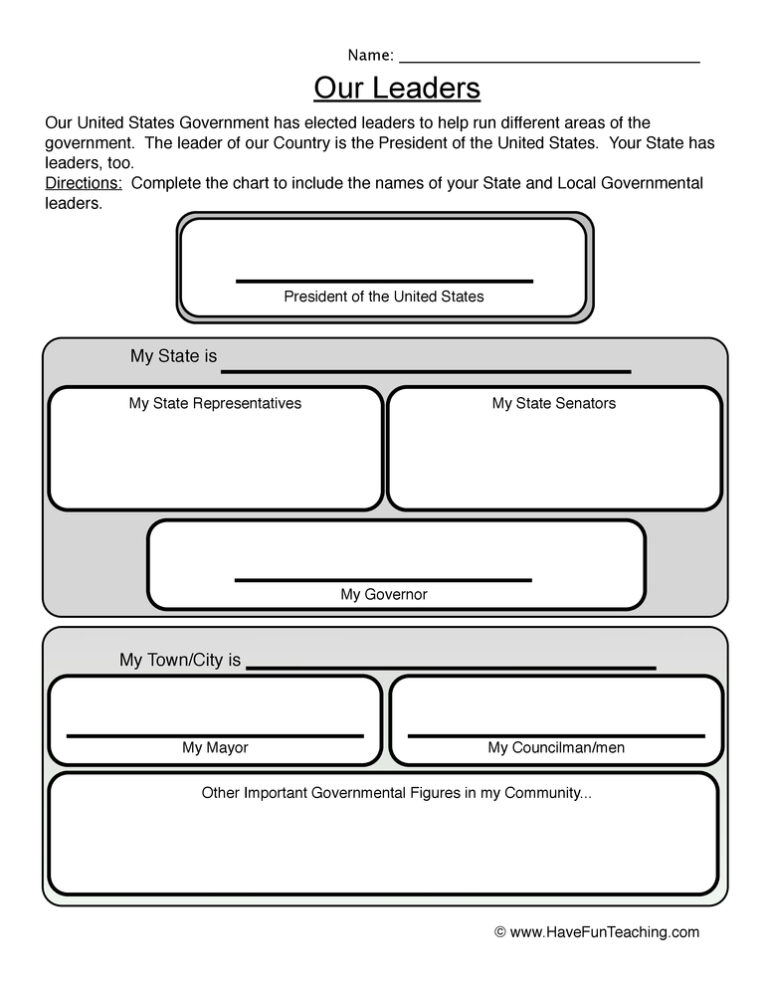
Worksheet3rd GradeOur Leaders Worksheet

This Our Leaders Worksheet has 3rd graders match the President, governor, mayor, senator and judge to the people each one serves, then apply it to real situations. Answer key included for fast, no-prep civics practice.

Worksheet
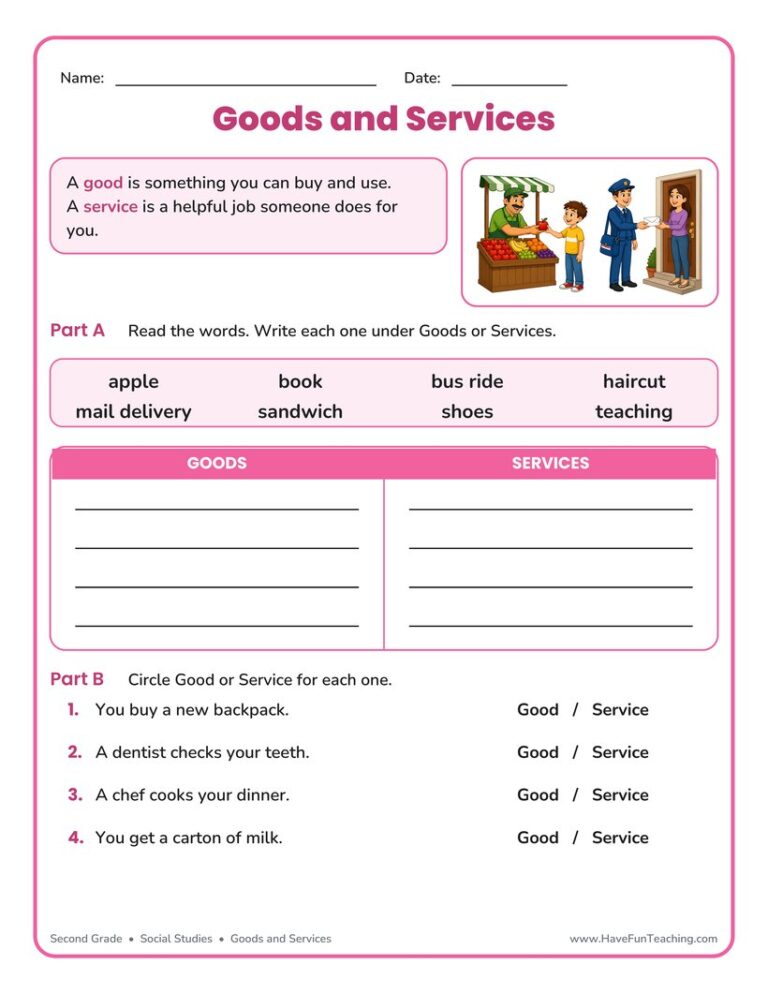
Worksheet2nd GradeGoods and Services Worksheet

This second grade goods and services worksheet helps students sort everyday goods and services and decide which is which, from apples to haircuts. A complete answer key is included, making it a no-prep way to build early economics skills.

Worksheet
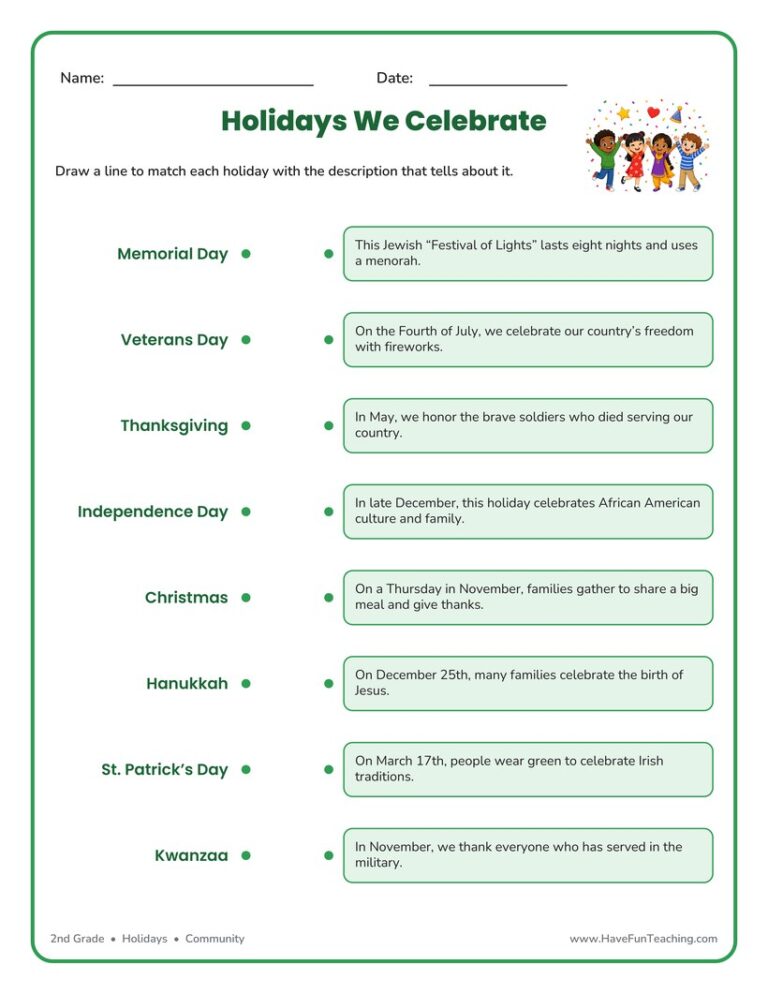
Worksheet2nd GradeHolidays Match Worksheet

This holidays match worksheet has 2nd graders match eight familiar holidays to their descriptions, from Memorial Day to Kwanzaa. Includes an answer key — a quick, engaging way to explore community traditions.

Worksheet
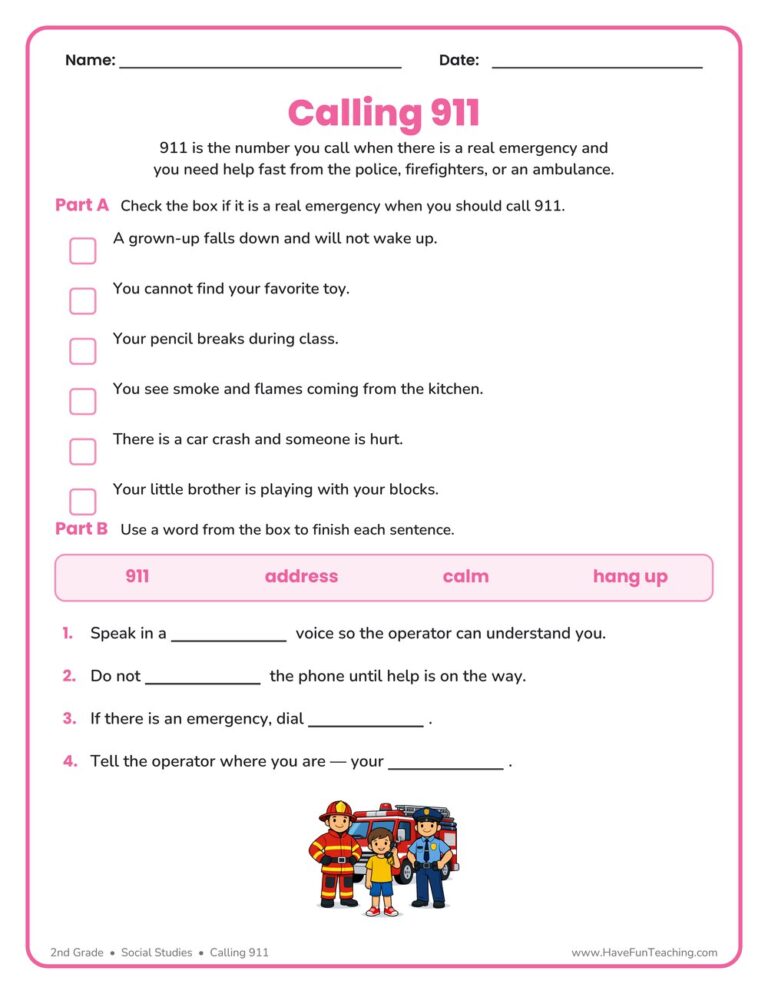
Worksheet2nd GradeCalling 911 Worksheet

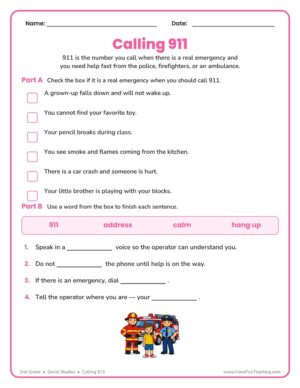
The Calling 911 Worksheet helps 2nd Grade students recognize real emergencies and practice what to say on a 911 call. An answer key is included so kids build safety skills with confidence.

Worksheet
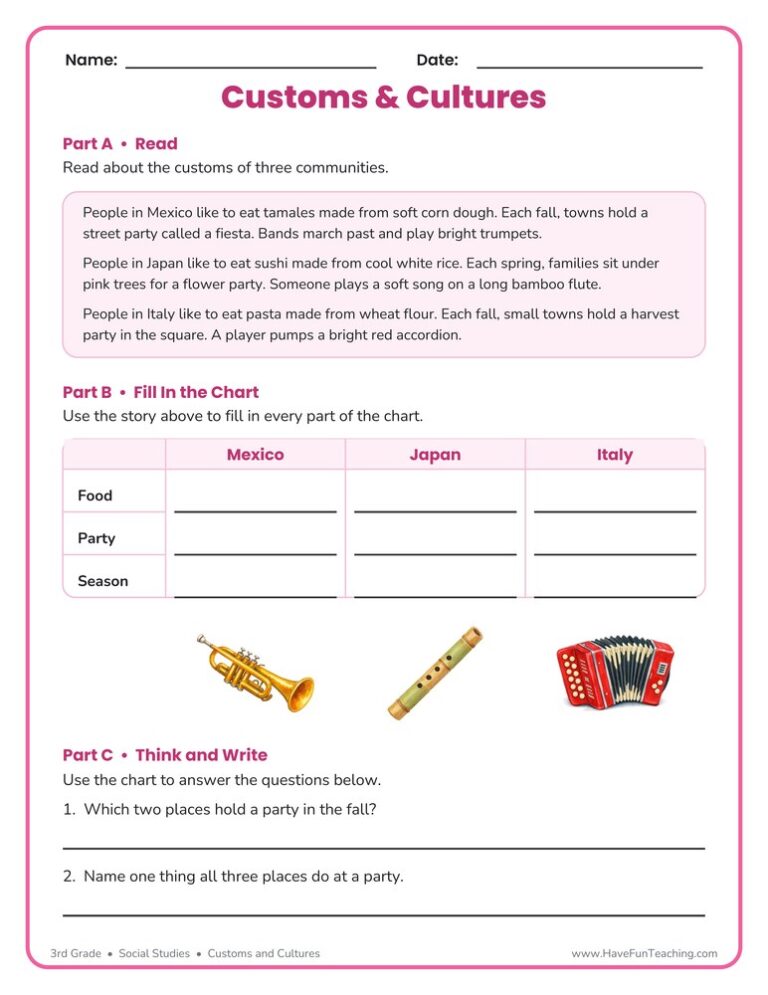
Worksheet3rd GradeCustoms and Cultures Comparison Worksheet

This Customs and Cultures Comparison Worksheet has 3rd graders read about three communities, then chart the food, party, and season for each one. Answer key included — an easy, no-prep way to practice comparing traditions.

Worksheet
Worksheet3rd GradeOther Cultures Worksheet

This other cultures worksheet gives 3rd graders a simple research page for recording a culture's language, traditions, food, music, and clothing, so notes stay organized and ready to turn into writing.

Worksheet
Worksheet3rd GradeLandmarks Worksheet

This landmarks worksheet has 3rd graders sort eight famous landmarks into Natural and Man-Made columns, then name three more from clues. Answer key included for quick, no-prep geography practice.

Worksheet
Worksheet1st GradeFire Safety Worksheet

This fire safety worksheet has 1st Grade students match four safety pictures to their words, then trace and write 9 1 1. An answer key is included, so it is ready to print and go.

Worksheet
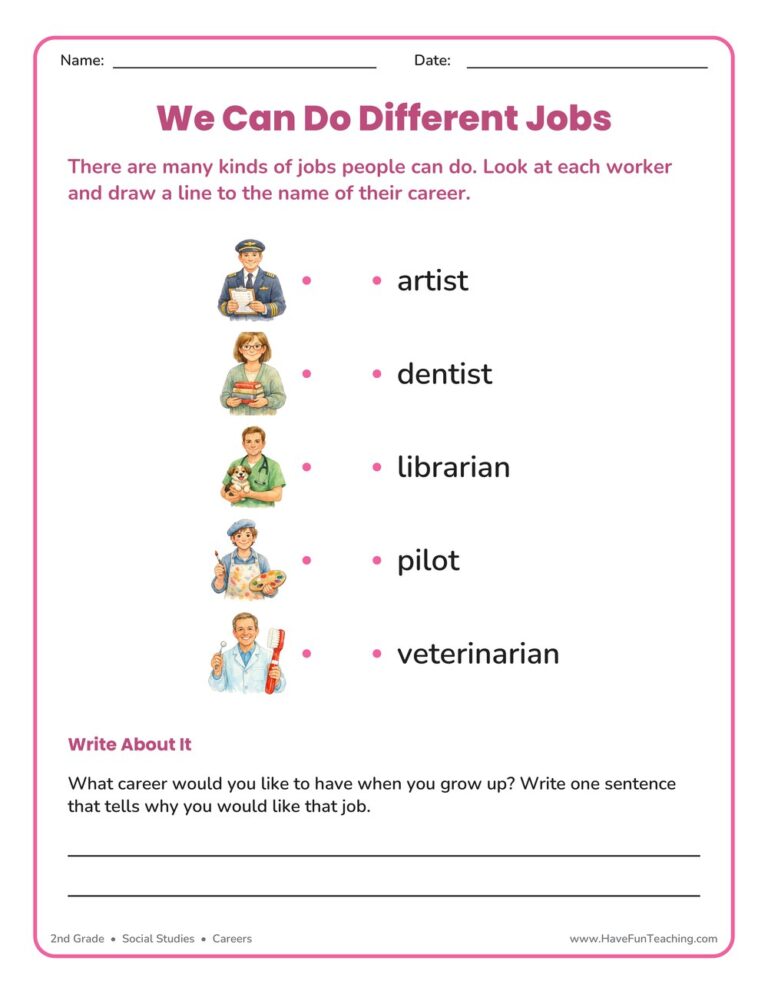
Worksheet2nd GradeCareers Worksheet

This careers worksheet asks 2nd graders to match five illustrated workers to their career names and write about the job they would like to have. Answer key included for easy, no-prep social studies practice.

Worksheet
Worksheet3rd GradeMy Neighborhood Worksheet

My Neighborhood Worksheet gives 3rd Grade students an on-level passage about neighborhoods, landmarks, and community workers, plus matching and writing practice. Answer key included, so checking work takes seconds.

Worksheet
Worksheet4th GradeGood Citizenship Examples Worksheet

This good citizenship examples worksheet has 4th graders sort helpful acts by place and judge four real-life choices, with an answer key included, so kids see citizenship at school, at home, and in town.

Worksheet
Worksheet1st GradeWriting Your Address Worksheet

This Writing Your Address Worksheet helps 1st graders write their street address, city, state, and ZIP code, then match each part of an address to its name. Answer key included for quick, no-prep practice.

Worksheet
Worksheet2nd GradeThe Hero Reading Comprehension Worksheet

This The Hero Reading Comprehension Worksheet gives 2nd graders an original story about a girl who helps a lost puppy by asking a community helper, plus four questions and a written response. An answer key is included.

Worksheet
Worksheet3rd GradeEconomy Worksheet

This economy worksheet helps 3rd graders sort out producers, consumers, goods, and services with a word bank and a short town story. Answer key included, so it is ready for no-prep social studies practice.

Worksheet
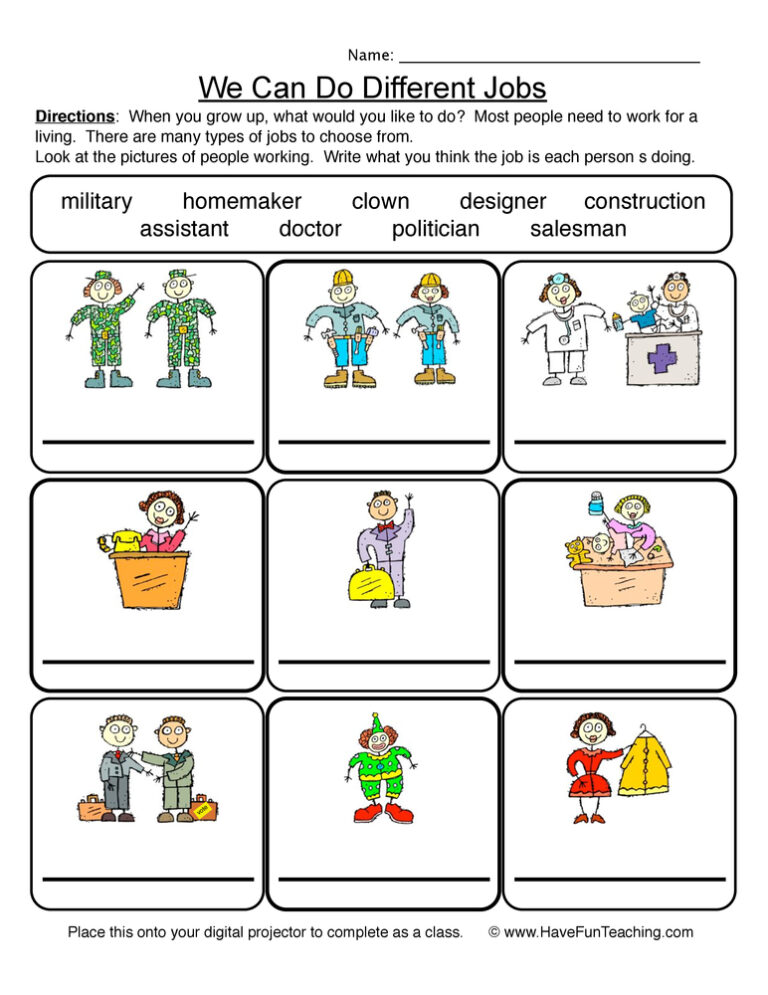
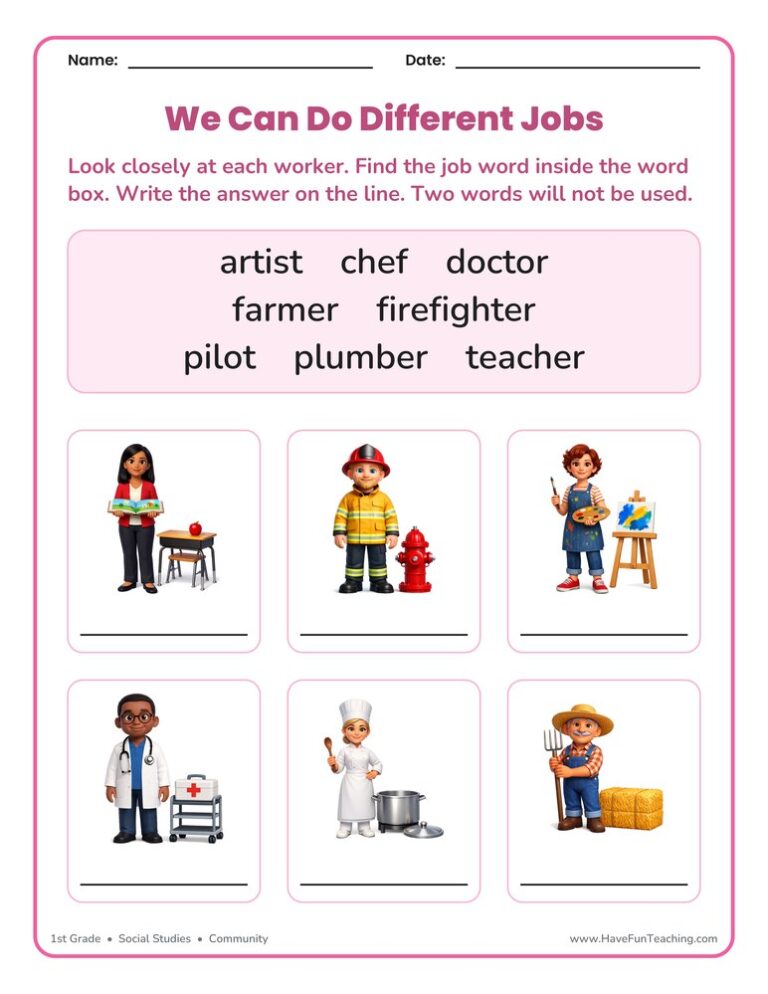
Worksheet1st GradeDifferent Careers Worksheet

This different careers worksheet asks 1st graders to study six community workers and write each job word from the word box. An answer key is included, so checking finished work takes seconds.

From our teachers' playbook

Helpers, neighbors and good citizens!

What do kids learn about community?

Community starts right outside the classroom door. Young kids learn that a community is a group of people who live, work and play together, and they meet the helpers who keep it running: firefighters, doctors, teachers and mail carriers. Older kids learn about goods and services, leaders and rules, and how communities can be urban, suburban or rural. Along the way, they figure out what it means to be a good citizen. The click comes when a child realizes they are part of the community too!

Our favorite ways to teach community

Community is best taught by looking around. These moves connect big ideas to kids' own streets and families.

Map your neighborhood

Have kids draw the places they pass on the way to school: a park, a store, a fire station. Then label which ones give goods and which give services. Their own map makes community real in a way a textbook picture can't.

Why it works: children learn more from words and pictures together than from words alone (Mayer, 2009).

My Neighborhood WorksheetTry it withMy Neighborhood WorksheetWorksheetsOpen it →

Start with a song

A catchy community song is a perfect hook on day one. Play it, then pause and ask, "Which helper did we just hear about?" Kids remember the jobs because they remember the tune.

Why it works: a catchy, repeating tune gives the brain a hook to hang words on, so sung text is remembered better (Wallace, 1994).

Community SongTry it withCommunity SongSongsOpen it →

Career dress-up day

Let kids pick a community helper, gather a prop or two, and act out a day on the job. Then they match each career to the tool it uses on paper. Acting it out first makes the matching easy.

Why it works: going from real objects to pictures to symbols is a core recommendation of the U.S. Department of Education's elementary math guide.

Identifying Careers WorksheetTry it withIdentifying Careers WorksheetWorksheetsOpen it →

Questions teachers and parents ask

How do you explain community to kindergarten?

Tell them a community is a group of people who live, work and play near each other. Then point out real examples: the school, the grocery store, the neighbors. Kids get it fastest when they see their own community.

What are community helpers?

Community helpers are people whose jobs keep a community safe, healthy and running. Firefighters, police officers, doctors, teachers, mail carriers and farmers are favorite examples for young kids.

What are the three types of communities?

Urban communities are cities with lots of people and tall buildings. Suburban communities are neighborhoods near a city. Rural communities are in the countryside with farms and open land.

How can kids be good citizens?

Good citizens follow rules, help others, take care of shared spaces and respect their neighbors. Even picking up trash on the playground counts!