Skip to content
Start My 3 Free Days $0 today · cancel anytime

3rd Grade Compound Words Resources

6 3rd grade compound words resources: 3 activities and 3 worksheets. How teachers use these

3rd Grade Compound Words Resources

6 3rd grade compound words resources: 3 activities and 3 worksheets. How teachers use these

Activity
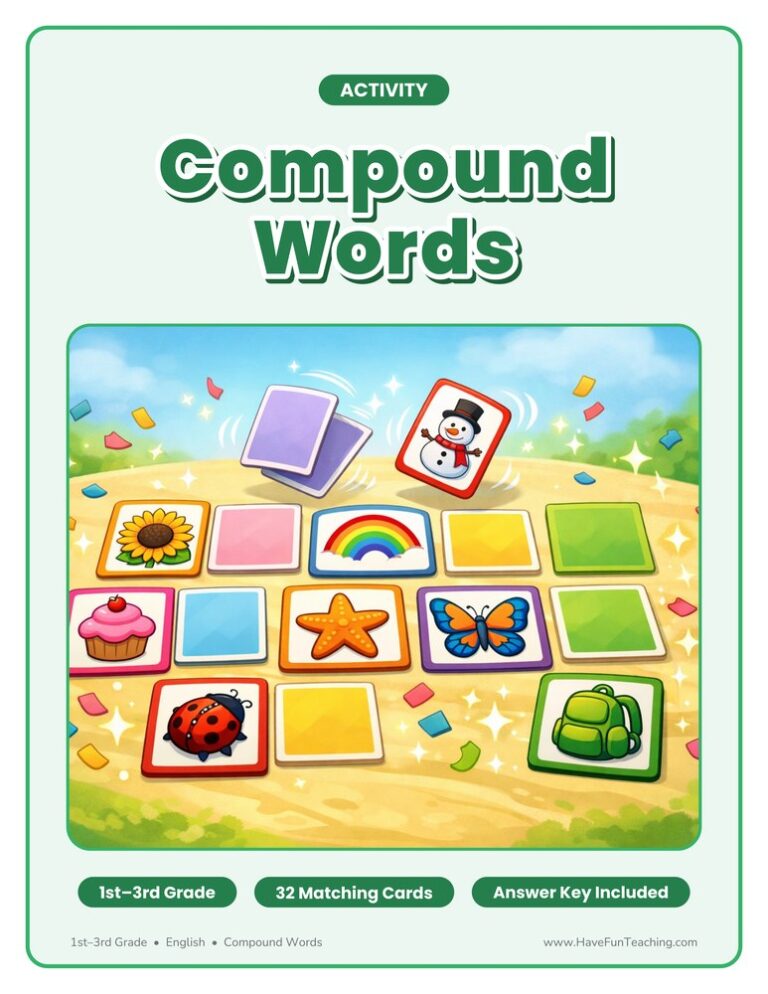
Activity3rd GradeCompound Words Activity

A compound words activity where 1st to 3rd grade children match picture cards to word cards and build new words from two small ones. Answer key included for easy checking.

Worksheet
Worksheet3rd GradeCompound Words Unscramble Worksheet

This compound words unscramble worksheet has 3rd graders solve five scrambled words and write a sentence for each. An answer key is included, making spelling and vocabulary practice quick to check.

Worksheet
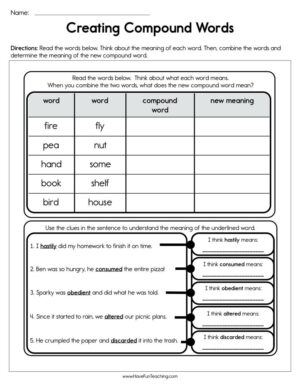
Worksheet3rd GradeCreating Compound Words Worksheet

This creating compound words worksheet has third graders join small word pairs, then match each new word to its meaning. An answer key is included, so it works as practice, homework, or a quick vocabulary check.

Worksheet
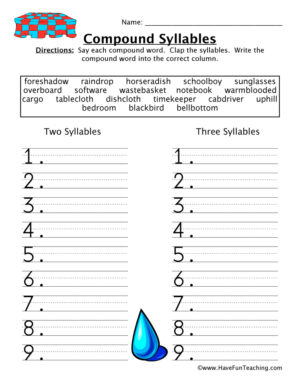
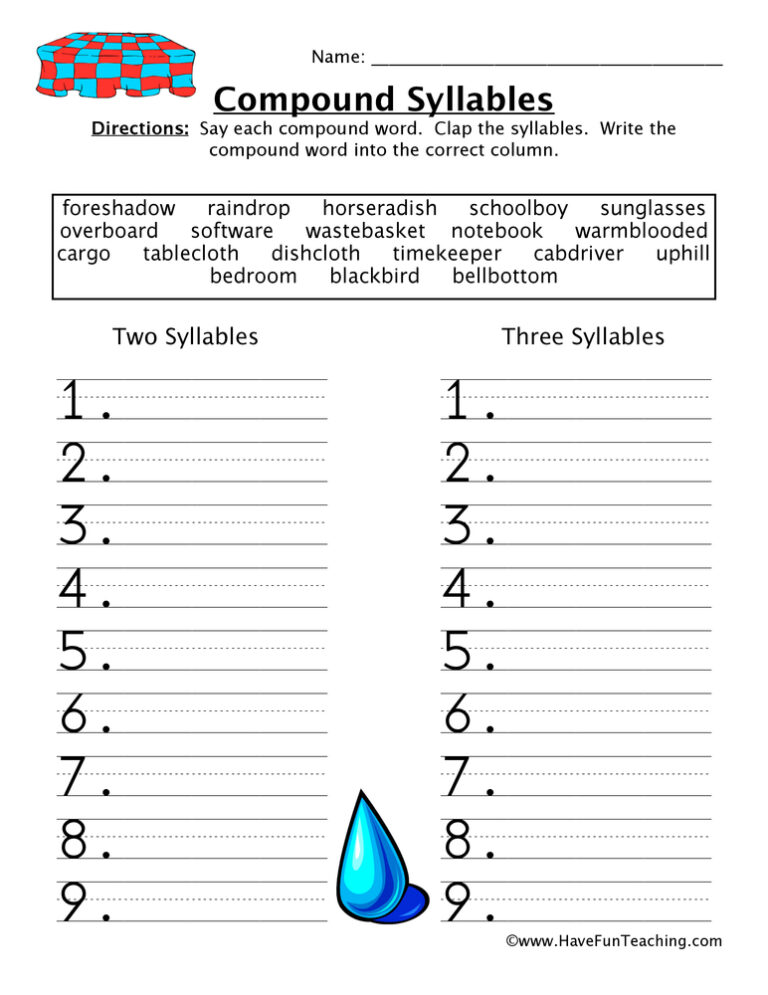
Worksheet3rd GradeCompound Words Syllables Worksheet

In this Compound Words Syllables Worksheet, 3rd Grade students clap and sort compound words by syllables, then split new compound words into two smaller words, with an answer key for easy checking.

Activity
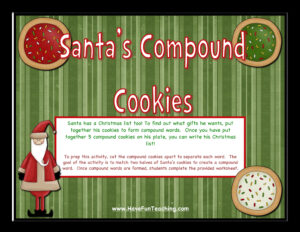
Activity3rd GradeSanta's Compound Cookies Activity

Using Santa's Compound Cookies Activity, studentsput together his cookies to form compound words to figure out what Santa wants for Christmas.

Activity
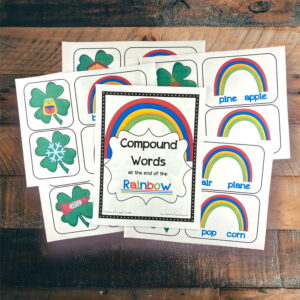
Activity3rd GradeSt. Patrick's Day Compound Words Activity

Using St Patrick's Day Compound Words Activity, students match pictures cards to compound word cards to build their reading fluency.

From our teachers' playbook

Two words, one big idea

What do 3rd graders learn about compound words?

Third graders learn that a compound word is two smaller words joined to make a new one, like rain + bow = rainbow. They use the meaning of each part to figure out the whole: a bookshelf is a shelf for books. They also notice that some compounds don't follow that rule exactly (a butterfly isn't made of butter!) and that some are written with a space or hyphen, like ice cream and well-known. Breaking long words into parts helps with both spelling and reading.

Our favorite ways to teach compound words

Compound words are a great way to show kids that big words are often just small words in disguise.

Snap them together

Give kids cards with single words like sun, flower, foot and ball. They combine pairs to make real compound words and write each one. Then challenge them to explain the meaning using both parts.

Why it works: the U.S. Department of Education's guide for teaching elementary math recommends moving from hands-on objects to drawings to numbers.
Compound Words ActivityTry it withCompound Words ActivityActivitiesOpen it →
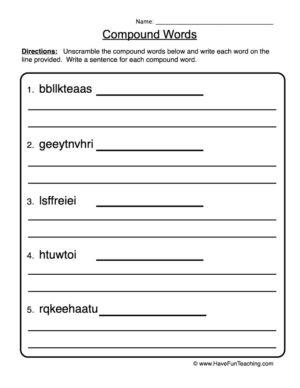
Unscramble and spell

Mix up the two halves of several compound words and have kids put them back together and spell them. Mixing different words in one practice helps them read for meaning instead of guessing.

Why it works: mixing different kinds of problems in one practice set helped students do far better on a later test (Rohrer and Taylor, 2007).

Compound Words Unscramble WorksheetTry it withCompound Words Unscramble WorksheetWorksheetsOpen it →

Clap the parts

Show how to read a long word by clapping each part: foot-ball, sun-set, eve-ry-thing. Then compare: is it two words joined or just syllables? Kids discover that compounds split right between the words.

Why it works: showing first, practicing together, then letting kids try alone is the "gradual release" model teachers have relied on for decades (Pearson and Gallagher, 1983).

Compound Words Syllables WorksheetTry it withCompound Words Syllables WorksheetWorksheetsOpen it →

Questions parents and teachers ask

What is a compound word for 3rd grade?

A word made from two smaller words, like sunflower, toothbrush or basketball. Third graders learn to use each part's meaning to understand the whole word.

What are the three types of compound words?

Closed (written as one word, like notebook), open (with a space, like ice cream) and hyphenated (like mother-in-law). Third graders mostly work with closed compounds.

Why are compound words important?

They help kids read and spell longer words by breaking them into parts they already know. That word-part thinking is the same skill kids use later with prefixes and suffixes.

How can I practice compound words at home?

Play a word-building game: say a word like "sun" and take turns making compounds (sunshine, sunset, sunflower). Look for compound words on cereal boxes and signs.