Skip to content
Start My 3 Free Days $0 today · cancel anytime

3rd Grade Idioms Resources

11 3rd grade idioms resources: 7 activities, 3 worksheets, 1 assessment and more. How teachers use these

3rd Grade Idioms Resources

11 3rd grade idioms resources: 7 activities, 3 worksheets, 1 assessment and more. How teachers use these

Worksheet
Worksheet3rd GradeDefining Idioms Worksheet

This defining idioms worksheet helps 3rd grade students read idioms in sentences, choose their real meanings and explain them in their own words. An answer key is included for easy checking.

Activity
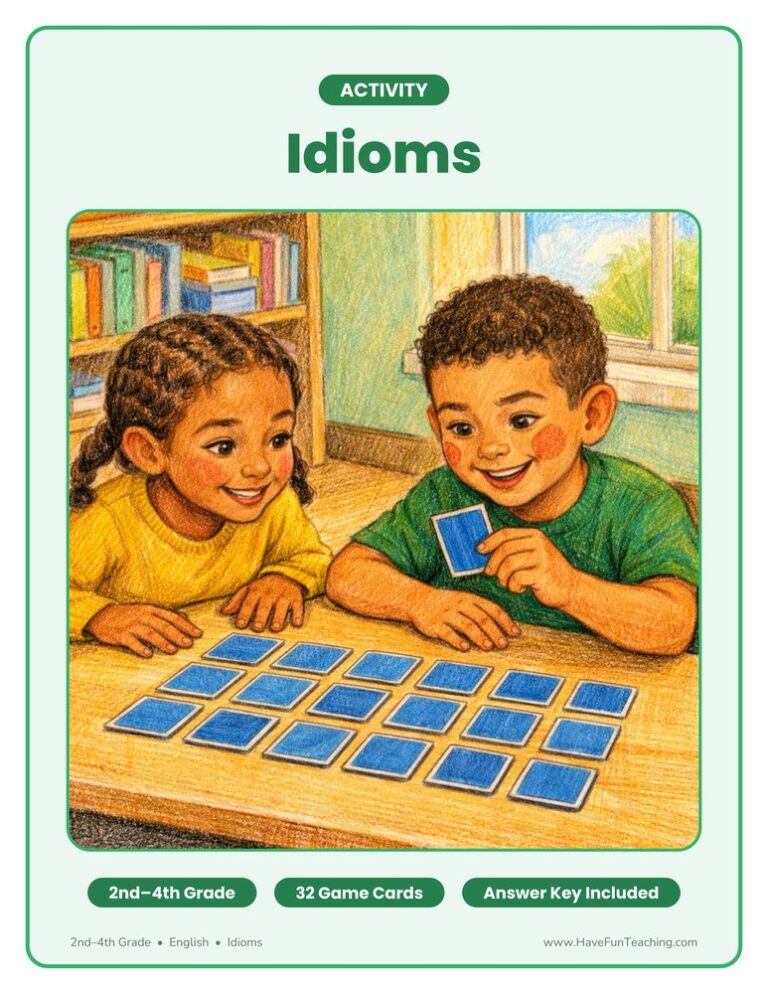
Activity3rd GradeIdioms Figurative Language Activity

This idioms figurative language activity lets 2nd to 4th grade students match idioms to their real meanings in a fun card game, then draw and explain them. Answer key included.

Activity
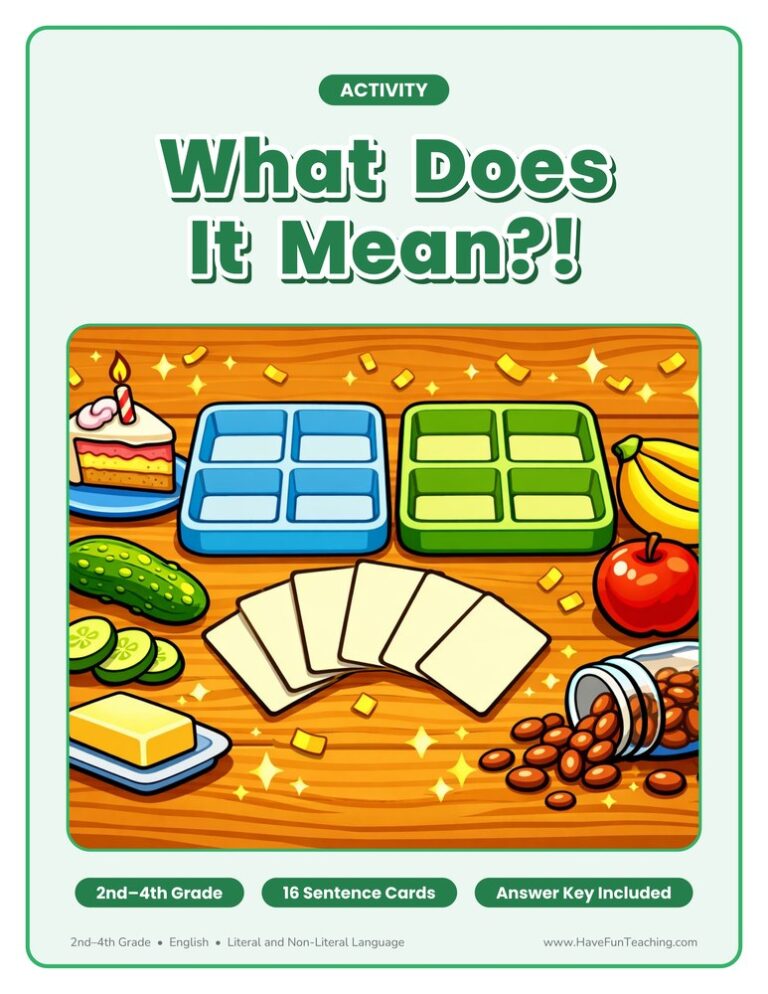
Activity3rd GradeWhat Does it Mean Literal Non-Literal Language Activity

This what does it mean literal non-literal language activity has 2nd to 4th grade students sort 16 food sentence cards and explain idioms. A practice page and answer key are included.

Activity
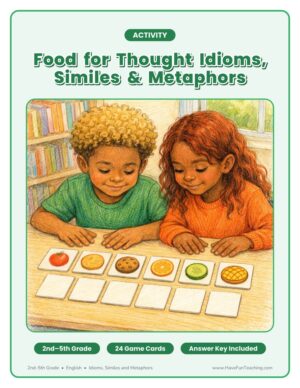
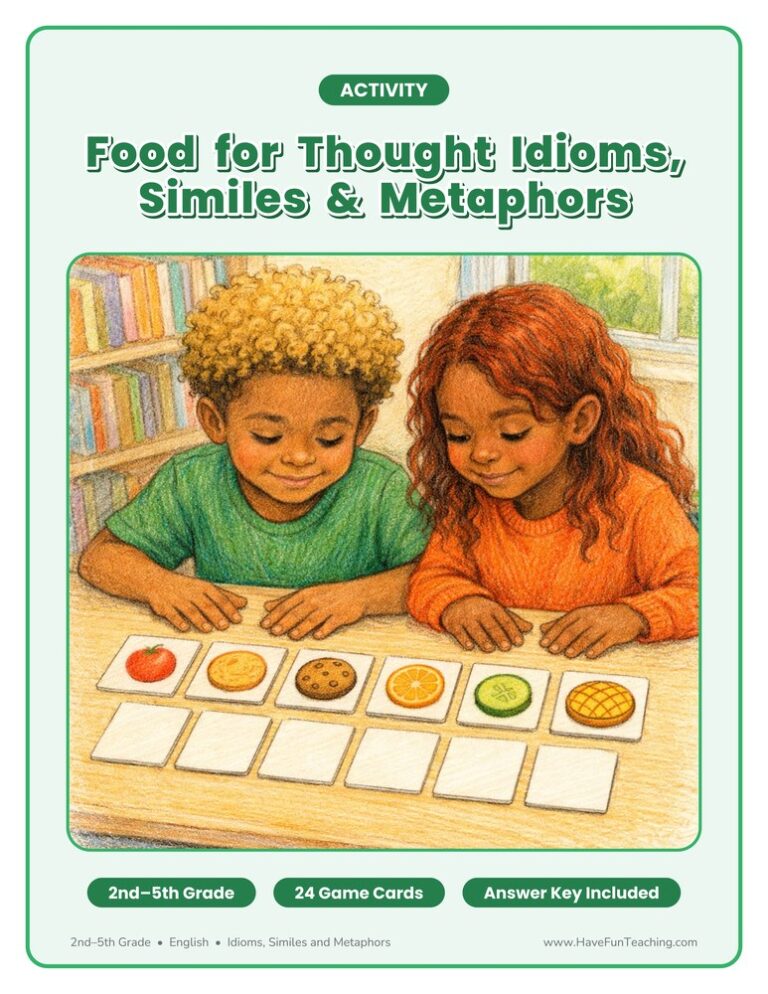
Activity3rd GradeFood for Thought Idiom Simile Metaphor Activity

Students match food idioms, similes, and metaphors to their meanings and sort them by kind in this food for thought idiom simile metaphor activity for 2nd to 5th grade, with an answer key included.

Assessment
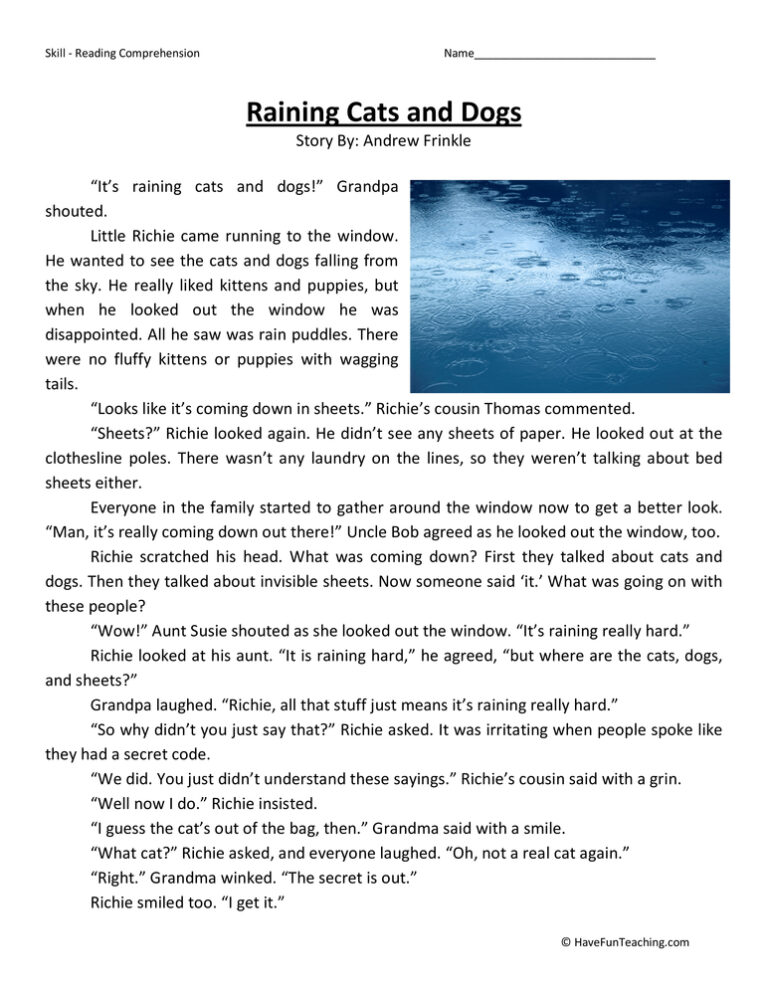
Assessment3rd GradeRaining Cats and Dogs Reading Comprehension Worksheet

The Raining Cats and Dogs Reading Comprehension Worksheet gives 3rd Grade readers a short passage about weather idioms, six questions, and an answer key, so every answer comes straight from the text.

Activity
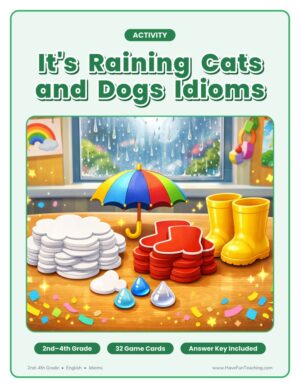
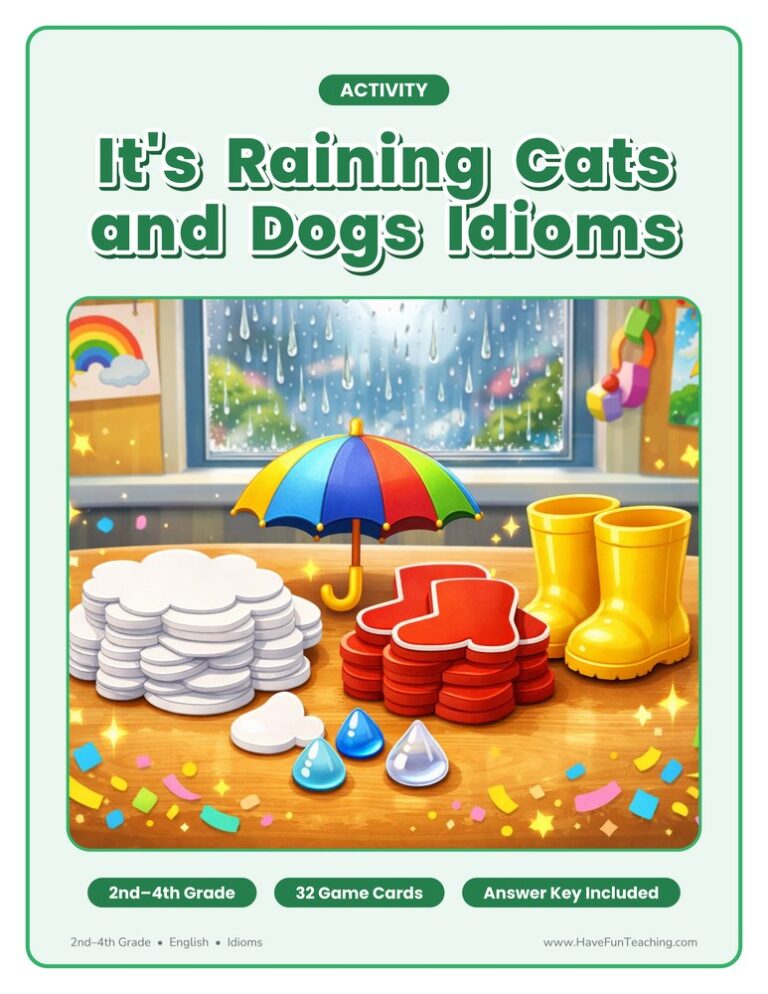
Activity3rd GradeIt's Raining Cats and Dogs Idioms Activity

This it's raining cats and dogs idioms activity helps 2nd to 4th grade students match idioms to their real meanings in a rainy-day game. A practice page and an answer key are included.

Activity
Activity3rd GradePlaying With Idioms Activity

This playing with idioms activity has 3rd to 5th grade students match idiom cards to their real meanings, draw funny literal pictures and read idioms in stories. An answer key is included.

Worksheet
Worksheet3rd GradeDescribing Idioms Worksheet

Using Describing Idioms Worksheet, students choose four idioms to describe through writing and drawing in order to use them in their writing.

Activity
Activity3rd GradeL.3.5 Common Core Activity

This L.3.5 common core activity gives 3rd to 5th grade students idiom task cards, a tips chart, and a practice page. An answer key is included for quick checking.

Common Core Lesson
Common Core Lesson3rd GradeRL.3.4 Third Grade Common Core Lesson

Using RL.3.4 Third Grade Common Core Lesson, students determine the meaning of words and phrases as they are used in a text, distinguishing literal from nonliteral language.

Activity
Activity3rd GradeFlip-a-Chip Idioms Activity

This flip-a-chip idioms activity is a memory game where 2nd to 4th grade students match idioms to their real meanings. A draw and explain sheet, practice page and answer key are included.

From our teachers' playbook

It's raining cats and dogs in here!

What do 3rd graders learn about idioms?

Third grade is when kids learn that some phrases don't mean what the words say. An idiom like break a leg means good luck, and a piece of cake means something easy. Students learn to tell literal meaning (the words exactly) from nonliteral meaning (what people really mean), and they use context clues in a story to figure out a new idiom. The click moment is pure laughter: a kid pictures a real cat falling from the sky and suddenly gets why "raining cats and dogs" just means a big storm.

Our favorite ways to make idioms stick

Idioms are silly, so lean into it. These moves turn confusion into giggles and real understanding.

What does it really mean?

Put up one idiom a day as a morning warm-up and have kids write what they think it means before you tell them. Check yesterday's idiom too. That tiny daily quiz builds a whole collection by the end of the month.

Why it works: pulling an answer out of memory makes it stick far better than rereading it, one of the strongest findings in learning research (Dunlosky and colleagues, 2013).

Defining Idioms WorksheetTry it withDefining Idioms WorksheetWorksheetsOpen it →

Draw it two ways

Fold a paper in half. On one side, kids draw the literal picture (a cat and dog falling from clouds). On the other, the real meaning (a heavy rainstorm). The funny drawing is what makes the real meaning stick.

Why it works: pairing a picture with each word gives kids two ways to remember it, a well-tested principle of how people learn (Mayer, 2009).

Describing Idioms WorksheetTry it withDescribing Idioms WorksheetWorksheetsOpen it →
Literal or not?

Read sentences aloud and have kids hold up an L card for literal or an N card for nonliteral. "I'm so hungry I could eat a horse" gets lots of N cards and lots of laughs. Ask how the story around it gave the clue.

Why it works: going from real objects to pictures to symbols is a core recommendation of the U.S. Department of Education's elementary math guide.

What Does it Mean Literal Non-Literal Language ActivityTry it withWhat Does it Mean Literal Non-Literal Language ActivityActivitiesOpen it →

Questions parents and teachers ask

What is an idiom for 3rd graders?

An idiom is a phrase that means something different from what the words say. "Hold your horses" doesn't mean grab a horse; it means wait a minute. Third graders learn to spot idioms and figure out their real meaning.

What are some easy idioms for kids?

Good starters are "piece of cake" (easy), "break a leg" (good luck), "raining cats and dogs" (raining hard), "hold your horses" (wait), and "under the weather" (feeling sick). Kids enjoy drawing the silly literal versions.

What is the difference between literal and nonliteral language?

Literal language means exactly what the words say. Nonliteral language, like idioms, similes and metaphors, means something else. In 3rd grade students learn to tell the two apart in what they read.

Why are idioms hard for some kids?

Idioms can't be figured out word by word, so English learners and very literal thinkers may find them confusing. Teach a few at a time, show the picture, and use them in real conversation.