
3 days free
Ready for the whole library?
You’ve had your freebie — but members download 10,000+ resources for every grade, all year long. Try it free — $0 today, cancel anytime.
Free for teachers
Pick your grade. We’ll send 10 free resources.
Worksheets, activities and a video — picked for your classroom, ready to print tonight.
One free bundle per teacher. We’ll also send free teaching ideas each week — unsubscribe anytime.

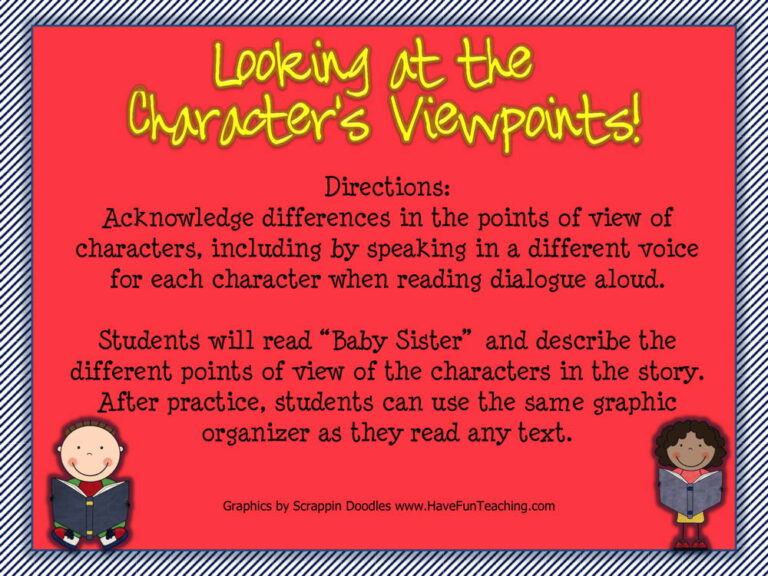
Using Looking at the Character's Viewpoints Activity, students acknowledge differences in the points of view of characters to gain a different perspective.
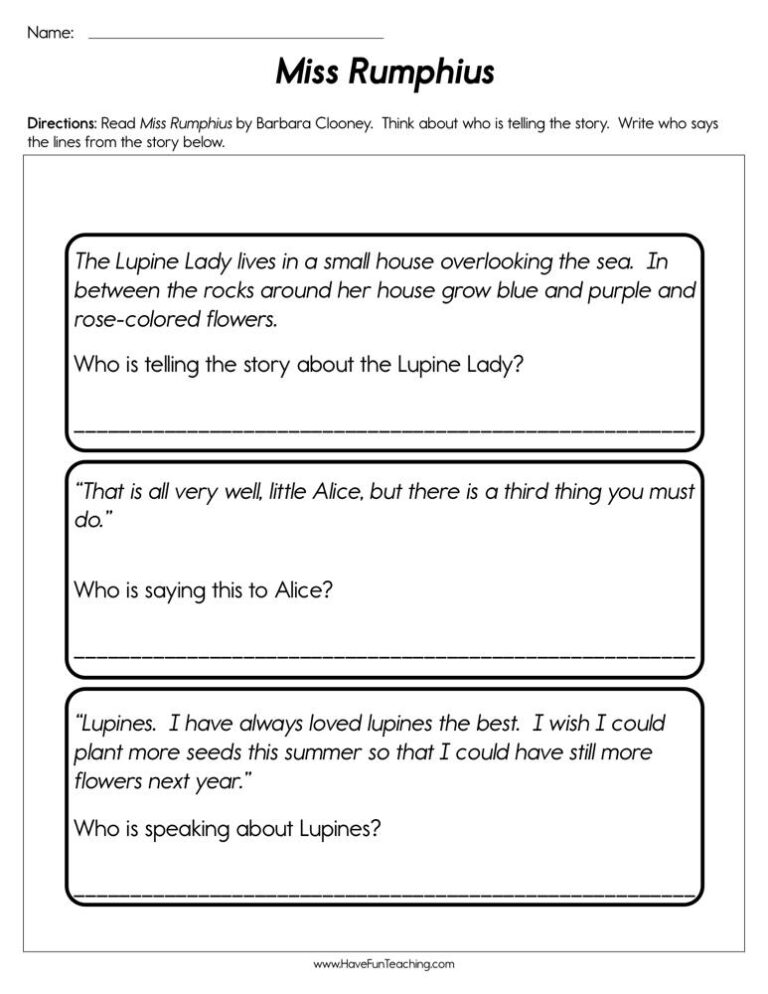
Using Miss Rumphius Point of View Worksheet, students read Miss Rumphius by Barbara Clooney to determine who says the lines from the story.

Using Point of View Activity, students identify who is telling the story at various points in a text.

Using Story Elements Organizing What You Read Activity, students use activity worksheets and graphic organizers to describe the characters, setting and events.

Using Animal Myth Busters Author's Purpose Activity, students read animal myths to explain how an author uses evidence to support points in a text.

Using Firsthand and Secondhand Accounts Activity, students read both firsthand and secondhand accounts of the same event to describe the differences in the information provided.

Using My Point of View Activity, students distinguish their own point of view from that of the narrator or those of the characters.
Using RL.3.3 Third Grade Common Core Lesson, students describe characters in a storyand explain how their actions contribute to the sequence of events.

Using this Whose Point of View Compare and Contrast Activity, students identify whether a story is being told in a first- or third-person POV, while comparing and contrasting the two.



