Skip to content
Start My 3 Free Days $0 today · cancel anytime

3rd Grade Plot Resources

12 3rd grade plot resources: 7 worksheets, 4 activities and 2 Common Core Lessons. How teachers use these

3rd Grade Plot Resources

12 3rd grade plot resources: 7 worksheets, 4 activities and 2 Common Core Lessons. How teachers use these

Worksheet
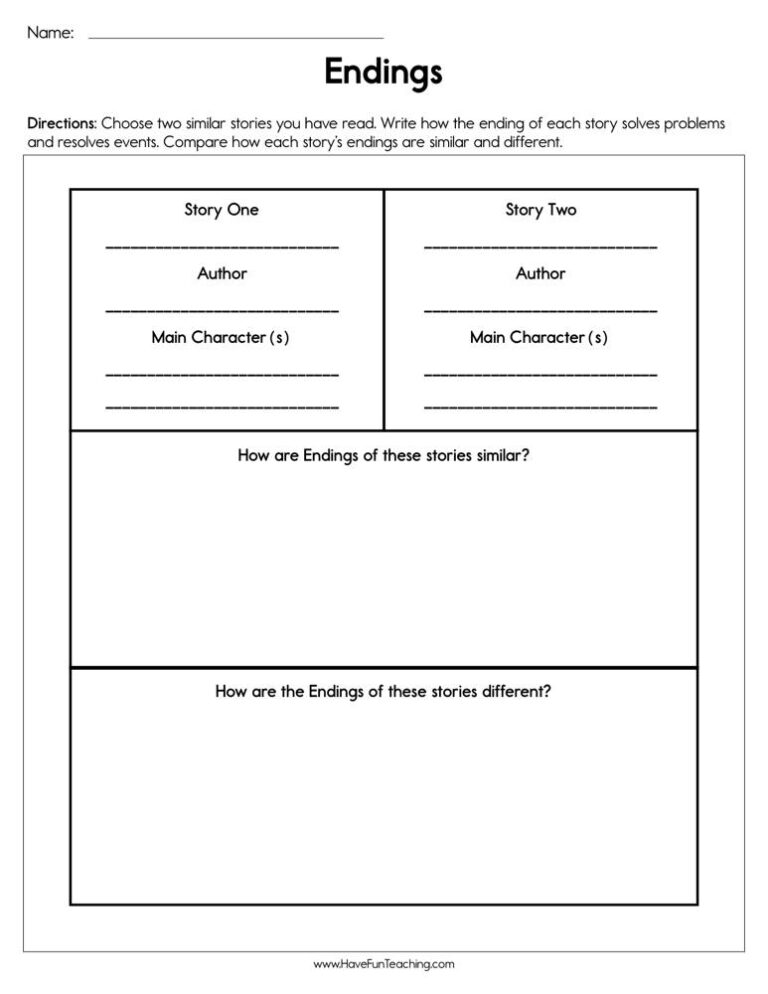
Worksheet3rd GradeEndings Worksheet

This endings worksheet helps 3rd grade students compare how two stories they have read end, explaining each ending and how the two are alike and different to build strong reading skills.

Worksheet
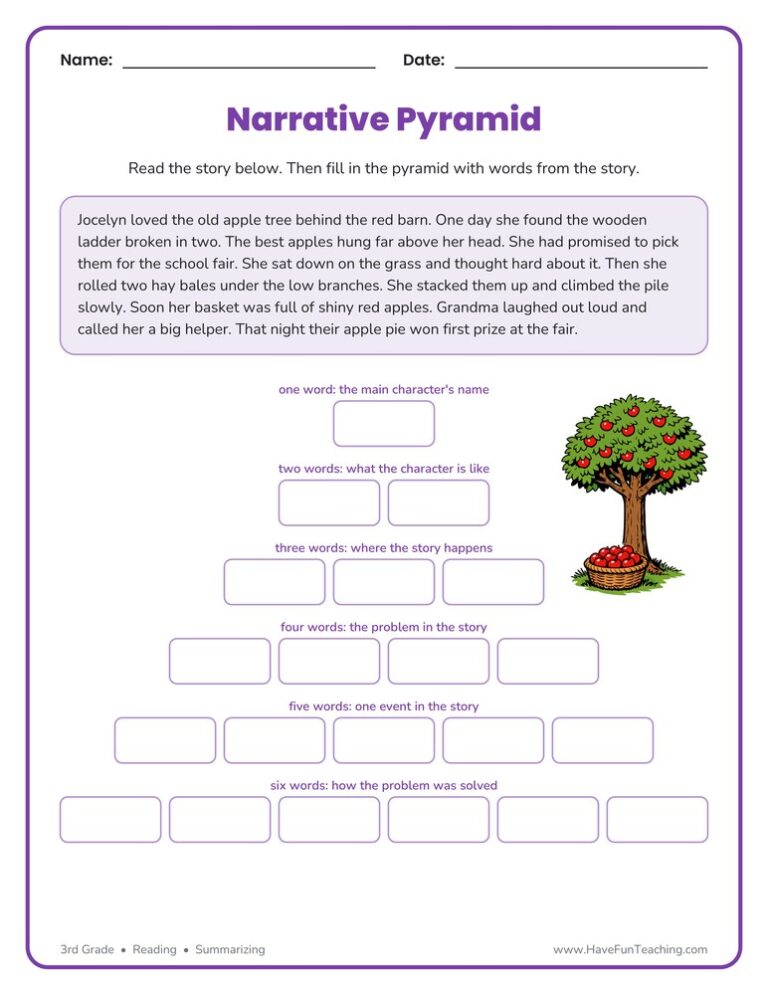
Worksheet3rd GradeNarrative Pyramid Worksheet

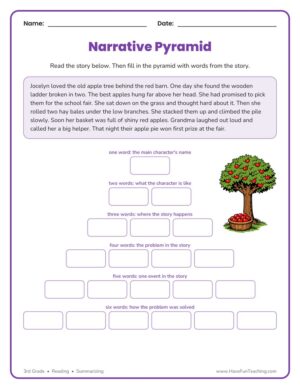
This Narrative Pyramid Worksheet prints an original story for 3rd graders, then asks them to summarize it row by row, from one word up to six. An answer key is included, so it works as a quick reading check or a pre-writing plan.

Worksheet
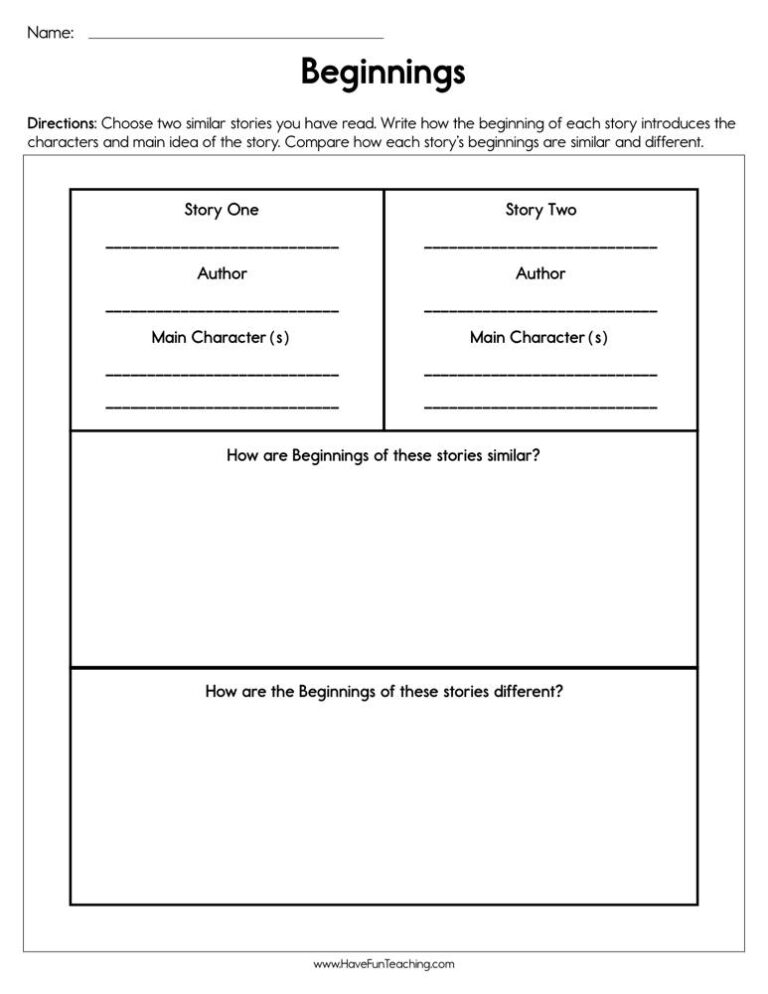
Worksheet3rd GradeBeginnings Worksheet

This beginnings worksheet helps 3rd grade readers describe how two stories they chose open, then explain how those beginnings are alike and different to strengthen story structure skills.

Activity
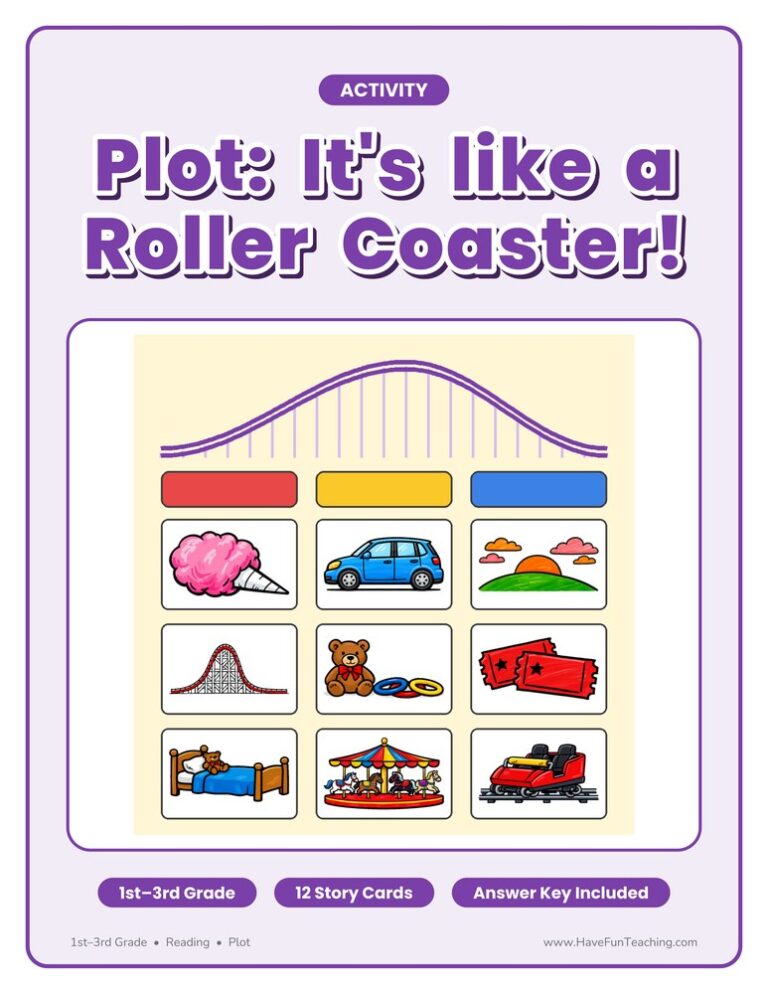
Activity3rd GradeBeginning Middle End Plot Activity

Kids sort story cards with this beginning middle end plot activity for 1st to 3rd grade, then retell the story on a roller coaster plot chart. An answer key is included for easy checking.

Activity
Activity3rd GradeDescribing Characters Beginning Middle and End Activity

In this describing characters beginning middle and end activity, 1st to 3rd Grade students order story cards and name feelings. Answer key included.

Activity
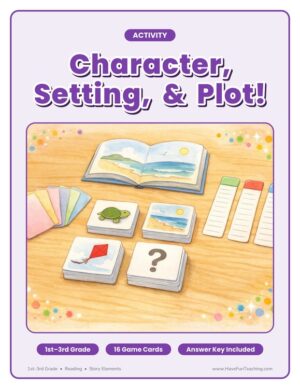
Activity3rd GradeCharacter Setting Plot Activity

This character setting plot activity has 1st to 3rd graders read a short story, sort story cards by element, and order the plot. Answer key included for quick checking.

Worksheet
Worksheet3rd GradeMorning Routine Sequence Worksheet

A Morning Routine Sequence Worksheet that has 3rd Grade readers number six mixed-up morning events and prove the order with words from the text. Answer key included for fast, no-prep sequencing practice.

Activity
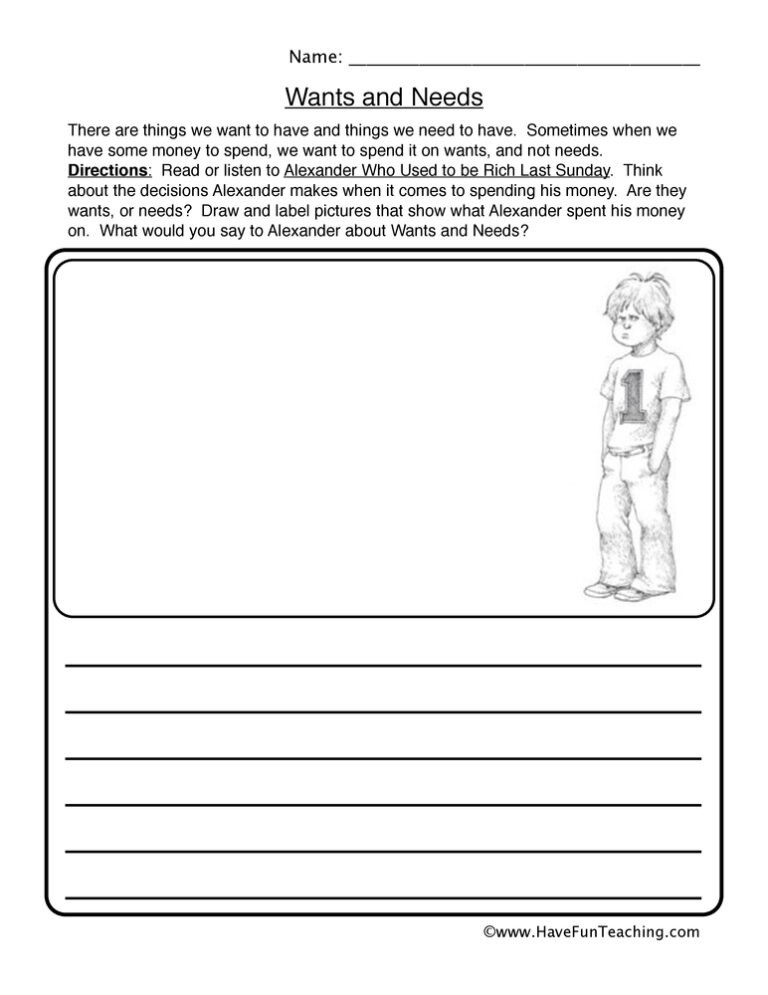
Activity3rd GradeWants Needs Reading Response Worksheet

Using this Wants Needs Reading Response Worksheet, students readAlexander Who Used to be Rich Last Sunday to build their understanding of wants and needs.

Worksheet
Worksheet3rd GradeSequencing Events Organizer Worksheet

This sequencing events organizer worksheet gives 3rd grade students five Beginning, Middle and End sections to plan or retell a story in order using time-order words.

Worksheet
Worksheet3rd GradeBeginning and Ending of a Story Worksheet

Use this beginning and ending of a story worksheet with any book your 3rd grade class reads. Students record the characters, the problem, and how the story starts and ends to build strong plot skills.

Common Core Lesson
Common Core Lesson3rd GradeRL.3.1 Third Grade Common Core Lesson

Using this RL.3.1 Third Grade Common Core Lesson, students answer questions aboutkey details in a fiction text.

Common Core Lesson
Common Core Lesson3rd GradeRL.3.5 Third Grade Common Core Lesson

Using RL.3.5 Third Grade Common Core Lesson, students refer to parts of stories, dramas, and poems when writing or speaking about a text, using terms such as chapter, scene, and stanza.

From our teachers' playbook

How one event leads to the next

What do 3rd graders learn about plot?

Third graders go beyond beginning, middle and end. They learn that a plot builds: a problem starts it, events make it more exciting (the rising action), it peaks at a turning point (the climax), and then it's resolved. They explain how a character's actions cause the next event and how each chapter or scene builds on the last. Retelling gets sharper too: only the key events, in order, with evidence from the text. The click comes when a student says, "If she hadn't lied in chapter 2, none of this would have happened!"

Our favorite ways to teach plot in 3rd grade

Third graders are ready to see cause and effect in stories. These moves make the structure visible.

Stack a narrative pyramid

After a read-aloud, kids build a narrative pyramid: character, setting, problem, key events, solution, each line a little longer. It forces them to pick the most important events and see how a story builds.

Why it works: going from real objects to pictures to symbols is a core recommendation of the U.S. Department of Education's elementary math guide.
Narrative Pyramid WorksheetTry it withNarrative Pyramid WorksheetWorksheetsOpen it →

Study strong beginnings

Read the first page of three different books and think aloud: "This one starts with action. This one starts with dialogue." Kids notice how authors hook readers and set up the problem. Then they try a beginning of their own.

Why it works: handing over the work step by step, from teacher to student, is one of the most widely used teaching frameworks (Pearson and Gallagher, 1983).

Beginnings WorksheetTry it withBeginnings WorksheetWorksheetsOpen it →

Track events chapter by chapter

During a chapter book, kids add the key event from each chapter to an organizer. Over a few weeks, they can see the whole plot rise and fall. Little daily notes make long books easy to retell.

Why it works: short practice spread over several days beats one long session, according to a large review of learning research (Dunlosky and colleagues, 2013).

Sequencing Events Organizer WorksheetTry it withSequencing Events Organizer WorksheetWorksheetsOpen it →

Plot questions parents and teachers ask

What are the parts of a plot for 3rd grade?

Most third graders learn exposition (characters and setting), problem, rising action, climax and resolution. Some teachers simplify it to problem, events and solution.

What is the climax of a story?

The climax is the most exciting moment, the turning point where the problem is faced head-on. Everything after it leads to the solution.

How do I help my child retell a story?

Ask them to name the character, the problem, two or three important events and how it was solved. Keep the retell short so they focus on what matters most.

How can I practice plot at home?

While reading a chapter book together, ask "What happened in this chapter that matters for later?" After a movie, draw the plot as a mountain and label the climax.