Skip to content
Start My 3 Free Days $0 today · cancel anytime

3rd Grade Solar System Resources

13 3rd grade solar system resources: 7 worksheets, 4 activities, 1 song and more. How teachers use these

3rd Grade Solar System Resources

13 3rd grade solar system resources: 7 worksheets, 4 activities, 1 song and more. How teachers use these

Video
Video3rd GradePlanets Song (Animated Music Video)

While watching the Planets Song (Animated Music Video), students learn about the order of planets in our solar system as well as cool facts about each planet.

Worksheet
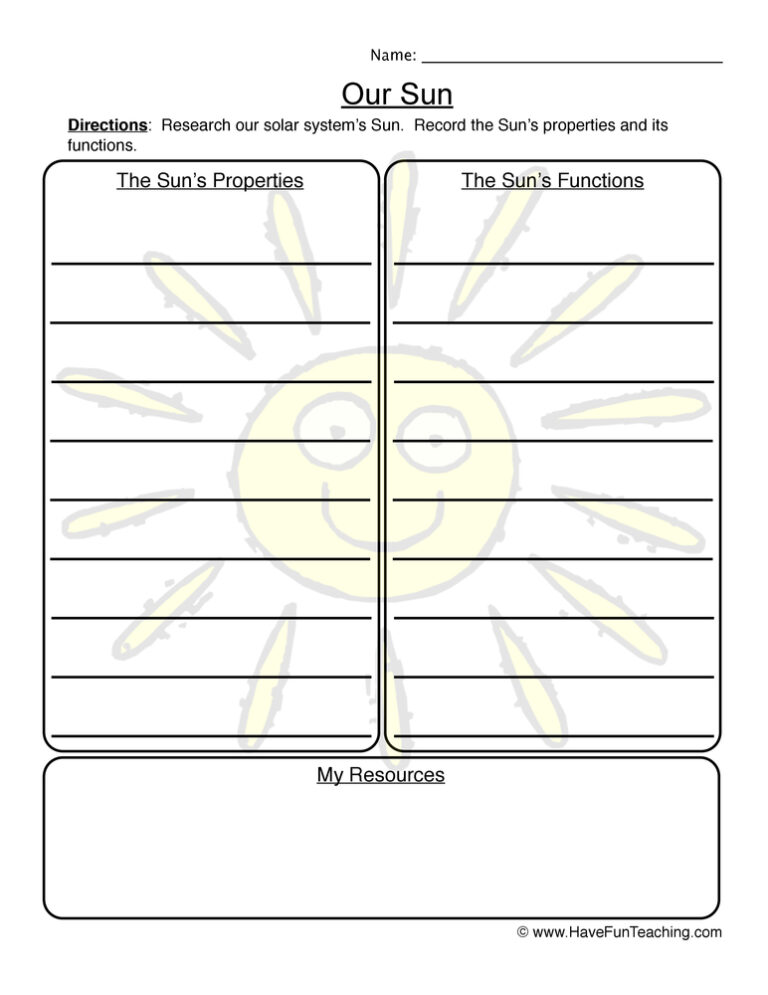
Worksheet3rd GradeOur Sun Worksheet

Our sun worksheet for 3rd grade: students sort eight facts into what the Sun is and what the Sun does, then find both inside four sentences. Answer key included for quick, no-prep science practice.

Worksheet
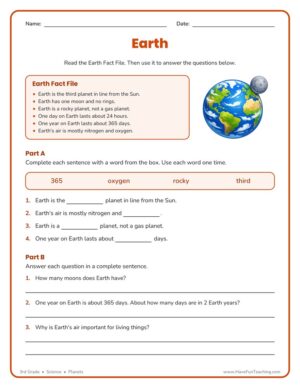
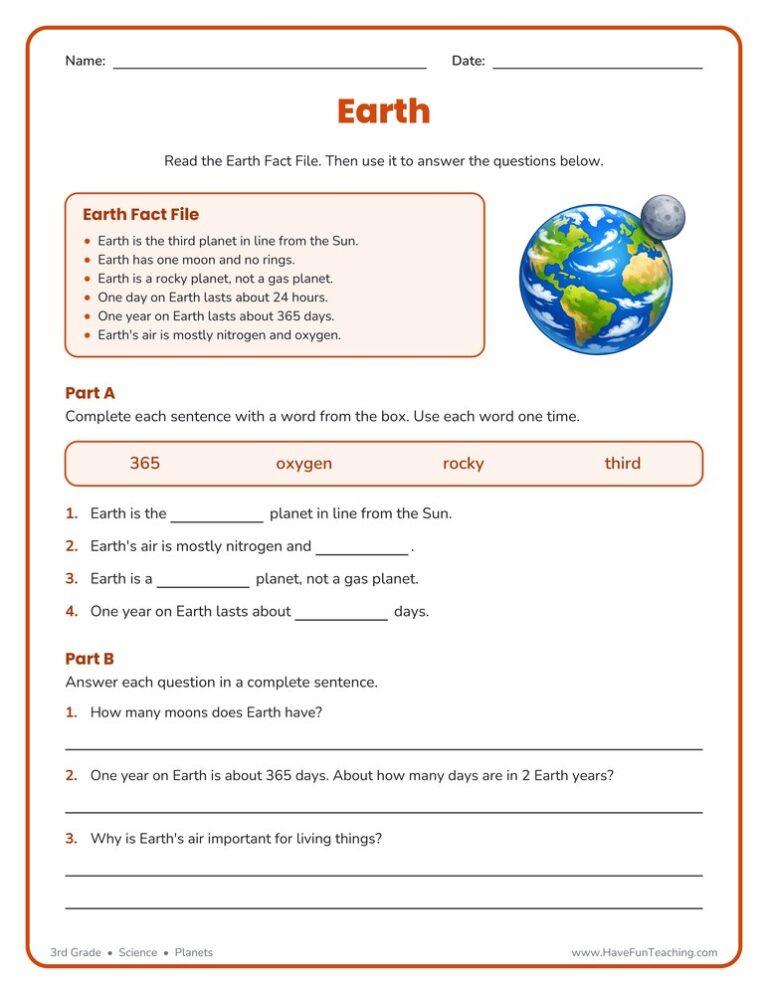
Worksheet3rd GradeEarth Planet Worksheet

Students use the Earth Planet Worksheet to read a six-fact file about our planet, complete word-bank sentences, and write full-sentence answers. Built for 3rd Grade with an answer key included.

Worksheet
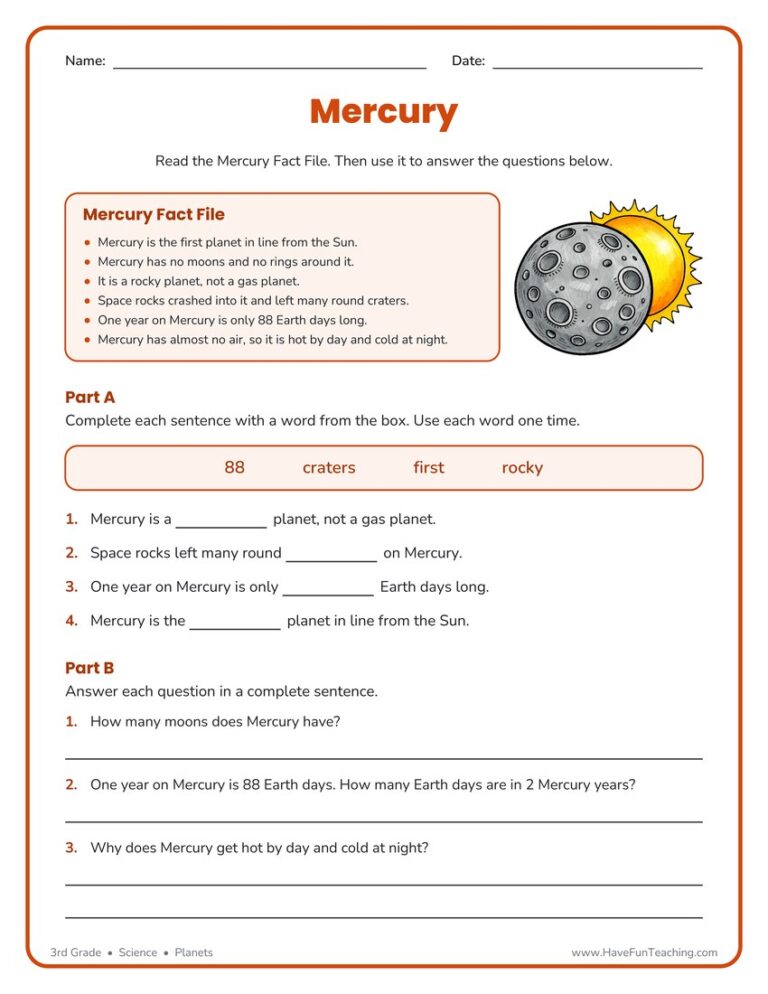
Worksheet3rd GradeMercury Planet Worksheet

This Mercury Planet Worksheet gives 3rd graders a fact file about the first planet from the Sun, then four word-bank sentences and three written answers. Answer key included for fast, no-prep solar system practice.

Worksheet
Worksheet3rd GradeSaturn Planet Worksheet

A Saturn planet worksheet for 3rd grade that pairs a short Saturn fact file with word-bank sentences and two written questions. Answer key included, so students can check their own solar system facts.

Activity
Activity3rd GradeSolar System Activity

This solar system activity is a Space Race game where 2nd to 5th Grade students spin, write and color the eight planets in order. Includes trivia cards, practice and answer key.

Worksheet
Worksheet3rd GradeVenus Planet Worksheet

This Venus Planet Worksheet gives 3rd Grade students a short fact box, fill-in-the-blank sentences, bubble questions, and a written response, with an answer key included, so learning about Venus feels clear and doable.

Worksheet
Worksheet3rd GradeMars Planet Worksheet

This Mars planet worksheet hands 3rd graders a kid-friendly fact file, then asks them to name Mars facts and explain one in writing. Answer key included for confident, no-prep science practice.

Worksheet
Worksheet3rd GradeSolar System Crossword Puzzle

This Solar System Crossword Puzzle gives 3rd graders ten clues about the Sun, the planets, orbits, and telescopes to solve with no word bank. An answer key is included, so space vocabulary practice takes no prep.

Activity
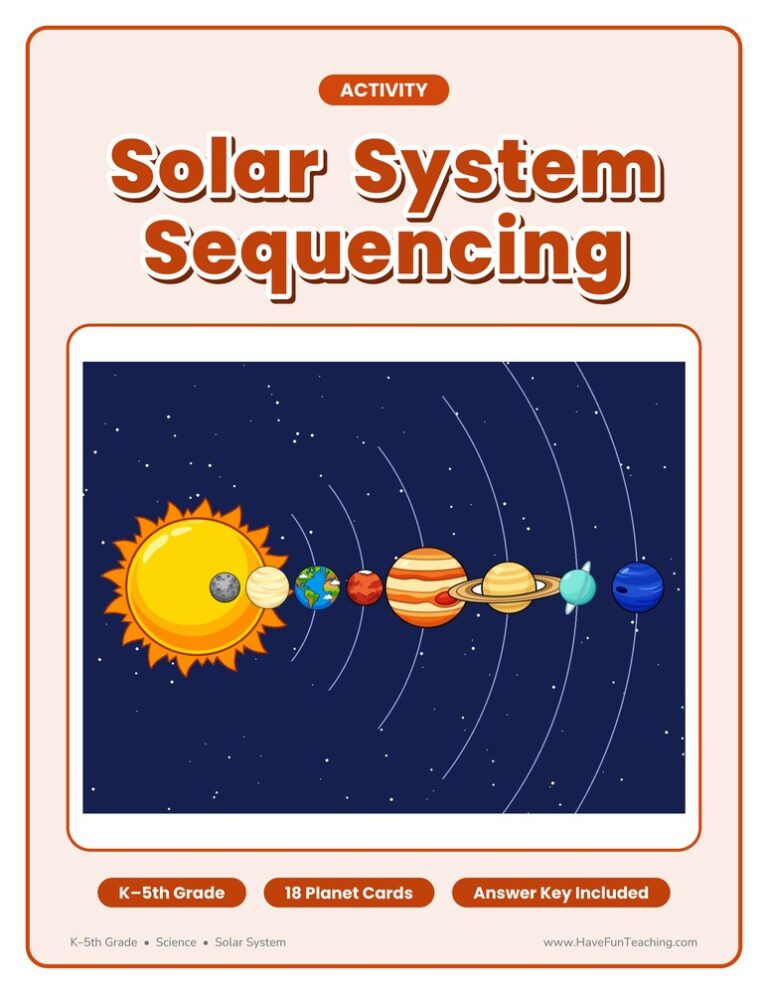
Activity3rd GradeSolar System Sequencing Planets Activity

In this solar system sequencing planets activity, kindergarten to 5th grade students put the eight planets in order from the Sun and match their names. Answer key included.

Flash Cards
Flash Cards3rd GradeSpace Flash Cards

Space flash cards with bright pictures of the sun, moon, planets and more help kindergarten to 4th grade students learn space words and facts. An answer key is included.

Activity
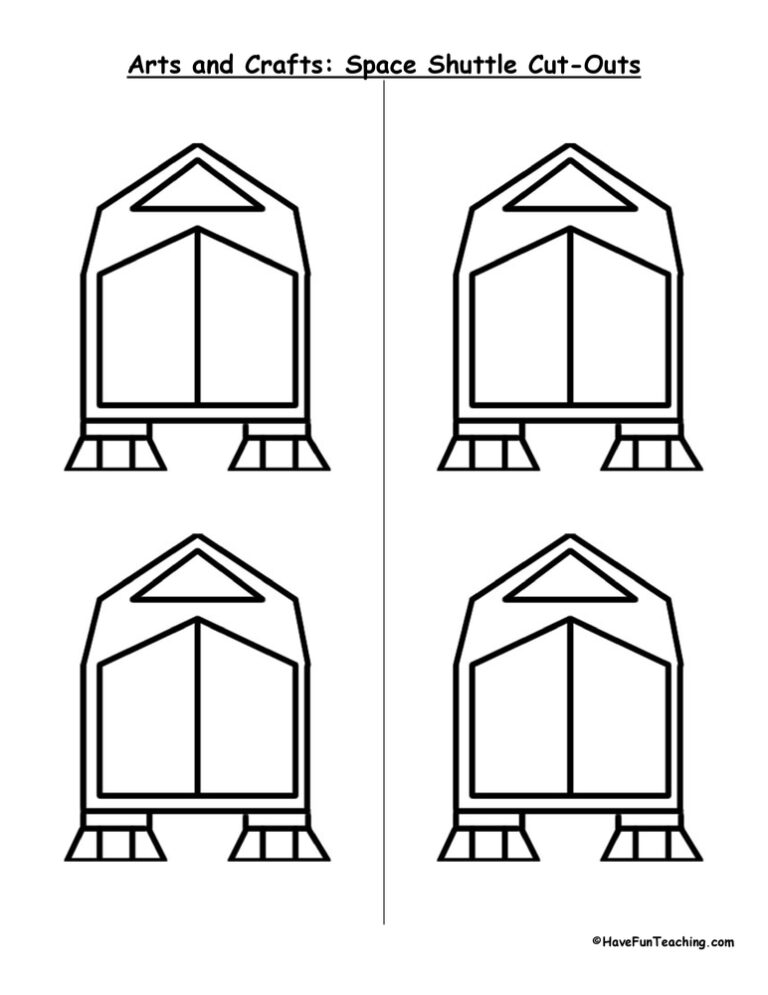
Activity3rd GradeSpace Shuttle Cut Outs

These Space Shuttle Cut Outs will quickly give you templates for classroom decoration or student activities.

Activity
Activity3rd GradeIts Just a Phase Phases of the Moon Activity

UsingIts Just a Phase Phases of the Moon Activity, students put the phases of the moon in order so they can understand the pattern of the moon.

From our teachers' playbook

Eight planets and one very big star

What do 3rd graders learn about the solar system?

Third graders learn that our solar system has the sun at the center and eight planets traveling around it in orbits. They put the planets in order (Mercury, Venus, Earth, Mars, Jupiter, Saturn, Uranus, Neptune) and compare them: the four inner planets are small and rocky, the outer four are giant and gassy. They learn the sun is a star, the moon orbits Earth, and Earth's spin gives us day and night. The click moment is when kids realize the sun only looks small because it's so far away.

Our favorite ways to teach the solar system

Space is huge and hard to picture. These moves bring it down to kid size.

Sing the planets in order

Play the planets song daily for a week and have eight kids line up holding planet cards as each is named. A song plus a living model makes the order stick far better than a memory trick.

Why it works: words set to a repeating melody are easier to recall than the same words spoken (Wallace, 1994).

Planets Song (Animated Music Video)Try it withPlanets Song (Animated Music Video)SongsOpen it →
Line up the planets

Kids cut out and sequence the planets, then glue them in order from the sun. Have them color inner rocky planets one way and outer gas giants another. Sorting while sequencing builds two ideas at once.

Why it works: kids understand an idea best when they touch it, then draw it, then write it, the order the U.S. Department of Education recommends for elementary math.

Solar System Sequencing Planets ActivityTry it withSolar System Sequencing Planets ActivityActivitiesOpen it →

Planet profiles

Start with a planet kids know best, Earth, and fill in a fact page: size, place from the sun, what it's made of. Then each group studies a different planet and compares it back to Earth. Comparisons make the facts meaningful.

Why it works: pairing a picture with each word gives kids two ways to remember it, a well-tested principle of how people learn (Mayer, 2009).

Earth Planet WorksheetTry it withEarth Planet WorksheetWorksheetsOpen it →

Solar system questions parents and teachers ask

What are the 8 planets in order?

Mercury, Venus, Earth, Mars, Jupiter, Saturn, Uranus and Neptune. A popular way to remember: My Very Educated Mother Just Served Us Nachos.

Why isn't Pluto a planet anymore?

In 2006, scientists decided Pluto is a dwarf planet because it hasn't cleared its orbit of other objects. It's still part of our solar system, just in a different group.

What is the difference between inner and outer planets?

The inner planets (Mercury, Venus, Earth and Mars) are small and rocky. The outer planets (Jupiter, Saturn, Uranus and Neptune) are giant and made mostly of gas and ice.

How can I teach the solar system at home?

Make a scale model with fruit or balls, from a peppercorn to a watermelon, to show size differences. Look at the night sky and find bright planets like Venus or Jupiter.