
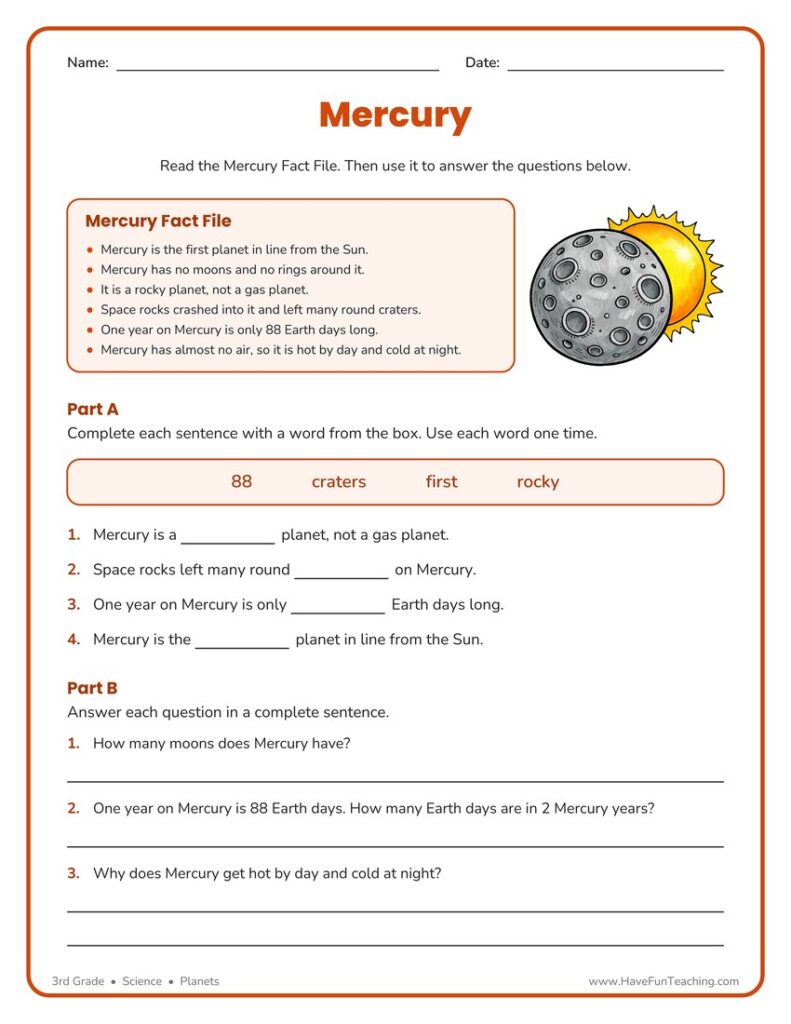
Mercury Planet Worksheet
This Mercury Planet Worksheet gives 3rd graders a fact file about the first planet from the Sun, then four word-bank sentences and three written answers. Answer key included for fast, no-prep solar system practice.
$6.97
Or free with a membership — members pay $3.33/mo for all 10,000+ resources. See plans
Want this one free?
Tell us where to send it and it’s yours — no card, no catch.
One free resource per teacher. We’ll also send free teaching ideas each week — unsubscribe anytime.
Teaching is easier with a membership
Unlimited printables, games & videos for PreK–6th — for your classroom or homeschool. Cancel anytime.
Start your 3-day free trial$0 today · cancel anytime · Instant access to 10,000+ resources
About this resource
Description
Mercury is the first planet in line from the Sun, and it is one of the easiest planets for young scientists to get curious about. It is small, rocky, and covered with round craters left behind by space rocks. Because Mercury has almost no air to hold in heat, it turns blazing hot by day and freezing cold at night. This Mercury Planet Worksheet gives students a short, kid-friendly fact file about the planet and then asks them to use it, so learning about the solar system becomes reading, thinking, and explaining instead of just memorizing.
This 3rd grade planets worksheet puts the research source right on the page. Students start by reading the Mercury Fact File, six clear sentences about the planet’s place in line, its moons and rings, what it is made of, its craters, the length of its year, and its air. In Part A they complete four sentences using words from a word box, and every answer can be found in the fact file. In Part B they answer three questions in complete sentences, including a two-step math question about Mercury years and a why question that asks them to explain the planet’s wild temperatures. Use it as an independent science station, a partner activity, homework, or a quick check before a solar system unit test.
What’s Included
- 1 print-ready PDF worksheet
- Answer key
- A 6-fact Mercury Fact File, 4 word-bank sentences, and 3 written-response questions
This Mercury Planet Worksheet helps kids in three ways. First, it teaches them to pull evidence from a text instead of guessing, which is the same skill their reading and science tests will ask for. Second, the word bank keeps spelling accurate while students focus on meaning, so the sentences they write are correct and confident. Third, the written-response questions push past recall into real thinking, asking students to multiply, compare, and explain a cause and its effect in their own words.
Teachers and parents can stretch this activity in fun ways. Build a hallway solar system by giving each student one planet to research and post, with Mercury closest to the classroom Sun. Compare planets side by side on a chart, then ask which one a visitor would want to see and why. Let students design a spacesuit that could handle a scorching day and a freezing night. Play a fact-file quiz game where one partner reads a clue and the other names the planet. Finish by singing the Planets Song together so the order of the planets sticks.
Related Resources
What teachers say
Reviews
You must be logged in to post a review.

While watching the Planets Song (Animated Music Video), students learn about the order of planets in our solar system as well as cool facts about each planet.
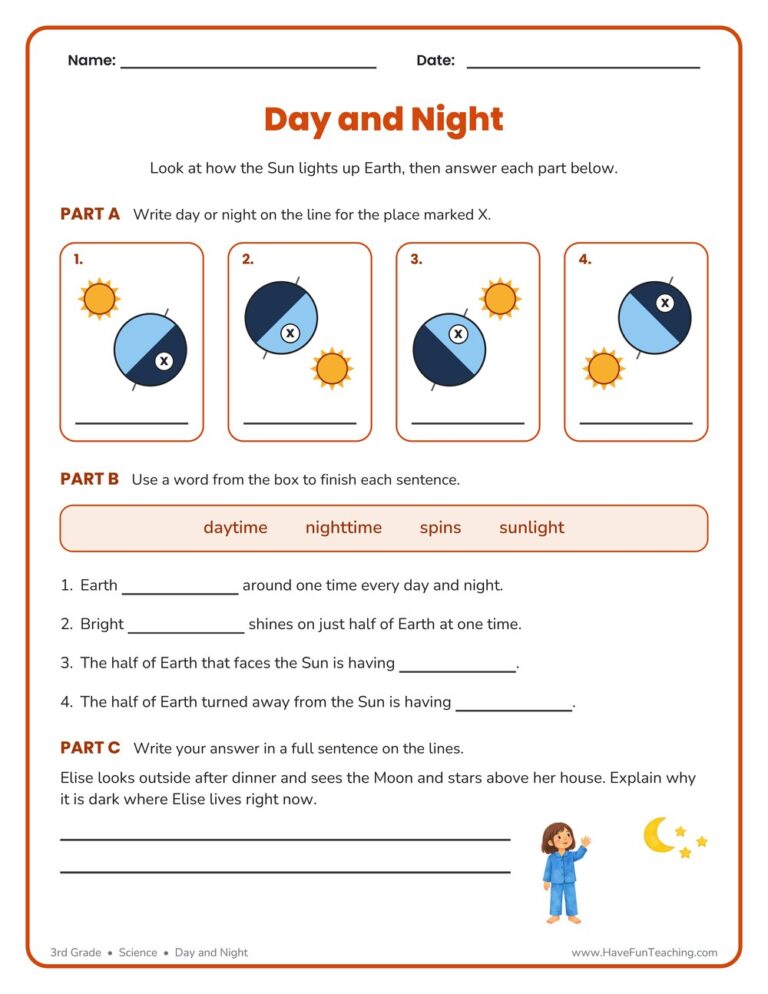
A hands-on day and night worksheet where 3rd graders read Sun and Earth diagrams, finish science sentences from a word box, and explain what makes it dark. Answer key included for quick, no-prep review.
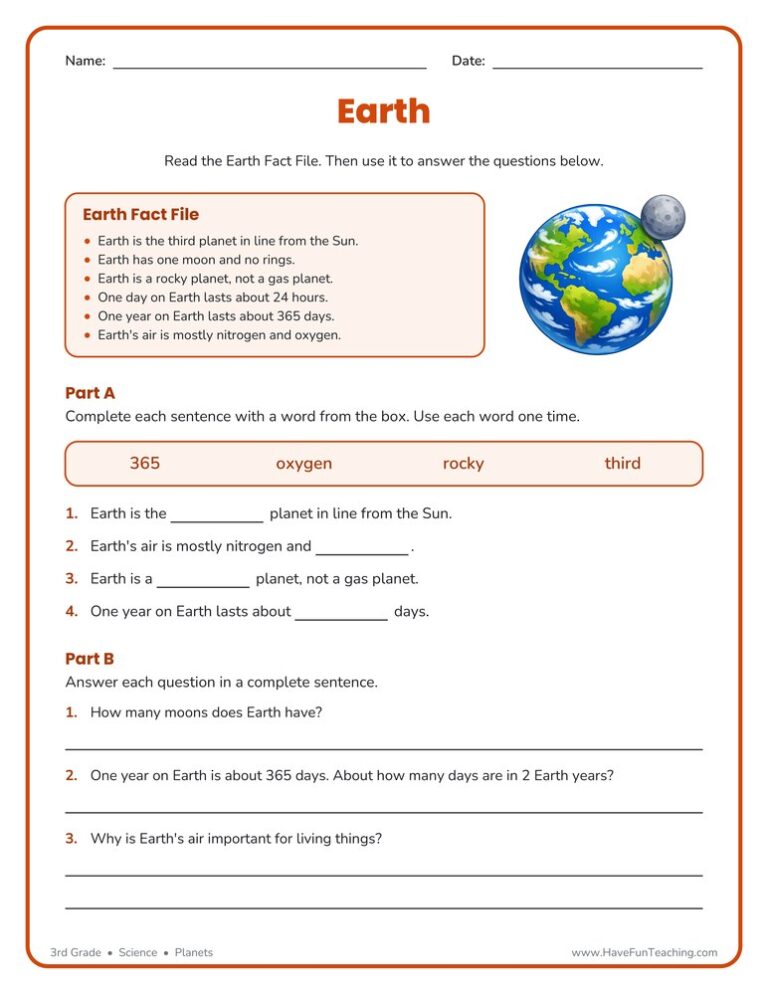
Students use the Earth Planet Worksheet to read a six-fact file about our planet, complete word-bank sentences, and write full-sentence answers. Built for 3rd Grade with an answer key included.

This Venus Planet Worksheet gives 3rd Grade students a short fact box, fill-in-the-blank sentences, bubble questions, and a written response, with an answer key included, so learning about Venus feels clear and doable.
While listening to the Planets Song (MP3), students learn about the order of planets in our solar system as well as cool facts about each planet.

This Mars planet worksheet hands 3rd graders a kid-friendly fact file, then asks them to name Mars facts and explain one in writing. Answer key included for confident, no-prep science practice.

A Saturn planet worksheet for 3rd grade that pairs a short Saturn fact file with word-bank sentences and two written questions. Answer key included, so students can check their own solar system facts.

This Solar System Crossword Puzzle gives 3rd graders ten clues about the Sun, the planets, orbits, and telescopes to solve with no word bank. An answer key is included, so space vocabulary practice takes no prep.

Using Solar System Sequencing Planets Activity, students correctly ordering the eight planets in our solar system.
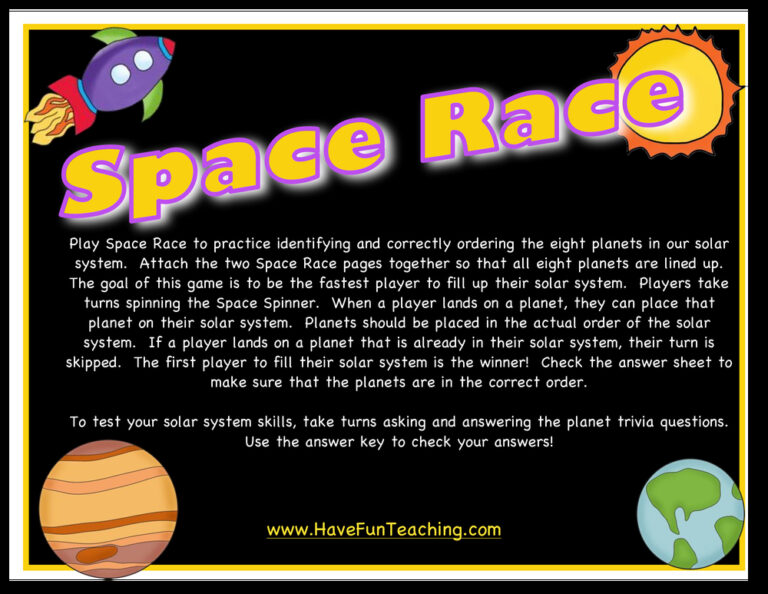
Using Solar System Activity, students play Space Race to practice identifying and correctly ordering the eight planets in our solar system.

Using these Space Flash Cards, students improve their space and solar system vocabulary by describing the colorful flash cards.
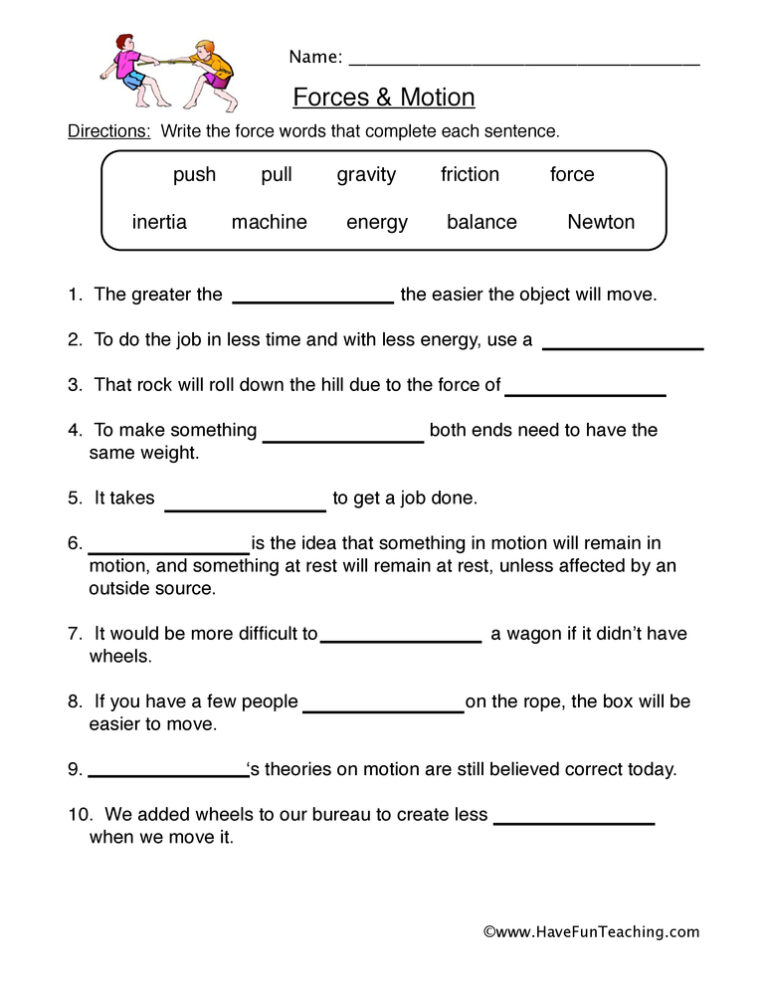
A 3rd grade forces motion worksheet where students use a word bank to complete eight sentences about force, push, pull, gravity, friction, motion, speed, and magnets. Includes an answer key for easy, no-prep science practice.
Reviews
There are no reviews yet