Skip to content
Start My 3 Free Days $0 today · cancel anytime

3rd Grade Timelines Resources

5 3rd grade timelines resources: 2 activities, 2 graphic organizers, 2 worksheets and more. How teachers use these

3rd Grade Timelines Resources

5 3rd grade timelines resources: 2 activities, 2 graphic organizers, 2 worksheets and more. How teachers use these

Activity
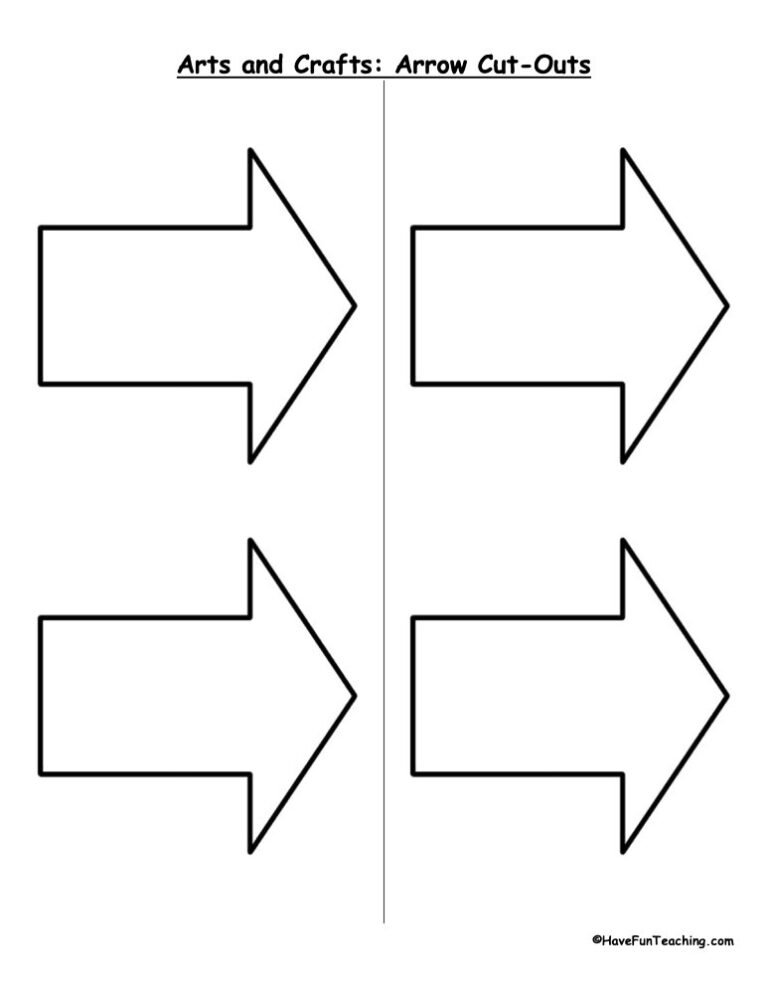
Activity3rd GradeArrow Cut Outs

Kids color and cut big arrows, build a My Day timeline book, and make a toy car path in this arrow cut outs activity for preschool to 3rd grade.

Worksheet
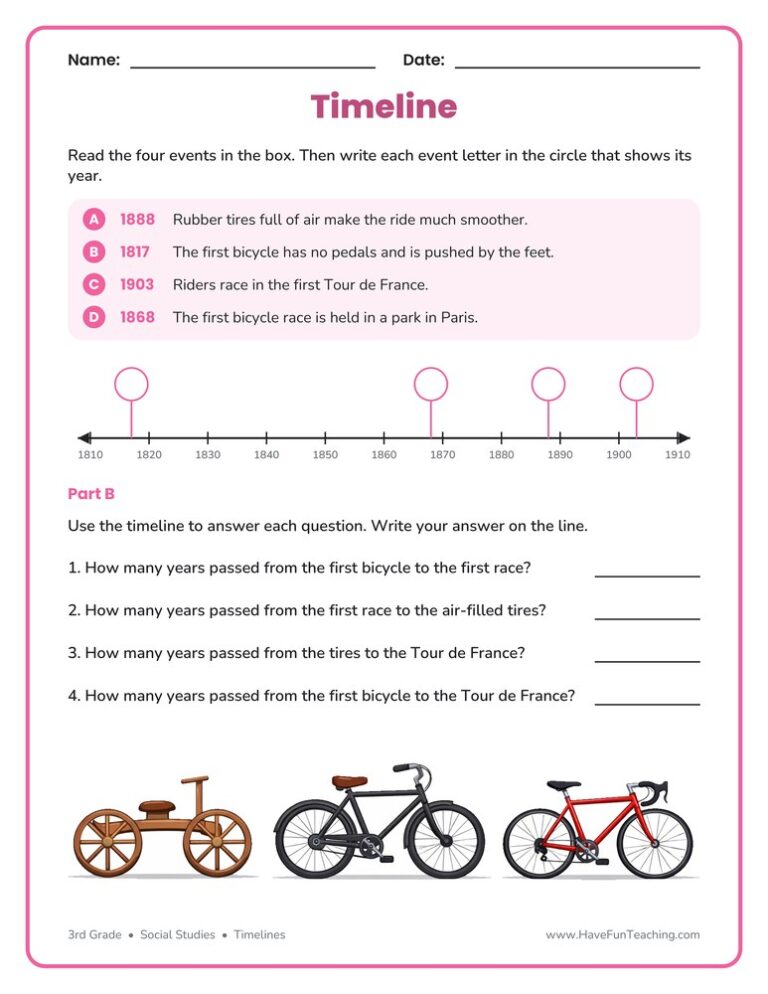
Worksheet3rd GradeTimeline Graphic Organizer Worksheet

This timeline graphic organizer worksheet has 3rd grade students place four dated events on a decade time line, then subtract dates to find elapsed years. An answer key is included.

Worksheet
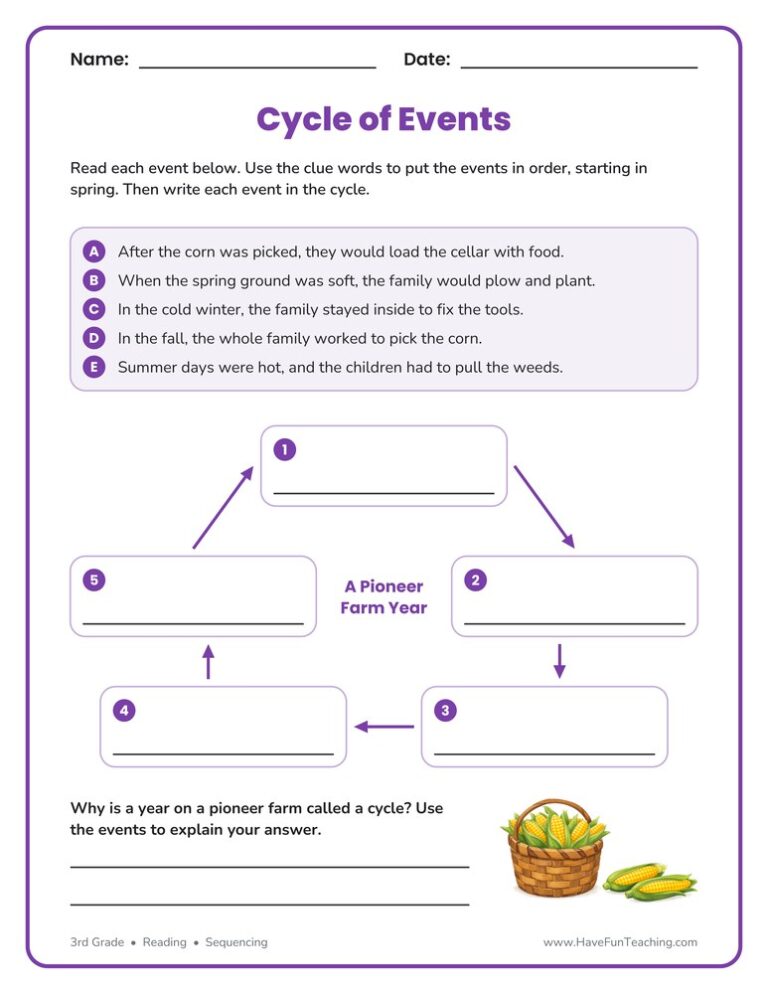
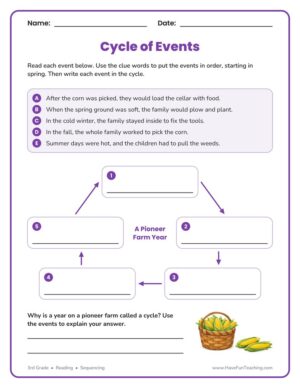
Worksheet3rd GradeSequence of Events Cycle Graphic Organizer

This sequence of events cycle graphic organizer has 3rd grade students order five pioneer farm events by clue words. An answer key is included to make checking quick and easy.

Common Core Lesson
Common Core Lesson3rd GradeRI.3.8 Third Grade Common Core Lesson

Using RI.3.8 Third Grade Common Core Lesson, students describe the connection between a series of historical events, scientific ideas or concepts, or steps in technical procedures in a text.

Activity
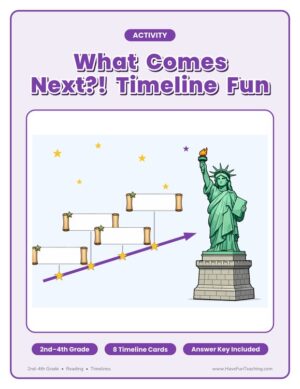
Activity3rd GradeWhat Comes Next? Timeline Activity

This timeline activity has students read a true Statue of Liberty text and put eight events in order. Made for 2nd to 4th grade, with an answer key included for quick checking.

From our teachers' playbook

Putting history in its place

What do 3rd graders learn about timelines?

Third graders learn that a timeline shows events in the order they happened, with the earliest on the left. They read timelines to answer questions like "What happened first?" and "How many years apart?" and they build their own for a person, a place or their own lives. Many classes connect timelines to local history: when the town was founded, when the first school opened. Kids also learn words like decade (10 years) and century (100 years). The click comes when a student realizes that spacing matters, and a 50-year gap should look bigger than a 2-year one.

Our favorite ways to make timelines stick

Timelines turn history into something kids can see. These moves get them building and reading them.

My life timeline

Kids gather five events from their own lives, like being born, starting school or losing a tooth, and place them in order on an organizer. Ask families for dates the night before. Starting with themselves makes the idea click before you move to history.

Why it works: kids understand an idea best when they touch it, then draw it, then write it, the order the U.S. Department of Education recommends for elementary math.
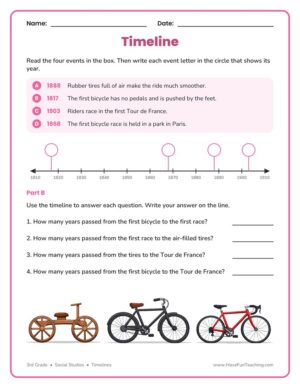
Timeline Graphic Organizer WorksheetTry it withTimeline Graphic Organizer WorksheetWorksheetsOpen it →
Cycle or line?

Show a cycle organizer (like the seasons) next to a timeline (like a person's life). Ask, "Which one starts over and which one keeps going?" Comparing the two helps kids understand that history moves in one direction.

Why it works: pairing a picture with each word gives kids two ways to remember it, a well-tested principle of how people learn (Mayer, 2009).

Sequence of Events Cycle Graphic OrganizerTry it withSequence of Events Cycle Graphic OrganizerGraphic OrganizersOpen it →

Think aloud with a real timeline

Project a short timeline of a famous person and read it aloud, thinking out loud: "This came first, and this was ten years later." Then ask three quick questions. Modeling how to read the spacing is half the battle.

Why it works: showing first, practicing together, then letting kids try alone is the "gradual release" model teachers have relied on for decades (Pearson and Gallagher, 1983).

RI.3.8 Third Grade Common Core LessonTry it withRI.3.8 Third Grade Common Core LessonCommon Core LessonsOpen it →

Questions parents and teachers ask

What is a timeline for 3rd grade?

A timeline is a line that shows events in the order they happened, usually from left to right. Third graders read timelines and make their own about people, places and their own lives.

How do you make a timeline with a child?

Pick a topic, like your child's life, and list five or six events with dates. Draw a line, mark the years, and place each event in order. Adding a small picture for each event helps.

What is the difference between a decade and a century?

A decade is 10 years and a century is 100 years. Third graders use these words when they read longer timelines in social studies.

Why do kids learn timelines?

Timelines help kids understand order, cause and effect, and how long ago things happened. They are a key tool in history and in reading biographies.