It is 8:40 on a Sunday night, the test is Thursday, and you are hunting for review game ideas that cover everything without eating your whole prep period. Not another packet. Something that gets the quiet kids talking and hits every skill you taught this month.
Good news: every game below runs on things you already have. A stack of worksheets. A set of flash cards. A whiteboard and a wadded-up ball of paper. Learn one this week and you can use it every review day for the rest of the year.
The short version
3 days free
Ready for the whole library?
You’ve had your freebie — but members download 10,000+ resources for every grade, all year long. Try it free — $0 today, cancel anytime.
Free for teachers
Pick your grade. We’ll send 10 free resources.
Worksheets, activities and a video — picked for your classroom, ready to print tonight.
One free bundle per teacher. We’ll also send free teaching ideas each week — unsubscribe anytime.



- The best classroom review games make every kid answer every question — not just the one with a hand up.
- Most of these need one thing you already printed: a worksheet, a page of problems, or a set of flash cards.
- Movement wins. Four of the nine get kids out of their chairs with under a minute of setup.
- Songs count as review, especially in K–2. Kids will sing facts they will not recite.
- Keep a round to 10–15 minutes. Review is a warm-up, not the whole block.
Why Review Game Ideas Beat Another Review Packet
A packet asks kids to look at the answer again. A game asks them to pull it out of their own head, out loud, in front of somebody. That difference is the whole point, and it is not just a vibe — the U.S. Department of Education’s What Works Clearinghouse practice guide on organizing instruction lists spacing learning over time and using quizzing to promote learning among its core recommendations.
Games do both without feeling like either one, and a fun review gets answers out of kids a silent one never will. Spacing happens because you are circling back to September’s skills in November. Quizzing happens because somebody has to answer before the cards move on.
The other quiet benefit: live data. Twenty seconds into Four Corners you can see that eleven kids still think a rectangle is not a quadrilateral, and you can fix it right then instead of finding out on Thursday. Any set of printable worksheets you have already used becomes the question bank.
What Makes a Review Game Actually Work
Most review games flop for the same two reasons. Fix these and almost anything works.
Everybody answers, every time
The classic classroom trivia game has one kid answering while twenty-four watch. That is not review for the twenty-four. Give every kid a whiteboard, a card, a corner to stand in, or a partner to answer out loud to. If you can scan the room and see twenty-five answers at once, it is working.
Keep score loosely and keep rounds short
Points are the engine, but a running tally that crowns a winner turns review into a tournament, and the kids who need it most stop trying. Team points that reset each round keep the energy without the sting. Ten minutes, then stop while they still want more.

Let a Song Do the Review for You
Have Fun Teaching is not only worksheets, and review day is where that matters. There are hundreds of skill songs and teaching videos on the same standards as the printables, and a song is review kids do not notice they are doing.
Play one as a warm-up, then run a game on the same skill — the melody does the recall work on the way in. For a whole set, the collection videos on the Have Fun Teaching YouTube channel review every letter, shape or sight word in one sitting.
Pair it up: sing the song, then play Around the World with the matching flash cards. Same content, two formats, about twelve minutes total.
9 Review Game Ideas You Can Run Tomorrow
Each one works for math facts, sight words, vocabulary, science terms, or social studies dates. Swap the question bank, keep the game.
- Scoot. Cut a worksheet into strips and tape one problem to each desk. Kids start at their own seat with a numbered answer sheet, work the problem, then move one desk when you call “scoot.” Thirty seconds per station. In fifteen minutes every kid has answered twenty-four questions standing up, and you are holding a record of who missed what.
- Around the World. Two kids stand side by side, you hold up a flash card, and whoever answers first moves on to challenge the next kid. Fast, loud, and free to set up. Run a second stack with a helper in the back so nobody sits out for long — that is the one fix this old game needs.
- Bingo. Kids fill a blank grid with answers you write on the board, then you read clues instead of calling numbers. “Five times seven” instead of “B-35.” Making the card is half the review, and a ready-made set saves you the grid-drawing on the weeks you have nothing left.
- Four Corners. Label the corners A, B, C, and D, read a multiple-choice question, and everybody walks to their answer. You get an instant bar graph of the room. Ask one kid per corner why they picked it, and the wrong corners teach as much as the right one.
- Quiz-Quiz-Trade. Every kid gets one flash card. They find a partner, quiz each other, trade cards, and go find somebody new. Two minutes and every card has been through six hands. It is the quietest game here and covers the most content per minute.
- Beat the Teacher. Class on one side of the board, you on the other. Miss a question and the point goes to you. Play it up — guess wildly, groan when they win. Kids will argue about place value for twenty minutes to keep you from scoring.
- Trashketball. Answer correctly, earn a shot at the recycling bin with a paper ball. One point for the answer, one for the basket, two from behind the rug. The shot takes four seconds and buys another question’s worth of attention.
- Whiteboard Relay. Teams line up, one marker each. First kid runs up, answers, runs back, hands off. The team has to agree the answer is right before the next kid goes, so the checking is the review. Perfect for multi-step math.
- Sing It Back. Play the skill song once with the words, once with the sound down so they fill in the gaps. For younger kids this is the highest-retention review on the list, and it costs three minutes and no prep.
Teacher tip: Write your questions once, on index cards, and keep them in an envelope stapled to the unit folder. The same thirty cards run Scoot on Monday, Quiz-Quiz-Trade on Wednesday, and Around the World in May. Building the bank once is what makes these test review activities sustainable.
Printables That Turn Into Classroom Review Games
You do not need special game supplies. These are ordinary Have Fun Teaching resources that happen to cut, sort, and shuffle beautifully.
-

Kindergarten–2nd Grade · Reading
Print, cut, and you have the deck for Around the World and Quiz-Quiz-Trade. One set covers three games and most of your word wall.
-

3rd Grade · English
The grid is already made, so bingo becomes a five-minute decision. Read the word, or read it inside a sentence for a harder round.
-
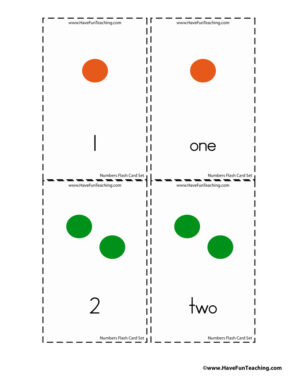
Kindergarten–2nd Grade · Math
Hand one card to each kid and you can run ordering relays and greater-than face-offs without writing a question down.
-
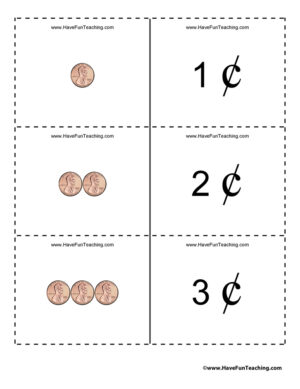
Kindergarten–3rd Grade · Math
Coins are the skill kids forget over every break. Tape these to desks for Scoot, or hold them up for Beat the Teacher and miscount on purpose.
-

Preschool–3rd Grade · Science
Science vocabulary suits Trashketball: the answer is short and the picture keeps it fair for readers still building speed.
-
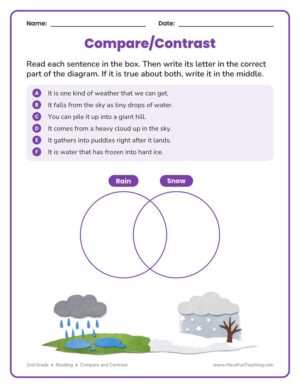
2nd Grade · Reading
Venn Diagram Graphic Organizer
Draw one on the board and run Whiteboard Relay: each team adds one true detail per turn. Great for two characters or two habitats.
Ready-to-print
Grab the question bank, skip the prep
Thousands of printables, Preschool through 6th grade, sorted by skill. Print one, cut it into strips, and half these games are ready before the bell.
Get the Worksheets Browse free resourcesNo login needed to browse · Preschool–6th · Print in seconds
Keeping Review Day Fun Without Losing the Room
Anyone who has run a review game knows the failure mode: it gets loud, then it gets silly, then somebody cries about points. Three habits prevent nearly all of it. Practice the stop signal once before you start. Name the teams by table, never by who picks whom. And end the game while it is still going well.
It also helps to say out loud what the game is for. Kids treat it differently when they know the point is Thursday’s test and not winning candy.
A review game does not have to be elaborate to work. It has to make every kid say the answer out loud, and it has to end before they are tired of it.
Where to Find the Review Material Without Building It
The slow part was never the game. It was assembling twenty-five good questions on a Sunday night. That is the part Have Fun Teaching hands you.
- Over 10,000 printables, songs, videos, and activities sorted by grade and skill, so your question bank is one filter click away.
- Flash card sets that print straight onto cardstock and run four of the nine games above with no rewriting.
- Songs and videos on the same skills as the printables, so the warm-up and the review use identical language.
Review Game Ideas: Questions Teachers Ask
What are the best review game ideas for elementary students?
Scoot, Four Corners, and Quiz-Quiz-Trade are the most reliable, because every child answers every question instead of watching one classmate answer. All three work with any content, take under five minutes to set up, and need nothing more than a printed worksheet or a set of flash cards.
How long should a classroom review game last?
Ten to fifteen minutes. Attention holds well for about that long, and stopping while kids still want another round is what makes them cooperate next time. If you need a longer review block, run two short different games rather than one long one.
Do review games work with only one or two kids at home?
Yes, with small tweaks. Beat the Teacher, Trashketball, and Sing It Back all work one-on-one, and Scoot becomes a hunt around the house with problems taped to five doors. Homeschool review has an advantage here: you can stop the moment you spot the gap.
Do songs really count as test review activities?
For facts that have to be memorized, yes. Melody and rhyme make sequences easier to recall, which is why kids can sing the alphabet long before they can write it. Use a song to warm up and cement, then use a game or a worksheet to check whether the knowledge transfers off the tune.
Never build a review question bank from scratch again
Get every printable, song, video, and activity, sorted by grade and skill, so your next review day takes five minutes to plan instead of an hour.
- 10,000+ ready-to-teach resources
- Preschool–6th grade
- Loved by 2M+ teachers & homeschoolers
No card required to start · Cancel anytime · $39.97/year
3 days free
Ready for the whole library?
You’ve had your freebie — but members download 10,000+ resources for every grade, all year long. Try it free — $0 today, cancel anytime.
Free for teachers
Pick your grade. We’ll send 10 free resources.
Worksheets, activities and a video — picked for your classroom, ready to print tonight.
One free bundle per teacher. We’ll also send free teaching ideas each week — unsubscribe anytime.