

Adaptation Worksheet
This adaptation worksheet has 4th graders sort seven animal traits into physical and behavioral adaptations, then explain how one helps an animal survive. Answer key included for fast, no-prep life science practice.
$6.97
Want this one free?
Tell us where to send it and it’s yours — no card, no catch.
One free resource per teacher. We’ll also send free teaching ideas each week — unsubscribe anytime.
Free teacher account · no credit card
Membership
Get every game, song, & printable
- Every game, on any device
- 10,000+ printables
- Assign online with HFT Classroom
Then $39.97/year · cancel anytime · See plans
- Instant digital download
- Printable PDF + answer key
- Made by real teachers
Teacher / Family membership
Teaching is easier with every resource
One membership for your whole year: 10,000+ worksheets, games, songs and videos for Preschool–6th, for your classroom or homeschool.
- Unlimited printables & downloads
- Every game, on any device
- Assign online with HFT Classroom
- Cancel anytime
Teacher / Family membership · 3 days free
Yearly
Monthly would be $119.64 a year
$3.33/month
Billed $39.97 once a year
You save $79.67 every year
Start My 3 Free Days$0 today · cancel anytime
Monthly
$9.97/month
Flexible, month to month
Yearly is just $3.33/mo. Switch and save $79.67
Start My 3 Free Days$0 today · cancel anytime
About this resource
Description
An adaptation is a body part or a behavior that helps an animal stay alive where it lives, and it is one of the first big ideas in elementary life science. This adaptation worksheet gives 4th grade students focused practice sorting real animal traits into two groups: physical adaptations, which are parts of the body, and behavioral adaptations, which are things an animal does. Students meet a polar bear’s thick fur, a camel’s wide feet, a woodpecker’s strong beak, and a rabbit that freezes in place when a hawk circles overhead.
This animal adaptations worksheet opens with a short, on-grade reading panel that defines both kinds of adaptation in plain language. Students then read seven statements and write P or B on the line beside each one. A final constructed-response section asks them to choose one animal, name its adaptation, and explain how that adaptation helps the animal survive, which turns recognition into real scientific reasoning. Use it as an introduction, as guided practice after a read-aloud, as a science center task, or as a quick check before a unit test.
What’s Included
- 1 print-ready PDF worksheet
- Answer key
- 1 illustrated reading panel defining physical and behavioral adaptations
- 7 classify-the-adaptation items
- 1 written explanation task with three writing lines
There are three clear reasons this adaptation worksheet helps children learn. First, it separates the two categories that students most often confuse, so the difference between a body part and a behavior becomes concrete instead of abstract. Second, every example describes a familiar animal in a real setting, which gives students a mental picture to hold on to long after the page is finished. Third, the closing explanation task pushes students past labeling and into cause and effect, the exact reasoning that state science assessments ask for.
Teachers and parents can stretch this lesson in simple ways. Take a walk and list the adaptations you notice on birds, squirrels, and insects in your own yard. Give each student an animal card and have the class sort themselves into a physical group and a behavioral group. Build a class chart with a column for each kind of adaptation and add to it all month. Watch a nature clip with the sound off and ask students to name one body part and one behavior that helps the animal survive. Finish by having students invent an imaginary animal for a desert, an arctic shore, or a rainforest, then draw it and label two adaptations that keep it alive.
Related Resources
What teachers say
Reviews
Write a review, earn store credit
Get 25¢ in credit for every approved review of a resource you’ve downloaded, played or purchased — up to 15 a month. Credit applies automatically to your membership payments, so your reviews can help pay for your membership.
Honest reviews only — any star rating earns the same. Program rules
Log in to write a review and earn store credit.
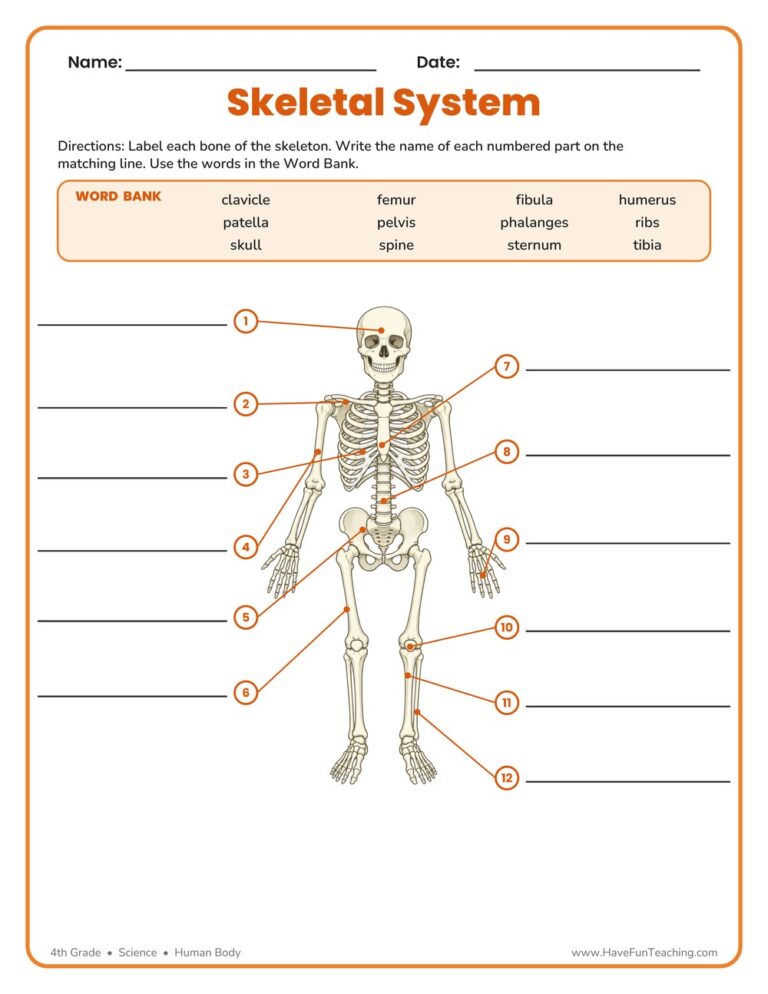
This Label Skeletal System Worksheet lets 4th grade students identify and name twelve major bones on a clear skeleton diagram using a word bank. An answer key is included for quick, no-prep human body practice.

This Muscular System Research Worksheet has 4th graders name the three muscle types, sort voluntary and involuntary actions, and explain their thinking. Answer key included, so checking work takes seconds.
While Parts of the Body Song (MP3), students learn about the different parts of the body while listening to catchy lyrics.

This skeletal system research worksheet asks 4th grade students to pair six bones with what each one does, then answer three research questions about the human skeleton. An answer key is included.
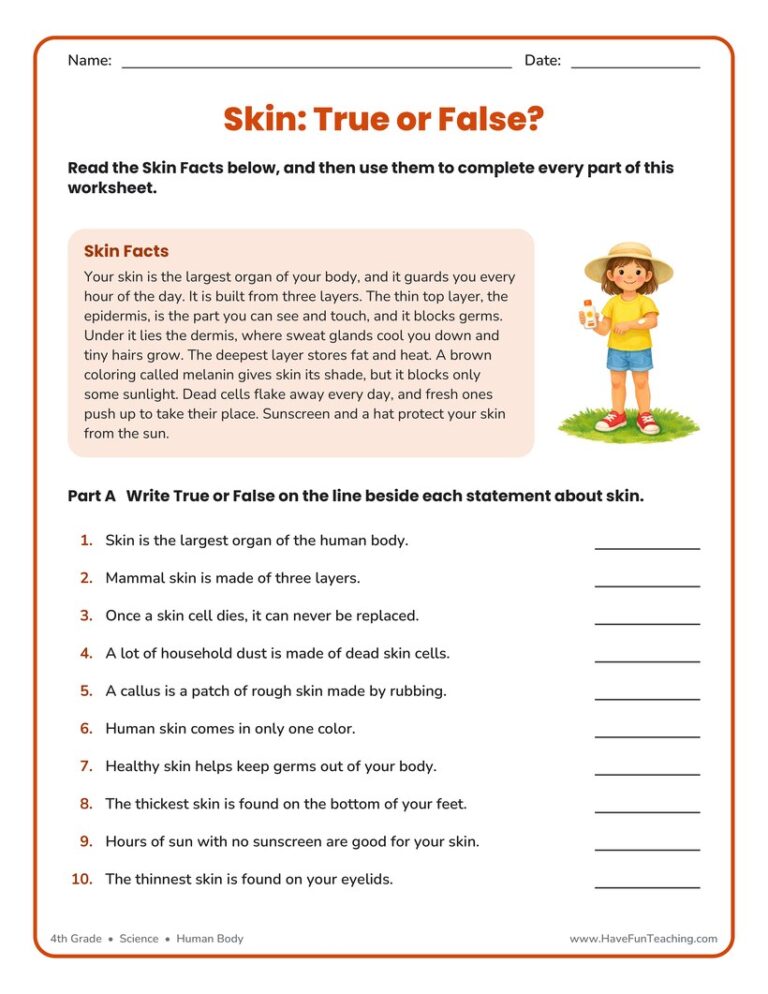
This Skin True or False Worksheet asks 4th grade students to judge ten skin facts, name the layers of the skin, and explain their thinking in writing. Answer key included, so science review takes minutes.
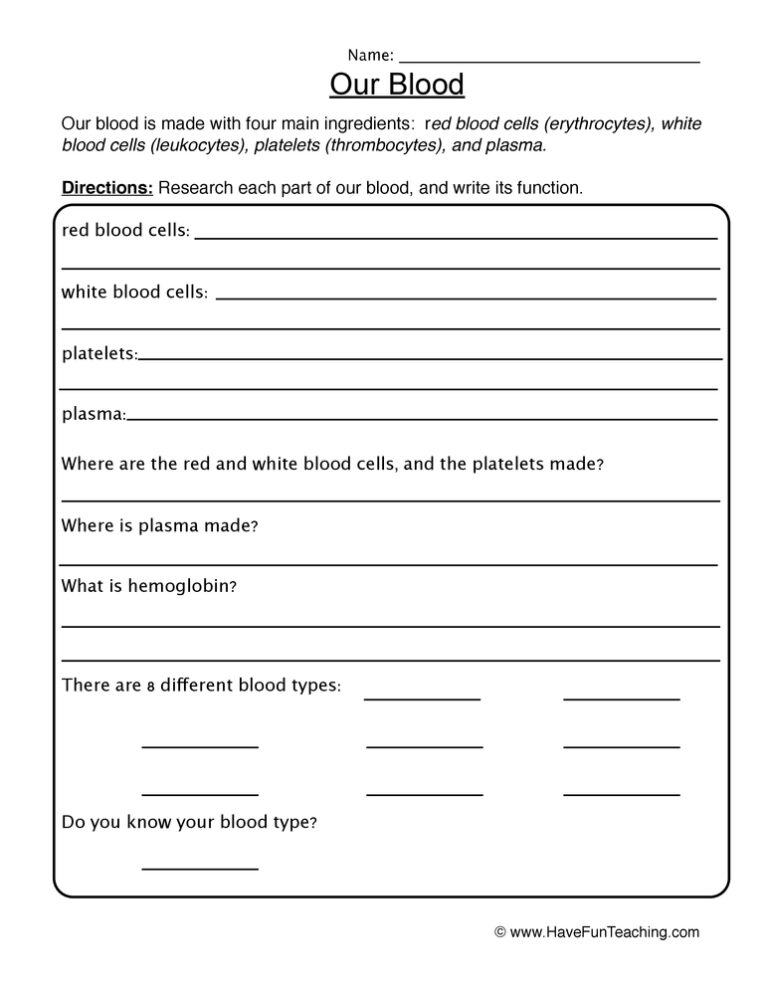
A Blood Worksheet that walks 4th graders through red blood cells, white blood cells, platelets, and plasma with matching, bubble questions, and a written response. Answer key included for fast, no-prep science practice.

This Popcorn Five Senses Worksheet asks 4th graders to chart each sense organ and the information it detects, then name the sense behind three popcorn-day clues. Answer key included for fast, no-prep science practice.
Using this Muscular System Writing Worksheet, students read and then write about each part of the muscular system and explain its function in our body.
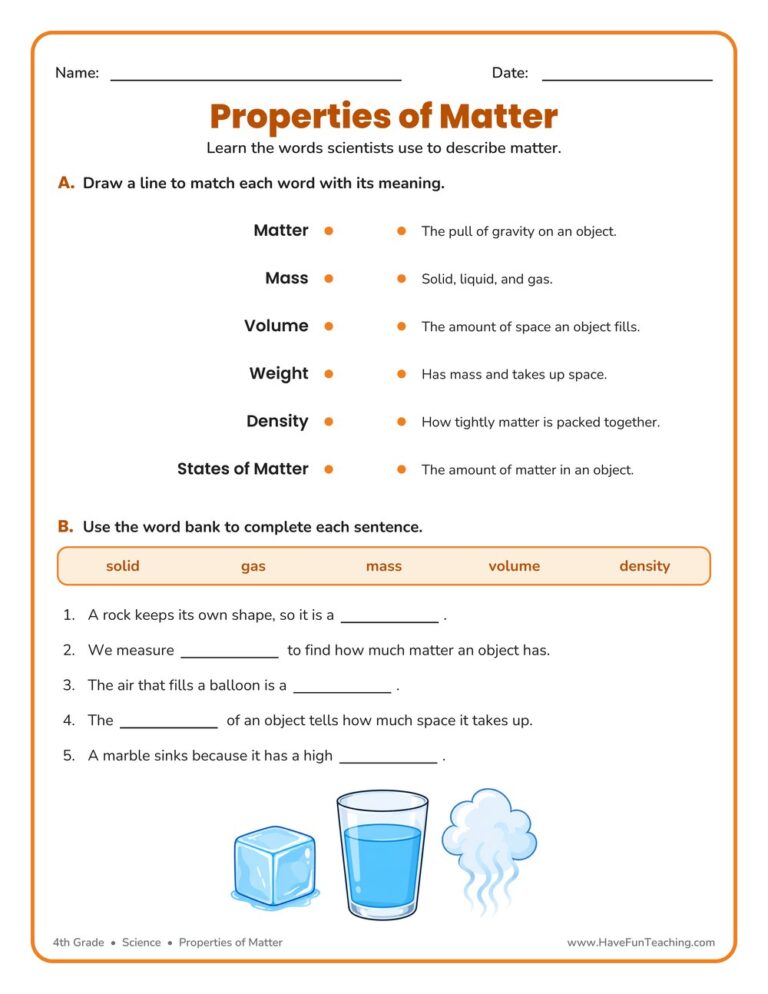
This Properties of Matter Definitions Worksheet helps 4th grade students match key science terms—matter, mass, volume, weight, and density—to their meanings and complete sentences about solids and gases. Answer key included for fast, no-prep science practice.
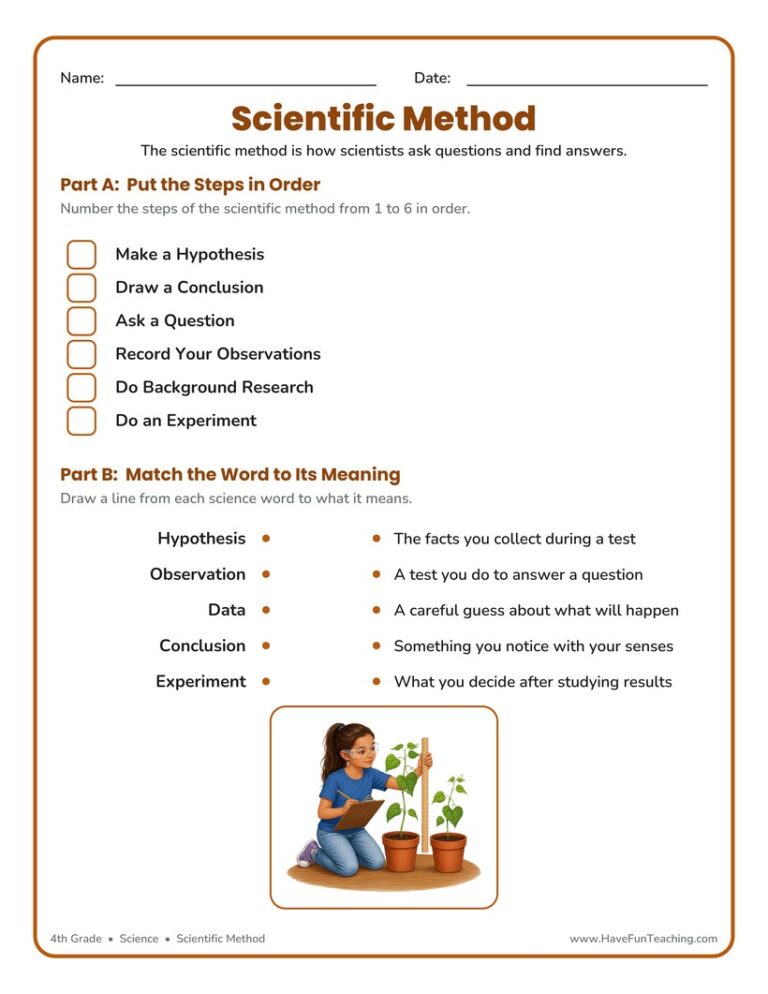
This Scientific Method Worksheet helps 4th graders order the six steps of an investigation, match key science words, and analyze a real bean-plant experiment. Answer key included — a no-prep way to build real science-thinking skills.
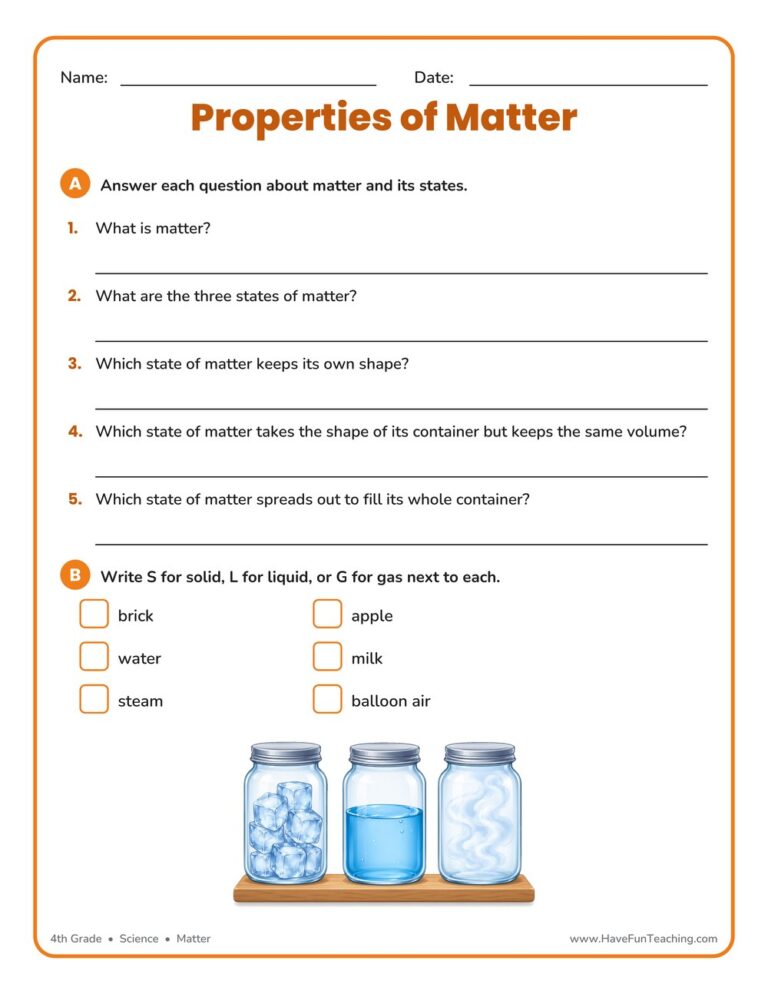
This 4th Grade Properties of Matter Review Worksheet has students answer key questions about matter and sort everyday objects as solid, liquid, or gas. Answer key included — an easy, no-prep way to review states of matter.

A layers of the Earth definition worksheet for 4th grade where students match each layer to its description and label a cross-section diagram. Answer key included for quick, no-prep earth science practice.
Reviews
There are no reviews yet