Skip to content
Start My 3 Free Days $0 today · cancel anytime

4th Grade Matter Resources

12 4th grade matter resources: 9 worksheets, 2 songs, 1 video and more. How teachers use these

4th Grade Matter Resources

12 4th grade matter resources: 9 worksheets, 2 songs, 1 video and more. How teachers use these

Worksheet
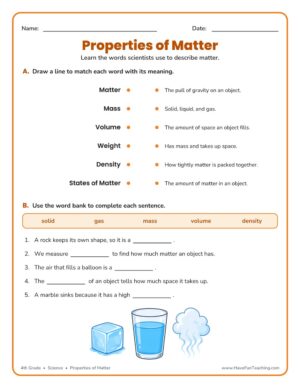
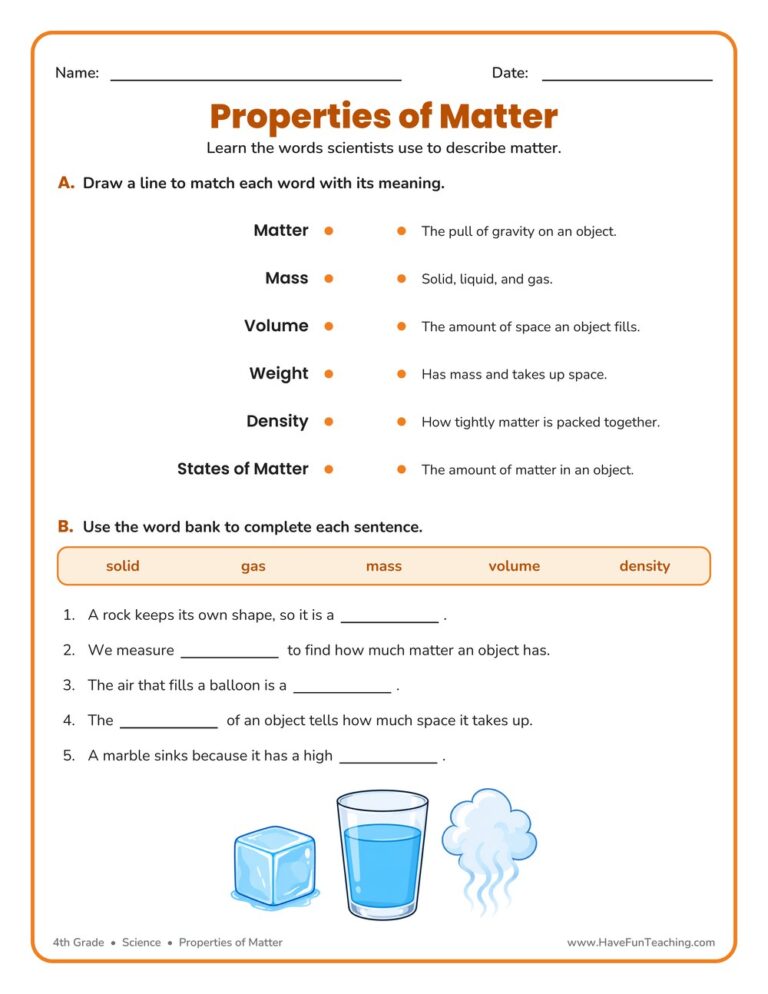
Worksheet4th GradeProperties of Matter Definitions Worksheet

This Properties of Matter Definitions Worksheet helps 4th grade students match key science terms—matter, mass, volume, weight, and density—to their meanings and complete sentences about solids and gases. Answer key included for fast, no-prep science practice.

Worksheet
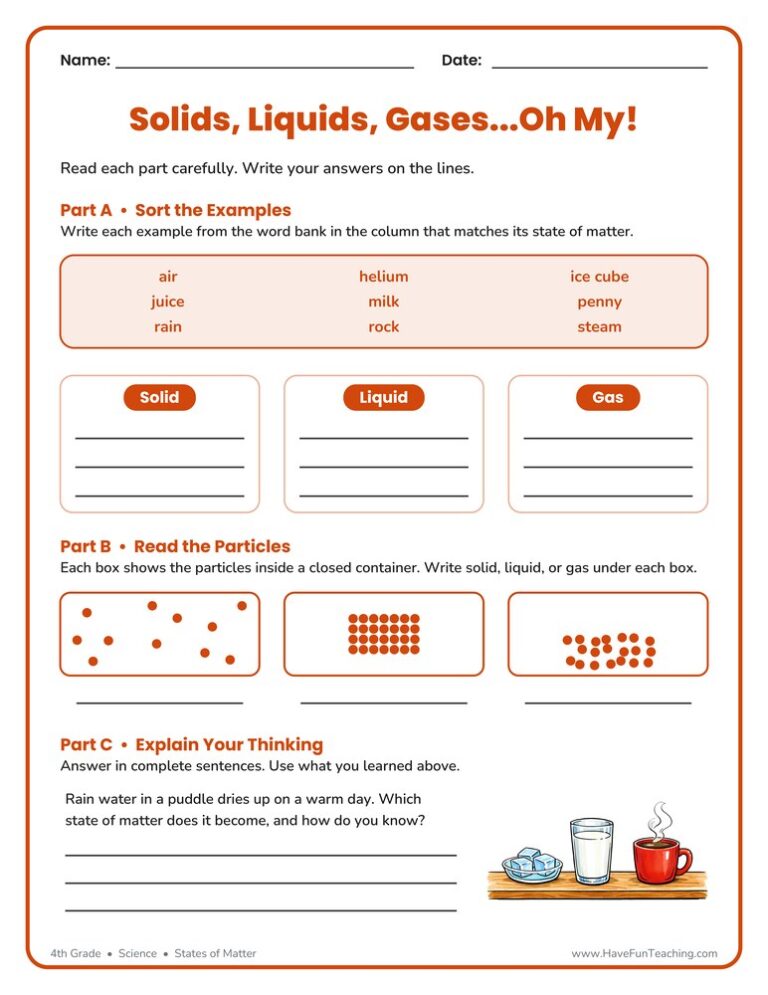
Worksheet4th GradeStates of Matter Examples Worksheet

Sort nine everyday examples, label three particle diagrams, and explain a change of state with this states of matter examples worksheet for 4th grade. An answer key is included, so checking work takes seconds.

Worksheet
Worksheet4th GradeProperties of Matter Review Worksheet

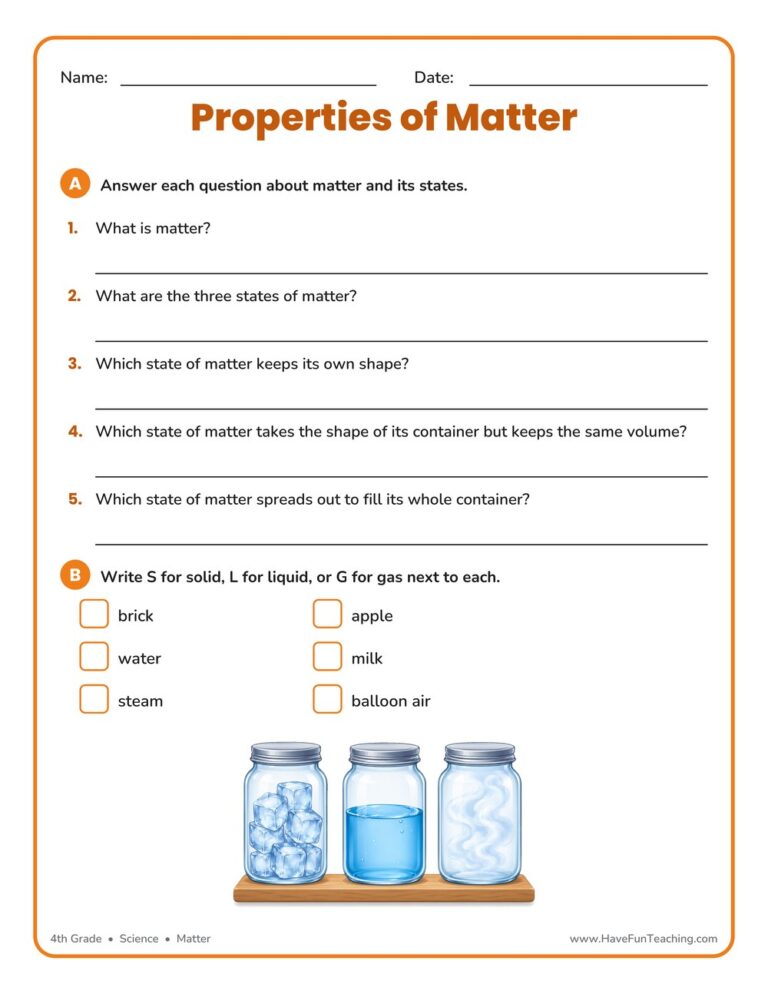
This 4th Grade Properties of Matter Review Worksheet has students answer key questions about matter and sort everyday objects as solid, liquid, or gas. Answer key included — an easy, no-prep way to review states of matter.

Video
Video4th GradeMatter Song

The Matter Song teaches all about matter and the states of matter. With this states of matter song, students learn about solid, liquid, and gas, as well as the phases of matter, properties of matter, physical changes, chemical changes, and so much more. Matter has mass and takes up space.…

Worksheet
Worksheet4th GradeElectricity Worksheet

This Electricity Worksheet pairs a short reading passage with vocabulary and explanation questions that show 4th graders how current, circuits, conductors, and insulators work. Answer key included for fast, no-prep science practice.

Worksheet
Worksheet4th GradeSolid Liquid Gas Explanation Worksheet

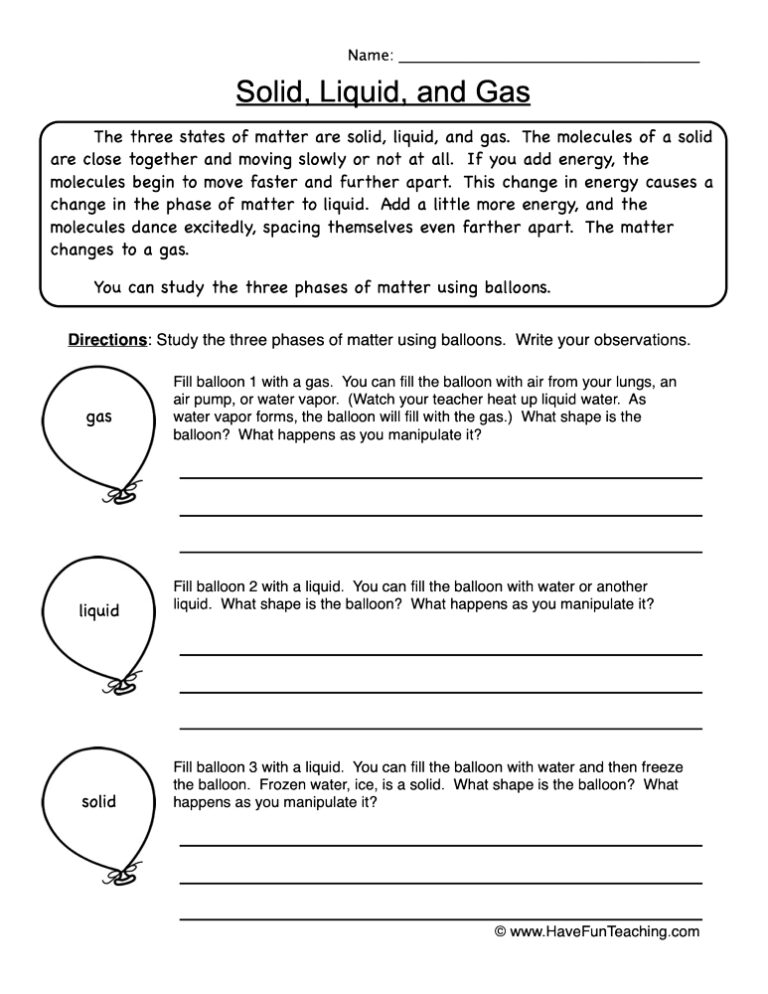
This solid liquid gas explanation worksheet has 4th graders sort nine materials into a three-column chart and name the solid and liquid in four sentences. An answer key is included.

Worksheet
Worksheet4th GradeMagnetic Earth Worksheet

This Magnetic Earth Worksheet gives 4th Grade students four magnet words and six real-life clues to match, plus an answer key, so magnetism vocabulary sticks long after the lesson ends.

Flash Cards
Flash Cards4th GradeMatter Word Wall

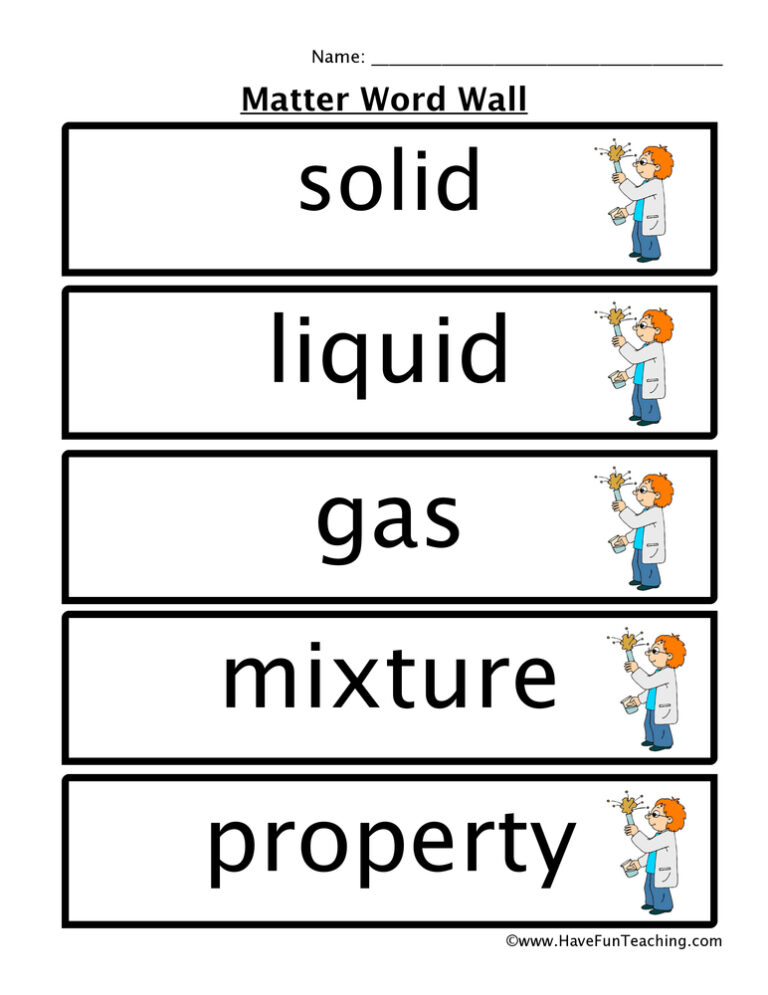
Matter word wall flash cards with 16 picture cards for solid, liquid, gas, melt, evaporate and more, for 2nd to 5th grade science. Answer key included for easy checking.

Worksheet
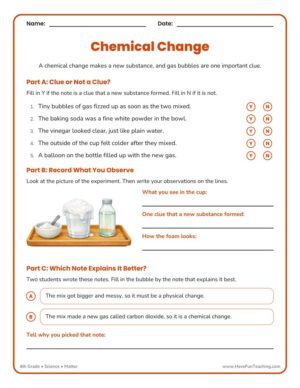
Worksheet4th GradeChemical Changes Observation Worksheet

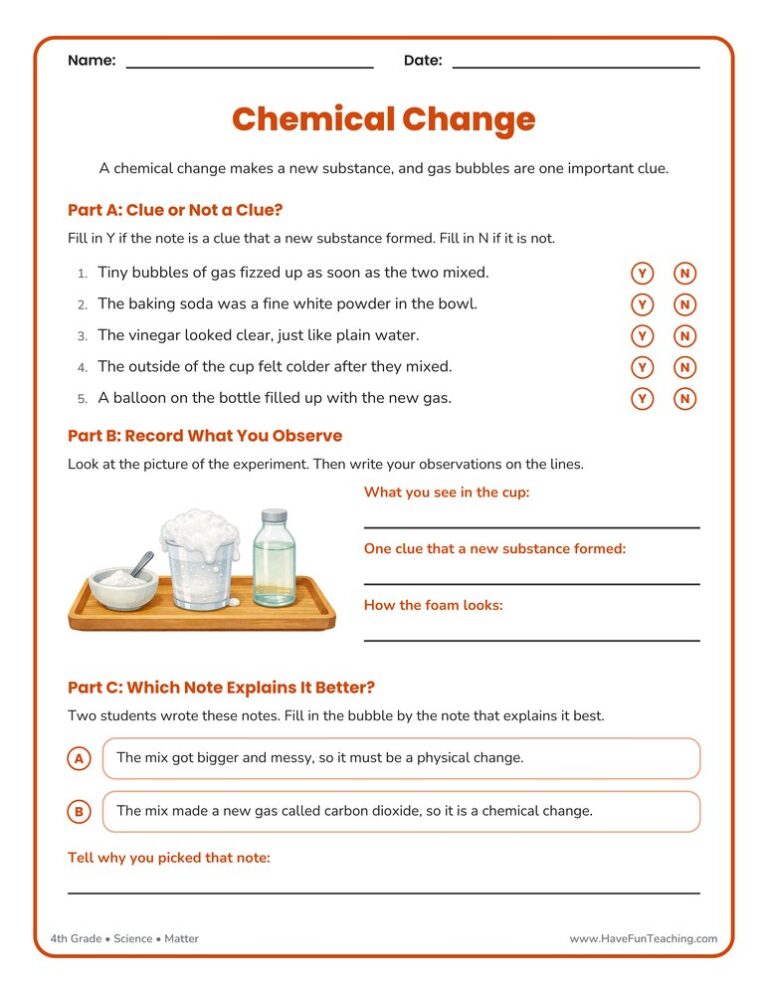
This chemical changes observation worksheet has 4th graders study a baking soda and vinegar reaction, spot the evidence of a new substance, and explain their thinking. An answer key is included.

Song
Song4th GradeMatter Song (MP3)

While listening to the Matter Song (MP3), students learn about the states of matter, phases of matter, properties of matter, physical changes, chemical changes, solid, liquid, and gas and more.

Worksheet
Worksheet4th GradePhysical Changes Observation Worksheet

This physical changes observation worksheet lets 4th grade students name everyday changes and explain clay and paper observations with evidence, and an answer key is included.

Worksheet
Worksheet4th GradeLet's Make Some Noise Worksheet

The Let's Make Some Noise Worksheet helps 4th grade students read about how sound travels and how the ear hears, then answer questions. An answer key is included for quick checking.

From our teachers' playbook

Solids, liquids, gases and changes

What do 4th graders learn about matter?

Matter is anything that has mass and takes up space, and that means almost everything! Fourth graders learn the three states of matter: solids keep their shape, liquids take the shape of their container and gases spread out to fill any space. They describe matter by its properties, like color, hardness, mass and whether it floats or sinks. They compare physical changes, like melting ice or cutting paper, with chemical changes, like baking a cake or rusting metal, where a new substance forms. The click comes when kids realize melted ice is still water, but a baked cake can never be batter again!

Our favorite ways to teach matter in 4th grade

Matter is the perfect topic for hands-on science. These moves keep it that way.

Sing the states

Start the unit with a matter song and have kids act out each state: huddle close for solids, flow around for liquids and spread out for gases. Moving like particles makes the differences easy to remember.

Why it works: words set to a repeating melody are easier to recall than the same words spoken (Wallace, 1994).

Matter SongTry it withMatter SongSongsOpen it →

Change it and check it

Let kids cut paper, melt an ice cube and dissolve sugar, then record what changed. Ask "Is it still the same stuff?" Testing real changes helps kids tell physical changes from chemical ones.

Why it works: kids understand an idea best when they touch it, then draw it, then write it, the order the U.S. Department of Education recommends for elementary math.

Physical Changes Observation WorksheetTry it withPhysical Changes Observation WorksheetWorksheetsOpen it →

Word wall check-in

Point to a word on the matter word wall and have kids give an example: "Gas! The air in a balloon." Quick examples keep the vocabulary connected to real things.

Why it works: researchers who compared ten study methods found practice testing is one of the two that work best (Dunlosky and colleagues, 2013).

Matter Word WallTry it withMatter Word WallFlash CardsOpen it →

Questions parents and teachers ask about 4th grade matter

What is matter?

Matter is anything that has mass and takes up space. Solids, liquids and gases are all matter, including the air we breathe.

What is the difference between a physical and a chemical change?

A physical change changes the size, shape or state of matter but not what it is, like freezing water. A chemical change makes a new substance, like burning wood or baking bread.

What are the properties of matter?

Properties describe matter, like color, shape, size, texture, hardness, mass and whether it is magnetic or floats. Scientists use properties to sort and identify materials.

How can I teach states of matter at home?

Freeze water into ice, let it melt and then watch steam rise from a hot pot (with an adult nearby). Ask your child to name the state at each step.