
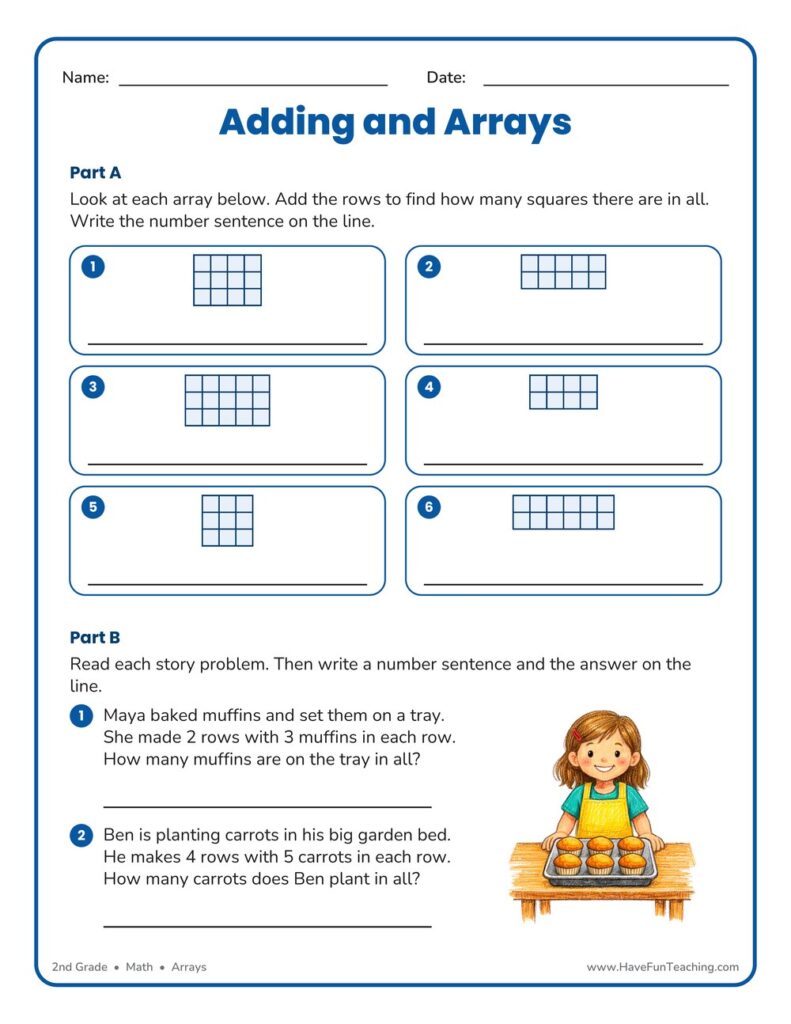
Adding and Arrays Worksheet
This Adding and Arrays Worksheet asks 2nd grade students to write a number sentence for six arrays and two story problems. An answer key is included, so practice with equal rows takes only minutes.
$6.97
Or free with a membership — members pay $3.33/mo for all 10,000+ resources. See plans
Want this one free?
Tell us where to send it and it’s yours — no card, no catch.
One free resource per teacher. We’ll also send free teaching ideas each week — unsubscribe anytime.
Teaching is easier with a membership
Unlimited printables, games & videos for PreK–6th — for your classroom or homeschool. Cancel anytime.
Start your 3-day free trial$0 today · cancel anytime · Instant access to 10,000+ resources
About this resource
Description
Arrays turn addition into a picture a child can actually see. When squares are lined up in equal rows, a second grader can count the rows, add the same number again and again, and find the total without counting one square at a time. This Adding and Arrays Worksheet gives students six rectangular arrays to study and two story problems to solve, so repeated addition becomes a strategy they reach for instead of a rule they memorize. An adding and arrays worksheet is one of the clearest ways to build the bridge between addition and the multiplication work that comes next.
On this printable page, students look at each array, add the rows, and write a number sentence such as 4 + 4 + 4 = 12 on the solid line below it. Part B moves the same thinking into two short story problems about a tray of muffins and rows of carrots in a garden bed. This repeated addition worksheet keeps every total at 20 or below, so the numbers stay friendly and the focus stays on the structure of the array. Use it as morning work, as a small-group warm-up, or as a quick check after teaching equal groups.
What’s Included
- One printable worksheet page with six rectangular arrays to turn into addition equations
- Two real-world story problems built on rows and equal groups
- Solid, roomy writing lines sized for second grade handwriting
- A complete answer key on the final page
- A print-ready PDF you can reuse with every class
This activity helps children in three ways. First, it makes equal groups visible, so students stop counting by ones and start adding by rows. Second, writing the whole number sentence instead of just the answer builds the habit of showing mathematical thinking, which is exactly what second grade addition standards ask for. Third, the story problems ask students to picture an array they cannot see on the page, and that mental step is the one that carries them into multiplication next year.
Teachers and parents can stretch this page further. Build each array with counters, cereal, or square tiles before writing anything down, and let students say the equation out loud as they touch each row. Ask a child to turn one array sideways and notice that 3 rows of 4 and 4 rows of 3 both make 12. At home, hunt for arrays in real life — an egg carton, a muffin tray, a window pane, the tiles on the kitchen floor — and write a number sentence for each one on scrap paper.
Related Resources
What teachers say
Reviews
You must be logged in to post a review.

This addition and subtraction word problems worksheet gives 2nd graders four real-world number stories to solve within 100. It includes a complete answer key, making it perfect for no-prep math practice at home or in the classroom.
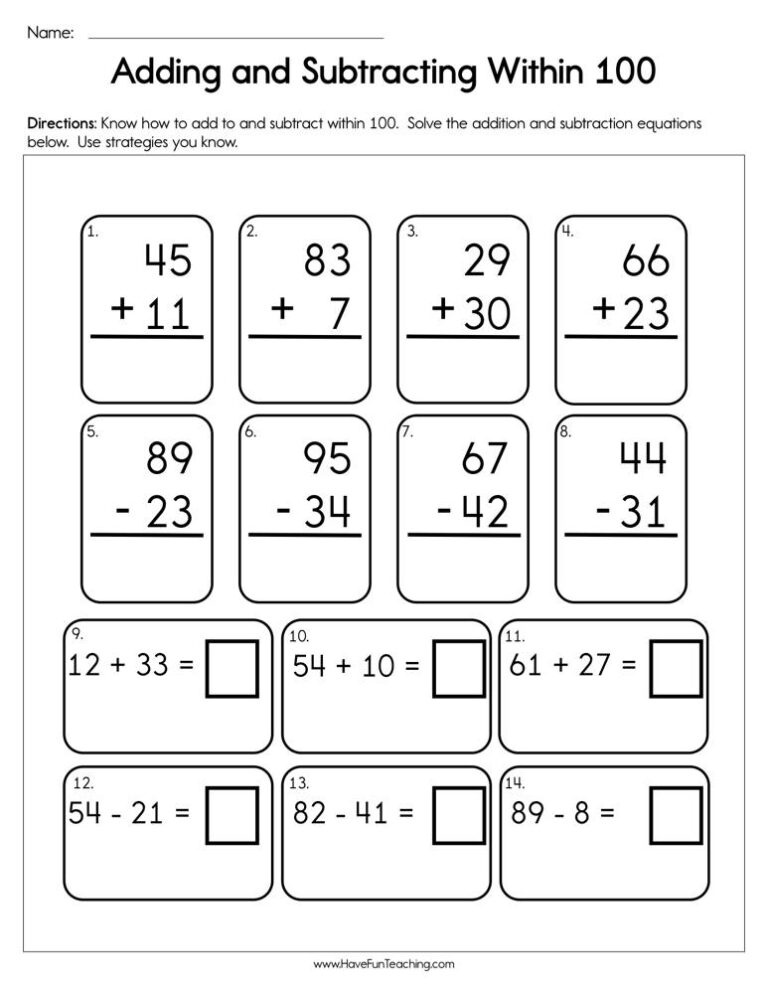
An adding and subtracting within 100 worksheet that helps 2nd graders solve two-digit problems in both stacked and horizontal form. Includes a complete answer key—great for quick, no-prep math practice at home or school.
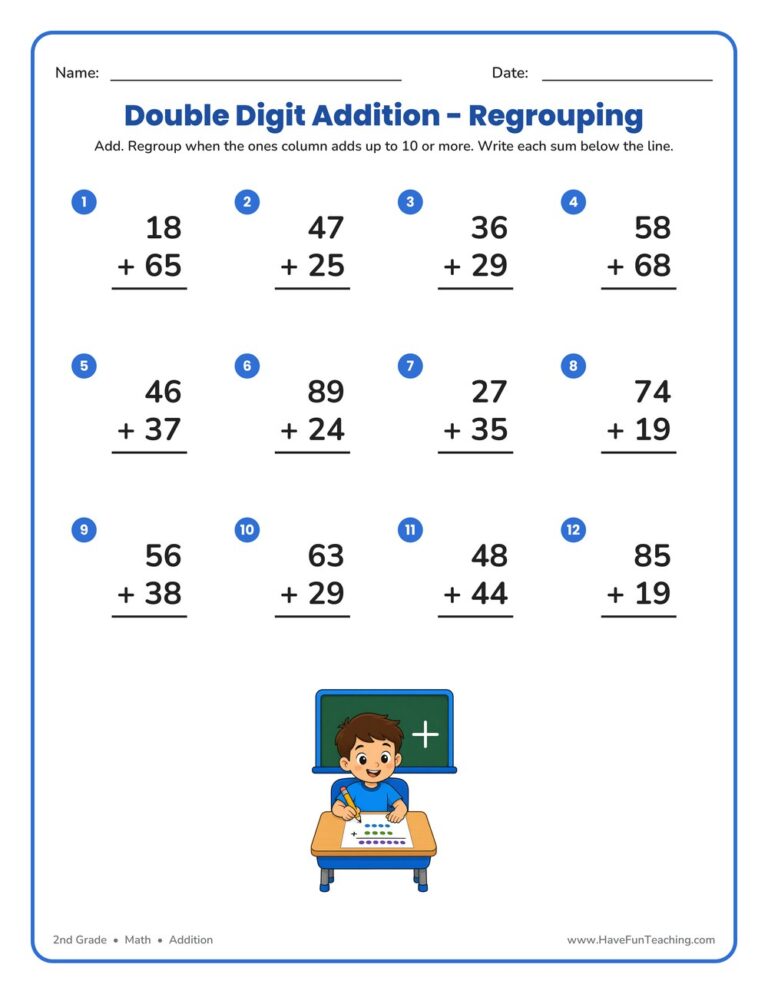
This double digit addition with regrouping worksheet gives 2nd graders twelve column-addition problems that practice carrying from the ones to the tens place. Includes a complete answer key—perfect for no-prep math practice at home or in class.

This Add and Subtract 10 and 100 Worksheet gives 2nd Grade students mental math practice with tens and hundreds, number patterns, and two word problems. An answer key is included, so checking work takes seconds.
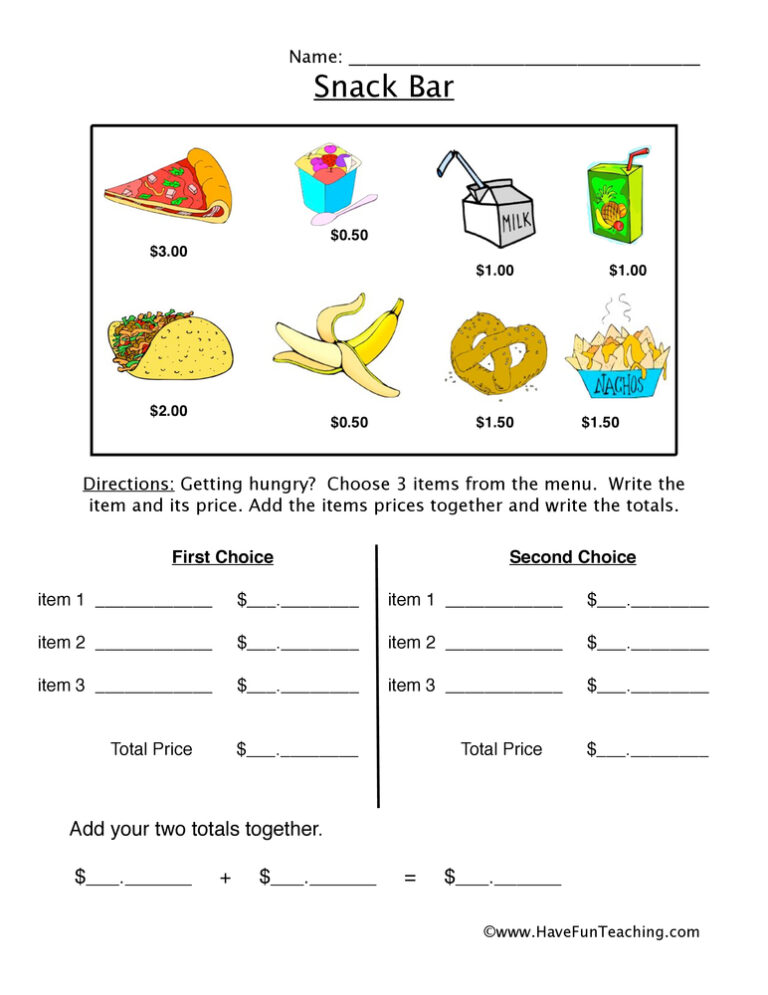
Students use the Ordering from a Snack Bar Worksheet to read a six-item menu, write two snack prices, and add them to find each total. Built for 2nd grade with an answer key included, it makes money practice feel like lunchtime.

This Word Problems With 3 Numbers Worksheet asks 2nd graders to draw a picture and then add three addends inside real stories. An answer key is included, so checking work takes only seconds.

Practice this add and subtract 10 and 100 word problems worksheet with three number stories and a 10 more, 10 less, 100 more, 100 less chart. Built for 2nd Grade with an answer key included, so mental math clicks fast.
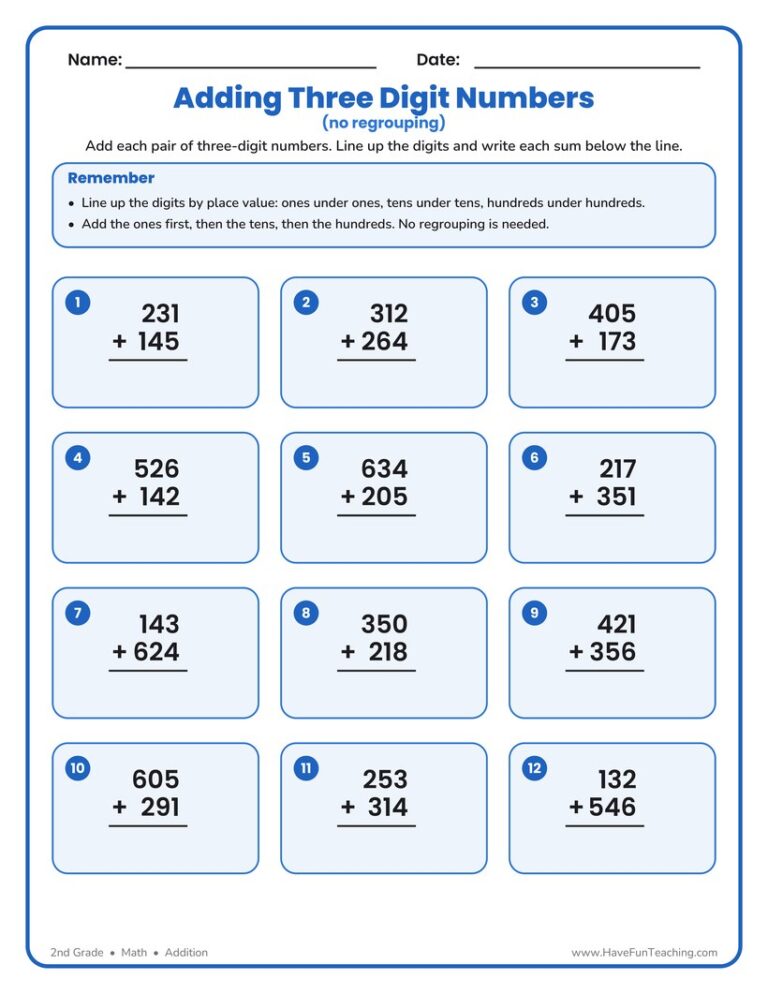
Practice adding three-digit numbers with this triple digit addition no regrouping worksheet for 2nd grade. Twelve column-addition problems with an answer key included — perfect for building place-value fluency with no-prep math practice.

This double digit addition with regrouping worksheet gives 2nd graders eight column-form problems that all trade ten ones for a new ten, plus a word problem. Answer key included for fast, no-prep practice.
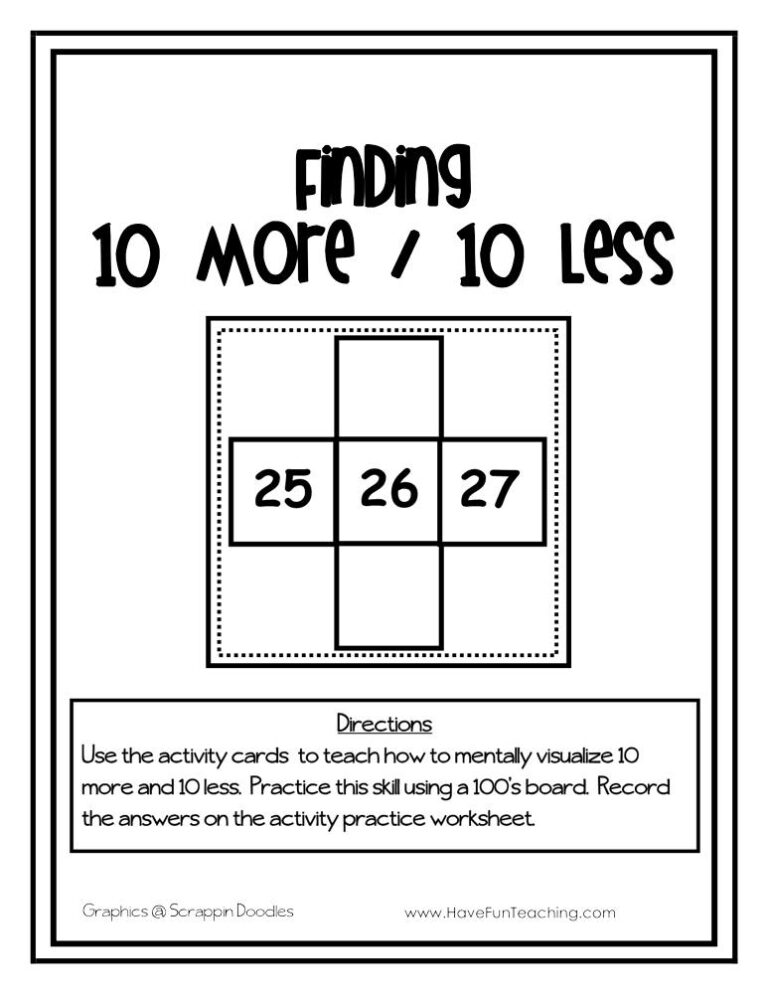
In this Finding 10 More 10 Less Activity, students practice finding 10 more and less than a given number to build skip counting and base ten skills.
Using the Adding 8 Song (Lyric Mjusic Video), students sing and practice adding 8 with all addition facts 1-15. Your kids will learn how to add 8.

This Adding and Subtracting with Number Line Worksheet helps 2nd graders solve addition and subtraction within 100 and mark each answer on a number line. Includes a complete answer key for no-prep math practice.




Reviews
There are no reviews yet