Skip to content
Start My 3 Free Days $0 today · cancel anytime

Arrays Resources

12 arrays resources: 5 Common Core Lessons, 4 activities and 3 worksheets. How teachers use these

Arrays Resources

12 arrays resources: 5 Common Core Lessons, 4 activities and 3 worksheets. How teachers use these

Worksheet
Worksheet2nd GradeAdding and Arrays Worksheet

This Adding and Arrays Worksheet asks 2nd grade students to write a number sentence for six arrays and two story problems. An answer key is included, so practice with equal rows takes only minutes.

Worksheet
Worksheet2nd GradeUsing Arrays to Write Addition Equations Worksheet

This Using Arrays to Write Addition Equations Worksheet has 2nd grade students count equal rows of apples and write a number sentence for each array. An answer key is included.

Worksheet
Worksheet2nd GradeArrays and Addition Worksheet

This arrays and addition worksheet asks 2nd graders to read four rectangular arrays and write a repeated addition sentence for each one. An answer key is included, so checking equal-group work takes seconds.

Activity
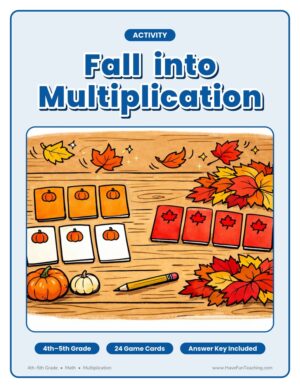
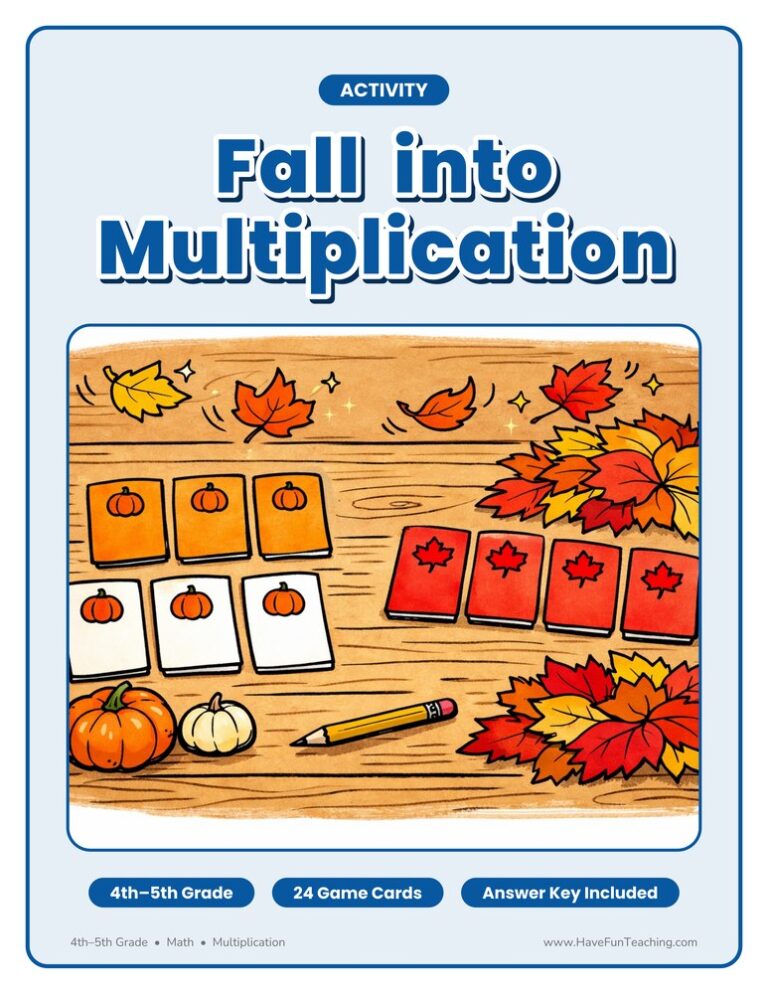
Activity4th GradeFall into Multiplication Activity

This fall into multiplication activity has 4th and 5th graders solve pumpkin problems with area models and match each product to a leaf. Answer key included.

Common Core Lesson
Common Core Lesson3rd Grade3.OA.1 Third Grade Common Core Lesson

In this 3.OA.1 Third Grade Common Core Lesson, students match multiplication equations to groups of grocery item to build multiplication skills.

Common Core Lesson
Common Core Lesson2nd Grade2.OA.4 Second Grade Common Core Lesson

In this 2.OA.4 Second Grade Common Core lesson, students use addition to find the total number of objects arranged in arrays with up to 5 rows and columns.

Activity
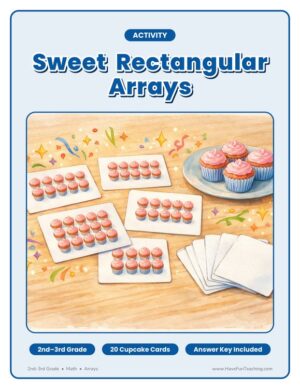
Activity2nd GradeSweet Rectangular Arrays Addition Activity

This sweet rectangular arrays addition activity has 2nd-3rd grade students match cupcake arrays to equal-addend equations. Cards, a recording sheet and practice page, with an answer key included.

Activity
Activity2nd GradeBe the Baker Multiplication Activity

Using this Be the Baker Multiplication Activity, students interpret products of whole numbers into equal groups.

Activity
ActivityKindergartenSharing Chocolate Rows and Columns Activity

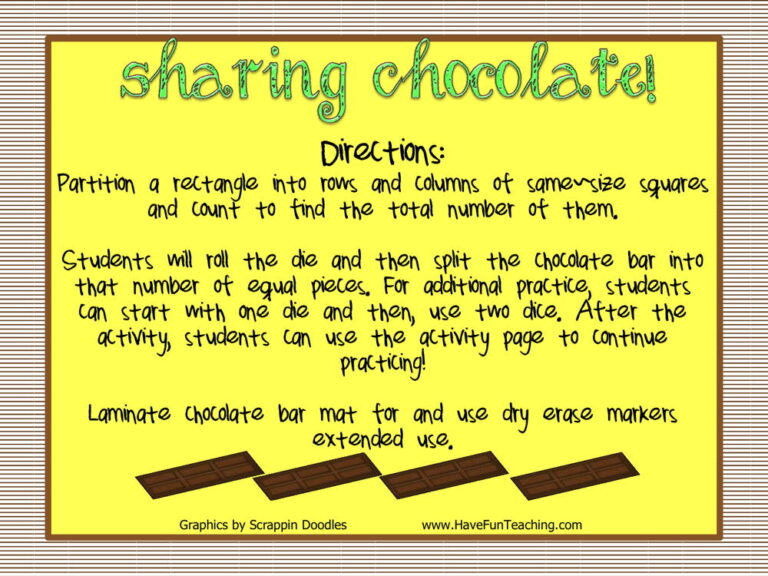
Using this Sharing Chocolate Rows and Columns Activity, students partition a rectangle into rows and columns of same-size squares and count to find the total number of them.

Common Core Lesson
Common Core Lesson3rd Grade3.OA.3 Third Grade Common Core Lesson

In this 3.OA.3 Third Grade Common Core Lesson, students use multiplication and division strategies within 100 to solve word problems.

Common Core Lesson
Common Core Lesson3rd Grade3.OA.5 Third Grade Common Core Lesson

In this 3.OA.5 Third Grade Common Core Lesson, students apply properties of operations as strategies to multiply and divide.

Common Core Lesson
Common Core Lesson2nd Grade2.G.2 Second Grade Common Core Lesson

In this 2.G.2 Second Grade Common Core Lesson, students will partition a rectangle into rows and columns and count to find the total number of them.

From our teachers' playbook

Rows and columns make math visible

What do kids learn about arrays?

An array is a set of objects arranged in equal rows and columns, like eggs in a carton or chairs in rows. In 2nd grade, kids use arrays to write repeated addition: 3 rows of 4 is 4 + 4 + 4 = 12. In 3rd grade, arrays become the picture of multiplication: 3 × 4 = 12. Turning an array on its side shows that 3 × 4 = 4 × 3, and splitting an array helps with harder facts later. The click comes when kids see a muffin tin and say, "That's 3 times 4!"

Our favorite ways to teach arrays

Arrays turn multiplication into something kids can see. These moves make the most of that.

Build it with snacks

Give kids small treats or tiles and ask them to make 3 rows of 5. They count the rows, the columns and the total, then write the addition or multiplication sentence. Building arrays by hand beats drawing them every time.

Why it works: going from real objects to pictures to symbols is a core recommendation of the U.S. Department of Education's elementary math guide.

Sharing Chocolate Rows and Columns ActivityTry it withSharing Chocolate Rows and Columns ActivityActivitiesOpen it →

Array to equation

Show an array and have kids write two sentences: the repeated addition and the multiplication. Then rotate the paper and ask if anything changed. Matching pictures to equations builds understanding before memorizing facts.

Why it works: children learn more from words and pictures together than from words alone (Mayer, 2009).

Using Arrays to Write Addition Equations WorksheetTry it withUsing Arrays to Write Addition Equations WorksheetWorksheetsOpen it →

Arrays all around

Every few days, show a photo of a real-world array, like a window, an egg carton or a chocolate bar, and have kids write its equation. Short repeated practice over weeks helps kids see multiplication everywhere.

Why it works: the brain holds on to what it meets again and again over time; spaced practice was rated among the very best methods (Dunlosky and colleagues, 2013).

Fall into Multiplication ActivityTry it withFall into Multiplication ActivityActivitiesOpen it →

Array questions parents and teachers ask

What is an array in math?

An array is an arrangement of objects in equal rows and columns. It helps kids see repeated addition and multiplication, like 3 rows of 4 equals 12.

What grade learns arrays?

Kids usually start with arrays in 2nd grade, using them for repeated addition. In 3rd grade, arrays are a key model for multiplication and the commutative property.

How do arrays help with multiplication?

Arrays show multiplication as equal groups in rows. Counting rows and columns gives the factors, and the total is the product. Turning the array shows that order doesn't change the answer.

What are examples of arrays in real life?

Egg cartons, muffin tins, ice cube trays, windows, chocolate bars, seats in a theater and rows of crops in a garden are all arrays.

Keep exploring